Is the W Trek Worth the Money?
The W is not expensive because of one big charge. It is expensive because of eleven small ones, and most of them are invisible until you are already committed.
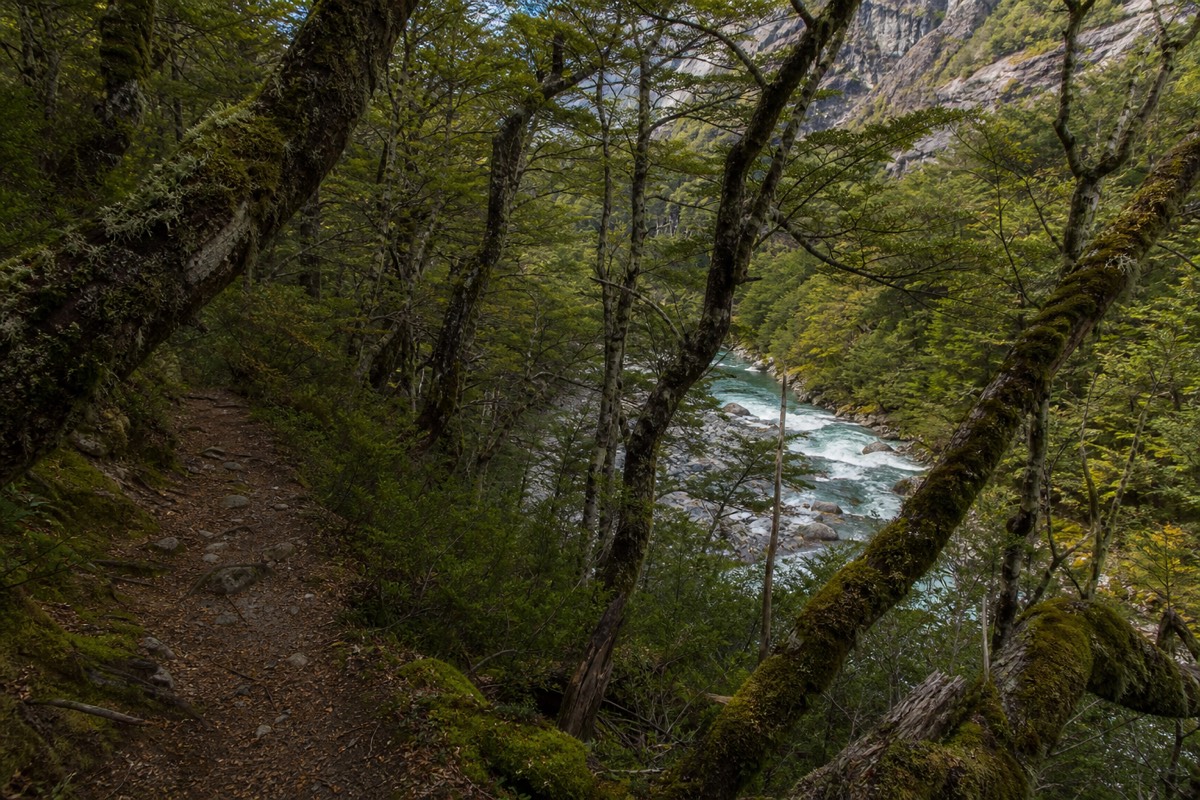
For anyone who can walk 8 to 10 hours a day for four days, yes. A self-guided W is published between roughly $600 and $1,500 all in, guided packages between $1,700 and $3,500 and up. That buys four days inside the massif instead of four hours of it. Day visitors get the postcards. Trekkers get the weather.
Worth depends on days, legs and which logistics you want bundled. Compare your current self-arranged total with the active five-day independent and three-day guided formats.
Booking Choice: The full W earns its cost for repeated days inside the massif. The five-day product is independent; the three-day product is guided from one base; a day circuit suits viewpoint-first travellers. Explore 5-Day Torres del Paine W Independent Trek
That is the short version, and it hides the interesting part. The W is not expensive because of one big charge. It is expensive because of eleven small ones, most of which are invisible until you are standing at a gate with a card in your hand. Working out whether it is worth the money means seeing the whole stack first.
What does the W Trek actually cost, all in?
Budget for a park ticket at 48,500 CLP, about $51 for the multi-day pass, buses at $20 to $29 each way, a catamaran at about 26,000 CLP or roughly $45 one way, a shuttle in cash, and then four nights of beds and meals. Beds alone run from $11 for a tent pitch to $114 for a dorm bunk. Add food and the range widens fast.
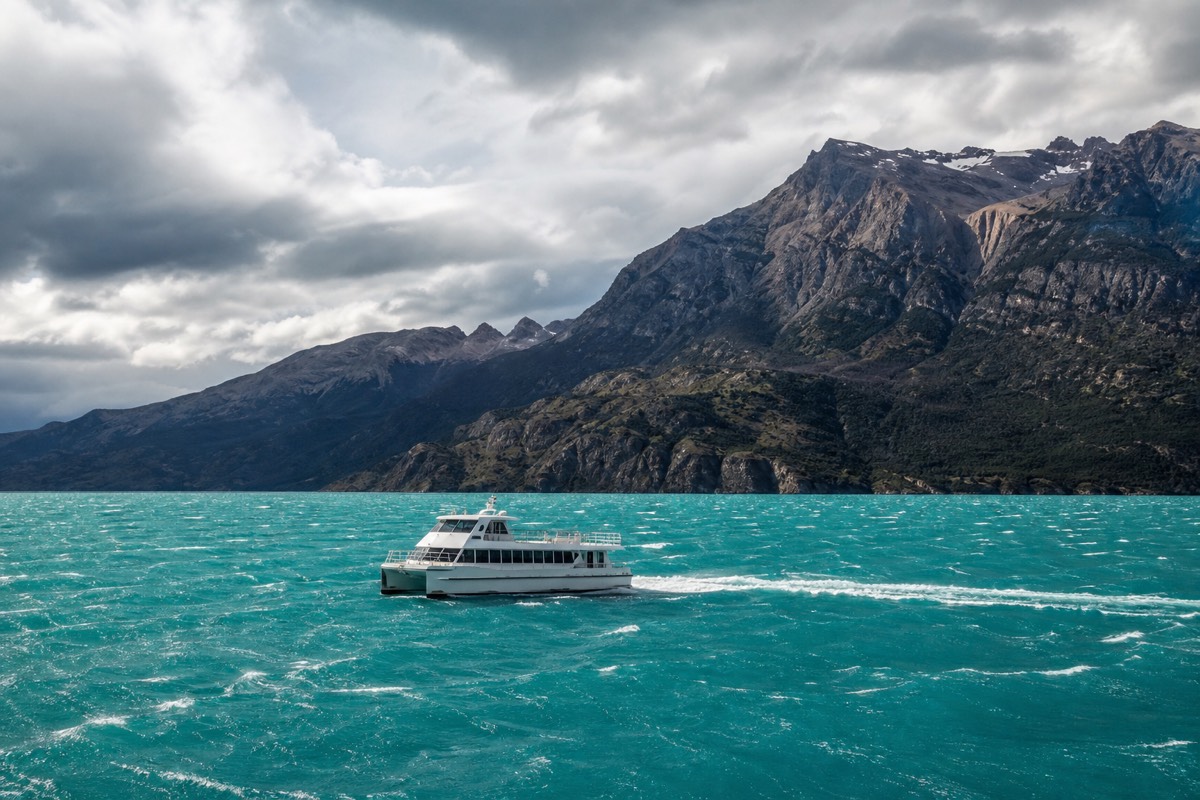
The ticket is bought in advance at the official park ticketing portal and it is date-locked, so a weather delay is money already spent. The Laguna Amarga shuttle to the Welcome Center costs 4,000 to 4,500 CLP and takes cash only, which is the single most commonly missed line in anyone's budget. Meals in the refugios are the item that breaks spreadsheets: published figures cluster around $25 for breakfast, $20 to $50 for a box lunch and $35 to $70 for dinner, with a full-board supplement often quoted near $100 a day.
| Line item | Published cost | Notes |
|---|---|---|
| Park entry, multi-day pass | 48,500 CLP, about $51 | Valid up to 10 consecutive days |
| Bus, Puerto Natales to the park | $20 to $29 one way | From the Terminal Rodoviario |
| Laguna Amarga shuttle | 4,000 to 4,500 CLP | Cash only, 7 km |
| Catamaran across Lake Pehoé | About 26,000 CLP, roughly $45 | 30 minutes, cancelled in high wind |
| Refugio dorm bed | $46 to $114 per person | Varies by sector and season |
| Own-tent pitch | $11 to $14 per person | Cheapest way to sleep on the route |
| Tent and bag rental in town | About $37 and $8 a day | Rental Natales published rates |
What do you actually get for the money?
About 80 km of walking, though published figures run from 60 to 85 km depending on which side trips are counted, with cumulative ascent given between 2,730 m and 3,480 m. Spread over four or five days that is three landscapes: the Ascencio valley and the towers, the French Valley amphitheatre, and the ice front at Grey.
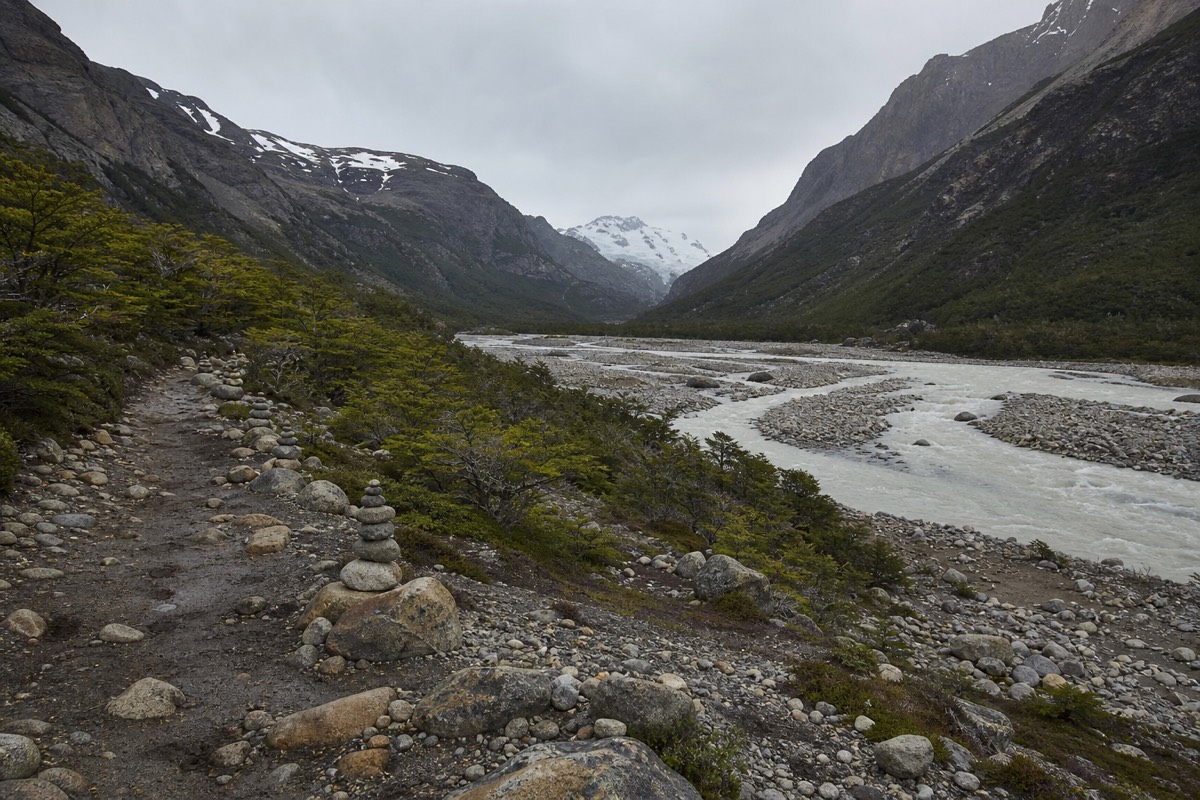
Those three things are genuinely different from each other, and that is the argument for the full route. A day tour gives you the massif from the road. The W gives you the inside of it: beech forest that turns copper in April, a hanging glacier that drops seracs across the valley while you eat lunch, and a lake with icebergs in it. The 5-day version walks each arm as a separate out-and-back, which is slower but easier on the legs. Our active five-day W is an independent trek with lodging and specified meals arranged; no guide or porter is included: the vouchers, meals, transfers and briefing are arranged, the trail is yours.
Is the guided version worth the premium?
It is if the booking is the part you dread. Two concessionaires run the accommodation and they book separately, Las Torres for Central, Chileno and Serón, Vertice for Paine Grande, Grey, Dickson and Los Perros, with park entry as a third booking. That three-system problem is what most guided packages are really selling.
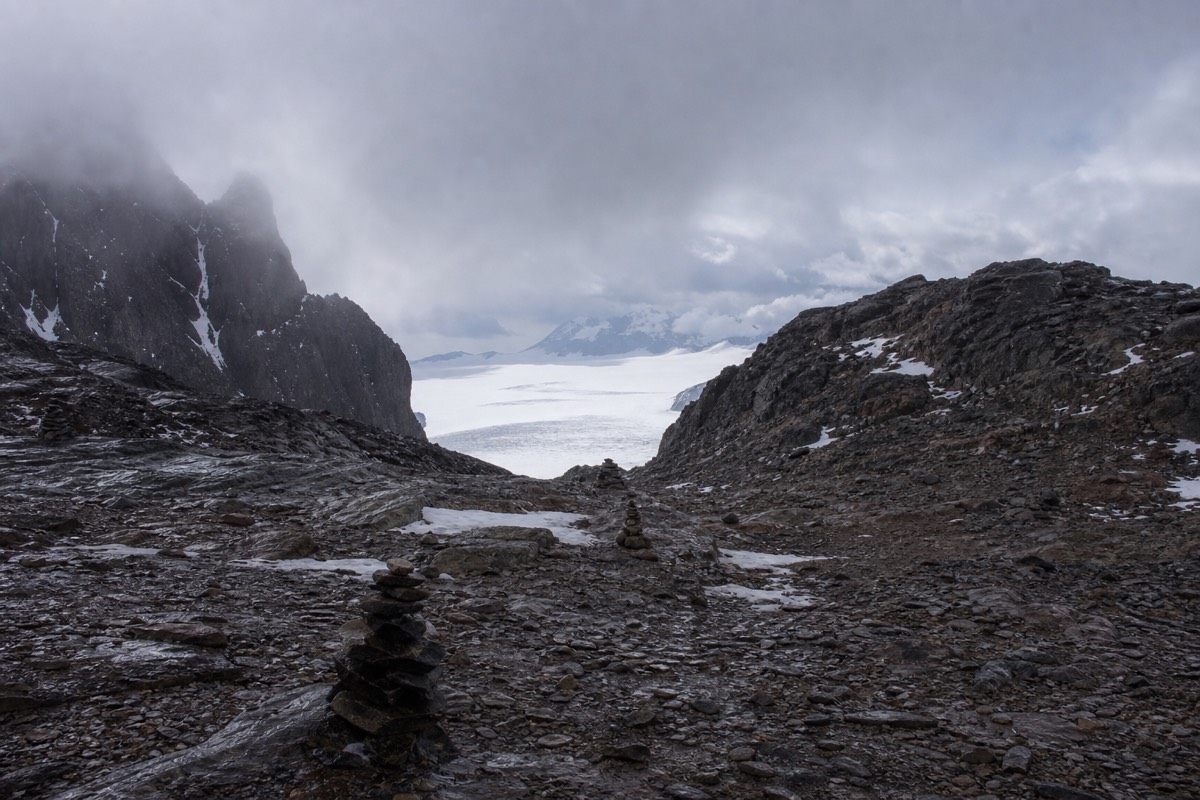
The calendar opens around April for the following season, and the Las Torres booking system sees Chileno go first, every year, followed by the December and January dates at the Vertice sectors. Miss that window and your itinerary gets designed by whatever beds are left, not by what you wanted to walk. A guided trip can combine some logistics, but inclusions and exclusions differ by itinerary and must be compared directly. It also removes the risk of walking a 20 km day in weather you have never met before with nobody to ask. Whether that is worth roughly a thousand dollars is a personal question, and we go through it properly in the guided against self-guided comparison.
Who should spend the money on something else?
Three groups. Anyone with fewer than five clear days in the region, anyone who has not walked 20 km in a day in the last year, and anyone whose real goal is photographs of the towers and the Cuernos rather than the walking itself. All three get better value from a day trip, a two-day express or a lodge-based stay.
The last group is bigger than people admit. If what you want is the massif in good light, the classic viewpoints are all roadside or close to it: Salto Grande is 1.5 km round trip from Pudeto, Mirador Cuernos is 4 km, Mirador Condor is 3 km with 200 m of ascent. A full-day circuit from Puerto Natales covers several road-accessible viewpoints with short walks; it is the lower-commitment option, though some walking and uneven access remain. A shorter itinerary can reduce lodging nights, but the legacy two-day product is not in the active verified registry; compare the active three-day guided format or a one-day circuit instead.
There is also the lodge answer. Staying at a property inside the park and walking out from it each morning costs more per night than a refugio, sometimes a great deal more, but it removes the pack, the booking chain and the shared bathroom. Hotel Las Torres publishes from $820 a night half-board for the 2025-26 season, which sounds enormous until you set it against a guided package divided by its nights.
Where does the W stop being worth it?
At the point where you are paying trekking prices for a walk you will not enjoy. The Base Torres day alone is 21 km with 1,041 m of ascent and 8 to 10 hours on your feet, and the final 45 minutes up the moraine is the part everyone remembers, not always fondly. Do that day badly and the remaining three feel like a sentence.
Fitness is the honest gate, not money, and we treat it separately in the fitness question for the W. The second gate is weather. November is the windiest month in the regional record at an average 32 to 37 kph, gusts of 60 to 100 kph are normal on summer afternoons, and the catamaran that connects the western arm simply does not sail when it blows hard. A W built with no spare day is a W with a single point of failure.
| Option | Published price | Days | Best for |
|---|---|---|---|
| Full-day tour from Puerto Natales | $139 | 1 | Viewpoints, no walking commitment |
| Two-day express with camping | $620 | 2 | Base Torres plus highlights, short trip |
| Three-day guided W alternative | $1,175 | 3 | All three W landscapes, fixed base camp |
| Five-day supported W | $1,905 | 5 | The full route, logistics handled |
So, is it worth the money?
Yes, if you have the days and the legs, and the four-day version is better value per dollar than the five for most people. No, if you are buying it because it is the famous thing to do in Patagonia. The park does not reward that purchase, and there are cheaper ways to see the same rock.
The middle answer is the three-day guided W alternative. It sleeps two nights at Camping Pehoé, so travellers carry day gear rather than moving camp, and covers Base Torres, French Valley and the Grey viewpoint. It is the W's content without the W's booking chain. If you want to see how the full route is structured before deciding, start with our route-by-route W Trek guide, then compare the numbers in the full cost breakdown for the W. Either way, the nine guided trips into Torres del Paine we list cover every version of this decision from one day to six.