What to Do If You Encounter a Puma in Patagonia?
Stop, stay calm, back away facing the animal and never play dead. The full sequence, in the order it matters, before anything else.
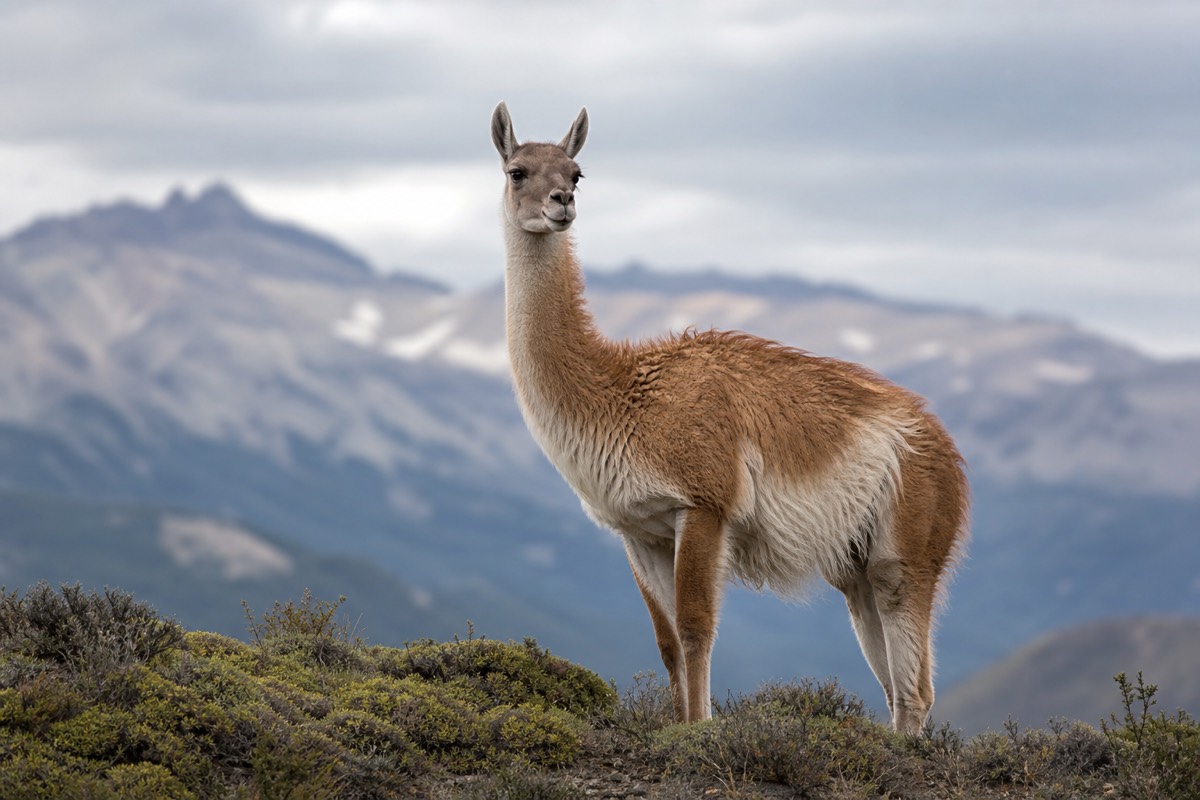
Stop. Stay calm, do not run and do not approach. Back away slowly while facing the animal and keeping eye contact, make yourself look bigger by raising your arms or opening your jacket, and speak firmly. Pick small children up without bending down or turning away. Never play dead. That sequence is the whole answer.
Memorize the response first. A wildlife tour is a separate choice for intentional observation and should never be framed as protection from an already rare encounter.
Booking Choice: Stop, face the puma, back away slowly, look larger and never run or play dead. Choose a tracking safari only if seeing wildlife deliberately is part of the trip. Explore Puma Tracking Safari in Torres del Paine
It is also guidance almost nobody in Torres del Paine ever has to use. Pumas here avoid people, hunt at dawn and dusk, and have enough guanaco on the eastern steppe that a walker is of no interest to them. Learn the sequence anyway, in the same spirit as knowing where the exits are on a plane.
What do you do the moment you see a puma?
Stop moving. Standing still and staying calm is the first instruction in every version of this guidance, from the park authority and from the operators who work in the sector. Do not run, do not approach, and do not turn your back. Everything else in the sequence follows from holding still long enough to think.
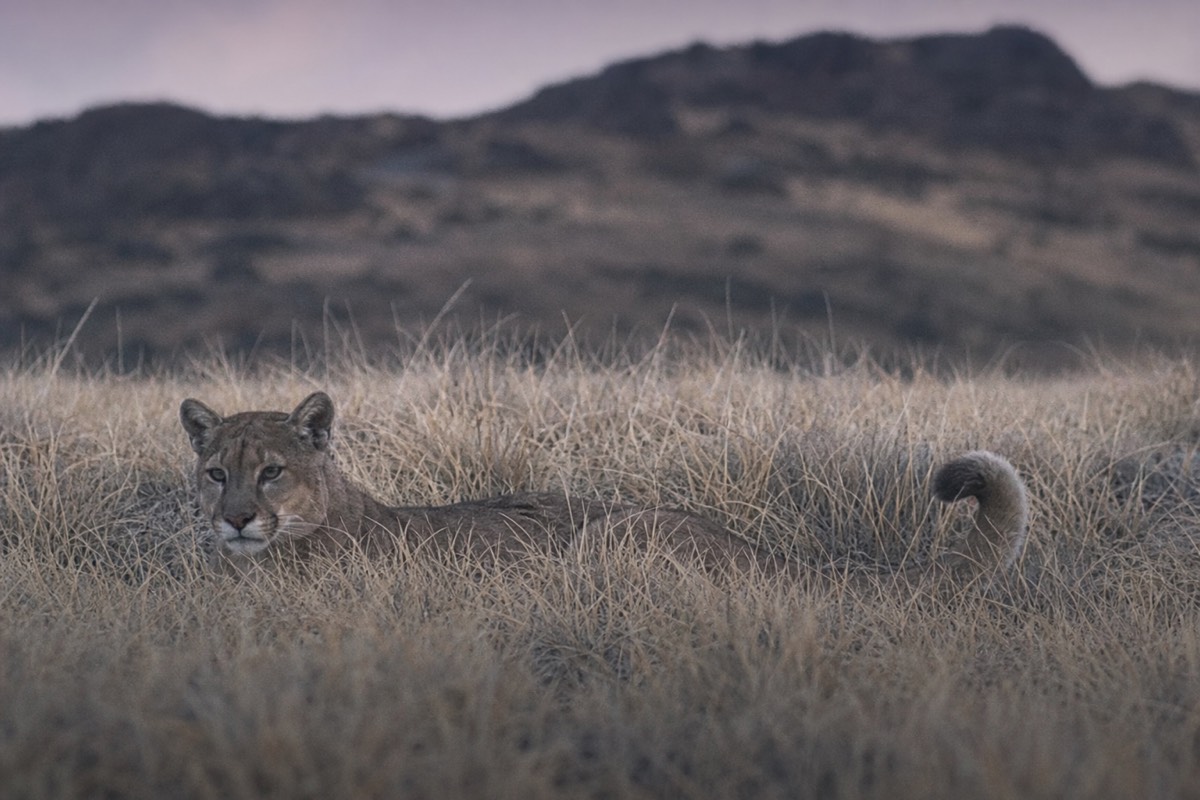
Running is the single worst reaction because it triggers a chase response in a predator that is faster than you over any distance. Approaching for a photograph is the second worst, and it is the mistake visitors are far more likely to make. A puma that sees you at fifty metres and holds position is not stalking you; it is deciding whether you are a problem. Give it the space to conclude that you are not.
| Step | What to do | Why |
|---|---|---|
| 1 | Stop and stay calm | Sudden movement is what escalates the situation |
| 2 | Do not run | Running triggers a chase response |
| 3 | Do not approach | Closing distance removes the animal's escape route |
| 4 | Face the animal and keep eye contact | A facing human reads as a threat, not as prey |
| 5 | Raise your arms or open your jacket | Looking bigger is the strongest deterrent you have |
| 6 | Speak firmly | Voice identifies you as human at distance |
| 7 | Back away slowly, still facing it | Retreat without turning away |
| 8 | Pick children up without bending or turning | Small, low, fast-moving shapes are the risk factor |
What should you never do?
Never run, never turn your back, never crouch or bend down, and never play dead. Playing dead is advice for a different animal on a different continent and it is actively dangerous here. Do not corner the animal, do not get between an adult and cubs, and do not try to move closer for a photograph.
The bending rule is the one people forget under pressure. Reaching down to a child, a dropped camera or a pack makes you shorter and puts your neck forward, which is exactly the shape the guidance is designed to avoid. Lift a child straight up, without leaning over and without taking your eyes off the animal. If you are carrying a pack, keep it on: bulk is on your side.
How likely is a puma encounter, really?
Very unlikely on a normal visit. Torres del Paine holds the densest known puma population on record, somewhere between 50 and 200 animals, and still the great majority of the 367,426 people who visited in 2024 never saw one. Sightings are concentrated at dawn and dusk in the open eastern sector.
Pumas are crepuscular, so the hours when most visitors are on the trail are the hours pumas are least active. Sightings cluster around the Laguna Amarga sector and the estancias just outside the boundary, which is open steppe where an animal can be spotted at distance from a vehicle. If your goal is to see one rather than avoid one, compare the active tracking trips by duration, pickup and group format, and treat every sighting as unguaranteed. On a standard day walk from a bus, the realistic wildlife you will meet is guanaco, foxes and condors, all covered in the park wildlife guide.
What do the park's own rules require of you?
Stay on marked trails, camp only in designated reserved sites, pack out all rubbish, and register at control points on the Base Torres and W routes. No fires, no camp stoves outside designated cooking areas and no smoking anywhere, under Chilean law 20.653.
Those rules do more for wildlife safety than any encounter technique. Staying on the trail keeps you predictable to animals that have learned where people go. Registering at control points means someone knows you are out there. And the fire rule is the strictest thing in the park for good reason: penalties run to fines of up to 2 million CLP, up to three years in prison and expulsion, after visitor-started fires in 1985, 2005 and 2011-12, the last of which burned a large part of the eastern park.
| Rule | What it means in practice |
|---|---|
| Stay on marked trails | No shortcuts across the steppe, no off-trail photography approaches |
| Camp only in reserved designated sites | Wild camping is not permitted anywhere in the park |
| Register at control points | Applies on the Base Torres and W routes |
| Pack out all rubbish | Food waste is what teaches foxes to approach people |
| No fires, stoves outside cooking areas, or smoking | Fines to 2 million CLP, up to three years in prison, expulsion |
Does walking with a guide change anything?
It changes who is watching. Guides can interpret tracks and wildlife behaviour, but the underlying risk is already very low and every visitor should still know the standard response.
That is also why the park requires an authorised guide on the Base Torres trail from 27 April to 30 August 2026: winter conditions, not wildlife. Guided groups carry the same benefit year-round. A guided full day in the park runs with a bilingual guide and a maximum of 22 travellers, while the four day guided experience caps groups at 15. Both are listed with the guided trips we sell.
What is actually more dangerous in Torres del Paine?
The weather, the wind and your own itinerary. Everyday summer gusts of 60 to 100 kph are normal in the park and regional sources have reported gusts up to about 193 kph. Underestimating the Base Torres day, 21 km with 1,041 m of ascent and 8 to 10 hours on foot, hurts far more visitors than any animal.
Take the wind seriously on exposed ground, carry more layers than the forecast suggests, and be honest about what your group can walk. The Base Torres trail breakdown gives the real timings, and the record on puma attacks puts the animal risk in proportion. The park authority publishes current conditions and closures at CONAF's Torres del Paine page, and puma behaviour is documented by Panthera's puma programme.