What Is the Biggest Predator in Patagonia?
The puma, and it is not close. Here are the real size figures, the runners-up, and why there are no jaguars or bears here at all.
The puma. It is the largest land predator in Patagonia and has no rivals for the title: adult males average around 76 kg, animals over 100 kg have been recorded, and total length for a male runs 1.8 to 2.7 m. There are no jaguars and no bears anywhere in Chilean or Argentine Patagonia.
That last sentence is what most people are actually asking. The question usually arrives shaped by North American or Amazonian assumptions, and the answer is simpler than expected. Patagonia's predator list is short, the largest member of it is a cat that avoids people, and the biggest flying predator is a scavenger with a three metre wingspan that will never come near you.
How big does a Patagonian puma actually get?
Adult males average about 76 kg with animals over 100 kg recorded, and females average around 48 kg. Total length for a male runs 1.8 to 2.7 m including the tail. That makes the puma the fourth largest cat in the world by weight and the largest predator on land anywhere in Patagonia.
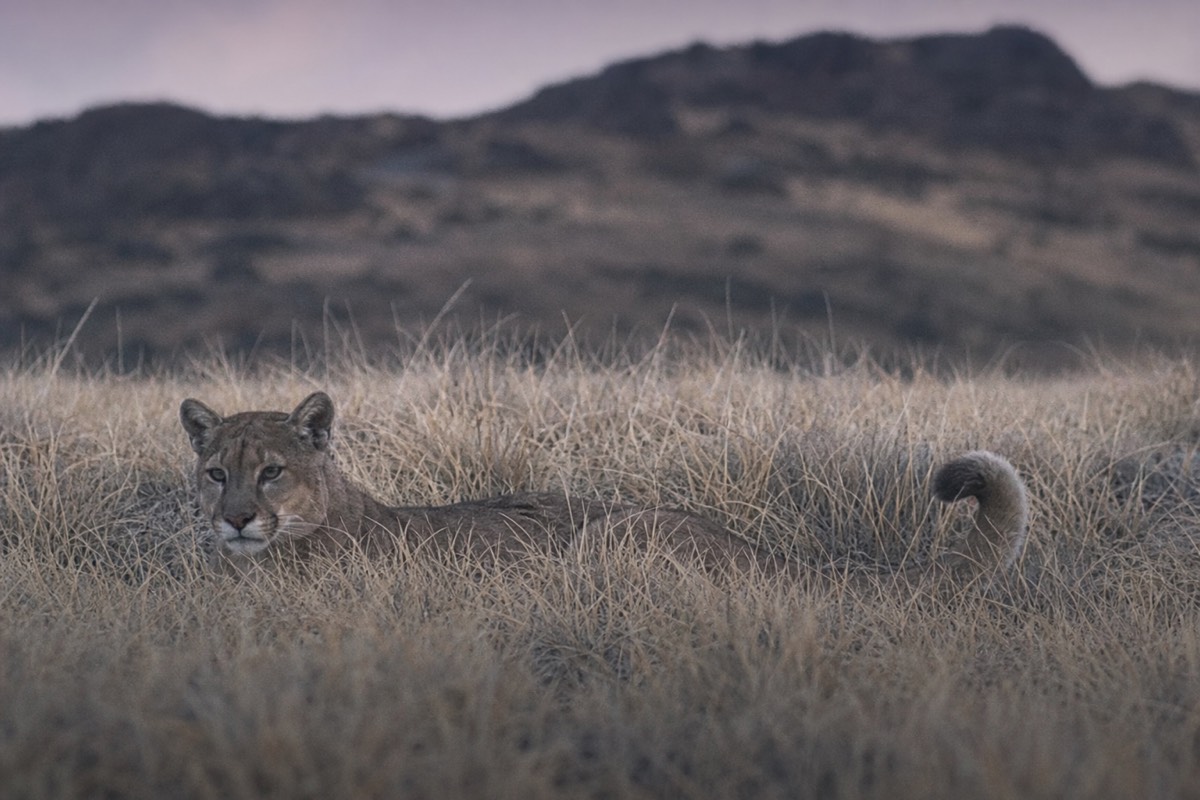
Size is only half the story. What distinguishes the Torres del Paine population is density rather than dimensions. The 1999 Franklin study in Biological Conservation recorded a minimum of 2.5 adult pumas per 100 km2 across a 200 km2 study area inside the park, roughly one animal per 17 km2, and researchers describe that as at least double any other known puma population. Estimates of the total park population vary between 50 and 200 animals, which is a wide enough range that nobody should quote a single figure as settled.
| Puma measurement | Published figure |
|---|---|
| Adult male, average weight | around 76 kg |
| Heaviest recorded animals | over 100 kg |
| Adult female, average weight | around 48 kg |
| Total length, males | 1.8 to 2.7 m |
| Density inside the park | 2.5 adults per 100 km2 (1999 study, 200 km2 area) |
| Park population estimate | 50 to 200, sources disagree |
Are there jaguars or bears in Patagonia?
No. There are no jaguars and no bears in Chilean or Argentine Patagonia, and there is no large canid predator either. The complete predator list is the puma, the culpeo fox, the chilla or grey fox, and Geoffroy's cat, with the Andean condor as the largest bird of prey.
Jaguars live far to the north, in tropical and subtropical South America. Bears are absent from the continent's southern cone entirely; the only South American bear is the spectacled bear of the northern Andes, thousands of kilometres away. Nothing in Torres del Paine will treat a walker as prey, and no part of the standard packing list for the park exists because of an animal. That is worth saying plainly, because the fear people bring to Patagonia is usually imported from somewhere else.
What is the largest bird of prey in Patagonia?
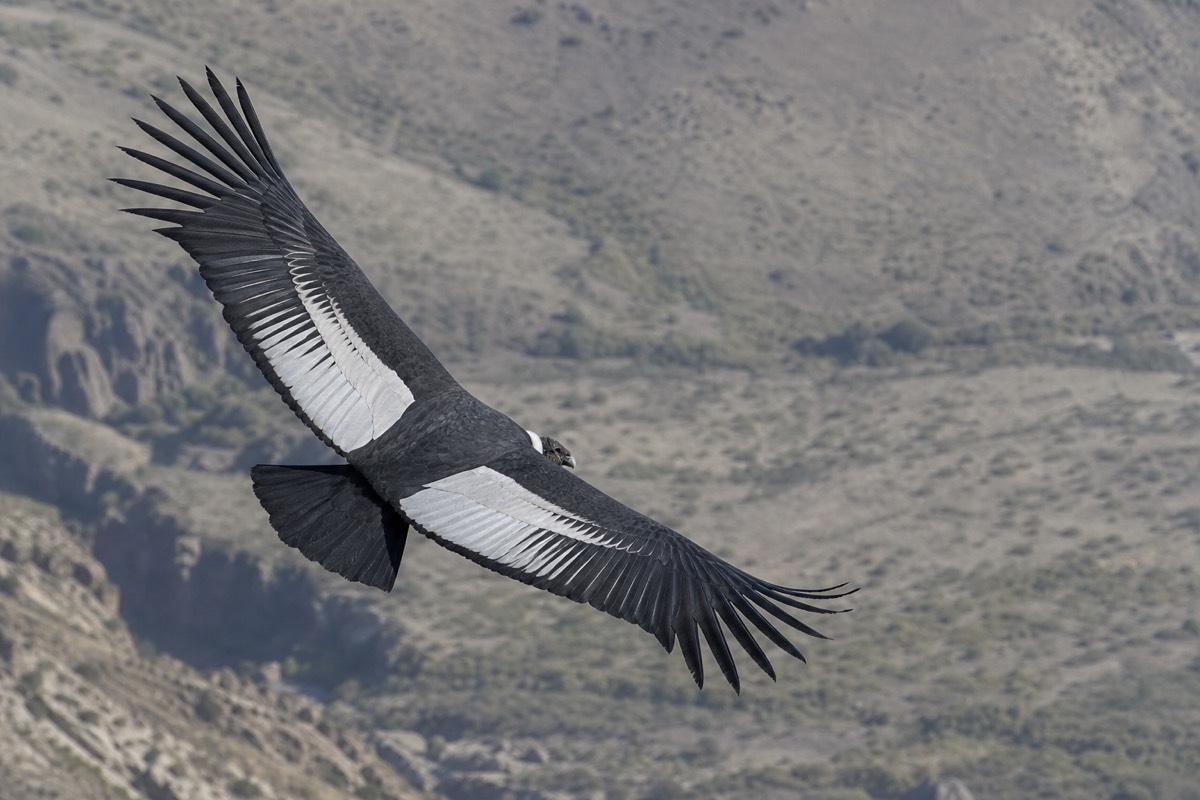
The Andean condor, with a wingspan of around 3 m. It is the largest bird of prey in Patagonia by a wide margin and one of the largest flying birds anywhere. It is a scavenger rather than a hunter, feeding mainly on carrion, and it is the animal visitors most reliably see overhead in the park.

Condors ride the thermals and updraughts along the massif, which is why the short Mirador Condor walk near Pudeto is named for them: 3 km out and back, about 200 m of ascent, an hour and a half. Look for the finger-like primary feathers at the wingtips and the pale ruff on adults. Guanaco carcasses left by pumas are a large part of what keeps them fed, so the two species are more connected than they look. Our wildlife guide covers what else you can realistically expect to see.
What are the other predators in Patagonia?
Two foxes and one small cat. The culpeo and the chilla, also called the grey fox, are both seen regularly on the steppe and around car parks and campsites. Geoffroy's cat is present but small and secretive, and most visitors will never see one in a lifetime of trips.
Foxes are the predator you are most likely to meet at close range, usually because someone has fed one. Do not. A fox that associates people with food stops hunting, becomes a nuisance at campsites, and eventually becomes a problem the park has to solve. The same logic runs through every CONAF rule in Torres del Paine, from staying on marked trails to packing out all rubbish.
| Predator | What it is | Realistic chance of seeing one |
|---|---|---|
| Puma | Largest land predator in Patagonia | Low on a day visit; dawn and dusk only, on dedicated tracking trips |
| Andean condor | Largest bird of prey, wingspan around 3 m | Good, overhead along the massif and ridgelines |
| Culpeo fox | The larger of the two Patagonian foxes | Good on the eastern steppe and near roadsides |
| Chilla or grey fox | The smaller fox | Reasonable, often near campsites |
| Geoffroy's cat | Small wild cat | Very low, effectively never on a normal visit |
Why does Torres del Paine hold so many pumas?
Prey and protection. The park's guanaco population is commonly cited at around 3,000 animals on an older estimate, they graze the open eastern steppe where they are easy to hunt, and pumas have not been hunted inside the park boundary for decades. That combination produces the highest puma density anyone has measured.
The geography helps too. Sightings cluster around the Laguna Amarga sector and the estancias just outside the park boundary, where the ground is open and a cat crossing it can be seen from a vehicle at distance. That is why dedicated puma tracking operates there and not in the forested western valleys. Published day-trip prices for tracking start around $841 per person, and no operator's success rate has been independently verified, so treat any percentage you are quoted as marketing.
Recommended tours
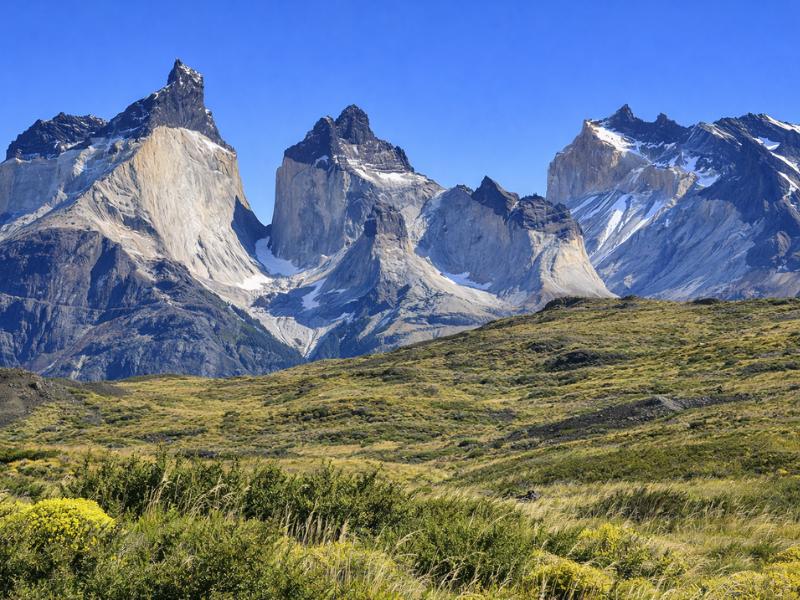
Torres del Paine Full-Day Adventure Tour from Puerto Natales
Pickup in Puerto Natales and a guided circuit of the main eastern viewpoints, with the drive and park entry organised for you.
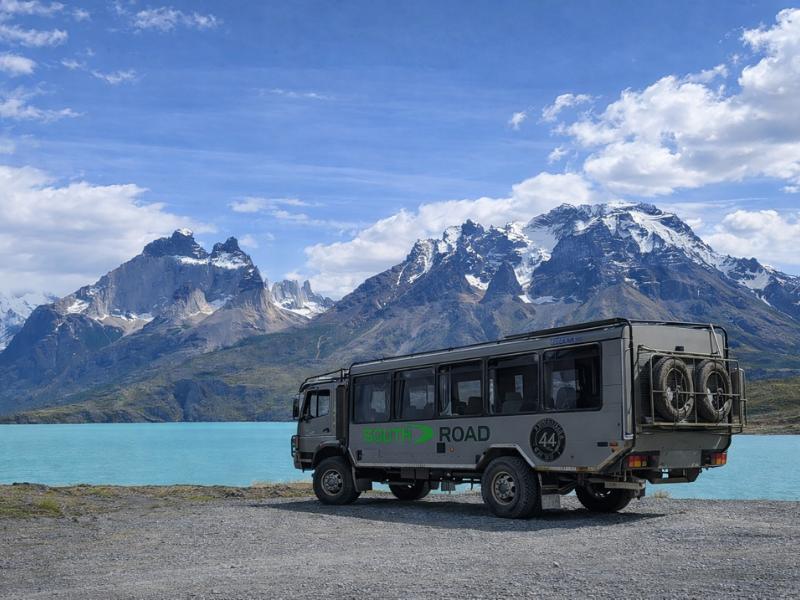
Torres del Paine Full-Day Overland 4×4 Expedition from El Calafate
A full day from El Calafate in an overland truck, using a shorter unpaved route into the park, with walks to Lake Pehoé and Lake Nordenskjöld.
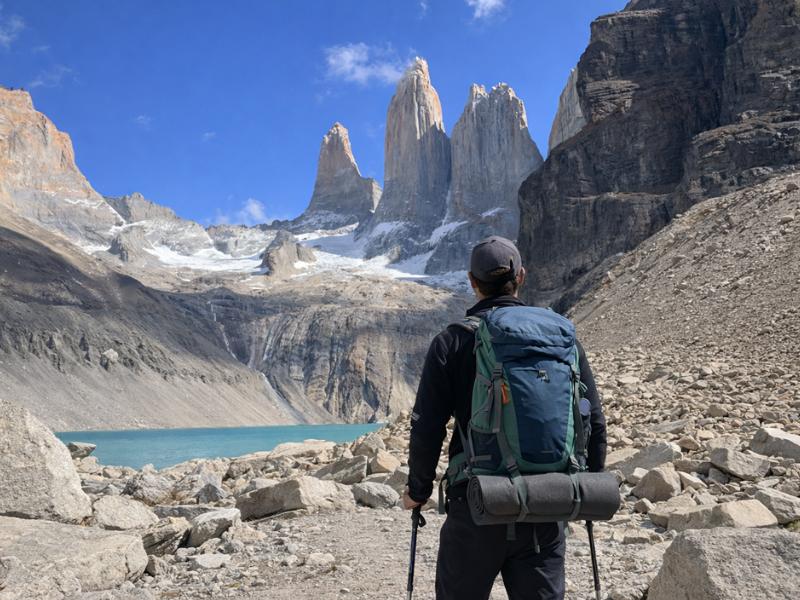
Torres del Paine 2-Day Express Tour – Aventura & Highlights
A two-day tour of the park highlights, departing Puerto Natales, for travellers who want more time than a single day trip.
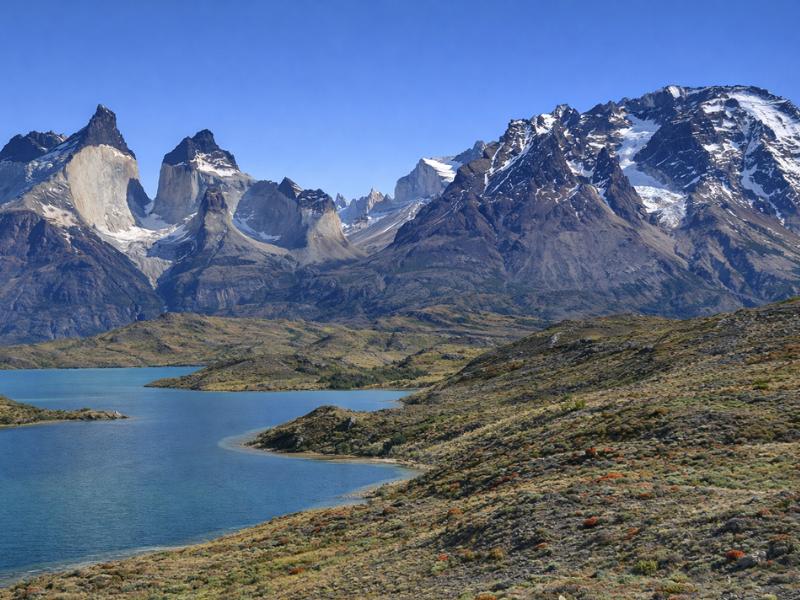
4-Day Torres del Paine Experience – Departing Puerto Natales
Four days from Puerto Natales with hotel stays, included breakfasts and lunches, time in the park, and a cruise to the Balmaceda and Serrano glaciers.
Is any of this a reason to worry on the trail?
No. Attacks are extremely rare, and there is no record of a fatal puma attack on a visitor inside Torres del Paine. The park received 367,426 visitors in 2024 against a resident puma population somewhere between 50 and 200 animals that spend their lives avoiding people.
The sensible position is preparation without anxiety. Know the standard guidance before you walk, which we set out step by step in what to do if you encounter a puma, and read the actual incident record in have there been any puma attacks in Patagonia. Then spend your worry on the wind and the weather instead, because those are what genuinely shorten days here. If you want the wildlife side of the park without organising it yourself, the full day tour across the eastern steppe takes in Laguna Amarga and the Sarmiento viewpoint where guanaco herds and flamingos are routine, and the overland 4x4 day from El Calafate does the same from the Argentine side. All of it is listed on the tours page. Background on puma biology is kept up to date by the Panthera puma programme, and park rules come from CONAF, the park authority.