Pumas in Torres del Paine: The Research, the Odds and the Rules
The park holds the densest recorded puma population anywhere, and most visitors still never see one. Here is why, and what you will see instead.
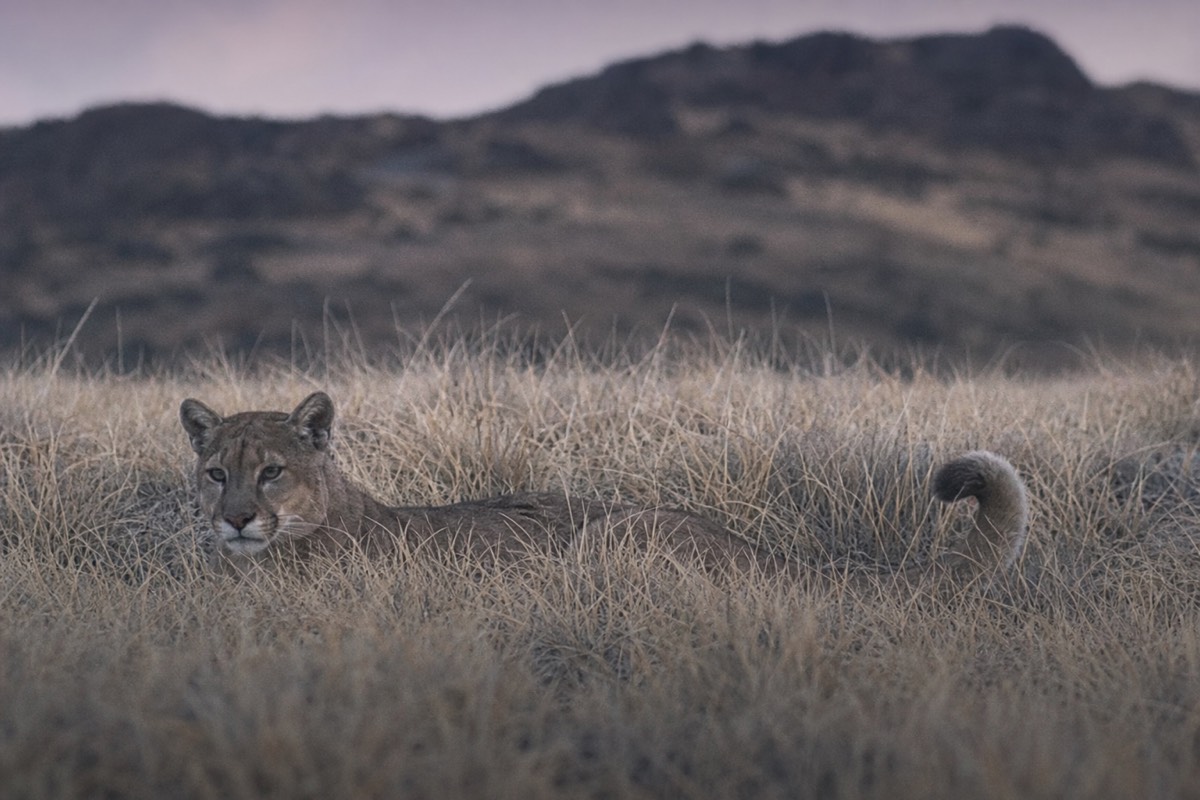
One adult puma for every 17 square kilometres. That is the density Franklin and colleagues recorded inside a 200 square kilometre study area in Torres del Paine and published in Biological Conservation in 1999: a minimum of 2.5 adult pumas per 100 square kilometres. Researchers have since described this population as at least twice as dense as any other known puma population anywhere. That single line is why wildlife photographers fly to the bottom of Chile.
It is also why this page will disappoint a few readers. We do not sell puma tracking. The trips we list are day tours, treks and glacier sailings, and a puma on any of them is luck rather than an itinerary. What follows is the version we would want to read first: what the research really says, what a tracking day costs from the specialists who run it, why nobody can honestly promise you an animal, and what you will actually see on a normal day inside the park.
What a wildlife day costs, published prices
Puma tracking is sold by specialist operators, not by us; the other four are tours we list, and every one of these prices moves, so check the live listing.
Is it common to see pumas in Torres del Paine?
Common for pumas, uncommon for people. The park holds the densest recorded population of the species anywhere, and most of the 367,426 visitors CONAF counted in 2024 still went home without seeing one. Sightings cluster at dawn and dusk, on the eastern steppe, and usually involve somebody whose job that morning was to look. The gap between those two facts is the whole story of puma watching here.
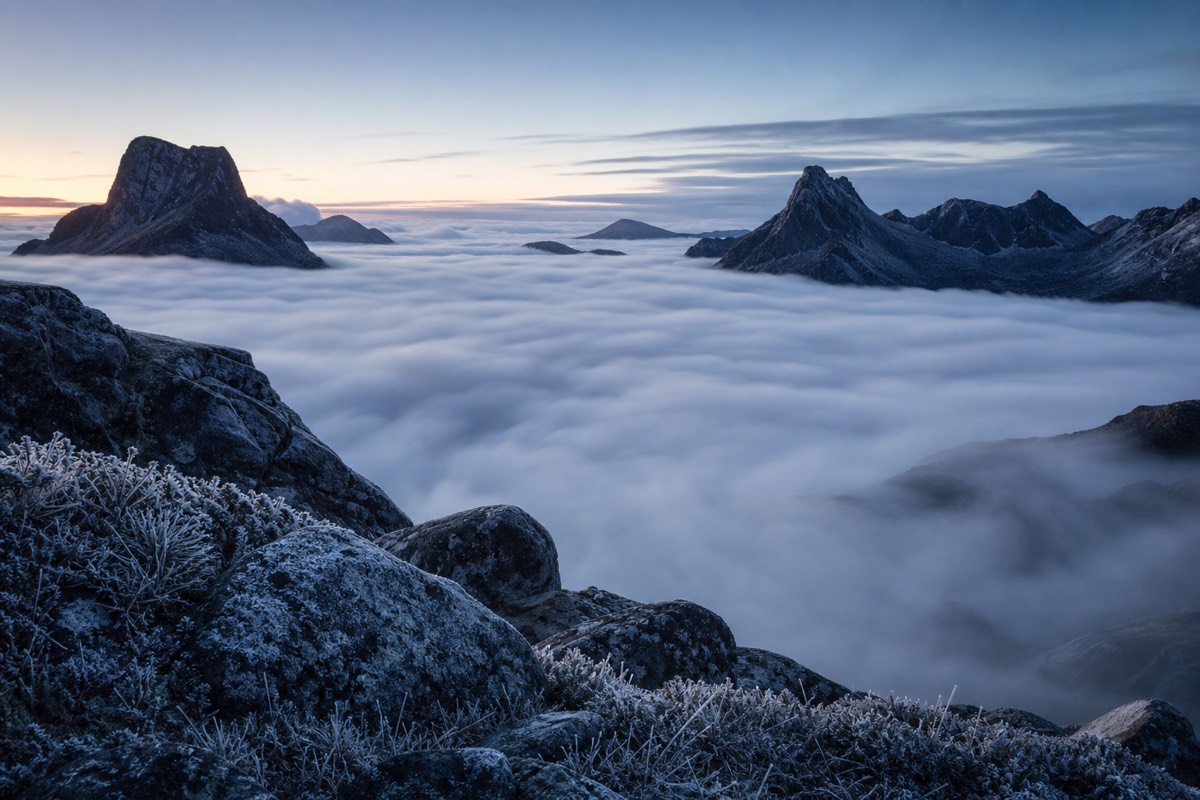
Density is not visibility. A cat at one animal per 17 square kilometres is still solitary, superbly camouflaged against tan grass, and active in the low light at either end of the day. The standard day trip leaves Puerto Natales around 07:00 and is back by early evening, which puts it inside the park through the middle of the day, exactly when a puma is lying up in scrub you cannot see into from a road.
The people who do see pumas are working differently. They are out before the light, they stay in a small number of known sectors on the eastern side, and they have spotters. Even then nothing is owed to them. Weather closes in, the guanaco herds shift, and the day ends with cold hands and no cat. That is a normal outcome rather than a failed trip, and any operator worth paying says so before you book. If your interest is really in seeing animals rather than one particular animal, what else lives in the park is a far better place to set your expectations.
How many pumas live in Torres del Paine?
Nobody publishes a settled figure. Recent estimates of the park population run between 50 and 200 animals, a range wide enough to tell you how hard the counting is. The one hard number in the literature is the 1999 density measurement: 2.5 adult pumas per 100 square kilometres, roughly one per 17 square kilometres, in a 200 square kilometre study area. Treat any site quoting a precise park total as guessing.
Counting solitary cats across 227,298 hectares is genuinely difficult. Animals cross the park boundary onto neighbouring land, individuals are identified by facial markings and scars rather than tags, and the study area that produced the famous density figure covered less than a tenth of the park. Scaling a density from one sector to the whole massif is exactly the kind of arithmetic that produces a 50 to 200 spread.
| Figure | What it actually is | How solid |
|---|---|---|
| 2.5 adult pumas per 100 km2 | Minimum density, Franklin et al. 1999, 200 km2 study area | Published, peer reviewed, but local to that study area |
| One adult per 17 km2 | The same 1999 density expressed per animal | Same source, same limits |
| 50 to 200 in the park | Range of recent population estimates | An honest range, not a census |
| At least twice any other known population | How researchers describe the density | A comparison, not a count |
| Around 3,000 guanacos in the park | The main prey base, an older estimate | Approximate, quoted widely, treat as dated |
The comparison matters more than the total. Whether there are 60 pumas or 180, the reason this place is famous is that the animals here are concentrated, they hunt in daylight more often than pumas elsewhere, and they are the region's apex predator with nothing above them. That last point is covered properly in our short answer on the largest predator in Patagonia.
Why is the puma density here the highest recorded anywhere?
Prey and protection. The park carries a large guanaco population, commonly put at around 3,000 animals in an older estimate, spread across open steppe where a cat can stalk. Inside a national park established in 1959 and a UNESCO Biosphere Reserve since 1978, those cats are not persecuted. Outside the boundary the relationship with sheep country is a different one. Put a dense, visible, predictable food supply on protected ground and you get exactly this.
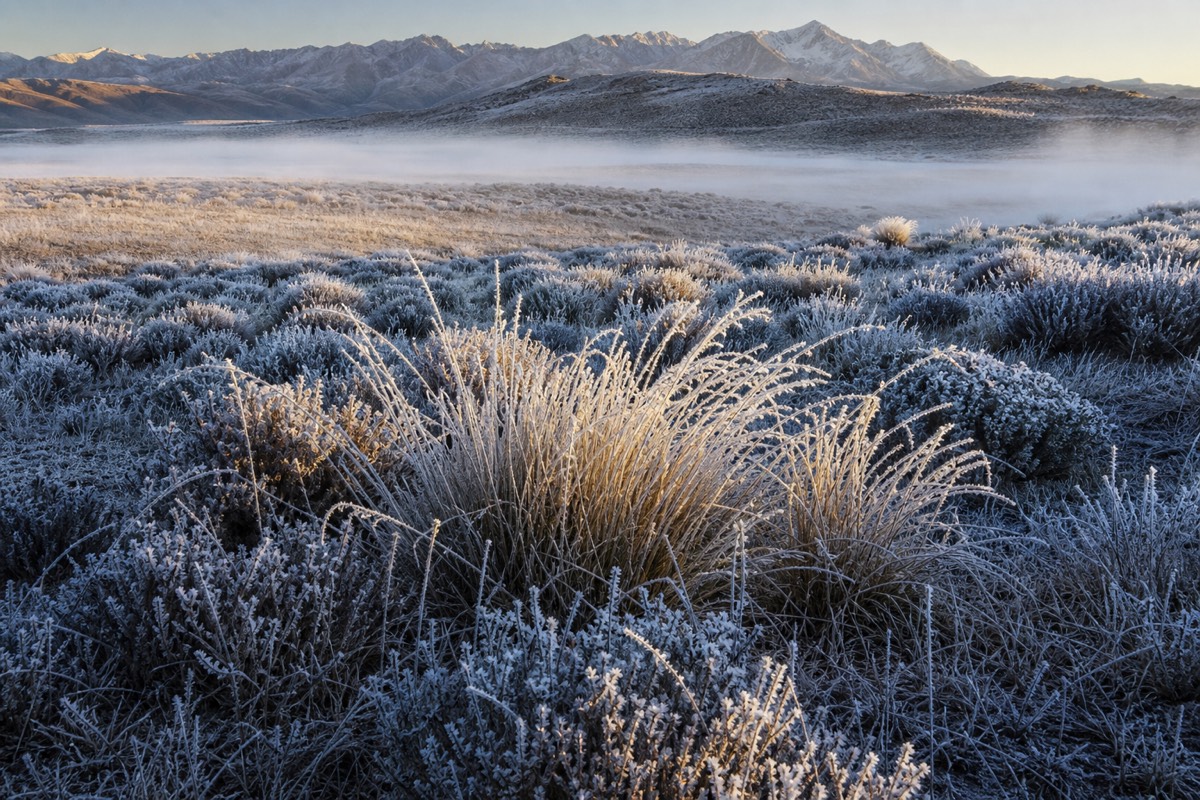
Guanacos are the engine of the whole system. They graze the eastern steppe in herds, they are large enough to be worth a puma's effort, and they use the same open ground season after season. That predictability is what allows trackers to work a handful of sectors rather than the whole 227,298 hectares. Park background, including the reserve designations and the geology that shaped the steppe, is set out on the park's background page.
The animal itself is bigger than most visitors expect. Males average around 76 kg with individuals over 100 kg recorded, and total length for a male runs 1.8 to 2.7 metres including the tail. Females are markedly smaller, averaging around 48 kg. General biology and conservation context for the species sits with the wild cat conservation group Panthera.
| Measurement | Male | Female |
|---|---|---|
| Average weight | Around 76 kg | Around 48 kg |
| Heaviest recorded | Over 100 kg | Not separately published |
| Total length including tail | 1.8 to 2.7 m | Not separately published |
| Main prey in this park | Guanaco | Guanaco |
How likely is it to see a puma in Patagonia?
On a standard day tour, unlikely. On a dedicated multi-day tracking trip with spotters working the eastern sectors at dawn and dusk, far better, though no operator can put a verified figure on it. The honest framing is that your odds are set by how many low-light hours you spend in the right sector, not by luck alone. Everything else follows from that.
A bus tour spends its useful hours between mid-morning and late afternoon and covers a lot of ground. That is the right shape for glaciers, lakes and viewpoints, and the wrong shape for a crepuscular predator. A tracking trip inverts it: fewer kilometres, more waiting, all of it either side of first and last light, repeated over several days so a bad weather morning does not sink the whole trip.
The other variable is season. Long summer days push sunrise towards 05:00 in late December, which means the good light arrives before the gates open at 07:00 unless you are sleeping inside the park. Shorter shoulder-season days put dawn at a civilised hour and cut the wind, which is why March and April read better on paper than the headline summer months. Our month by month case for when to come works through that trade in full.
| How you visit | Hours in the park | What the day is built around | Realistic puma odds |
|---|---|---|---|
| Full-day bus tour from Puerto Natales | Roughly 07:00 to 18:00 | Viewpoints, lakes, Salto Grande, Milodón Cave | Low, and never the plan |
| Guided Base Torres day hike | 06:30 pickup, back 20:00 to 21:00 | One trail, 20 to 21 km, forest and moraine | Low, wrong habitat for most of it |
| Multi-day trek on the W | Several days, mostly forest and lake shore | Distance and refugio bookings | Low, though sightings happen |
| Self-drive with early and late starts | Whatever the gate hours allow | Your own timing on the eastern roads | Better than any tour, still unpredictable |
| Dedicated tracking trip with spotters | Dawn and dusk blocks, repeated | Finding one species | The best there is, and still not promised |
When and where do sightings actually happen?
At dawn and dusk, on the dry eastern side of the park, in and around the Laguna Amarga sector and the estancias immediately outside the boundary. That is where the guanaco herds graze open ground, and where trackers concentrate. The wet western sectors around Grey and Paine Grande are forest and ice, and are not where this happens. Time of day matters as much as place.
Gate hours are the practical constraint nobody warns you about. In high season, October to April, the porterías run 07:00 to 21:00, and in low season 08:00 to 18:30. In late December the sun is up around 05:00 and does not set until close to 22:00, so a visitor coming in from Puerto Natales cannot legally be in the park for the first two hours of light. Anyone sleeping inside the park or on an estancia just outside it can be, and that is a large part of what a tracking package is buying you.
The eastern approach also happens to be the one every bus uses, since Laguna Amarga is the main gate and sits 112 km from Puerto Natales, a drive of two to three hours. That is covered in detail in our guide to the routes into the park, and the light and wind side of the same question in the month by month weather record.
| Sector | Terrain | Why it matters for pumas | Best window |
|---|---|---|---|
| Laguna Amarga and the eastern steppe | Open grass, low scrub, ridgelines | Guanaco herds, long sightlines, the classic tracking ground | First and last light |
| Estancias just outside the boundary | Sheep and grazing country | Same prey, and access before the park gates open | Pre-dawn |
| Lago Sarmiento shoreline | Steppe running down to the lake | Guanacos on the flats, calcareous shore terraces | Early morning |
| Lake Nordenskjöld and Pehoé road | Mixed scrub and viewpoint stops | Foxes and birds are realistic, pumas are not the point | Any daylight hour |
| Grey, Paine Grande, French Valley | Beech forest, moraine, ice | Wetter, enclosed, poor sightlines | Not a tracking sector |
What does a puma tracking day involve, and what does it cost?
Published day-trip prices start at around $841 per person with Far South Expeditions, and multi-day packages run into the thousands. That buys pre-dawn access, a spotter network and repeated attempts, which is what actually moves the odds. It does not buy a guaranteed sighting, and we do not sell these trips. Compare that against $99 for a guided Base Torres day and $139 for the full-day park circuit and the pricing makes sense: you are paying for time and specialists rather than distance.
The shape of a tracking day is set by the animal. Out before first light, into a sector, then long periods of glassing ridgelines and waiting on radio calls from other spotters. It is slow, it is cold, and the good moments are short. Multi-day packages exist because a single morning is a coin flip and three or four mornings are a plan. If the idea of standing still in Patagonian wind for hours does not appeal, this is not the trip for you and there is no shame in the day tours.
Costs also stack differently from a normal park day. Park entry is a separate purchase at 34,000 CLP for a foreign adult on a single day or 48,500 CLP for the multi-day ticket, bought in advance at the official park ticketing portal, and tracking operations working the estancias outside the boundary have their own access arrangements. Our breakdown of what the park charges and when covers the ticket side.
| What you get | Tracking day, from about $841 | Full-day adventure tour, $139 | Base Torres day trip, $99 |
|---|---|---|---|
| Sold by us | No, specialist operators only | Yes | Yes |
| Start time | Before first light | Pickup around 07:00 | Pickup 06:30 to 07:00 |
| Guide | Specialist trackers and spotters | Bilingual guide | Bilingual guide plus assistant, 1:6 in summer |
| Park entrance fee | Check the operator, usually extra | Not included | Not included |
| Food | Check the operator | Snacks and water, box lunch is a paid add-on | Not included |
| Gear | Bring optics, bring layers | Air-conditioned minibus, seat insurance | Trekking poles, crampons when there is ice |
Why can no operator prove a success rate?
Recommended tours by season
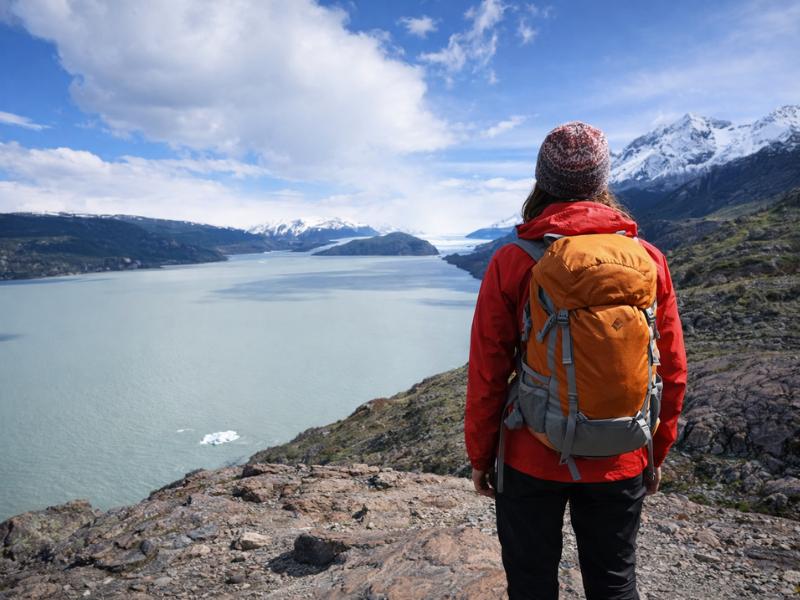
5-Day Torres del Paine W Trek – Guided Patagonia Adventure
A guided five-day walk on the W. Suited to the long-day months, when you want full days on the trail rather than a single park circuit.
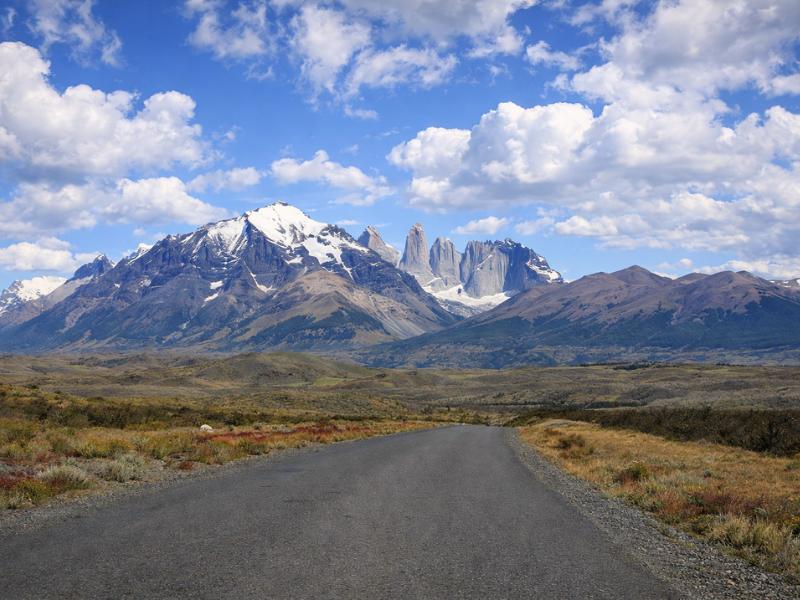
6-Day Self-Drive Torres del Paine National Park Adventure
A week with your own vehicle. Useful in the shoulder months if you want to set each day’s start and finish yourself.
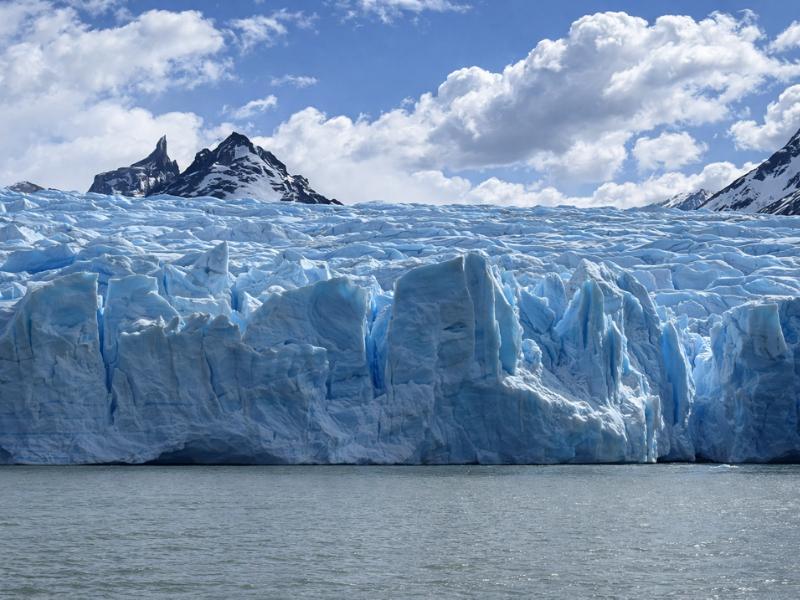
Torres del Paine: 3-Hour Grey Glacier Scenic Cruise
Three hours on Grey Lake. A short outing when you do not want a full trail day.
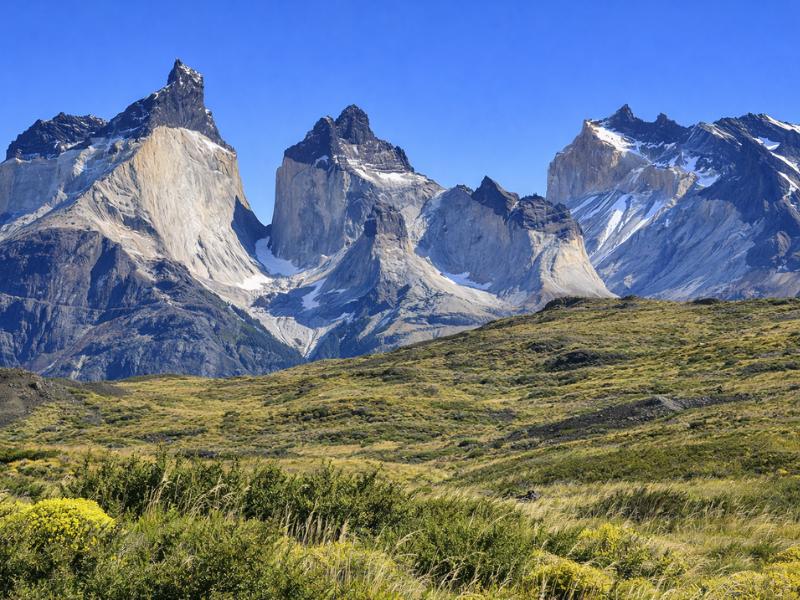
Torres del Paine Full-Day Adventure Tour from Puerto Natales
The standard circuit from Puerto Natales, with the steppe and lake stops on one organised day.
Because nobody audits the denominator. A success rate needs a counted number of departures and a counted number of sightings, verified by somebody with no stake in the answer. No such record is published for puma tracking in Patagonia, so any percentage you read is a marketing figure. We will not quote one and neither should anyone selling you a trip.
The reasons are practical rather than sinister. Sightings depend on the weather that week, on where the guanaco herds have moved, on which individual cats are denning, and on how many other vehicles are working the same sector. A run of good mornings and a run of blank ones both happen. An operator counting only its best season, or counting a distant shape on a ridge as a sighting, can produce almost any number it likes.
What you can sensibly compare between operators is the stuff that is checkable. Ask these before you pay:
- How many separate dawn and dusk sessions the price covers, not how many days.
- Whether they hold access to land outside the park gates, which is what buys pre-dawn time.
- How many guests per vehicle and per spotter.
- What happens if the weather cancels a session, and whether anything is refunded.
- Whether they will state plainly, in writing, that no sighting is guaranteed.
That last one is the tell. Operators who are straight about the odds tend to be straight about everything else. The same instinct applies to the trips we do sell, which is why our own listings carry their real booking counts and ratings rather than slogans, including the four-day park experience from Puerto Natales.
Is puma tracking ethical?
It can be, and it is not automatically. The pressure points are distance, vehicle numbers at a sighting, repeated disturbance of the same animals, and whether the operation stays on legal ground. A well-run trip watches from a distance and leaves; a badly run one surrounds a cat with four vehicles and photographers on foot. The difference is visible within minutes of arriving at a sighting.
Inside the park, CONAF's rules do a lot of the work: stay on marked trails, camp only in reserved designated sites, never feed any animal, and take everything out with you. The fire rules are stricter still, with no fires, no stoves outside designated cooking areas and no smoking anywhere in the park under Chilean law 20.653, which carries fines up to 2 million CLP and up to three years in prison. Two of the worst fires in the park's history were started by visitors, and the 2011 to 2012 fire burned a large part of the eastern side, which is precisely the puma ground this page is about. The current rules and closures sit with the park authority, CONAF.
Outside the boundary it is a working landscape. Pumas and sheep are an old conflict in Patagonia, and tourism revenue is one of the arguments for tolerating a predator rather than removing it. That is a reason to book carefully rather than a reason to avoid the whole idea. What a good operation looks like in practice:
- Watching from vehicles or from distance, never approaching on foot for a better frame.
- Capping how long a group stays with one animal, and moving off when it moves.
- No baiting, no calls, no food of any kind.
- Coordinating by radio so a single cat does not collect a crowd.
- Reporting sightings to researchers rather than only to social media.
What to do if you encounter a puma in Patagonia?
Stop. Stay calm. Do not run and do not approach. Back away slowly while facing the animal and keeping eye contact, make yourself look bigger by raising your arms or opening your jacket, and speak firmly. Pick small children straight up without bending down or turning away. Never play dead. This guidance is consistent across park and operator sources and it is worth reading twice, because the instinct to turn and move quickly is exactly wrong.
Running triggers a chase response in a predator built to run down guanacos. Turning your back removes the thing that most often ends an encounter without incident, which is a large upright animal looking straight at it. Crouching to pick up a child does the same in miniature, which is why the guidance is to lift the child in one movement while staying square to the cat.
Most encounters are brief and end with the puma leaving. The realistic version is a cat crossing a road at dusk or watching you from a slope a long way off, not a confrontation on a trail. Our short-form answer on handling a puma encounter is the version to send to whoever you are travelling with.
| Do this | Never do this |
|---|---|
| Stop where you are and stay calm | Run, jog or move away quickly |
| Face the animal and hold eye contact | Turn your back or crouch down |
| Back away slowly, keeping it in view | Approach for a photograph |
| Raise your arms or open your jacket to look bigger | Make yourself small or quiet |
| Speak firmly and steadily | Scream or make sudden movements |
| Lift small children straight up, staying square to it | Bend down or let children run ahead |
| Leave the area once it moves off | Play dead |
Have there been any puma attacks in Patagonia?
Attacks are extremely rare. There is no record of a fatal puma attack on a visitor inside Torres del Paine. One disputed incident involving a local fisherman is referenced from more than thirty years ago and was never confirmed. The puma is the largest land predator in Patagonia, and it is not a meaningful danger to hikers. That is the whole record, stated plainly.
It is worth being equally plain about what else is out there, because visitors arrive with imported fears. There are no jaguars and no bears in Chilean or Argentine Patagonia. The other predators are the culpeo fox, the smaller chilla or grey fox, and Geoffroy's cat, none of which present any risk to a person. The Andean condor, with a wingspan around 3 metres, is the largest bird of prey and eats carrion.
The genuine hazards here are duller: wind, exposure, river crossings, an underestimated 21 km day on the Base Torres trail, and hantavirus, which is rodent borne and is the reason for the rules about food storage and never sleeping in disused buildings. We keep a fuller version of the record on the question of puma attacks in Patagonia.
What wildlife will you actually see on a day tour?
Guanacos, almost certainly, in herds on the eastern steppe. Condors, often, riding thermals along the cliffs. Foxes, regularly, at road edges. Flamingos and black-necked swans on the right lagoons, and rheas on open ground. That is a genuinely good day of Patagonian wildlife, and none of it requires a specialist trip. The full-day circuit from Puerto Natales runs through the best of that country.
The route matters more than the animal list. The full-day tour crosses Villa Cerro Castillo, stops at the Sarmiento Lake viewpoint and Laguna Amarga, where the listing specifically notes flamingos and the frontal view of the towers, then walks 30 minutes to Salto Grande, takes in the Nordenskjöld viewpoint and Lake Pehoé, and finishes at the Milodón Cave. Almost all of that is open steppe and lake shore, which is where the visible animals are.
| Species | Where on a standard day route | How often |
|---|---|---|
| Guanaco | Eastern steppe, Sarmiento and Laguna Amarga | Almost every trip |
| Andean condor | Cliffs and thermals, Mirador Condor near Pudeto | Often |
| Culpeo and chilla foxes | Road edges and scrub across the east | Regularly |
| Chilean flamingo | Laguna Amarga and shallow lagoons | Seasonal, often |
| Rhea, the ñandú | Open steppe near the entrance roads | Occasional |
| Black-necked swan | Sheltered lake water | Occasional |
| Puma | Eastern sectors, dawn and dusk only | Rare on any day tour |
| Huemul | Present in the park, very rarely seen | Rare |
If wildlife is the reason you are coming, book the days that spend their time in the east and give yourself more than one of them. The full-day adventure tour from Puerto Natales covers the classic steppe and lake circuit, and the overland 4x4 crossing from El Calafate works the same ground from the Argentine side on an unpaved shortcut. Neither is a puma trip, and neither pretends to be. The rest of the Torres del Paine tours we list sit alongside them, priced and rated as they actually are.