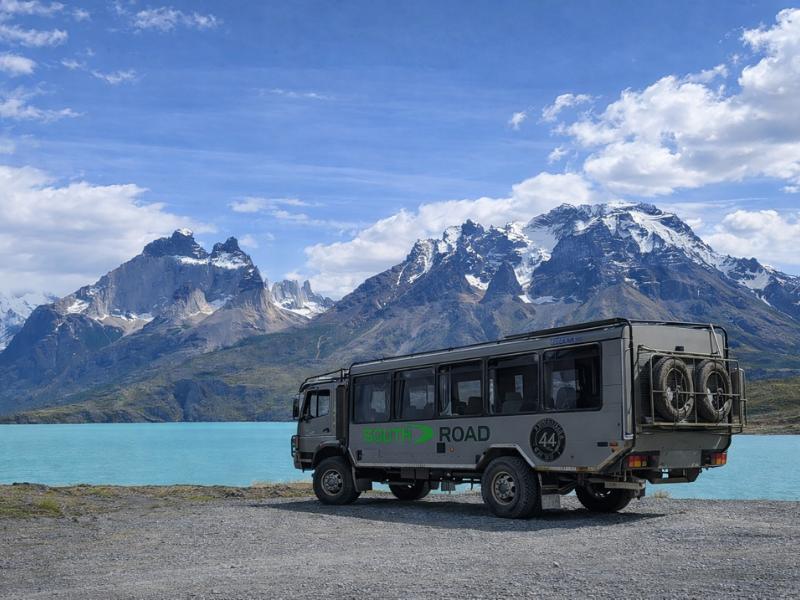
Torres del Paine Wildlife: What You Will Actually See, and Where
Around three thousand guanacos, a condor with a three metre wingspan, and the densest known puma population on earth, all inside one park.
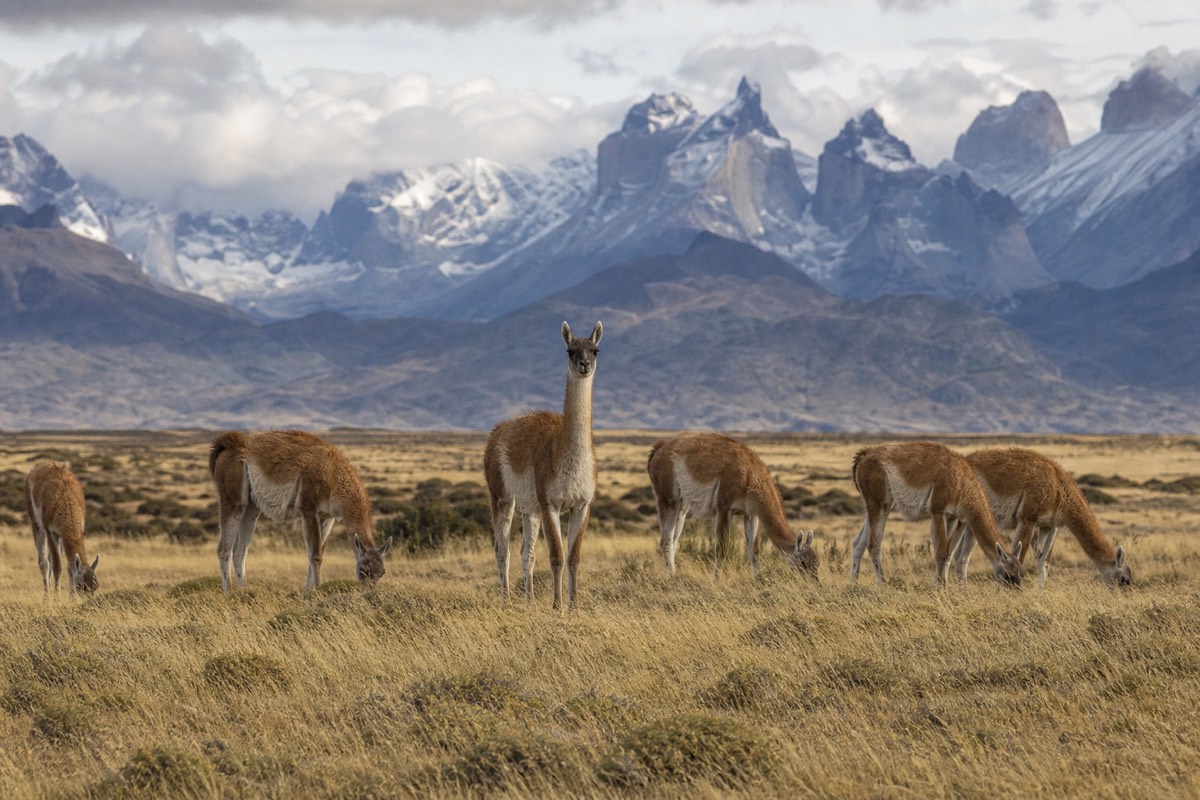
Around 3,000 guanacos, an Andean condor with a wingspan near 3 metres, and the densest recorded puma population on earth, all inside 227,298 hectares. Torres del Paine is unusual among famous mountain parks in that most of its wildlife is visible from the road. You do not need a trek or a hide. You need to be on the eastern side, early or late, with your eyes off the towers for ten minutes.
What follows is the honest inventory: which animals you will really see, where each one turns up, what time of day rewards you, and which of the famous species you will almost certainly miss. We have kept the population figures as ranges where the sources disagree, because for most of these animals nobody has a current count.
Wildlife watching conditions, month by month
Scores are our own planning read of daylight, access and season; the daylight, wind and guiding rules behind them come from the Puerto Natales climate normals and CONAF.
What wildlife will you actually see in Torres del Paine?
Guanacos in herds, near certainty on the eastern steppe. Condors overhead, often. Foxes at road edges, regularly. Flamingos, black-necked swans and upland birds on the right water. Pumas and huemul, rarely, and only if you are somewhere specific at the right hour. That list is the realistic version, and it is already a strong day.
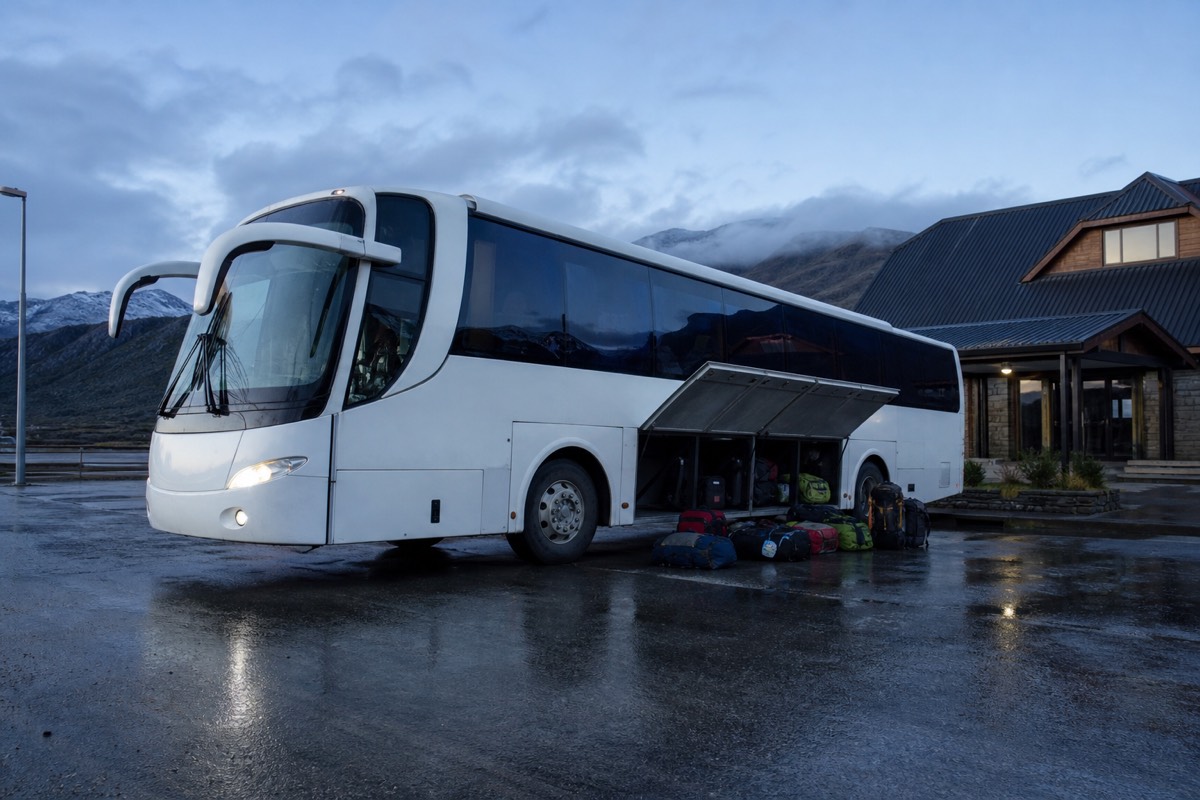
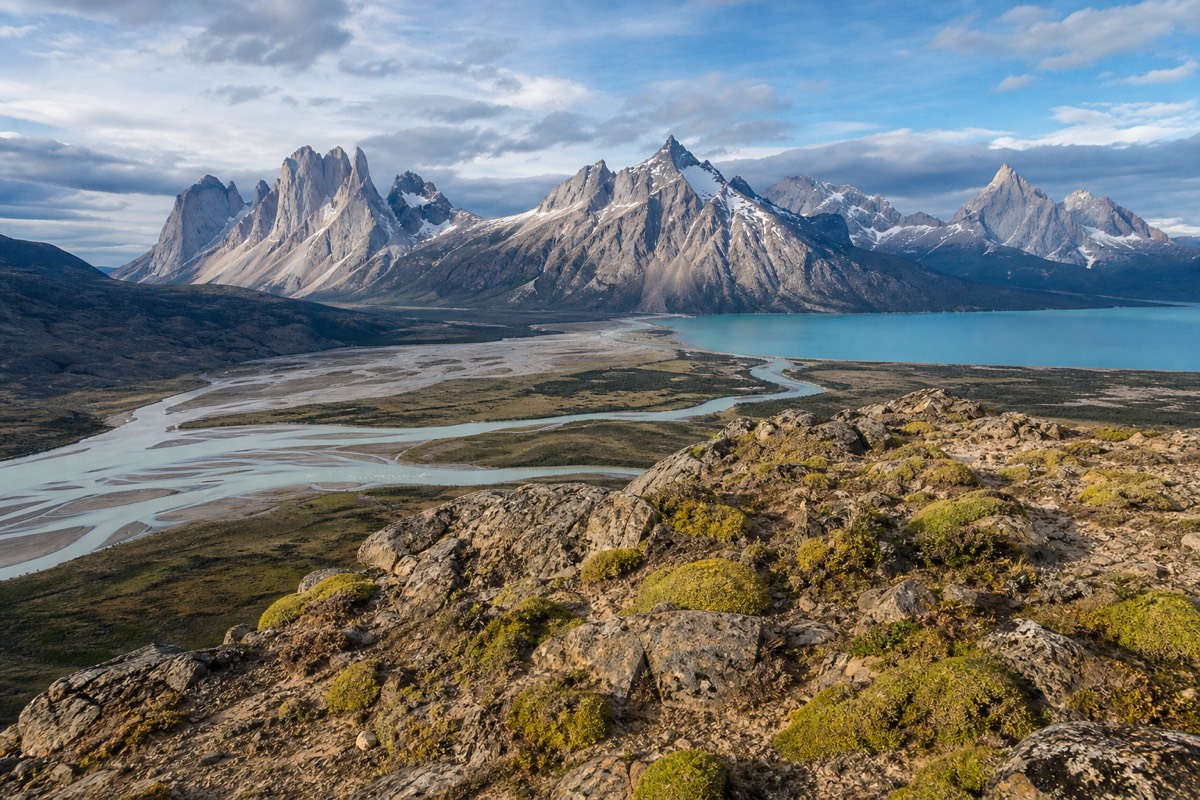
The park splits neatly in two for wildlife purposes. The eastern side, where the buses enter at Laguna Amarga and where Lago Sarmiento sits, is dry open steppe: long sightlines, grazing herds, raptors working the ridges. The western side around Grey and Paine Grande is wetter, forested and enclosed, better for woodland birds and much worse for spotting anything large. Anyone whose main interest is animals should weight their days east.
| Species | Best sector | How likely |
|---|---|---|
| Guanaco | Eastern steppe, Laguna Amarga, Lago Sarmiento | Almost certain |
| Andean condor | Cliffs and ridges, Mirador Condor near Pudeto | Likely |
| Culpeo fox | Scrub and road edges, east and centre | Likely over several days |
| Chilla, the grey fox | Open steppe, often near the entrance roads | Possible |
| Chilean flamingo | Laguna Amarga and shallow lagoons | Seasonal, often |
| Black-necked swan | Sheltered lake water and lagoons | Possible |
| Rhea, the ñandú | Open steppe on the entrance roads | Occasional |
| Austral parakeet | Beech forest in the valleys | Occasional, heard before seen |
| Magellanic woodpecker | Mature lenga forest, Ascencio and French valleys | Occasional |
| Puma | Eastern sectors at dawn and dusk | Rare without a specialist trip |
| Huemul | Present in the park, no reliable sector | Very rare |
The guanaco: the animal you will see first, and most
Commonly cited at around 3,000 in the park, though that is an older estimate and should be treated as approximate, the guanaco is the animal that defines the eastern steppe. Herds graze open grass within metres of the entrance road, they are unbothered by vehicles, and they are the main prey of every puma in the park. Most visitors photograph one within an hour of the gate.
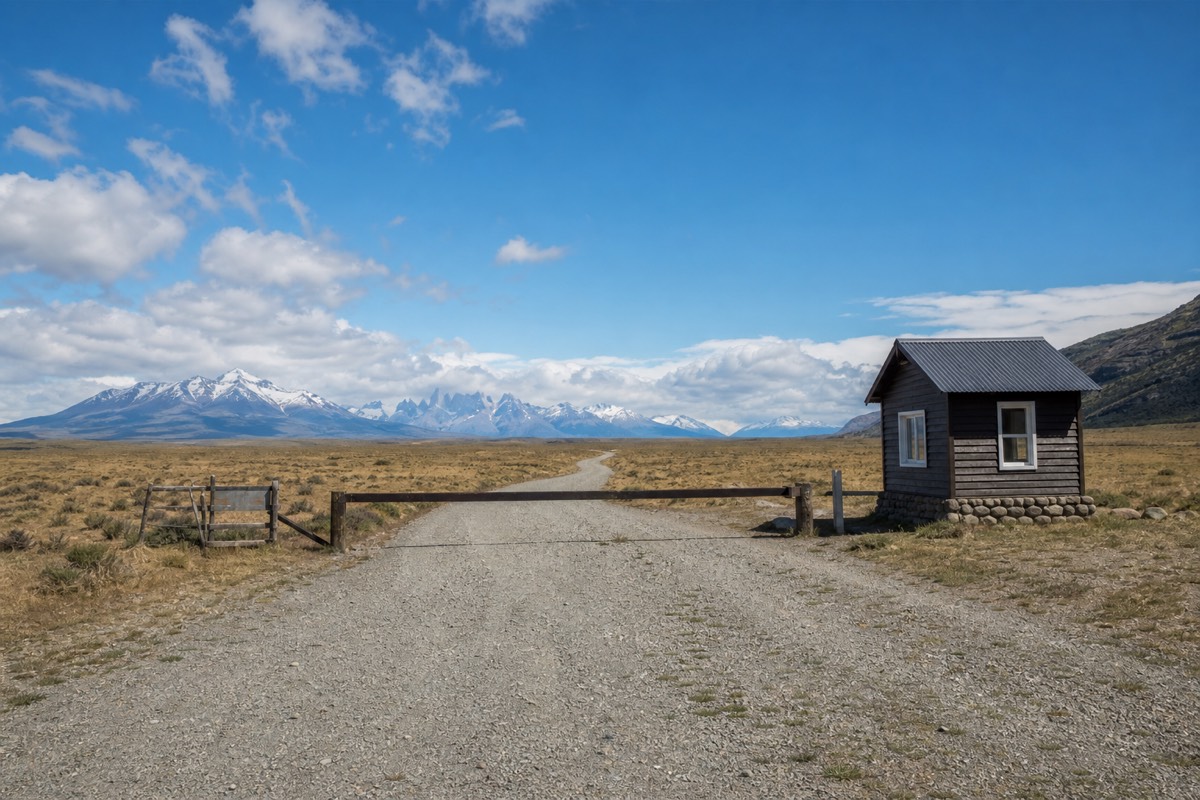
They are a wild camelid, related to the domesticated llama, and they hold themselves like something that has been watched by predators for a very long time. Herds keep a sentinel animal standing while the rest graze, and the alarm call is a high stuttering bray that carries a long way across open ground. If you hear it, look for what set it off before you look at the guanaco. It is the most reliable puma signal available to a visitor without a spotter.
Their bodies are also a record of the predator. Scarred flanks are common, and the skeletons scattered across the steppe are the visible half of the food chain the park is famous for. That relationship is the reason the density figures work at all, and it is set out with the research in our page on pumas and the density research.
Practically, guanacos are the easiest wildlife photography in the park: large, tolerant of distance, and set against grass that lights beautifully at either end of the day. Keep to the road or the marked trail, do not walk into a herd for a closer frame, and never feed one. Habituated animals near roads are a road-safety problem as much as a welfare one.
Where do you see an Andean condor?
Along the cliffs and ridgelines where thermals form, most reliably from the Mirador Condor viewpoint near Pudeto, a 3 km return walk with about 200 metres of ascent that takes around an hour and a half. With a wingspan around 3 metres, it is the largest bird of prey in Patagonia and it does not flap much. Look for a slow black cross riding an updraught rather than a bird beating its wings.
Condors need moving air, so they appear when the sun has warmed the rock and the wind is pushing up a face. That makes late morning to mid-afternoon the productive window, which is the exact opposite of every other wildlife recommendation on this page. It also makes them one of the few species that suits a standard bus-tour schedule.
They nest on inaccessible cliff ledges and they are carrion feeders, so a group of them circling and dropping onto the steppe usually means a dead guanaco below. That is often the first clue that a puma has been working the area overnight. The birds themselves are unmistakable at distance once you have seen one: enormous, steady, with upturned primary feathers at the wingtips and a pale collar on adults.
For photographers this is a long-lens species and a patience species. The viewpoint walk is short enough to fit into a day trip and is covered along with the other short options in our rundown of the park's short walks.
Culpeo and chilla: the park's two foxes
Two species share the park. The culpeo is the larger, redder animal, usually seen alone in scrub and along road edges. The chilla, or grey fox, is smaller and greyer and favours open steppe. Both are seen regularly, both are entirely used to vehicles, and neither should ever be fed. Over three or four days in the park most visitors see at least one.
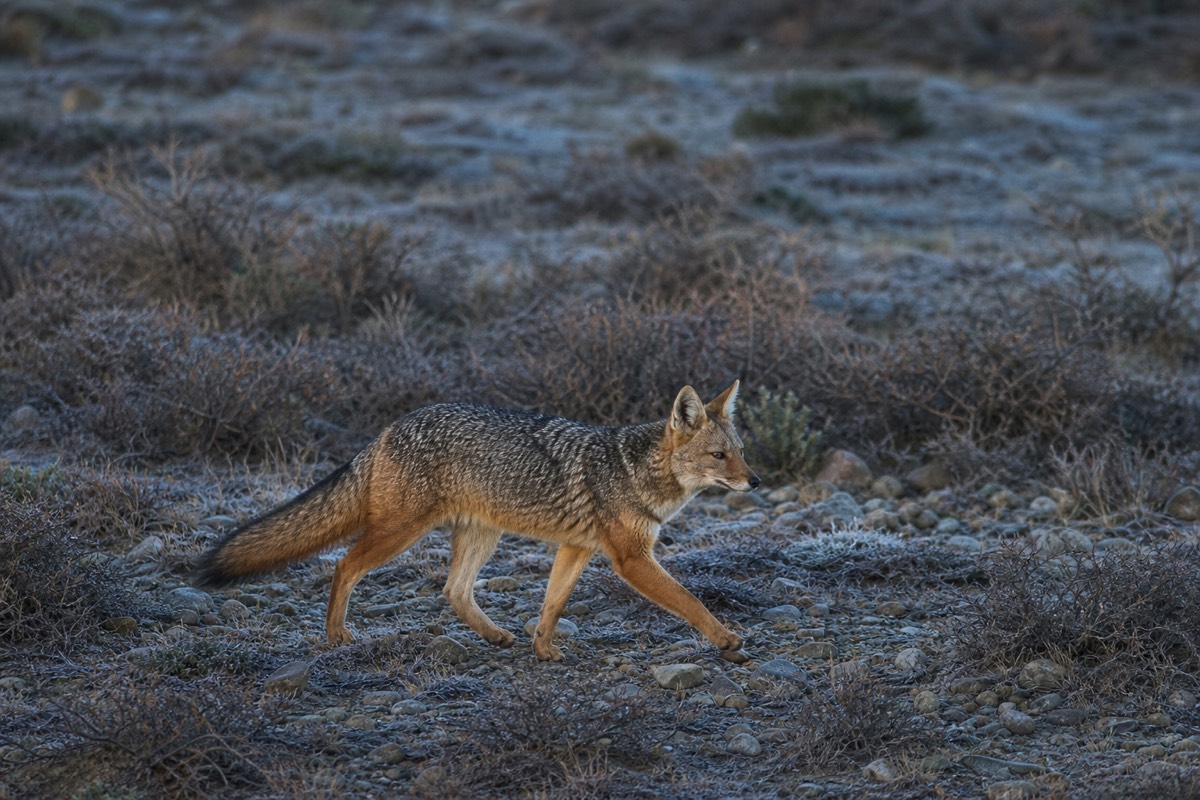
Foxes are the wildlife most likely to approach you, which is exactly why they are the wildlife most often ruined by tourists. A fox that has learned to work a car park is a fox that will be killed by a vehicle or removed. The park's rule about not feeding animals is not decoration. It is the difference between a wild fox and a problem animal.
They are opportunists: rodents, hares, birds, carrion and whatever a campsite leaves out. That last item connects to a health rule rather than an etiquette one, since rodent-borne hantavirus is the reason food storage discipline matters across Patagonia. Camp food handling is dealt with in our guide to camping inside the park.
What is the biggest predator in Patagonia?
The puma. It is the largest land predator in Patagonia and there is nothing above it in the food chain. There are no jaguars and no bears anywhere in Chilean or Argentine Patagonia. The other predators are the culpeo fox, the chilla fox and Geoffroy's cat, and the Andean condor is the largest bird of prey. Visitors arriving with North American or Andean expectations should recalibrate on all three counts.
Adult male pumas here average around 76 kg, with animals over 100 kg recorded, and run 1.8 to 2.7 metres in total length including the tail. Females average around 48 kg. The 1999 Franklin study measured a minimum density of 2.5 adult pumas per 100 square kilometres, roughly one animal per 17 square kilometres, in a 200 square kilometre study area, and recent estimates of the whole park population span 50 to 200 animals.
None of this makes the park dangerous. There is no record of a fatal puma attack on a visitor inside Torres del Paine, and the single disputed incident anyone cites involves a local fisherman more than thirty years ago and was never confirmed. Species biology and conservation background sits with the wild cat conservation group Panthera. The full incident record, rather than the summary above, is set out in our page on puma attacks in Patagonia.
| Predator | Size | Risk to visitors | Chance of seeing one |
|---|---|---|---|
| Puma | Males around 76 kg, over 100 kg recorded | Extremely low, no fatal attack recorded in the park | Rare |
| Culpeo fox | The larger of the two foxes | None, do not feed | Likely |
| Chilla, grey fox | Smaller and greyer | None, do not feed | Possible |
| Geoffroy's cat | Small wild cat | None | Very rare |
| Andean condor | Wingspan around 3 m, largest bird of prey | None, it eats carrion | Likely |
| Jaguars and bears | Not present | None, they do not live here | Zero |
Which birds are worth knowing before you go?
Five are worth learning by sight: the Andean condor, the Chilean flamingo on shallow lagoons, the black-necked swan on sheltered water, the rhea or ñandú striding across open steppe, and the Magellanic woodpecker in mature beech forest. The austral parakeet is the sixth and you will hear it before you see it. Learn those and you will name most of what you meet.
The flamingos catch people out because nobody expects them at this latitude. They work shallow alkaline water, and the full-day tour from Puerto Natales specifically notes them at Laguna Amarga alongside the frontal view of the towers. Black-necked swans prefer sheltered lake water and are one of the easiest birds here to identify at distance: white body, black head and neck.
Rheas are the odd ones. Large flightless birds crossing open steppe, they read as out of place until you remember this is grassland. They are usually seen from a moving vehicle on the entrance roads. The Magellanic woodpecker is the opposite: a forest bird of mature lenga stands in the Ascencio and French valleys, the male with a scarlet head, and the sound of it working a trunk carries a long way through quiet forest.
| Bird | Habitat | Best chance | Field mark |
|---|---|---|---|
| Andean condor | Cliffs, ridges, thermals | Late morning to mid-afternoon | Wingspan near 3 m, barely flaps |
| Chilean flamingo | Shallow alkaline lagoons | Laguna Amarga in the warm months | Pink at distance, feeding head down |
| Black-necked swan | Sheltered lake water | Calm mornings | White body, black head and neck |
| Rhea, the ñandú | Open steppe | From the entrance roads | Large, flightless, running |
| Magellanic woodpecker | Mature lenga forest | Ascencio and French valleys | Scarlet head on the male, loud drumming |
| Austral parakeet | Beech forest edges | Anywhere with lenga | Green flock, noisy in flight |
The huemul and the animals you will probably miss
The huemul, an endangered Andean deer, lives in the park and is rarely seen. So are Geoffroy's cat, the skunk and the armadillo, all present and all a matter of luck rather than planning. Nobody publishes a park population figure for the huemul that we would repeat. Plan your trip around the animals you will see and treat these as bonuses.
The huemul is a stocky, short-legged deer of steep broken country and forest edge, and it is one of the two animals on Chile's coat of arms. It is genuinely endangered, its numbers across its range are low, and it does not have a reliable viewing sector inside the park the way guanacos do. Guides who see one talk about it for weeks. If you do see one, keep your distance and report it rather than chasing a photograph.
Skunks and armadillos are nocturnal or crepuscular and mostly turn up as a smell, a burrow, or a shape crossing a road at dusk. Geoffroy's cat is small, nocturnal and secretive, and most visitors who think they have seen one have seen a fox. None of these should shape an itinerary.
Recommended tours by season
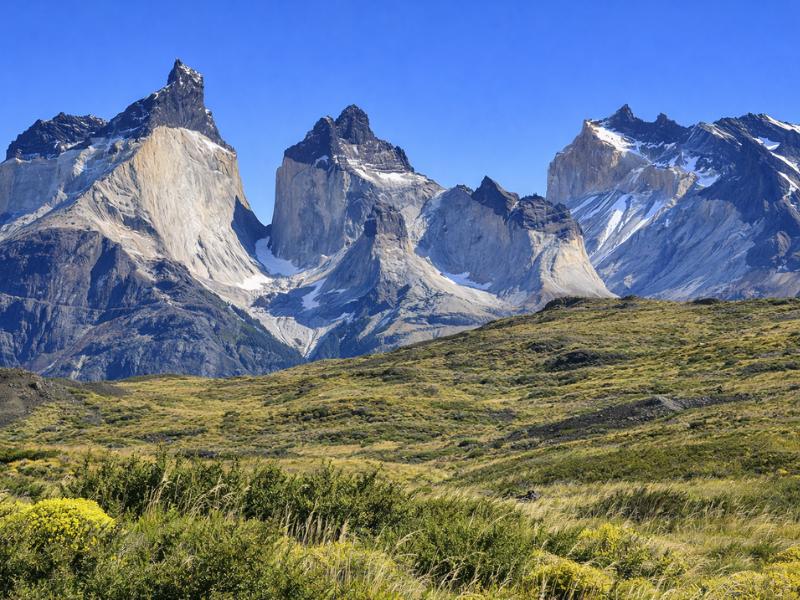
Torres del Paine Full-Day Adventure Tour from Puerto Natales
Warm months. Pickup in Puerto Natales at 07:00, a bilingual guide, and a circuit that includes the flamingo lagoon at Laguna Amarga and the eastern steppe viewpoints. Back between 17:00 and 18:00.

5-Day Torres del Paine W Trek – Guided Patagonia Adventure
Autumn and any stay long enough for the valleys. A guided five-day W Trek through the lenga forest of Ascencio and the French Valley, where the woodpeckers and parakeets on this page live.
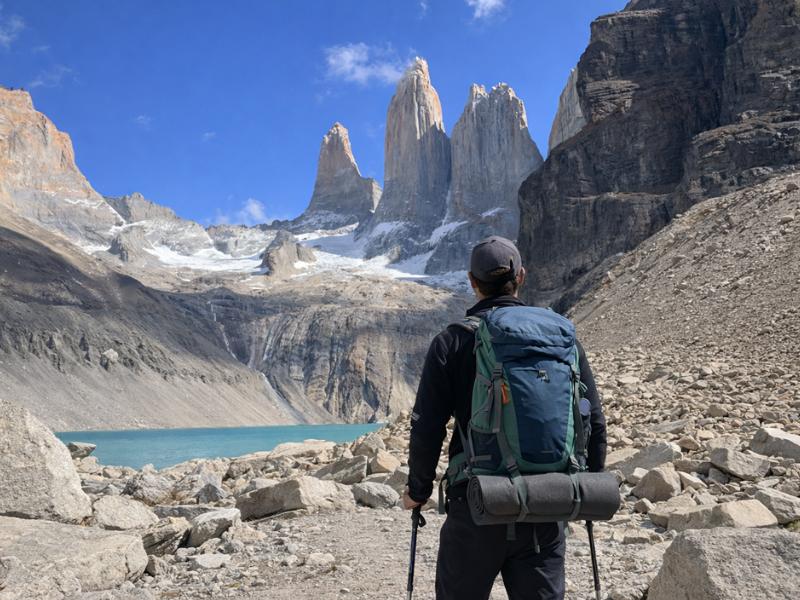
Torres del Paine 2-Day Express Tour – Aventura & Highlights
Winter kit listed. A night at Pehoé camping, the Condor viewpoint hike and the Aonikenk trail. The operator provides trekking poles and crampons in winter.
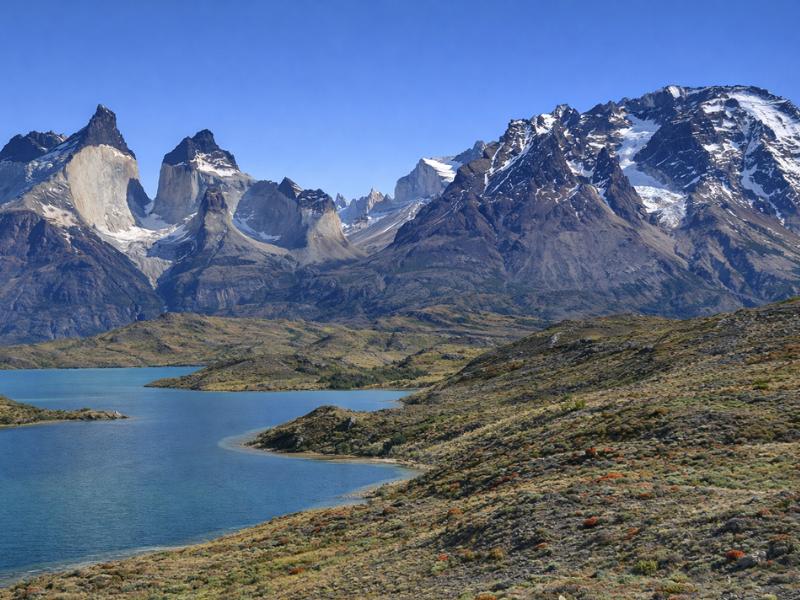
4-Day Torres del Paine Experience – Departing Puerto Natales
Guided months. A four-day itinerary departing Puerto Natales, the step between a day circuit and a full W Trek when you want more than one look at the eastern herds.
From steppe grass to lenga forest: what grows where
The park changes vegetation as you move west. Dry open steppe covers the eastern side where the buses enter and where the guanaco herds graze, beech forest fills the sheltered valleys like Ascencio and the Valle Francés, and the wet western sectors around Grey run into moraine and ice. That west to east gradient explains where every species on this page lives. The western side of the park is significantly wetter than the eastern steppe, which is why Grey can be raining while Laguna Amarga is dry.
The steppe is grass and low scrub, wind-flattened and pale for most of the year. It is poor cover and good hunting ground, which is why the animals that matter here are large, alert and herd-forming. In spring the same ground carries wildflowers, and in autumn the beech forest turns in a way that changes the whole eastern approach.
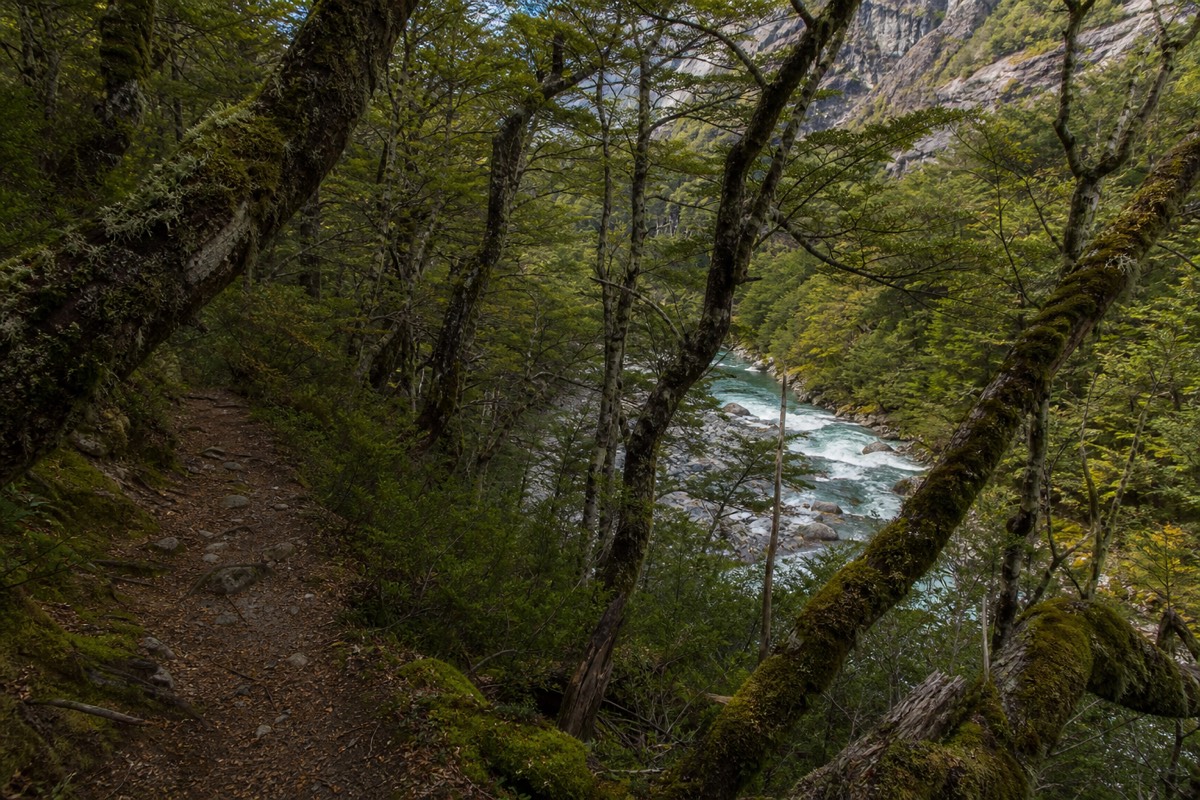
Lenga, the southern beech that fills the valleys, is the tree you will walk through on the Ascencio valley approach to Mirador Las Torres and on the French Valley trails. Mature stands are where the woodpeckers and parakeets are. Fire history matters here too: the 2011 to 2012 fire burned a large part of the eastern park, and burnt standing timber is still visible on some approaches. Under Chilean law 20.653 there are no fires, no stoves outside designated cooking areas and no smoking anywhere in the park, with fines up to 2 million CLP, up to three years in prison and expulsion. Current rules and closures are published by CONAF, the park authority.
| Zone | Where you meet it | What lives there |
|---|---|---|
| Open steppe | Eastern entrance roads, Laguna Amarga, Lago Sarmiento | Guanaco, rhea, foxes, condors overhead, pumas at dawn |
| Lagoons and lake shore | Laguna Amarga, Pehoé, Nordenskjöld | Flamingos, black-necked swans, waterbirds |
| Lenga beech forest | Ascencio valley, Valle Francés, sheltered slopes | Magellanic woodpecker, austral parakeet, forest passerines |
| Moraine and high ground | Final climb to Mirador Las Torres, the passes | Almost nothing, wind and rock |
| Wet western sectors | Grey, Paine Grande, Pingo | Forest birds, poor sightlines, no puma tracking |
What time of day should you be looking?
First light and last light for mammals, mid-morning to mid-afternoon for condors, and calm early mornings for water birds. In late December sunrise in the region is around 05:00 and sunset near 22:00, which gives roughly 17 hours of daylight and two very long golden windows at either end. The middle of the day is the worst wildlife hour and the busiest visiting hour, which is not a coincidence.
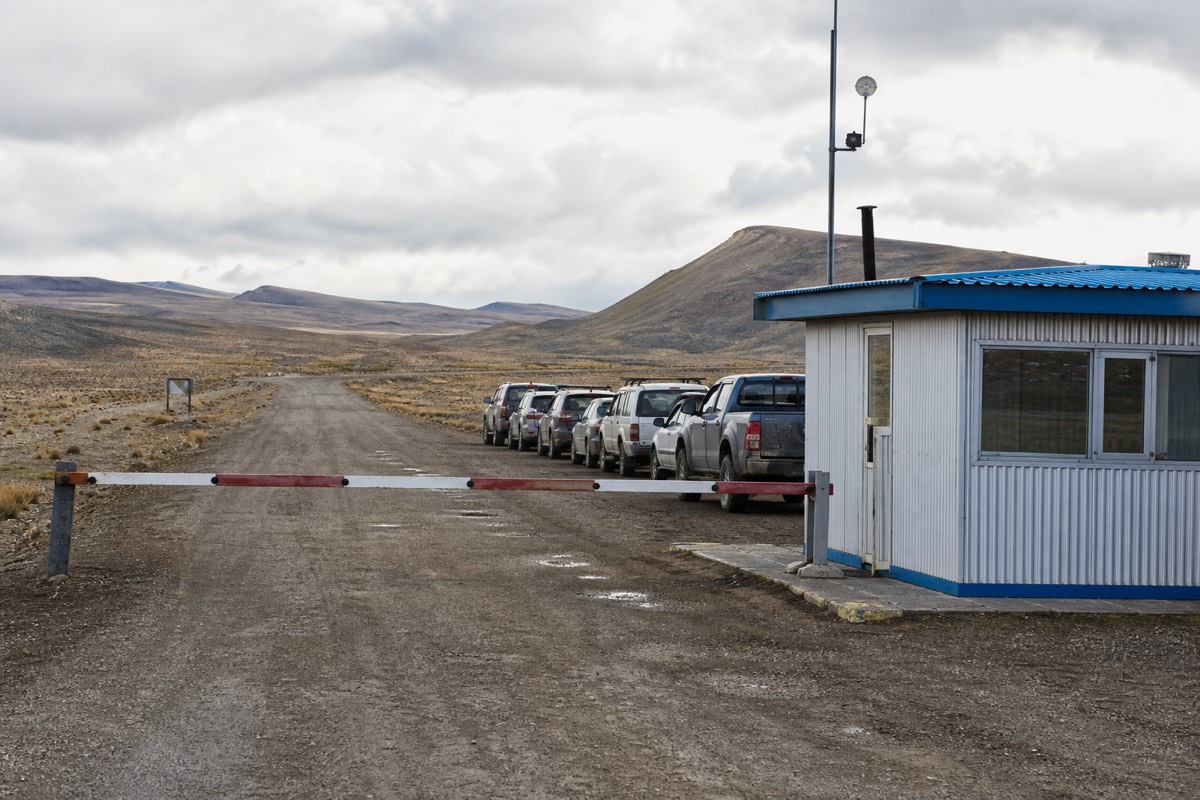
Gate hours set the floor on what is possible. Porterías run 07:00 to 21:00 from October to April and 08:00 to 18:30 from May to September, so in high summer the first two hours of light happen before a day visitor can legally be inside. Sleeping in the park, or booking a two-day trip that starts inside it, is the only way to buy that time.
| Window | What is active | Where to be |
|---|---|---|
| Pre-dawn | Pumas, foxes, guanacos alert and grouped | Eastern steppe, only if you slept inside or outside the gates |
| First two hours of light | Guanaco herds grazing, foxes still out | Laguna Amarga and Sarmiento roads |
| Mid-morning | Condors as thermals build, forest birds | Mirador Condor, valley forest |
| Middle of the day | Little mammal activity, wind rising | Viewpoints, lakes, the Salto Grande walk |
| Late afternoon | Herds moving, light softening | Back east |
| Last hour of light | Pumas, foxes, best mammal odds of the day | Eastern sectors, gates permitting |
What animals should I be aware of in Patagonia?
Realistically, one animal and one microbe. The puma is the only predator that requires you to know a procedure, and encounters are extremely rare. Hantavirus, carried by rodents, is the reason for the food storage rules and the rule about never sleeping in disused buildings. Nothing else in the park will hurt you. There are no bears, no jaguars, no venomous snakes worth planning around.
If you do meet a puma: stop, stay calm, do not run and do not approach. Back away slowly while facing the animal and holding eye contact. Make yourself look bigger by raising your arms or opening your jacket. Speak firmly. Pick small children straight up without bending down or turning away. Never play dead. That guidance is consistent across park and operator sources.
The rest is discipline rather than danger. Keep distance from everything, including guanacos, which are large animals that kick. Feed nothing, ever, which protects both the animal and the next visitor. Store food sealed and off the ground. Stay on marked trails, both for your safety and because off-trail walking is what turns a wildlife sector into a disturbed one.
| Hazard | Real risk level | What to do |
|---|---|---|
| Puma encounter | Very low, no fatal attack recorded in the park | Stop, face it, back away slowly, look big, never run |
| Hantavirus | Low but real across Patagonia | Seal food, avoid rodent droppings, never sleep in disused buildings |
| Guanacos at close range | Low, they kick and bite if cornered | Stay in the vehicle or on the trail, keep distance |
| Habituated foxes | Low for you, high for the fox | Feed nothing, store food, close packs |
| Fire | Catastrophic, the strictest rule in the park | No fires, no stoves outside cooking areas, no smoking anywhere |
| Wind and exposure | The genuine everyday hazard | Layers, poles, and turning back when the weather turns |
How solid are the wildlife numbers people quote?
Weaker than they look. The guanaco figure of around 3,000 is an older estimate quoted widely. The puma population range of 50 to 200 is honest precisely because it is wide. The one peer-reviewed measurement is the 1999 density study, and it covered a 200 square kilometre study area rather than the whole park. Anyone quoting a precise total for any species here is rounding somebody else's guess.
Compare that with the numbers the park itself publishes and the difference is obvious. CONAF counted 367,426 visitors in 2024. The park covers 227,298 hectares and was established in 1959. Those are administrative figures, counted and recorded. Wildlife figures are surveys, estimates and extrapolations, and they age fast.
| Figure | Source type | How much to trust it |
|---|---|---|
| 2.5 adult pumas per 100 km2 | Peer-reviewed study, 1999, 200 km2 area | Solid for that area and that period |
| 50 to 200 pumas in the park | Range of recent estimates | Use the range, never a single number |
| Around 3,000 guanacos | Older population estimate | Approximate and dated |
| Condor wingspan around 3 m | Species biology | Reliable |
| 367,426 visitors in 2024 | CONAF administrative count | Reliable |
| 227,298 hectares, established 1959 | Park record | Reliable |
Which trips actually put you in wildlife country?
The ones that spend their hours on the eastern steppe and the lake shores rather than in forested valleys. A full-day circuit from Puerto Natales covers Sarmiento, Laguna Amarga, Salto Grande, the Nordenskjöld viewpoint and Lake Pehoé, which is most of the good ground in one day. Add a second day and the odds on foxes and condors improve sharply.
The full-day adventure tour from Puerto Natales is the straightforward version: 07:00 pickup, a bilingual guide, and the flamingo lagoon and steppe viewpoints built into the route, back between 17:00 and 18:00. Coming from Argentina, the overland 4x4 expedition from El Calafate crosses the same country on an unpaved shortcut and runs 14 to 16 hours door to door. If you would rather stay overnight and get one dawn and one dusk inside the park, the two-day express tour with a night at Pehoé camping includes the Condor viewpoint hike and the Aonikenk trail, which is the wildlife-facing half of the park.
Two things we do not sell, and will not pretend to: puma tracking, which is run by specialist operators from around $841 a day, and any kind of accommodation inside the park. Both are covered honestly elsewhere on the site, including the light and season planning in our guide to shooting the massif and the timing case in when to visit the park. For what we do run, the nine Torres del Paine tours we list carry their real prices, ratings and booking counts.