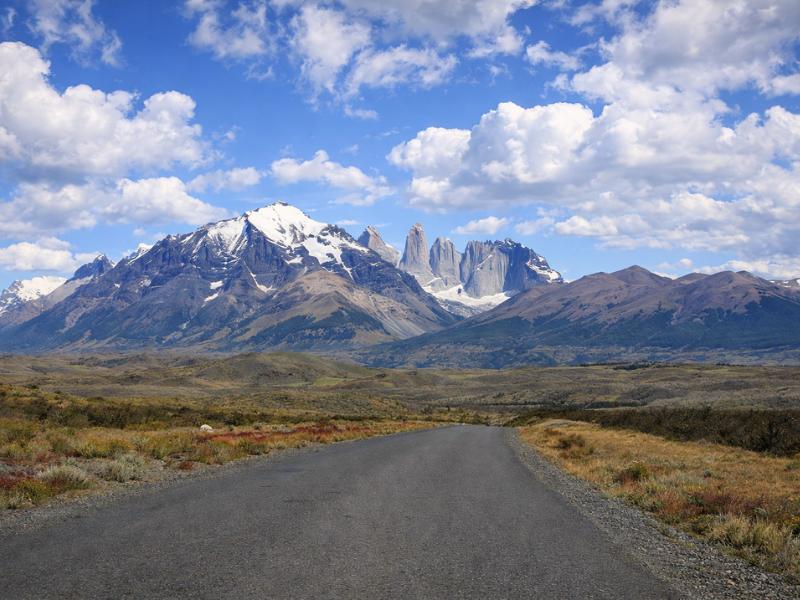
Puerto Natales to Torres del Paine: Buses, Shuttles and Driving Yourself
The 112 km from town to the park gate, done independently: which bus, which stop, the shuttle nobody budgets for, and how much park time is left.
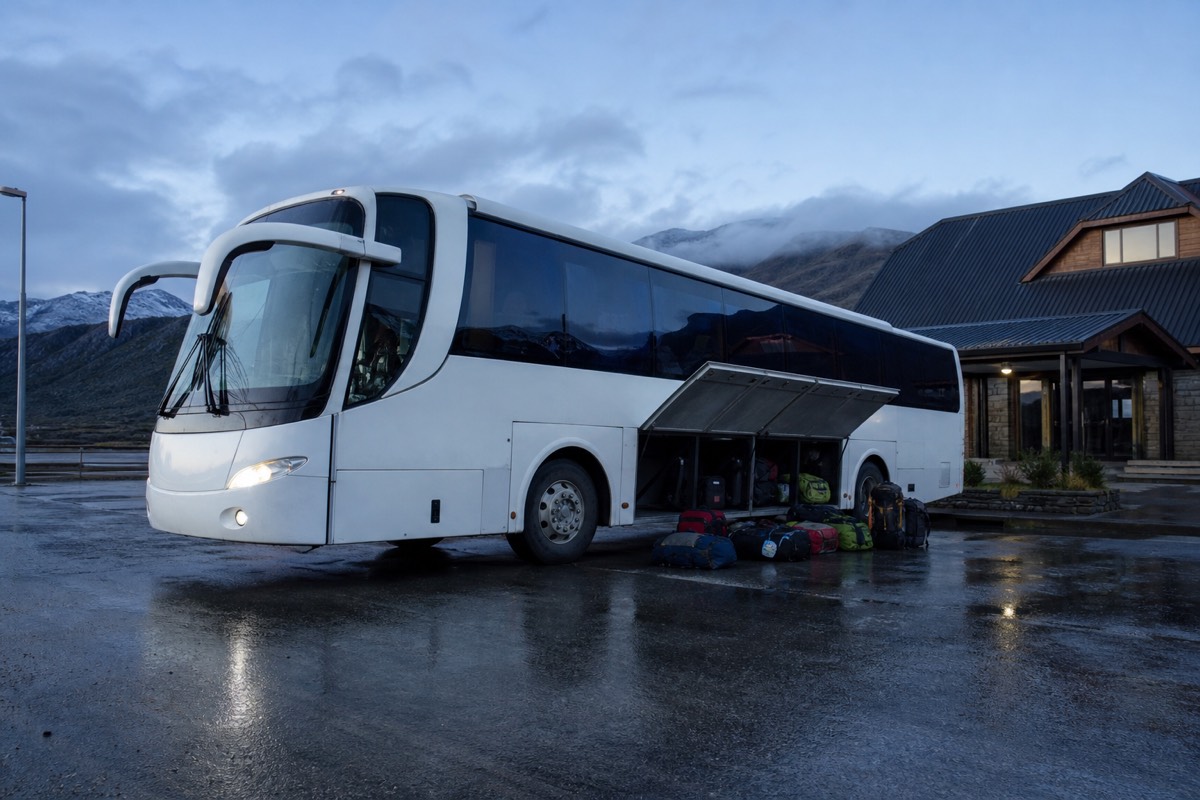
The bus from Puerto Natales to Torres del Paine costs roughly $20 to $29 and takes two to three hours. What the fare does not tell you is that it drops you at a gate 7 km short of the main trailhead, that the shuttle covering those 7 km wants 4,000 to 4,500 Chilean pesos in cash, and that the return timetable will decide how long you actually spend in the park. Done well, an independent day here works. Done from a standing start at the ticket window, it usually costs more time than it saves money.
What each piece of a Puerto Natales day costs
Peso figures converted at roughly 950 CLP to the dollar; check pasesparques.cl and the terminal board for the live numbers before you travel.
How far is Puerto Natales from Torres del Paine, and how long does the drive really take?
112 km to the park, and the published times disagree. The park's own regional profile says 1.5 to 2 hours by road. The bus timetables say 2 to 3 hours to Laguna Amarga. The guided day trips allow around two hours from a 06:30 to 07:00 pickup. Plan on two and a half hours and you will rarely be wrong.
The spread is not sloppiness. A private car on an empty road early in the morning does it faster than a bus that stops for passengers, slows for ripio and queues at the gate. The last section is gravel, and gravel does not reward speed. Wind matters too: a strong crosswind on the open steppe takes speed off a high-sided vehicle in a way it does not take it off a car.
| Source of the figure | Distance | Time given |
|---|---|---|
| The park's regional description | 112 km | 1.5 to 2 hours |
| Bus timetables to Laguna Amarga | 112 km | 2 to 3 hours |
| Guided Base Torres day trip schedule | not stated | about a two-hour drive from a 06:30 to 07:00 pickup |
| Guided full-day tour schedule | not stated | 07:00 pickup, back in town 17:00 to 18:00 |
Which end of that range you get also depends on where you are going. Laguna Amarga is the first park stop. Pudeto is further in, and Administracion further still, so a ticket to the last stop is a longer ride than the headline figure. For the wider picture of how this leg fits with flights and the Argentine crossing, see every route into the park compared.
Where to book a bus to Torres del Paine?
At the Terminal Rodoviario in Puerto Natales, where the companies keep ticket windows and post the current timetable, or through your accommodation, which will phone it through for you. Buy the day before in January and February. The early departures fill, and turning up at 06:40 hoping for a seat is how people lose a day.
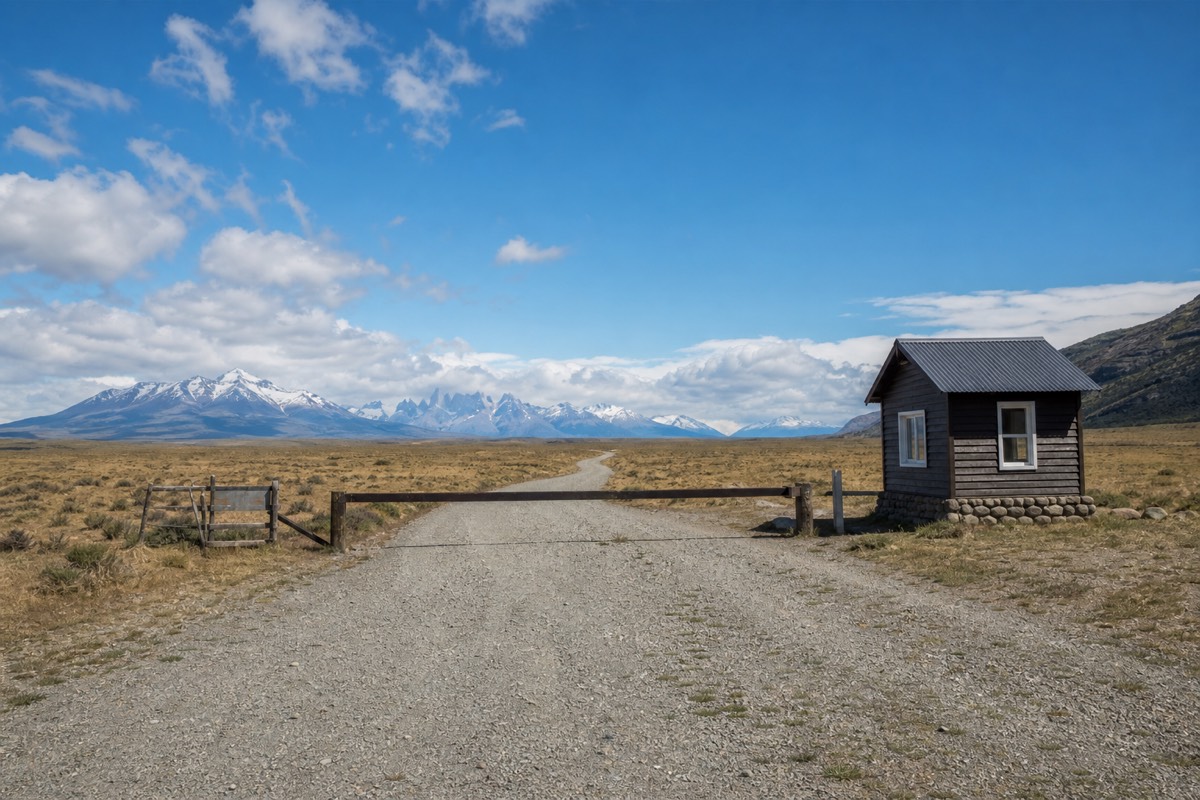
The board at the terminal is the authority. Timetables shift between seasons and between companies, and a printed schedule from a website three months old is worse than useless because it looks current. Walk to the terminal the afternoon you arrive, read the board, buy the ticket, and confirm the return time at the same window. Bus-Sur and Buses Fernandez are the names you meet most often on the Magallanes routes, running the Punta Arenas services several times a day including airport pickups.
Whatever you do about the bus, the park ticket is a separate transaction and it has to happen first. It is bought at the official park ticketing portal, currently 34,000 CLP for a foreign adult on one day and 48,500 CLP for up to ten consecutive days, and it is date-locked and non-refundable. There are payment totems at the Serrano and Laguna Amarga entrances, but they exist for private vehicles. Arriving on a bus without a QR code is not a strategy.
| Where you book | What it gets you | When to use it |
|---|---|---|
| Terminal Rodoviario ticket windows | Current times, seat confirmed, return leg booked at the same time | Always, ideally the day before |
| Your hostel or hotel front desk | The same ticket without the walk, sometimes with a pickup | Late arrivals, bad weather |
| Company websites in advance | Peace of mind in peak season | January and February bookings |
| The park ticket portal | The QR code the gate scans | Before you travel, every time |
What time do the buses leave, and which stop do you want?
High-season departures from the Terminal Rodoviario are commonly around 06:45, 07:00, 12:00 and 14:30. Only the first two give you a usable day. The route stops at Laguna Amarga, then Pudeto, then Administracion, and your choice of stop decides which part of the park you can reach on foot.
The early pair exist because that is what a day visit needs. The midday and afternoon services are there for people moving into the park to sleep, walking a short evening trail, or connecting to the late catamaran. Taking the 12:00 for a day trip means arriving in the early afternoon, which is also when the wind is usually at its strongest.
- Around 06:45 and 07:00: the day-trip departures, and the ones that connect to the morning catamaran.
- Around 12:00: for travellers with a bed booked inside the park.
- Around 14:30: late arrivals, transfers between sectors, and anyone starting a trek the following morning.
| Stop | Position on the route | What it reaches | The catch |
|---|---|---|---|
| Laguna Amarga | First park stop, eastern gate | Base Torres trailhead via the shuttle | You are still 7 km from the Welcome Center |
| Pudeto | Middle of the route, on Lake Pehoe | Salto Grande, 1.5 km round trip, and the catamaran pier | Sailings are cancelled in high wind |
| Administracion | Last stop, southern sector | Park headquarters and the Serrano side | Longest ride, fewest onward walking options |
If the towers themselves are the point of the trip, Laguna Amarga is your stop and the walk is a serious one. The day walks that fit inside a single visit covers what is realistic from each drop-off, including the 30-minute stroll to Salto Grande from Pudeto.
The Laguna Amarga shuttle almost nobody budgets for
The bus does not reach the Base Torres trailhead. It stops at the Laguna Amarga gate, and a separate shuttle covers the remaining 7 km to the Welcome Center for 4,000 to 4,500 CLP, cash only. It meets the arriving buses. Carrying no Chilean cash is the single most common way an independent day here goes wrong.
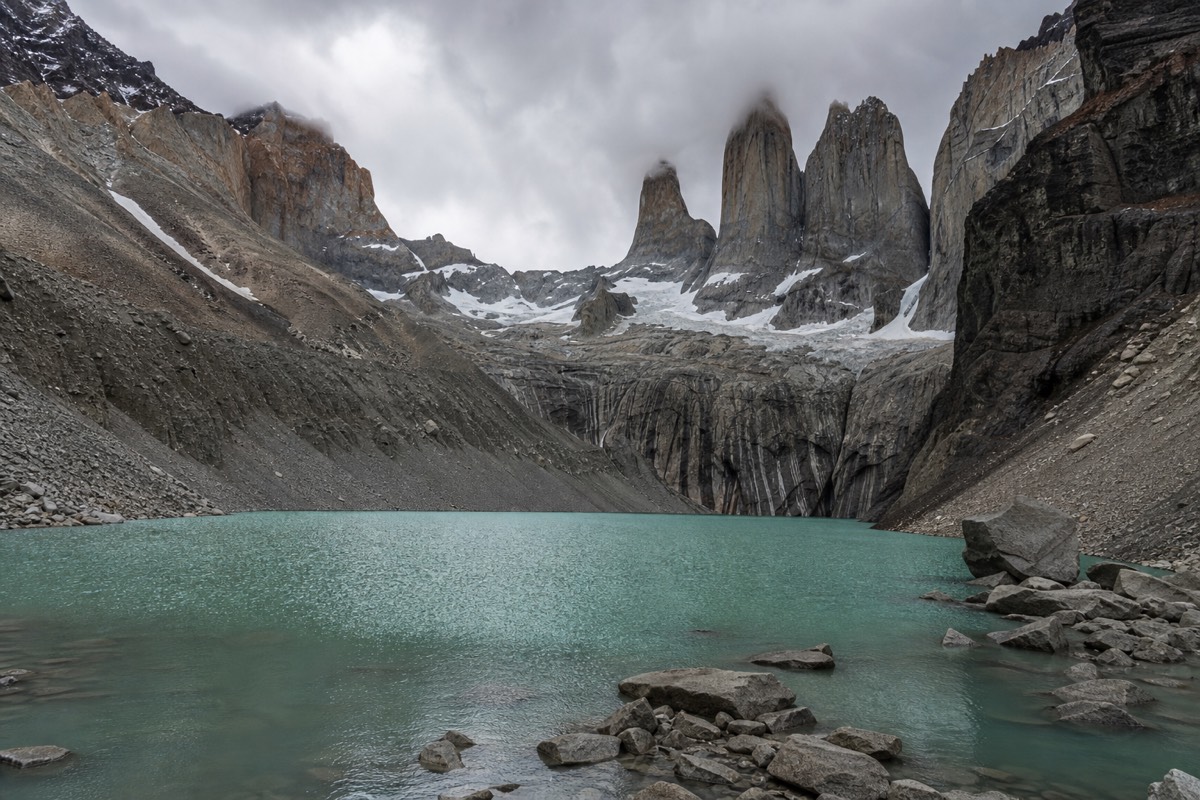
Think of it as a third ticket. You have paid for the bus, you have paid for park entry online, and now there is a small cash fare on top. There is no card machine, no application, and no reason to expect one. Take small notes: handing over a large note for a 4,000 peso fare on a full shuttle is not popular.
The alternative is walking those 7 km, which is possible on a road but costs you the better part of two hours out of a day that does not have two hours spare, in each direction. Almost everyone pays. Budget the return leg too, because the same shuttle brings you back down to the gate to meet the afternoon bus, and missing it because you were still on the trail is the reason people end up hitching in the dark.
The trailhead the shuttle serves sits in the Central sector, run by the Las Torres Patagonia concession, which also handles the Chileno and Serón accommodation. If you are staying up there rather than day-tripping, that booking is a separate system again, explained in how the two accommodation systems work.
Can you Uber from Puerto Natales to Torres del Paine?
No. Uber does not operate in Puerto Natales, and no ride-hailing app covers the 112 km to the park. The private option is a booked transfer, published at around $150 for the vehicle, arranged the day before through an agency or your accommodation. There is no app-based fallback if you miss the bus.
This surprises people who have travelled in Santiago, where ride-hailing is normal. Puerto Natales is a small town at the end of a long road, and the transport economy is built around scheduled buses and pre-booked tour minibuses. Local taxis exist for moving around town. They are not a park transport solution, and treating them as one leads to conversations about prices you will not enjoy.
The practical consequence is that the last bus is genuinely the last bus. If you are still on the trail when it goes, your options are a very expensive negotiated ride, a lift from another visitor, or a night you did not plan. Build the return time into the walk you choose rather than the other way round.
What does a DIY bus day actually look like, hour by hour?
Roughly twelve hours door to door, of which four to six are spent on a bus and a shuttle and the rest is yours. That is the honest headline. A 07:00 departure puts you at the trailhead around 10:00, and the afternoon return means the walking window is about five to six hours, not the eight to ten a Base Torres round trip wants.
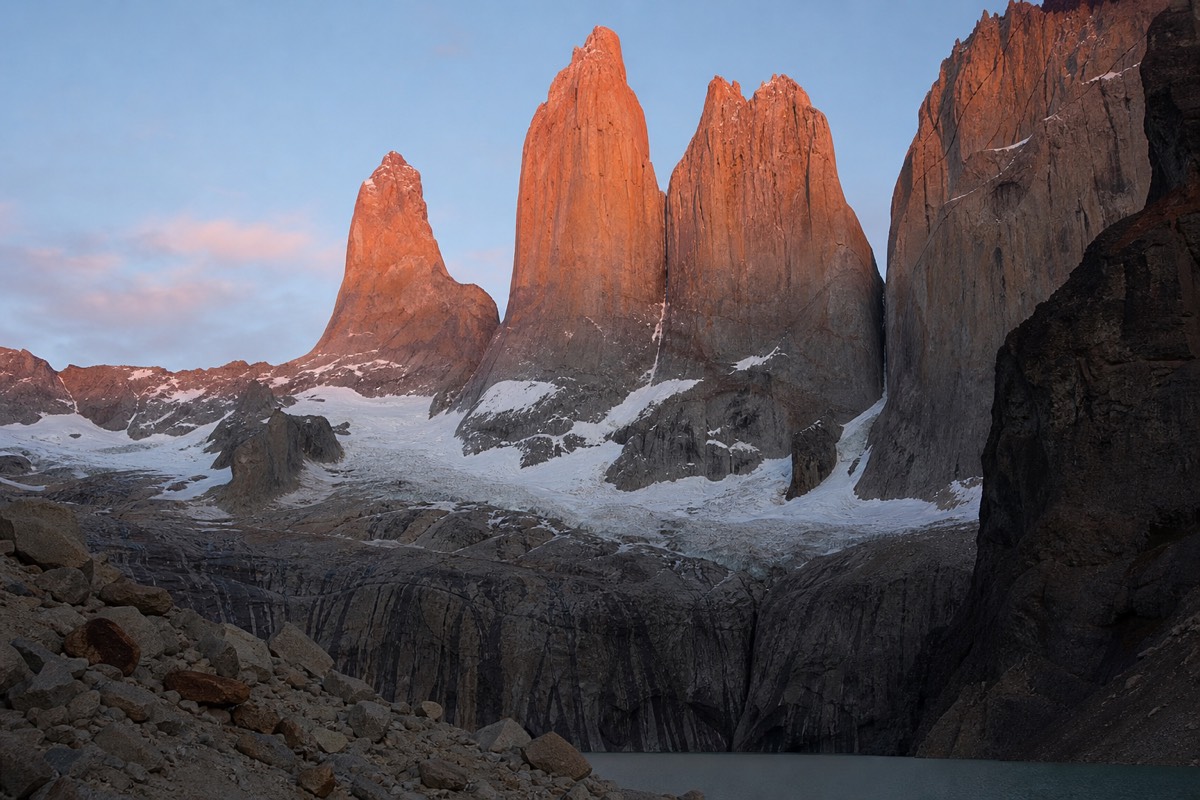
The timeline below assumes a high-season day, the 07:00 departure, and Laguna Amarga as the stop. Times after the departure are planning allowances built on the published journey time, not a printed schedule, because return times shift with the season and are posted at the terminal rather than fixed all year.
| Time | What is happening | Where you are |
|---|---|---|
| 06:15 | Up, breakfast, walk to the terminal | Puerto Natales |
| 07:00 | Bus leaves, 112 km ahead | Terminal Rodoviario |
| 09:15 to 09:45 | Laguna Amarga, QR code scanned at the gate | Eastern park boundary |
| 09:45 to 10:15 | Shuttle, 7 km, 4,000 to 4,500 CLP in cash | Welcome Center |
| 10:15 | Boots on, walking starts | Central sector |
| Mid-afternoon | Turnaround time, whatever you have reached | On the trail |
| Late afternoon | Shuttle back down to the gate, then the return bus | Laguna Amarga |
| Evening | Back in town, roughly twelve hours after you left | Puerto Natales |
Compare that with the round trip you would want to do. Base Torres from the Welcome Center is 21 km with 1,041 metres of ascent and takes 8 to 10 hours, and the last 45 minutes up the moraine is the slow part. Five or six hours does not cover it, which is why independent walkers who want the towers either sleep inside the park or take a guided Base Torres day trip that leaves earlier and waits for them. The four to five day W route exists for exactly this reason.
Recommended tours by season

Torres del Paine Full-Day Adventure Tour from Puerto Natales
High season: the viewpoint circuit with hotel pickup, so you are not relying on the early public bus in January and February.

Torres del Paine: 3-Hour Grey Glacier Scenic Cruise
Shorter days: three hours on the Grey Glacier side of the park when you want the ice without a full trail schedule.
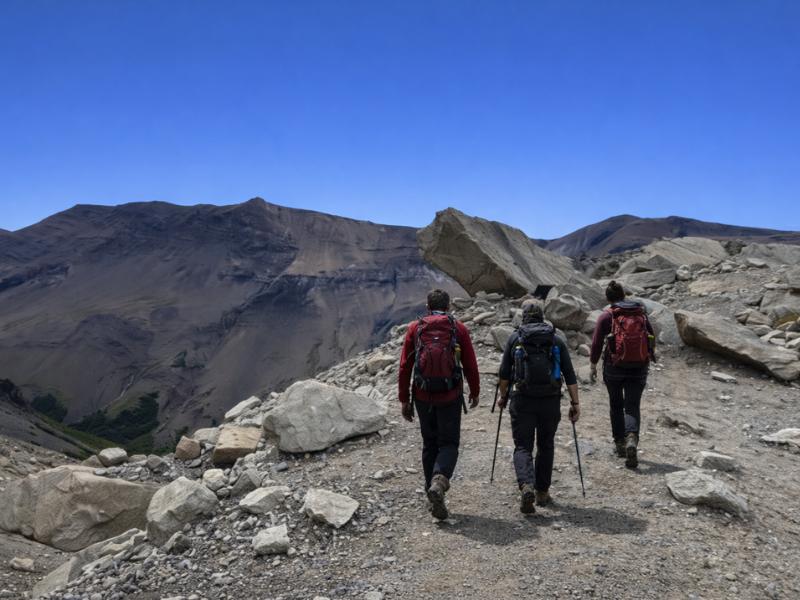
Torres del Paine Base Torres Trekking Day Trip from Puerto Natales
Winter and the guided-trail months: the day hike from town that still reaches the towers when an authorised guide is required.
5-Day Torres del Paine W Trek – Guided Patagonia Adventure
Long-daylight months: a guided five-day W when a single bus day cannot cover the walk you came for.
The catamaran across Lake Pehoe, and how the bus connects to it
The catamaran runs from Pudeto to Paine Grande, takes about 30 minutes and costs roughly 26,000 CLP, about $45 one way. High-season sailings from Pudeto are commonly listed around 08:30, 10:30, 16:15 and 18:00. The morning bus is timed to make the later morning sailing. Wind cancels it, and wind wins.
For anyone starting a trek from the western end, this is the connection the whole day hangs on. Bus to Pudeto, boat to Paine Grande, then walk. It works reliably in calm weather and it is a genuine risk in November, the windiest month in the regional record, with average wind around 37 kph and gusts far above that. There is no road alternative to the crossing. If the boat does not sail, you do not get to Paine Grande that day.
Two habits reduce the damage. Take the earlier sailing rather than the later one, because wind almost always builds through the afternoon, a pattern visible in the regional wind record for Puerto Natales. And do not book an accommodation night on the far side that you cannot cancel. Timetables change every season, so confirm the current one before you travel rather than trusting a figure you read months ago. The onward route from Paine Grande toward the ice is covered in reaching the ice at Lago Grey.
Driving yourself: ripio, wind and no fuel inside the park
A rental car turns a fixed timetable into a flexible day and adds two problems: gravel and fuel. There are no fuel stations inside the park, so the tank you leave Puerto Natales with is the tank you have. The park roads are ripio, and the wind is strong enough that rental agents specifically warn about door damage.
Nothing about the driving needs four-wheel drive in summer. It needs patience. Ripio punishes speed, throws stones and chews tyres, and the excess on a rental agreement is usually where the real cost of a bad day lives. Read what the insurance covers before you sign, not after a windscreen chip.
| What to plan for | The detail |
|---|---|
| Fuel | None inside the park. Fill in Puerto Natales, both directions |
| Surface | Paved then ripio to the gate, gravel throughout the park |
| Wind | Hold doors with both hands; door damage is common enough that agents warn about it |
| Park entry | Totems at Serrano and Laguna Amarga take cards, aimed at private vehicles |
| Distances | 112 km each way from town, 245 to 250 km if you collected the car in Punta Arenas |
| Cross-border | Advance permit around $150, and not every company issues one |
If the independence appeals but the arranging does not, the 6-day self-drive package is the version with the car, the insurance, five nights of accommodation and an itinerary already set, collected at Punta Arenas airport. Fuel, park fees and meals beyond breakfast stay yours.
Private transfers: what around $150 buys you
A booked private transfer runs at around $150 and buys the one thing the bus cannot sell: departure time. You leave when you want, you go to the trailhead rather than the gate, and you are collected where you finish. Split across three or four people it is close to the cost of bus tickets plus shuttles.
Transfers make most sense in three situations. A group of four, where the per-head maths works out. An early start, because a private vehicle can leave before the first bus and put you on the trail while it is still quiet. And an awkward connection, such as arriving late from Punta Arenas and needing to be inside the park at dawn the next morning.
They are booked, not hailed. Arrange one the day before through an agency in town or your accommodation, and confirm exactly where the drop-off and pickup happen, because the difference between the Laguna Amarga gate and the Welcome Center is 7 km on foot. Ask whether the return time is fixed or flexible, since a driver waiting is different from a driver returning.
How does winter change the journey?
From May to September the gates run 08:00 to 18:30 instead of 07:00 to 21:00, daylight at Puerto Natales drops to roughly 09:30 to 17:30 in late June, and the Base Torres trail requires an authorised guide from 27 April to 30 August 2026. The independent bus day gets shorter at both ends and narrower in what it can legally do.
Start with the arithmetic. An eight and a half hour July day, against a gate that shuts at 18:30, against a two to three hour road leg in each direction, does not leave much of a walking window. The high-season departure times posted above are exactly that, high season. Confirm the winter board at the terminal rather than assuming the 06:45 service still exists, because a gate that does not open until 08:00 changes what an early departure is even for.
Then the trail rules. The guided requirement on the Base Torres route is not a suggestion, and it removes the main reason most day visitors come. Most refugios are shut, the O Circuit back side is closed through the winter, and snow at trail level is likely from June to August. Guided winter trips run at a tighter guide ratio of 1:4, carry crampons for ice, and finish earlier: the winter version of the full-day circuit returns to Puerto Natales around 16:00 rather than 17:00 to 18:00.
Winter is not a write-off, it is a different trip. May is the calmest month in the regional wind record at around 28.5 kph average, September is the driest at 103 mm, and both give you a park with almost nobody in it after the January and February crush. It just has to be planned as a guided Base Torres day trip with short days rather than as a flexible bus day. What the weather does month by month sets out where the trade sits.
What does a DIY day cost once you add everything up?
For one person on the bus: roughly $20 to $29 each way, about $5 for the shuttle each way in pesos, and 34,000 CLP for park entry, which is around $36. Call it $85 to $100 before food, and that is before any catamaran ticket. The guided full-day alternative is currently $139 with transport and a guide included.
Written out like that, the gap between doing it yourself and being driven is smaller than people expect, and the guided day includes hotel pickup, a bilingual guide, snacks and water. What the DIY day buys is not really money, it is the freedom to walk what you want rather than the route the minibus takes.
| Item | Published cost | Notes |
|---|---|---|
| Bus, one way | $20 to $29 | Double it for the return |
| Laguna Amarga shuttle | 4,000 to 4,500 CLP | Cash only, each way |
| Park entry, foreign adult, one day | 34,000 CLP, about $36 | 48,500 CLP for up to ten consecutive days |
| Catamaran, if you use it | about 26,000 CLP, $45 one way | Only if you cross Lake Pehoe |
| Private transfer instead of the bus | around $150 | Per vehicle, worth splitting |
| Tent rental in town | about $37 a day | Rental Natales, sleeping bag about $8 |
One detail worth knowing before you pay for anything: the multi-day park ticket at 48,500 CLP covers up to ten consecutive days, so the moment you stay a second night it costs less than two single days. The full ticket and fee breakdown has the resident rates, the exemptions and the current adjustment.
When does doing it yourself stop making sense?
When the walk you want is longer than the bus timetable allows. A bus day gives roughly five to six hours in the park. Base Torres wants 8 to 10. If the towers are the reason you came, either sleep inside the park or take a Base Torres day trip that leaves earlier and waits for you at the end.
The other trigger is weather. A date-locked, non-refundable park ticket plus a bus fare plus a shuttle fare, spent on a day when the massif is inside cloud, is a bad afternoon and real money. Guided full-day trips run their route regardless and fill the day with the parts that still work in poor visibility, which is a genuine advantage rather than a sales line.
| Option | Cost per person | Hours in the park | Reaches the towers |
|---|---|---|---|
| Public bus, day trip | around $85 to $100 all in | roughly 5 to 6 | Not realistically |
| Private transfer, shared by four | transfer around $150 per vehicle plus entry | up to 8 with an early start | Possible with discipline |
| Guided full-day tour | from $139 | 07:00 to 17:00 or 18:00 door to door | Viewpoints, not the trail |
| Guided Base Torres day hike | from $99 | 10 to 12 hours door to door | Yes, that is the point of it |
The two guided versions do different jobs. The full-day adventure tour from Puerto Natales is the sightseeing circuit, with the Sarmiento viewpoint, Laguna Amarga, a 30-minute walk to Salto Grande, the Nordenskjöld viewpoint, Lake Pehoe and the Milodon Cave. The Base Torres trekking day trip is the walk itself, currently $99, with a 06:30 to 07:00 pickup, trekking poles, crampons when there is ice, a guide ratio of 1:6 in summer, and a return between 20:00 and 21:00. That later return is the whole difference. If neither shape fits, look across the guided trips into the park we list and pick the one that matches the walking you have in mind.