Is the O Trek Worth It?
The O adds roughly 50 km, three to four days and a mandatory pass. What it does not add is a new headline view, and that surprises people.
Only for experienced multi-day trekkers with eight clear days, flexible dates and an early booking. The O adds roughly 50 km, three to four days and the John Gardner Pass to the W, and gives back something the W cannot: a back side of the park with almost nobody on it. For everyone else the W is the better trip.
We should say this at the top: we do not sell the O Circuit. Nothing on this site books it, and nothing here earns us anything if you walk it. That makes this an easier question to answer honestly than most.
What does the O add that the W does not?
Most sources put the O at 136 km against the W's roughly 80 km, with the full published range running 120 to 136 km, over 7 to 9 days and most often 8. Cumulative ascent is about 4,971 m. The extra distance is the northern loop: Serón, Dickson, Los Perros and the pass, walked before you join the W.
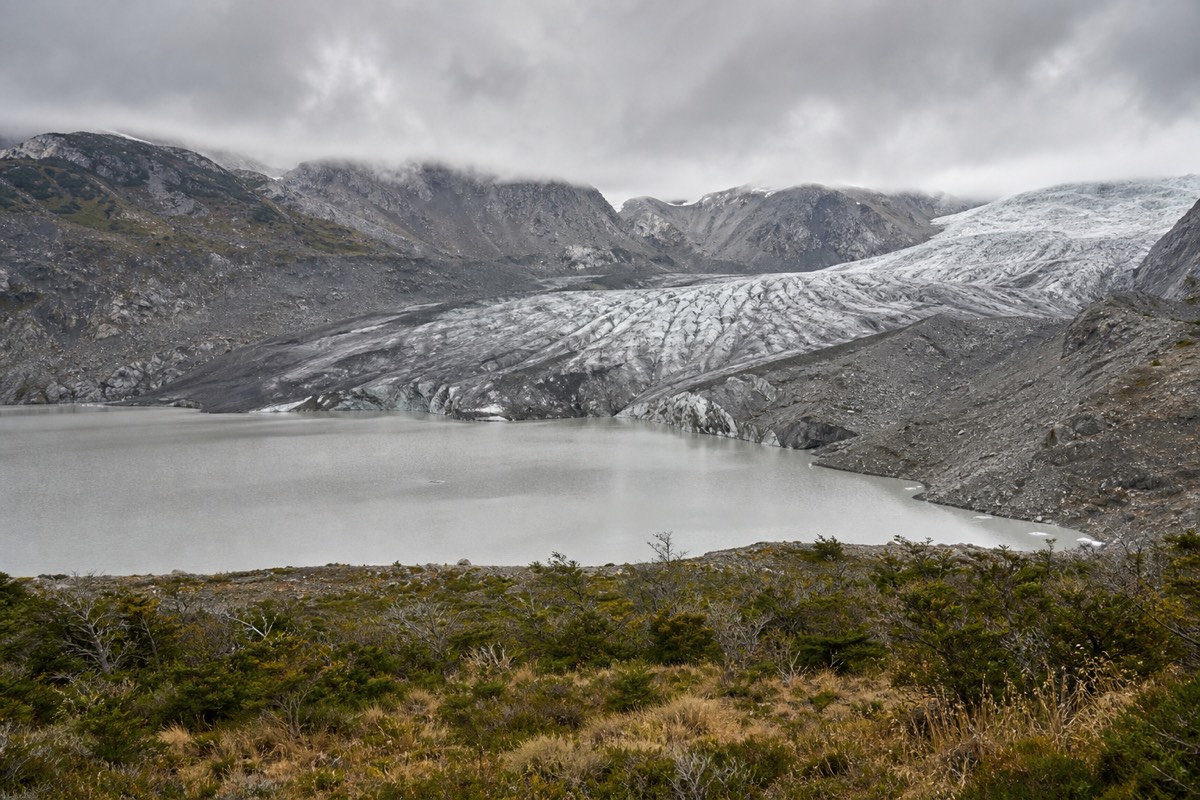
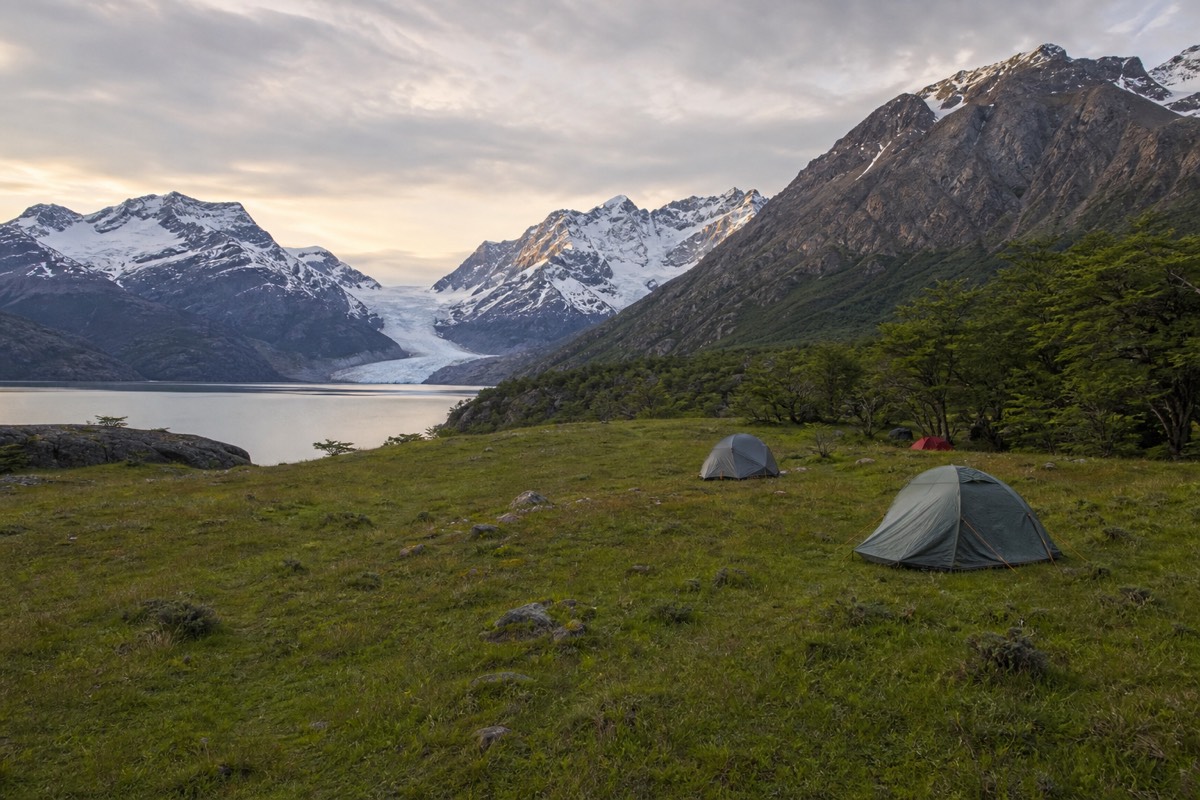
The back side is the reason people do it. Serón sits on open grassland by the Paine river. Dickson is a lake camp under a glacier that most visitors to the park never see a photograph of. Los Perros is a moraine lagoon with ice in it. None of those places have a road, a day tour or a crowd, and the contrast when you drop onto the W at Grey and meet forty people in an hour is the thing every O walker mentions afterwards. If you want the geography laid out properly, our full O Circuit route guide covers each camp in order.
How hard is the John Gardner Pass day?
The pass tops out at 1,200 m, the climb from Los Perros is roughly 550 to 600 m, and the day as a whole typically runs 10 to 12 hours. Departures from Los Perros are often required by 07:00. It is the most weather-exposed point on either route, and CONAF closes it outright when conditions are bad.
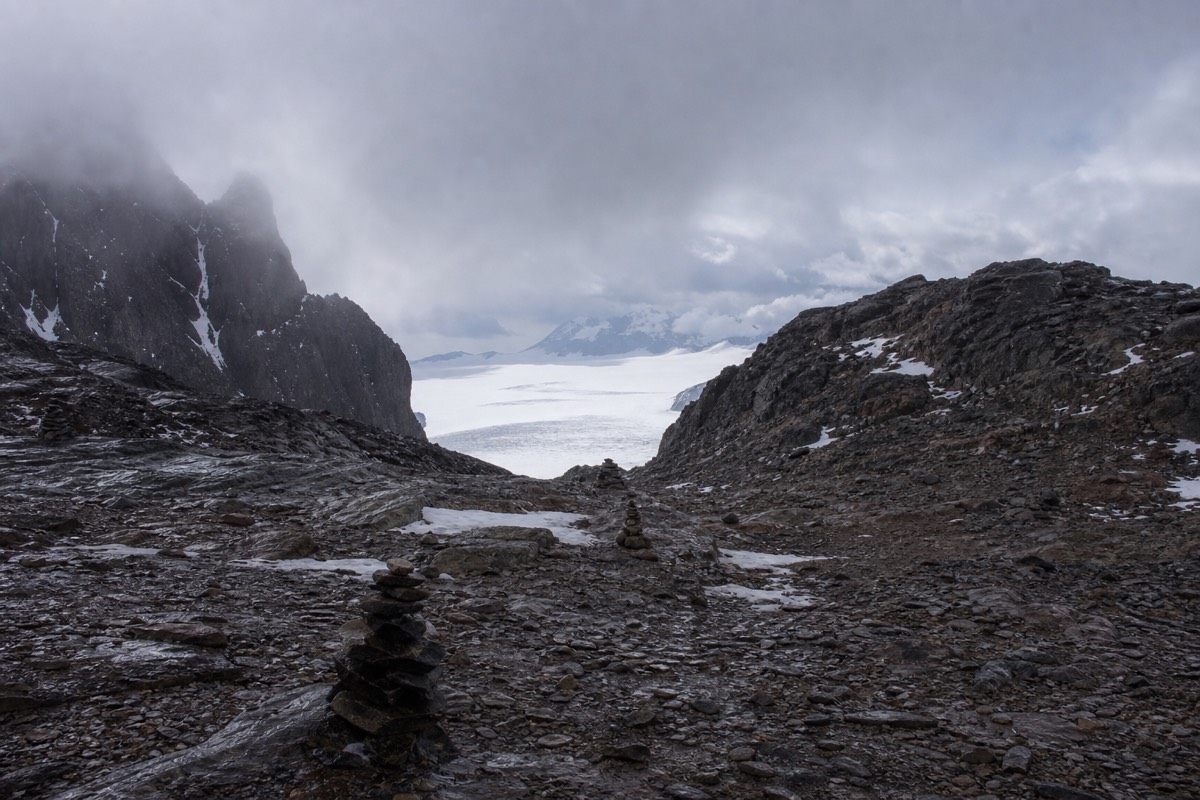
The numbers understate it. The ascent is short by alpine standards, but it is walked on scree and snow after a night at the most basic camp on the circuit, with cold showers and no wifi at Los Perros, and the descent on the far side is a long steep drop through forest to Grey. The direction is not optional either: the circuit is walked counter-clockwise and the pass may only be crossed from the Los Perros side, which is a rule about rescue and weather rather than preference. The park authority's own page is where closures get posted.
| W Trek | O Circuit | |
|---|---|---|
| Distance | About 80 km, sources 60 to 85 | Most sources 136 km, range 120 to 136 |
| Days | 4 to 5 | 7 to 9, most often 8 |
| Cumulative ascent | 2,730 m to 3,480 m published | About 4,971 m |
| Direction | Either way, west to east is common | Counter-clockwise only, no exceptions |
| Season | October to April independently | Roughly November to March |
| High point | Mirador Las Torres viewpoint | John Gardner Pass, 1,200 m |
| Self-guided cost | Roughly $600 to $1,500 | Roughly $500 to $1,500 |
| Guided cost | $1,700 to $3,500 and up | Published from about $2,550 |
Why is the O harder to book than the W?
Because the back-side camps are few, small and mandatory. Serón belongs to Las Torres, while Dickson, Los Perros and Grey belong to Vertice, and every night must be reserved before you are allowed to start. One missing night in the chain and the whole circuit collapses, because you cannot skip a camp on that section.
On the W, a failed booking means a different sleeping arrangement. On the O it means no trip. The concessionaires open the next season's calendar around April, and the back-side dates in the December and January window go quickly at the Vertice reservation system, with Serón booked separately through the Las Torres side. Add park entry as a third, separate purchase and you have three systems that do not talk to each other. We unpick that whole mess in the refugio and campsite booking guide.
Recommended tours by season
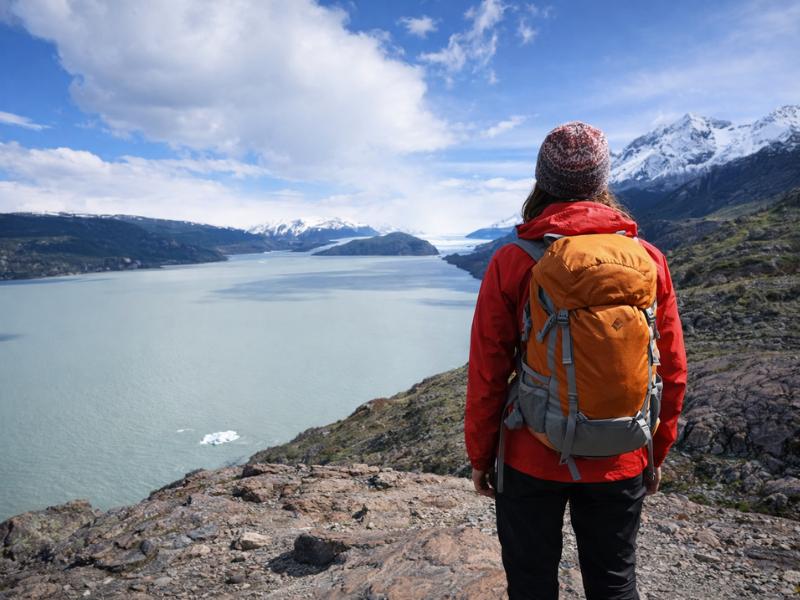
5-Day Torres del Paine W Trek – Guided Patagonia Adventure
Five days on the W with meals, park lodging vouchers and the bus and catamaran transfers.
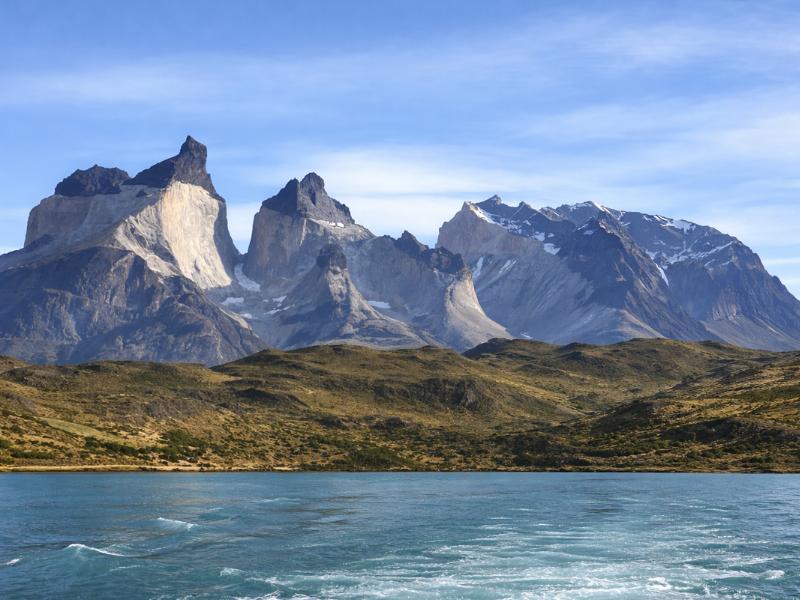
Torres del Paine W Trek Alternative 3-Day Guided Tour
Guided days to Base Torres, the French Valley and the Grey viewpoint, sleeping at Camping Pehoé rather than moving camp each night.
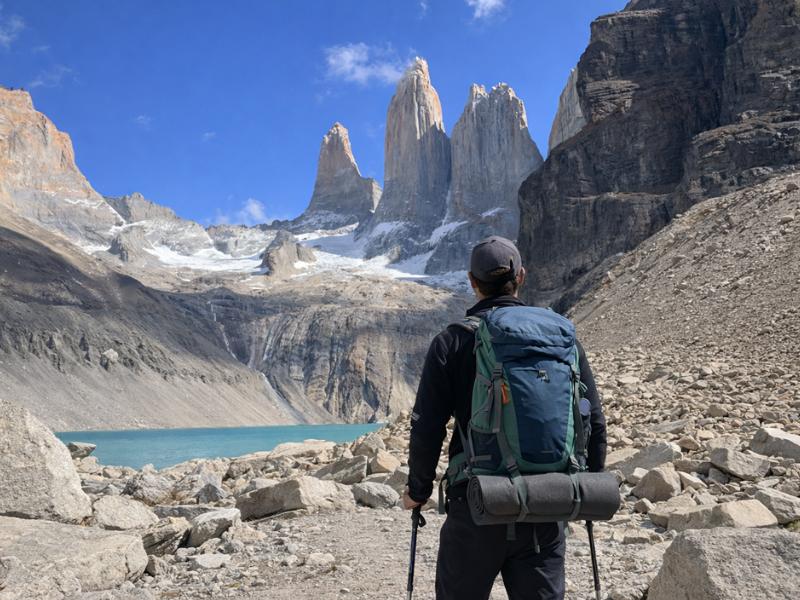
Torres del Paine 2-Day Express Tour – Aventura & Highlights
Two days including the Base Torres hike and a night at Pehoé. The shortest listed trip that still reaches the towers.
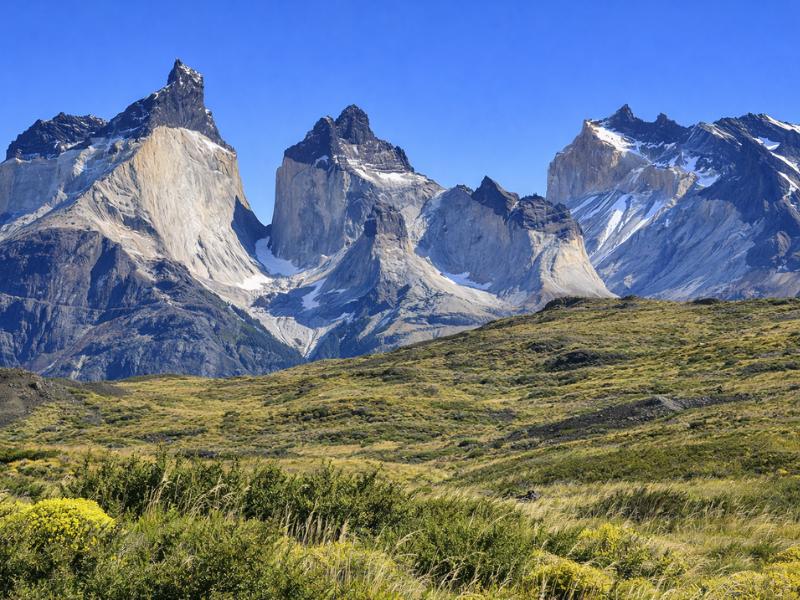
Torres del Paine Full-Day Adventure Tour from Puerto Natales
A full day in the park from Puerto Natales, for trips that cannot spare a multi-day circuit.
How much shorter is the O season?
Roughly November to March against October to April for the W, with exact opening and closing dates set by CONAF each year on conditions rather than on a calendar. The back side closes for winter entirely, and the circuit has been listed as closed until at least 31 October 2026.
That shorter window matters more than it sounds. It pushes the O into the months with the strongest wind in the regional record, November averaging 37 kph, and it removes the two shoulder months that make the W pleasant: April, when the lenga forest turns and the wind drops to around 29 kph, and October, when the park is quiet. If your travel dates are fixed and they fall outside that window, the decision has already been made for you. The month-by-month picture is in our weather breakdown for the park.
Who should skip the O and walk the W instead?
Anyone doing their first multi-day trek, anyone with fewer than ten days in Chile once travel is counted, anyone travelling outside November to March, and anyone who wants the option to change plans. The O commits you to a fixed direction, a fixed sequence of camps and a pass that can shut with no alternative route.
There is also a plain content argument. The three famous sights of the park, the towers, the French Valley and the Grey ice front, are all on the W. The O adds solitude and a pass, not new headline views. Travellers who assume the extra four days buy extra icons are usually disappointed, and it is worth reading the route-by-route comparison of the two circuits before committing four extra days of holiday.
What can you book through us instead?
The W, in three lengths. We list a five-day supported W, a three-day guided alternative and a two-day express, and nothing on this site sells the O Circuit, its camps or a guide for the pass. If the O is what you want, book it directly with the two concessionaires and CONAF.
For most people who arrive at this question, the honest recommendation is the five-day supported W package at $1,905, which handles the accommodation vouchers, full-board meals, bus and catamaran transfers and the QR check-in that trips people up. If eight days was never realistic, the three-day guided W alternative at $1,175 covers the Base Torres trail, the French Valley and the Grey viewpoint from a fixed camp at Pehoé, and the two-day express at $620 is the shortest version that still includes the towers. All of them, plus the day trips, sit on our list of Torres del Paine tours.