The Patagonia O Trek: A Full Guide to the Torres del Paine O Circuit
What the O circuit really involves: 136 kilometres, one mandatory direction, four reserved camps and a pass the park authority can close on you.
Two numbers decide this one. The O circuit is most often published at 136 kilometres with about 4,971 metres of cumulative ascent, and it takes seven to nine days, most often eight. Between Serón and Grey there is no road, no shop and no sensible way to quit.
That single fact shapes everything else. The W trek, which the O contains, is a set of out and back arms with catamarans, buses and staffed refugios within a few hours of wherever you are standing. The O adds a remote northern half where the only way onward is forwards, over a 1,200 metre pass that the park authority can close on you at short notice. Every decision below follows from that.
How far the O is against the W and its day walks
Commonly published figures. The O's full range runs 120 to 136 km and the W's 60 to 85, depending on which side trips are counted.
What is the O circuit, and how is it different from the W?
The O is a full loop around the Paine massif that swallows the entire W and adds a remote northern half. Published at 120 to 136 kilometres, walked in seven to nine days, with roughly 4,971 metres of climbing. The W is about 80 kilometres of out and back arms over four to five days. Same mountains, very different commitment.
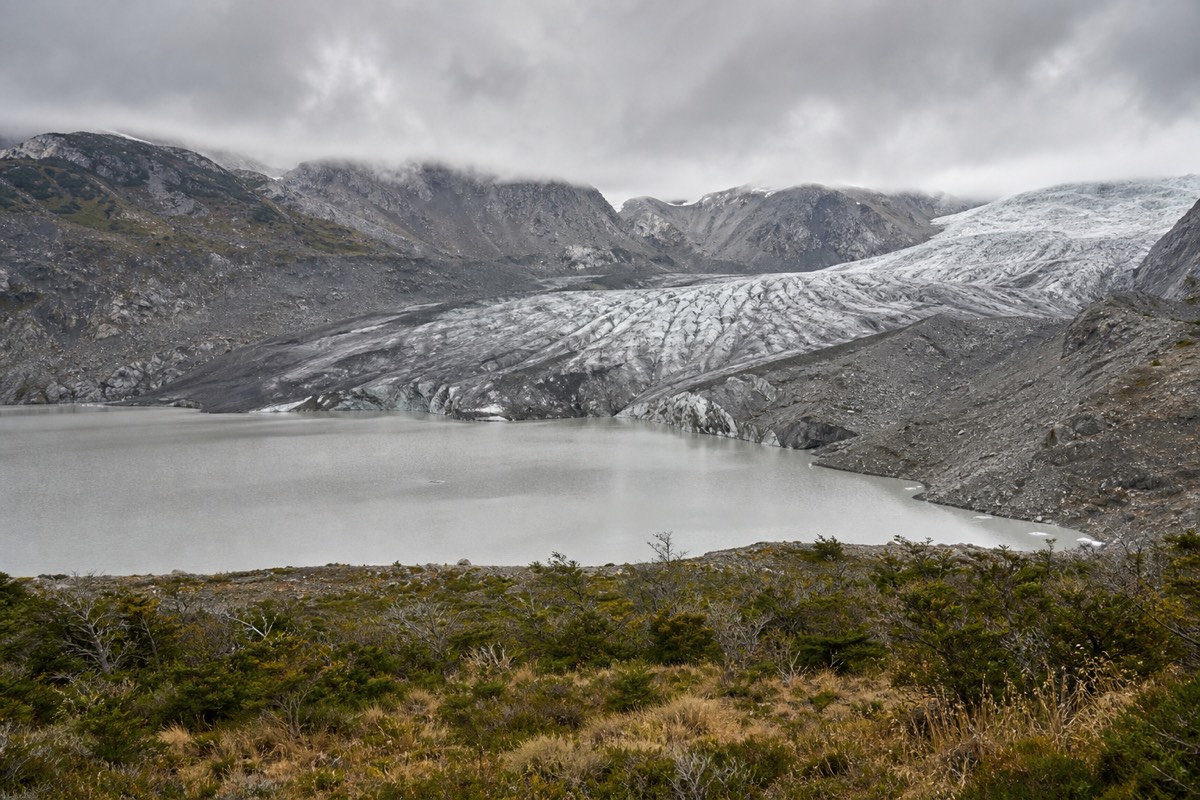
Walk the O and you spend the first half on the back side: Serón, Dickson, Los Perros, then the pass. Those days are quiet in a way the W never is, because far fewer people are permitted onto them and there are no day visitors at all. Once you drop off the John Gardner Pass to Grey, you rejoin the W and the trail fills up again with people who arrived by catamaran that morning.
The other difference is psychological. On the W you can walk out to a road or a boat in most of a day from almost anywhere. On the back side you cannot. Rangers describe the northern half as having no easy resupply and no mid-route exit, which is the honest reason it is treated as a serious multi-day route rather than a long walk. If you are still weighing the two, how the two routes compare head to head puts them side by side in more detail.
| Measure | O circuit | W trek |
|---|---|---|
| Published distance | 120 to 136 km, most sources 136 | about 80 km, sources range 60 to 85 |
| Cumulative ascent | about 4,971 m | 2,730 m to 3,480 m depending on source |
| Typical days | 7 to 9, most often 8 | 4 to 5 |
| Direction | counter-clockwise only, mandatory | west to east is the common way, either works |
| Season | roughly November to March | October to April for independent hikers |
| Mid-route exit | none on the back side | catamaran, buses and road access |
| Sold on this site | no | yes, guided and supported versions |
How long does it take to hike the O circuit?
Seven to nine days of walking, most commonly eight. Reported times run from six days for fast, light parties up to twelve for people taking rest days and weather days. Add a night in Puerto Natales at each end and an eight day circuit becomes a ten day trip on your calendar. The walking days are the easy part to plan. The days you lose are not.
Weather is the variable nobody budgets for. The John Gardner Pass is closed on conditions, and when it closes the queue at Los Perros simply waits, because there is nowhere else to go and no way round. That waiting day has to exist somewhere in your booking, which is awkward when every night on the route is a separate reservation with a fixed date on it.
The published figures themselves also disagree more than most people expect, so treat any single number you read as one source's answer rather than the answer. Rangers quote higher distances when the route variants are counted, and the ascent total moves depending on whether the side trip to the Grey mirador and the French Valley are included.
| Figure | Commonly published | Full range across sources |
|---|---|---|
| Total distance | 136 km | 120 to 136 km, rangers quote up to 180 km with variants |
| Total distance in miles | 85 miles | 75 to 85 miles |
| Days on the trail | 8 | 7 to 9 standard, 6 to 12 reported |
| Cumulative ascent | 4,971 m | about 4,971 m to roughly 5,000 m |
| John Gardner Pass ascent | 550 to 600 m from Los Perros | 900 to 950 m counted from camp across the whole day |
How hard is the O circuit in Patagonia?
Hard, and harder than the sum of its days. No single climb matches an alpine route, but you carry a multi-day pack for eight days, sleep in tents in wind, cross one exposed 1,200 metre pass on a fixed schedule, and have no option to bail out once you are on the back side. Fitness matters less than tolerance for repetition and weather.
Compare it with the day walk most visitors do. The Base Torres trail gains 1,041 metres and takes eight to ten hours, and plenty of fit travellers find it the hardest day of their trip. On the O you do something in that register most days, with a pack, and then do it again the next morning whether or not it is raining. Our full breakdown of the Base Torres trail section by section is a fair self-test: if that day would break you, the circuit will.
The pass day is the one people train for, and reasonably so. It runs ten to twelve hours, the ground is steep, rocky and often muddy, and the top is the most weather-exposed point on either route. But the days that actually end trips are the unglamorous ones: a wet stage into Dickson with a soaked sleeping bag, or an ankle turned on the descent to Grey where there is no vehicle within a day's walk.
| Route | Distance | Ascent | Pack carried | Bookable with us |
|---|---|---|---|---|
| O circuit | 120 to 136 km | about 4,971 m | full multi-day pack | no |
| W trek, self-guided | about 80 km | 2,730 to 3,480 m | full multi-day pack | yes, supported 5-day version |
| Guided 3-day W alternative | not published as one figure | not published as one figure | day pack, fixed base camp | yes |
| Base Torres in a day | 21 km round trip | 1,041 m | day pack | yes |
| 2-day express trip | about 22 km on day one | not published as one figure | day pack | yes |
Why does the O circuit only run counter-clockwise?
Because the park permits the John Gardner Pass to be crossed from the Los Perros side only. That makes the direction mandatory rather than advisory: you walk north out of the Torres sector to Serón, round through Dickson and Los Perros, cross the pass westward, and drop to Grey. Nobody comes the other way.
The practical reasons hold up. The climb from Los Perros is the shorter, more predictable side of the pass, so parties reach the top earlier in the day, before the wind has built. The Grey side is a long, steep descent that is far safer to lose height on than to gain it on with a heavy pack. And a single direction of travel on a narrow, exposed section means no two parties have to pass each other in bad visibility.
There is a booking consequence too. Because the whole route flows one way, your reservations have to fall in the correct order on consecutive dates, and a night you cannot get at Los Perros does not just cost you that night, it breaks the sequence on both sides of it. This is the single most common way an O itinerary falls apart at the planning stage.
The back side camp by camp: Serón, Dickson, Los Perros and Grey
Four reservations carry the northern half. Serón is run by Las Torres Patagonia; Dickson, Los Perros and Grey are run by Vertice Patagonia. Every one of them must be booked in advance, none can be skipped, and Los Perros is deliberately the most basic because it exists to put you within striking distance of the pass.
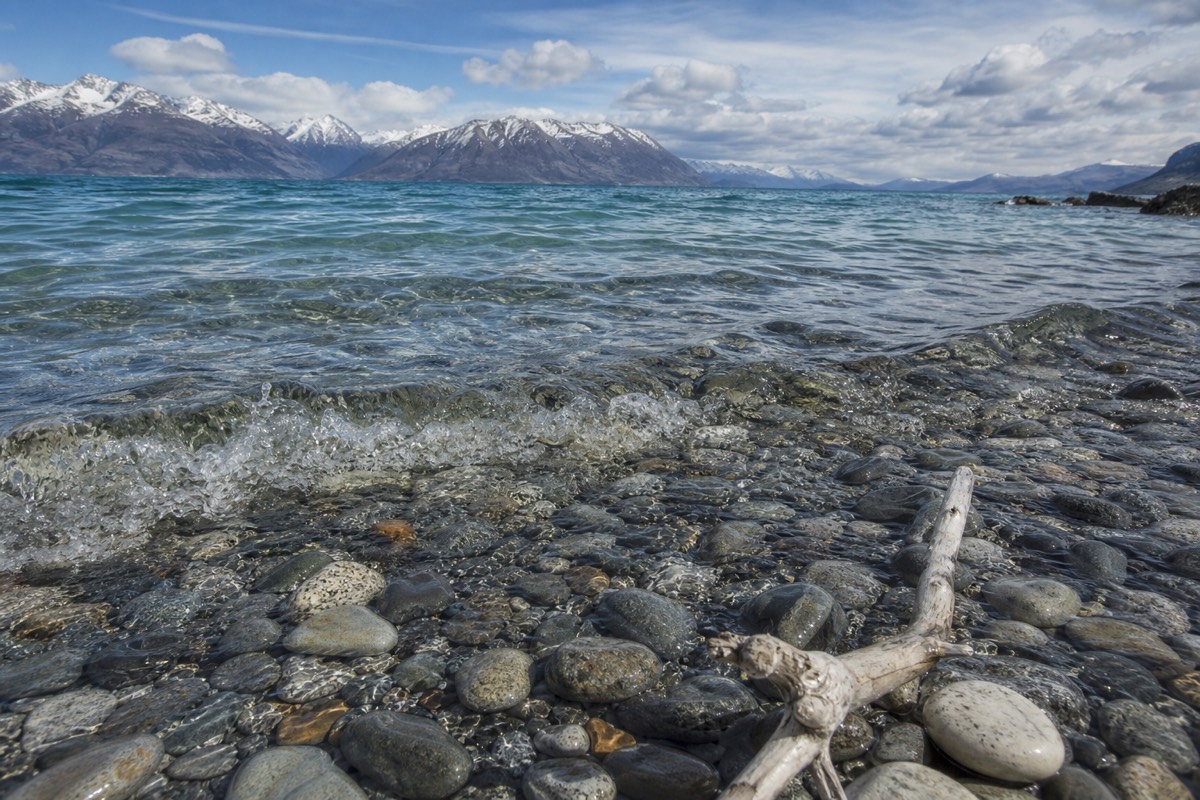
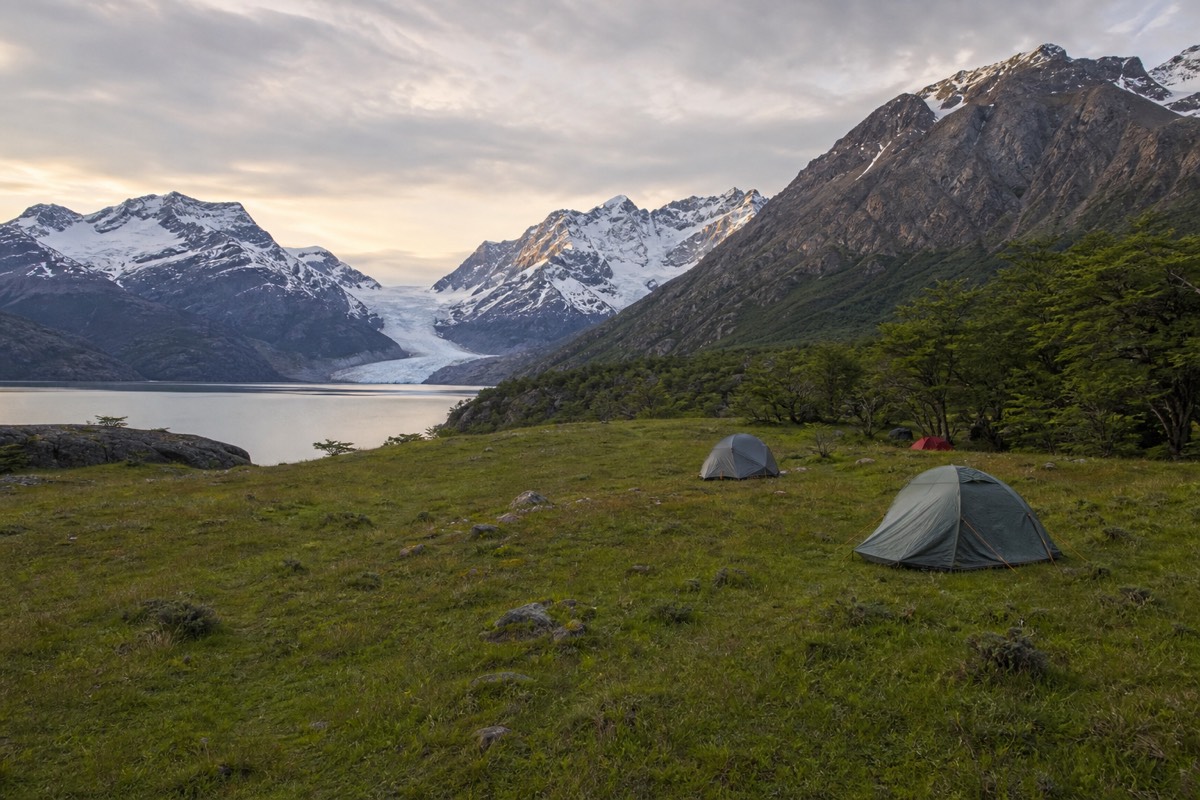
Los Perros deserves its reputation. Cold showers, no wifi, and a night that ends with an early alarm because it is the last stop before the crossing. Dickson, by contrast, sits on a lake with the glacier behind it and is the camp people remember fondly. Serón is the gentlest introduction, out on grassland at the start of the loop, and it is also the dearest of the four because it sits inside the Las Torres pricing rather than the Vertice one.
One name to be careful with. "Paso" appears on plenty of route descriptions, and sources do not agree that it is a bookable camp in the current season. Treat the pass as something you cross in a day, not somewhere you sleep, and build your itinerary on the four camps that actually take reservations. Booking mechanics for all of them, including the W-side beds, are covered in the refugio and campsite booking systems.
| Camp | Operator | Type | Published price per person | What it is like |
|---|---|---|---|---|
| Serón | Las Torres Patagonia | equipped camping | $40 to $90 in high season | open grassland, toilets and showers, meals possible |
| Dickson | Vertice Patagonia | camping and refugio | $11 to $14 own tent, more for a bed | lakeside, showers, meals available |
| Los Perros | Vertice Patagonia | camping | $11 to $14 own tent | basic, cold showers, no wifi, last camp before the pass |
| Paso area | not agreed across sources | not a standard bookable camp | none published | treat the pass as a crossing, not a stop |
| Grey | Vertice Patagonia | camping and refugio | $11 to $14 own tent, dorm beds $46 to $114 | glacier views, meals, back on the W |
What actually happens on the John Gardner Pass day?
You leave Los Perros early, often required to depart by 07:00, climb roughly 550 to 600 metres to a col at 1,200 metres, and then spend the rest of a ten to twelve hour day descending to Grey. Counting the whole day from camp, the climbing works out at around 900 to 950 metres. The top is the most weather-exposed ground on either route.
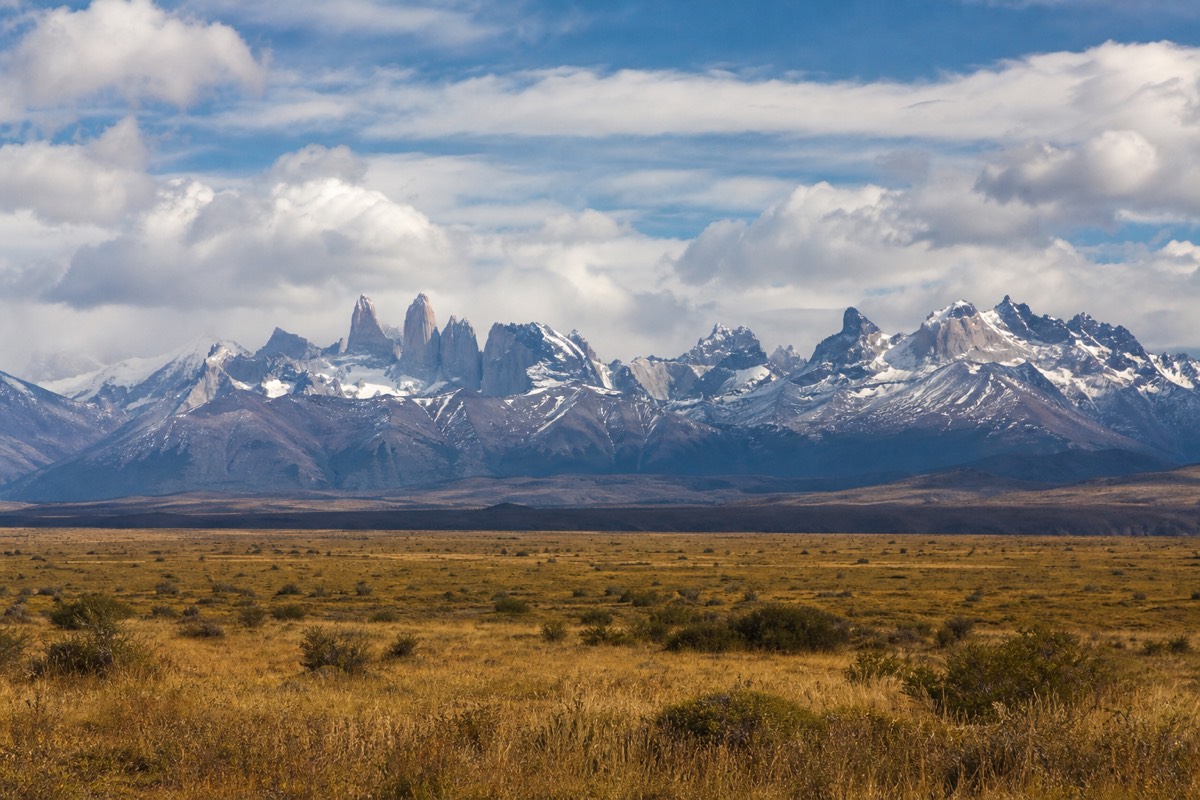
The 07:00 rule is not a suggestion from a guidebook. It exists because the wind builds through the day here as reliably as it does everywhere else in the park, and because the descent on the far side is long enough that a late start puts you on it in failing light. Camp staff enforce it, and on marginal days the answer is simply that nobody goes.
Closure is the part to plan around. CONAF closes the pass on weather and trail conditions, and the decision belongs to them, not to your itinerary or your guide. The park authority publishes its current status and access rules at CONAF's own park page, and that is the only source worth checking on the morning it matters.
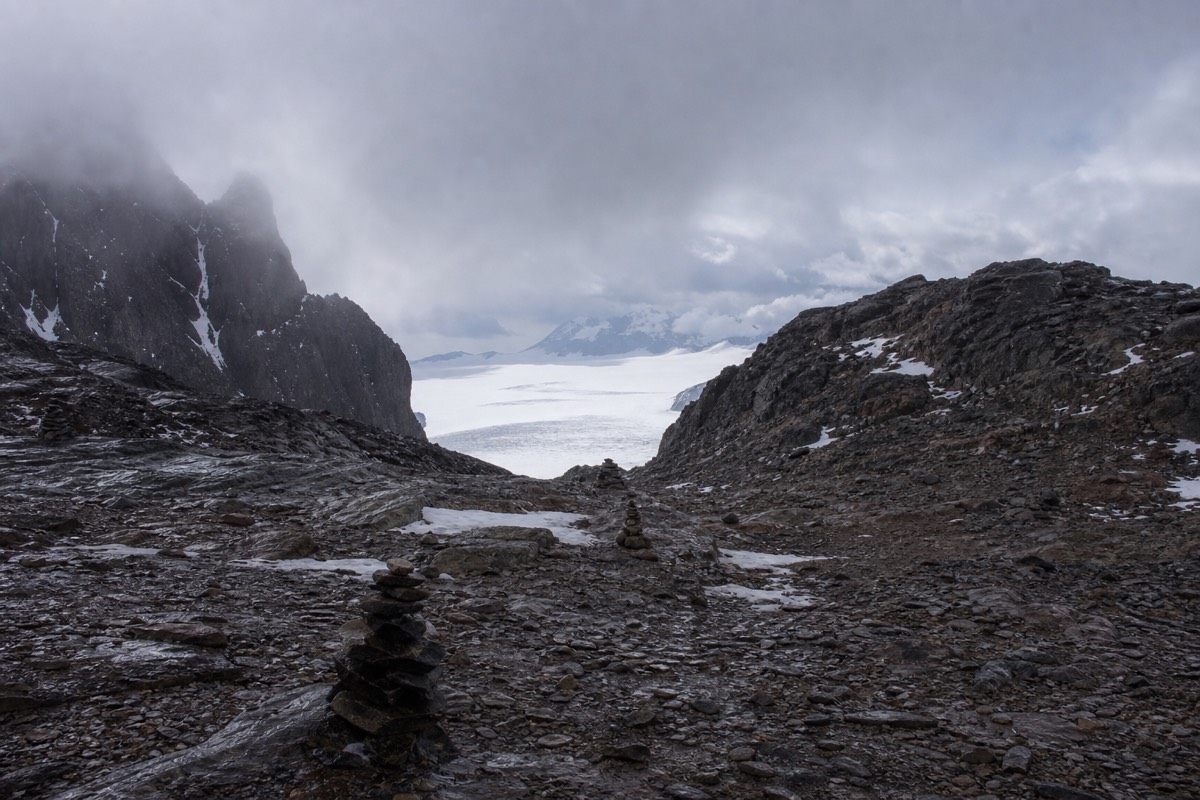
What you get for it is the view most people come for: the moment the ground drops away on the western side and the Southern Patagonian Ice Field opens up below, with Grey Glacier running away from you down the valley. Everything you can see from the pass, you can also see from the water on a three hour boat, which is worth knowing before you commit eight days to it. We describe the alternatives in what Grey Glacier looks like up close.
| The pass day | Figure |
|---|---|
| Pass elevation | 1,200 m |
| Ascent from Los Perros | roughly 550 to 600 m |
| Ascent counted from camp across the day | 900 to 950 m |
| Typical duration | 10 to 12 hours |
| Departure requirement | often required by 07:00 from Los Perros |
| Direction permitted | from the Los Perros side only |
| Who closes it | CONAF, on weather and trail conditions |
When is the O circuit open, and who decides the dates?
Roughly November to March, but CONAF sets the exact opening and closing dates every year on conditions rather than on the calendar. The back side is closed through winter. At the time of writing the circuit was listed as closed until at least 31 October 2026, which is the kind of date that moves.
The camps have their own seasons layered on top. Paine Grande and Grey open around 1 October, Dickson around 1 November, and the Las Torres sectors run roughly 1 October to 25 April 2026. A route that needs Dickson cannot start before Dickson opens, no matter what the park gates are doing, which is why the practical O season is narrower than the park season.
Gate hours change with the season as well: 07:00 to 21:00 from October to April, and 08:00 to 18:30 from May to September. Neither matters much once you are inside the loop, but they matter a great deal on the day you arrive and the day you come out. For the wider picture of what each month does to the park, see when the park season opens and closes.
| Sector or gate | Season or hours | Set by |
|---|---|---|
| O circuit back side | roughly November to March, closed in winter | CONAF, annually, on conditions |
| Paine Grande and Grey | open around 1 October | Vertice Patagonia |
| Dickson | opens around 1 November | Vertice Patagonia |
| Serón and the Las Torres sectors | roughly 1 October to 25 April 2026 | Las Torres Patagonia |
| Park gates, October to April | 07:00 to 21:00 | CONAF |
| Park gates, May to September | 08:00 to 18:30 | CONAF |
How does booking work across two concessionaires and one park ticket?
Recommended tours by season
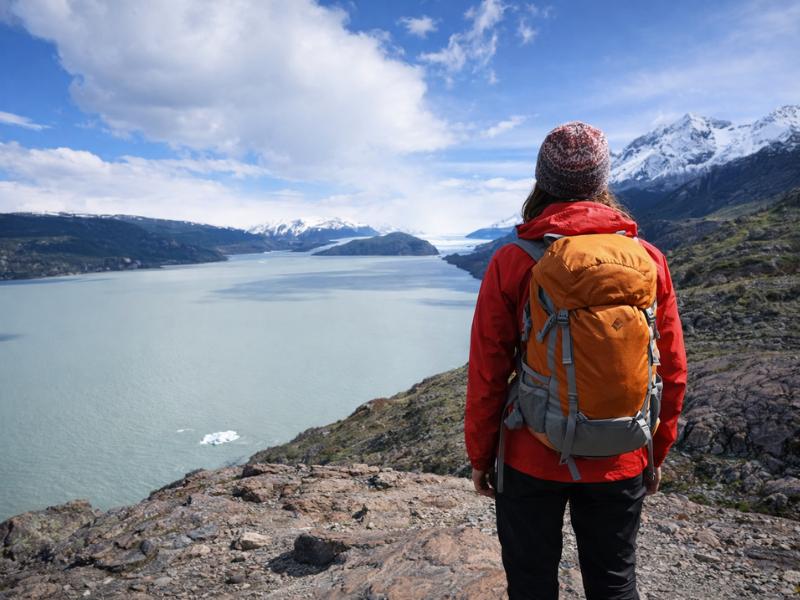
5-Day Torres del Paine W Trek – Guided Patagonia Adventure
Supported rather than led. Confirmed nights, full-board meals, bus and catamaran, and the four W legs. The closest substitute if the back-side camps will not line up.
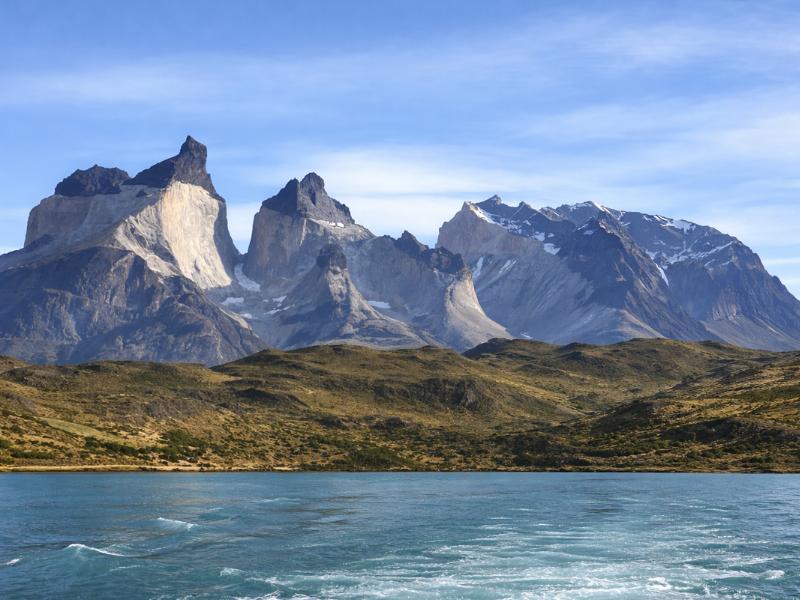
Torres del Paine W Trek Alternative 3-Day Guided Tour
A local guide, a day pack and two nights at a fixed camp on Lake Pehoé. Base Torres, the French Valley and the Grey Glacier viewpoint.
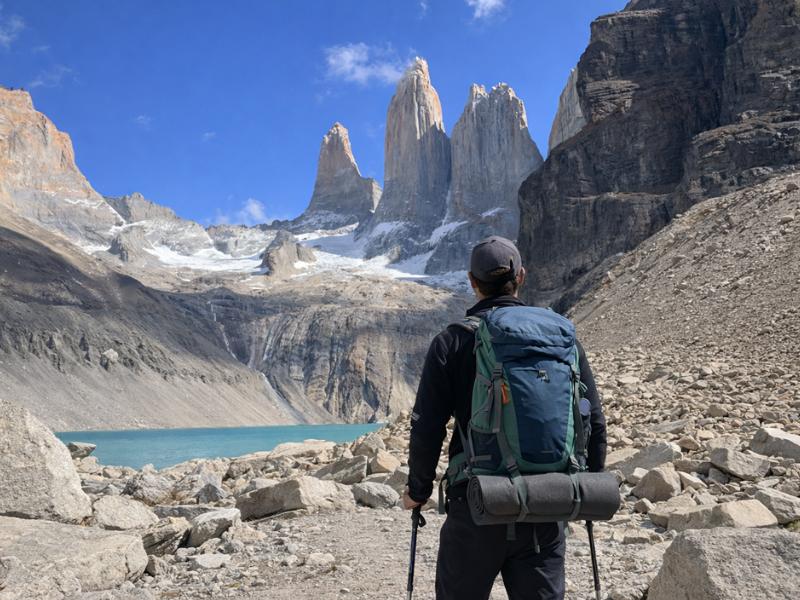
Torres del Paine 2-Day Express Tour – Aventura & Highlights
One overnight at Pehoé. Base Torres on day one; Cuernos, Cóndor and the Aonikenk trail on day two. Winter departures include poles and crampons.
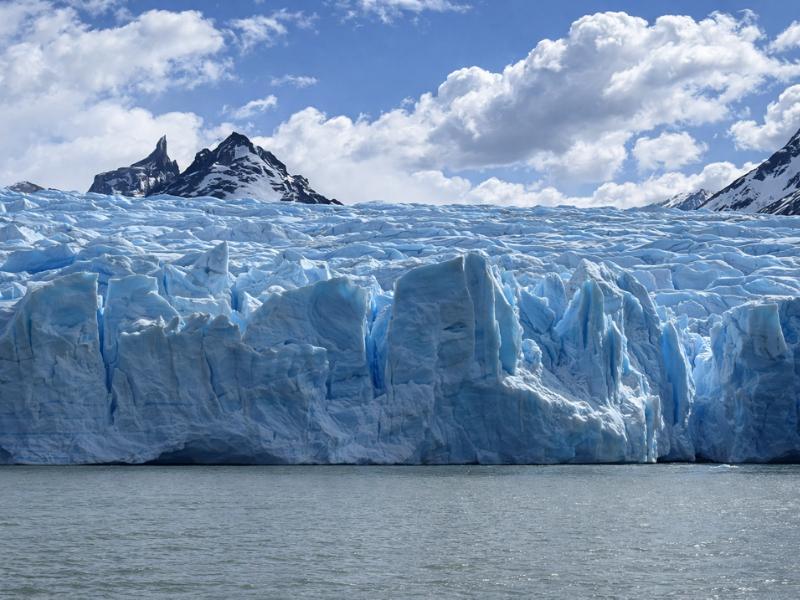
Torres del Paine: 3-Hour Grey Glacier Scenic Cruise
Three hours on the water in front of Grey Glacier. The same ice the John Gardner Pass looks down on, without the crossing.
Three separate systems, none of which talks to the others. Las Torres Patagonia holds Central, Chileno and Serón. Vertice Patagonia holds Paine Grande, Grey, Dickson and Los Perros. Park entry is a third booking at pasesparques.cl. You need all three to line up on consecutive dates.
The calendars for the next season open around April, and the popular dates go quickly. Chileno sells out first every year, which matters on the O because most itineraries finish through that sector. If you are chasing a specific week in December or January, April is when you sit down and do it, not August.
Book the Vertice nights at Vertice Patagonia's booking site and the Serón night at the Las Torres Patagonia site, then buy entry at the official park ticketing portal. The multi-day entrance ticket, published at 48,500 Chilean pesos for a foreign adult and valid up to ten consecutive days, is the right one for a circuit. It is date-locked and non-refundable, so buy it after the beds are confirmed, never before. Current prices and the exemptions are set out in park entry prices and the ticket rules.
| Booking | Covers | Where | Notes |
|---|---|---|---|
| Las Torres Patagonia | Central, Chileno, Serón | lastorres.com | Chileno sells out first every season |
| Vertice Patagonia | Paine Grande, Grey, Dickson, Los Perros | vertice.travel | holds three of the four back-side camps |
| Park entry | the national park itself | pasesparques.cl | 48,500 CLP multi-day, foreign adult, date-locked |
Food, resupply and the absence of an exit
There is no resupply point on the back side and no way to leave the loop between Serón and Grey. You either carry eight days of food or buy meals at the camps that sell them, and you carry a working plan for a bad day, because a road is not part of it.
Camp meals are available at most of the sites, at published figures clustering around $25 for breakfast, $20 to $50 for a box lunch and $35 to $70 for dinner, with a full board supplement often quoted around $100 a day. Sources vary a lot on these, so check the concessionaire's own page rather than a blog. Eight days of bought meals is a serious line in the budget and it is the main reason many people carry food instead.
Nothing in the park is free any more. The old CONAF campsites that people used to rely on closed and have not reopened for the 2025-26 season, so every night on the circuit is a paid, reserved night. Gear can be hired in town before you go, with Rental Natales publishing around $37 a day for a tent and $8 a day for a sleeping bag, which is often cheaper than flying your own kit south. What to actually put in the pack is covered in the packing list for a multi-day trek.
Fire is the one rule that carries real consequences. No fires, no stoves outside designated cooking areas, no smoking anywhere in the park. Chilean law 20.653 provides fines up to 2 million pesos, up to three years in prison and expulsion from the park, and the park has burned badly enough in living memory that the rangers do not treat it as a formality.
What does the O cost, and how does that compare with a guided W?
Self-guided, published all-in figures run roughly $500 to $1,500 per person depending on how many nights are in your own tent. Guided O packages are published from about $2,550, and the upper end of the range runs to roughly $4,590. Our own guided three-day W and supported five-day W sit between those two poles.
The self-guided number hides how much of it is fixed. Park entry, the camp nights and transport to and from Puerto Natales barely move whatever you do. What actually swings the total is beds against your own tent, and bought meals against carried food. Choose refugio beds and full board on the sectors that offer them and the circuit stops being a budget trip very quickly.
Set against that, the guided three-day W alternative is currently $1,175 with a local guide, meals, and two nights at a fixed camp on Lake Pehoé so you are not carrying a full pack from site to site. It covers the Base Torres trail, the French Valley and the Grey Glacier viewpoint, which is the scenic core of the massif. Its published rating is 5 across 320 bookings on the listing.
Is the O Trek worth it?
It is worth it if the solitude of the back side is the point, and not worth it if the views are the point. The scenery people photograph, the towers, the Cuernos, the French Valley and Grey Glacier, is almost all on the W. The O adds Serón, Dickson, Los Perros and one very good pass, at the cost of four extra days and a much harder booking problem.
Put plainly: the O is a route for people who want the walking itself, who are comfortable being three days from a road, and who have the calendar flexibility to absorb a closed pass. It rewards them with the emptiest days in the park. If you have walked multi-day routes before and the logistics do not frighten you, it earns its reputation.
If, on the other hand, you have eight days and want to see as much of the massif as possible, the W does that better, and the days you save are days you can spend on the water at Grey or watching wildlife on the eastern steppe. Our shorter take on the same question sits at our verdict on the O in brief, and the W trek route in full lays out what the four to five day version actually delivers.
We do not sell the O circuit, so what should you do instead?
We list nine Torres del Paine trips and the O circuit is not one of them. Nothing on this site books a night at Serón, Dickson or Los Perros. If you want the circuit, book it directly with the two concessionaires and CONAF, using the links above, and treat this guide as planning material rather than a sales page.
What we do sell is the W and the day trips, and for most people asking about the O those are the better fit anyway. The supported five-day W is currently $1,905 and is the closest thing to the O experience we can arrange: confirmed accommodation vouchers, full-board meals, bus and catamaran transfers and a briefing, with the walking done under your own steam. Note that this one is supported rather than led, so a professional guide is not included, and the listing gives the legs as Base Torres 19.5 km round trip, the Nordenskjöld leg 13.5 km, the French Valley day 20.5 km and the Grey day 22 km round trip.
If eight days was never realistic, the two-day express trip at $620 puts the Base Torres viewpoint and the Cuernos and Condor walks into a single overnight, with a tent at Pehoé camping and meals included. It has a published 4.8 rating across 823 bookings. The full range, from a three hour glacier cruise to a six day self-drive, is on the Torres del Paine tours we list.