French Valley (Valle Francés): The Middle Arm of the W Trek
The middle arm of the W, where two viewpoints sit two hours apart and the decision between them is best made at the trail junction.
Two viewpoints, one valley, and a difference of roughly two hours between them. That is the decision the French Valley actually puts in front of you, and most people make it badly because they make it the night before instead of at the trail junction.
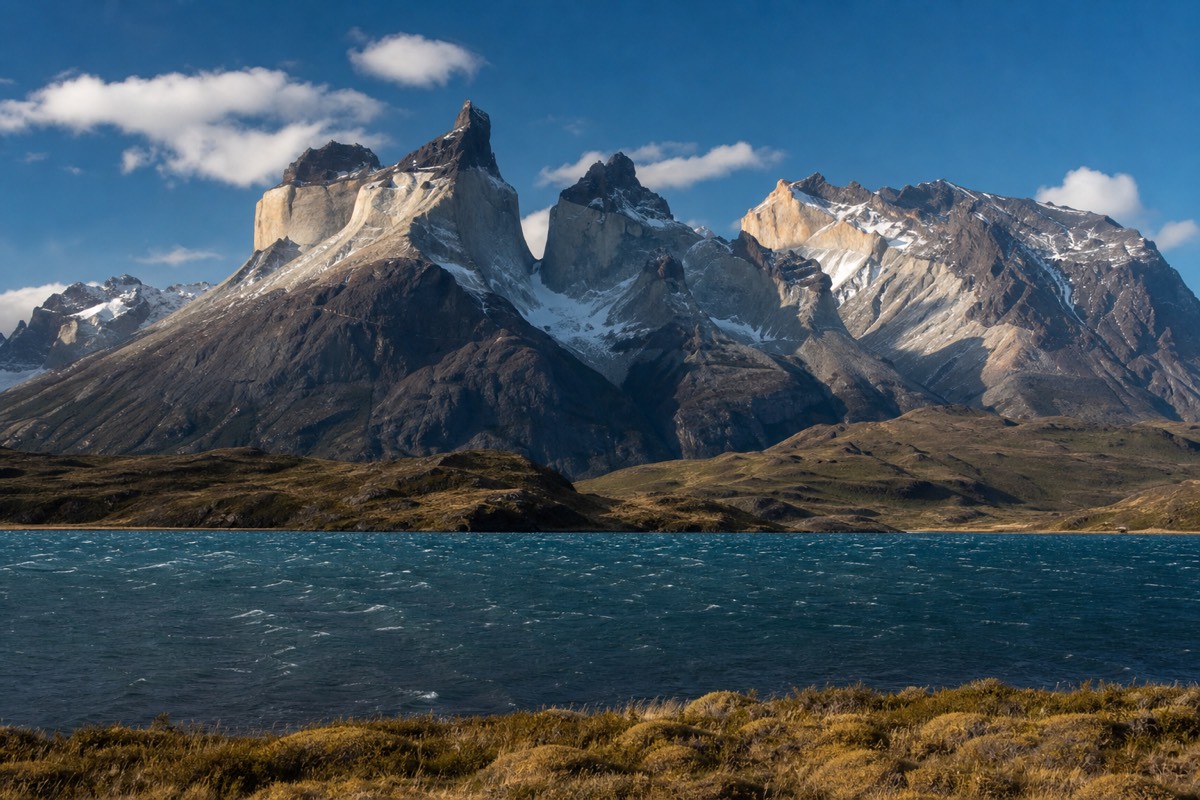
Valle Francés is the middle arm of the W, the one that runs north into the massif between the Cuernos and Paine Grande. It is the section of the route with the least road access, the most wind funnelling and the highest chance of being turned back, and it is also the part of the W that people talk about for years afterwards. Here is how it works.
The French Valley against the W's other side trips
Side trips are shown out and back, stages one way. The Británico figure is published anywhere between 7.5 and 12 km depending on the source and the start point.
Where does the French Valley sit on the W trek?
In the middle. Walking the standard west to east direction, you cross Lake Pehoé by catamaran to Paine Grande, do the Grey arm, then walk east to Campamento Italiano and turn north into Valle Francés. It is the second of the W's three arms, and the only one that is a genuine dead end.
The geometry matters because the valley is not on the way to anywhere. The Grey arm and the Base Torres arm both sit at the ends of the route where you sleep nearby; the French Valley hangs off the middle of a walking day. You arrive at Italiano having already walked, drop your pack, go up, come back down to the same spot, pick the pack up and keep going. That structure is why it is the arm most often cut when a trip runs late or the weather turns.
The approach legs either side are moderate. Torres Central to Refugio Cuernos along Lake Nordenskjöld is 11 kilometres one way with about 200 metres of ascent and takes around four hours. Refugio Francés to Paine Grande is 7.5 kilometres one way, about 100 metres, roughly 2.5 hours. Neither is hard. The valley itself is what makes the day. Where all of this sits on the ground is easier to picture with the park trail map laid out, and the full route is in the whole W trek explained.
| Leg | Distance | Ascent | Typical time |
|---|---|---|---|
| Torres Central to Refugio Cuernos, along Lake Nordenskjöld | 11 km one way | about 200 m | 4 hours |
| Campamento Italiano to Mirador Francés, out and back | 3.9 km | 274 m | 1.5 hours |
| Campamento Italiano to Mirador Británico, out and back | 7.5 to 12 km, sources differ | 640 m | 3.5 to 4 hours |
| Refugio Francés to Paine Grande | 7.5 km one way | about 100 m | 2.5 hours |
| The whole French Valley day as sold on the supported 5-day W | 20.5 km | not published as one figure | a full day |
What is Campamento Italiano, and what is it not?
It is the junction camp at the mouth of the valley, the point where the W's middle arm leaves the main trail, and the place you leave your pack before going up. It is not a refugio, not a shop and not a place to arrange a bed on the day. Treat it as a trailhead with tent sites, nothing more.
Almost everyone who walks the valley starts and finishes here, which is why both published viewpoint distances are measured from Italiano rather than from a refugio. If you are sleeping at Refugio Francés or Cuernos, or at Paine Grande on the other side, you add the approach leg on top of the valley figures, and that is where a "3.5 hour" walk becomes a nine hour day.
Beds either side of the junction are split between the two concessionaires, and they book separately: Paine Grande, Francés and Grey through Vertice Patagonia, Central, Chileno and Cuernos through Las Torres Patagonia. Neither system knows what the other is holding, which is the single biggest planning irritation on the W. We set the whole thing out in how beds on the W are booked.
| Where you sleep | Operator | Published price per person | Relation to the valley |
|---|---|---|---|
| Paine Grande | Vertice Patagonia | own tent $11 to $14, dorm beds $46 to $114 | west side, adds the 7.5 km approach |
| Refugio Francés | Vertice Patagonia | own tent $11 to $14, dorm beds $46 to $114 | closest bed on the eastern side |
| Refugio Cuernos | Las Torres Patagonia | equipped camping $30 to $50 | eastern side, along Lake Nordenskjöld |
| Campamento Italiano | at the junction itself | no published rate we can quote | the trailhead for both viewpoints |
Mirador Francés or Mirador Británico: two different days
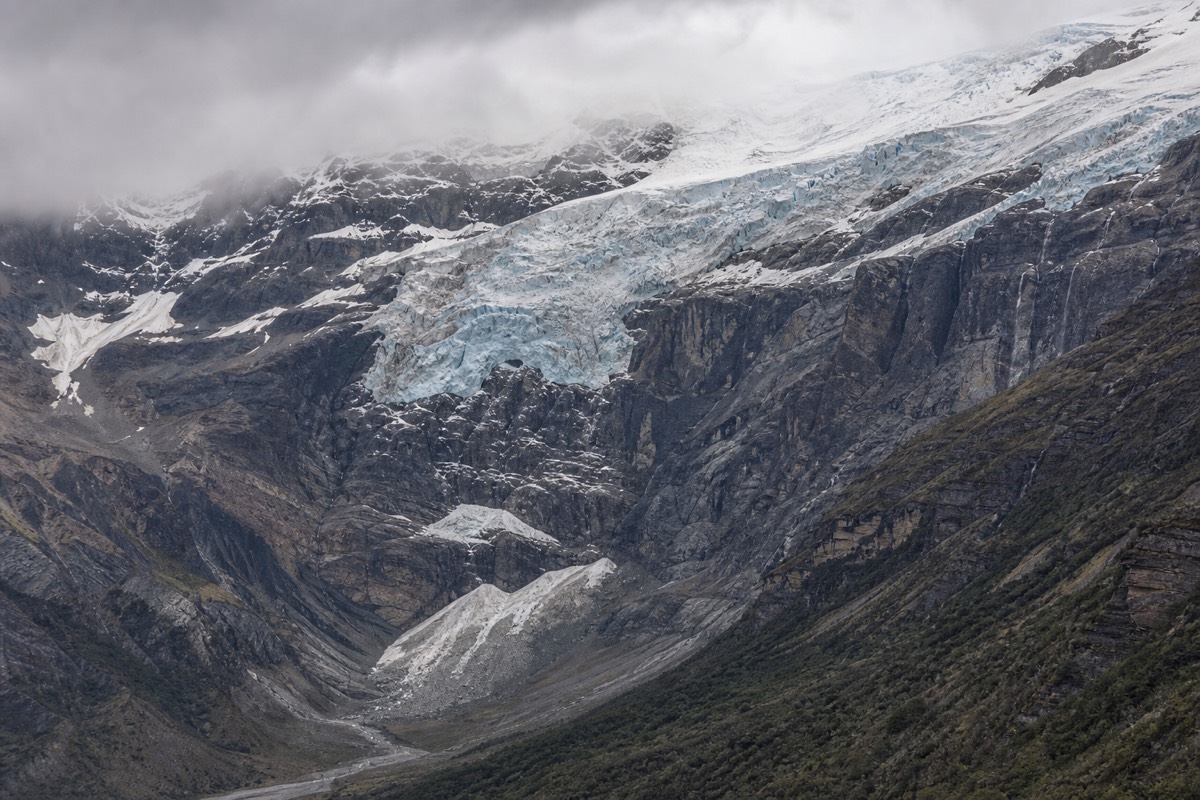
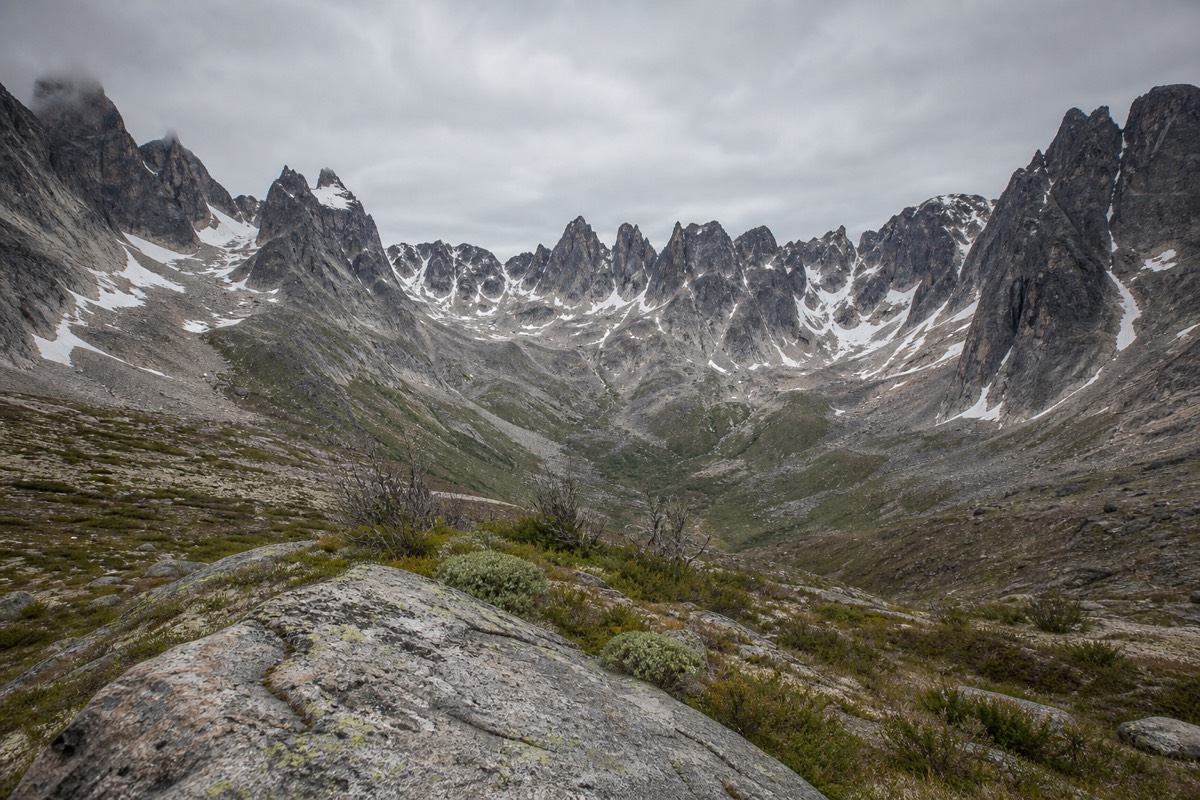
Mirador Francés is 3.9 kilometres out and back from Italiano with 274 metres of ascent, about 1.5 hours, and it is where the hanging glacier is. Mirador Británico is published at 7.5 to 12 kilometres out and back with 640 metres of ascent, 3.5 to 4 hours, and it is the amphitheatre at the head of the valley.
They are not two stages of the same walk in any meaningful sense. The first is a short, moderate climb that most people on a W can do with a light pack in an hour and a half and still make their next camp comfortably. The second more than doubles the ascent, adds two to three hours, and turns a stage day into a long one. Some sources describe the full Británico day from Paine Grande as 21 kilometres and seven to eight hours, which is the version to plan for if you are not sleeping close by.
The honest advice is that Francés gives you the single most dramatic thing in the valley for a fraction of the effort, and Británico gives you the panorama: a ring of peaks around the head of the valley that you cannot see from lower down. If you have the hours and the weather, go on. If either is in doubt, take the first viewpoint and keep your day intact.
| Comparison | Mirador Francés | Mirador Británico |
|---|---|---|
| Distance from Italiano, out and back | 3.9 km | 7.5 to 12 km depending on source |
| Ascent | 274 m | 640 m |
| Typical time | 1.5 hours | 3.5 to 4 hours |
| Rated | moderate | hard |
| What you go for | the hanging glacier on the flank of Paine Grande | the amphitheatre of peaks at the head of the valley |
| Effect on your stage day | minimal | turns it into a long day |
The hanging glacier, and the noise
The reason to stop at Mirador Francés is the hanging glacier on the eastern flank of Paine Grande, directly across the valley from the viewpoint. Ice breaks off it, and because you are looking at it across open air rather than standing beneath it, the sound reaches you a beat after the movement does.
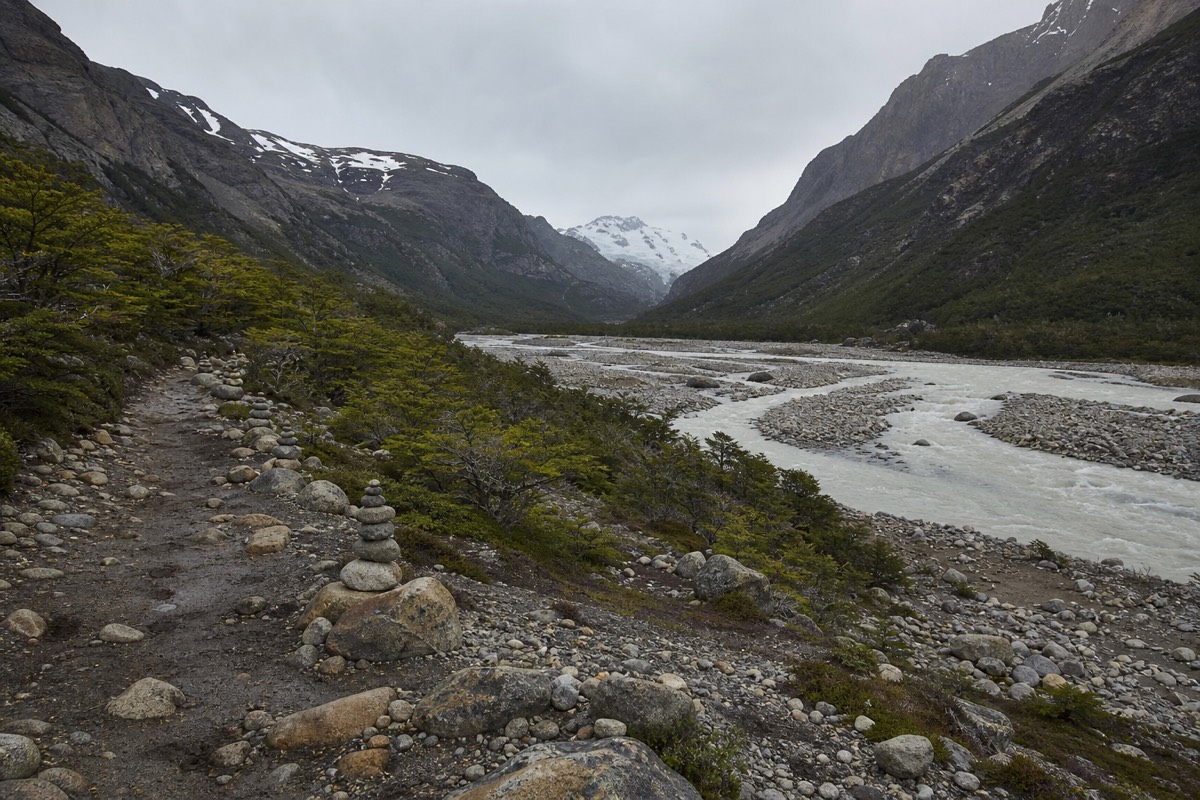
People stand there longer than they planned to. That is the practical point: a viewpoint listed at 1.5 hours out and back is rarely done in 1.5 hours, because nobody walks up, looks once and leaves. Build in the standing-around time when you are working out whether you also have the hours for Británico.
We have not found a published figure for how often ice comes off the face, and we are not going to invent one, so treat it as something the valley does rather than something it is guaranteed to do while you are watching. Weather has a lot to do with it, and so does the time of day. What is guaranteed is the view of the ice itself, which is the thing the trail data files list as the highlight of this viewpoint.
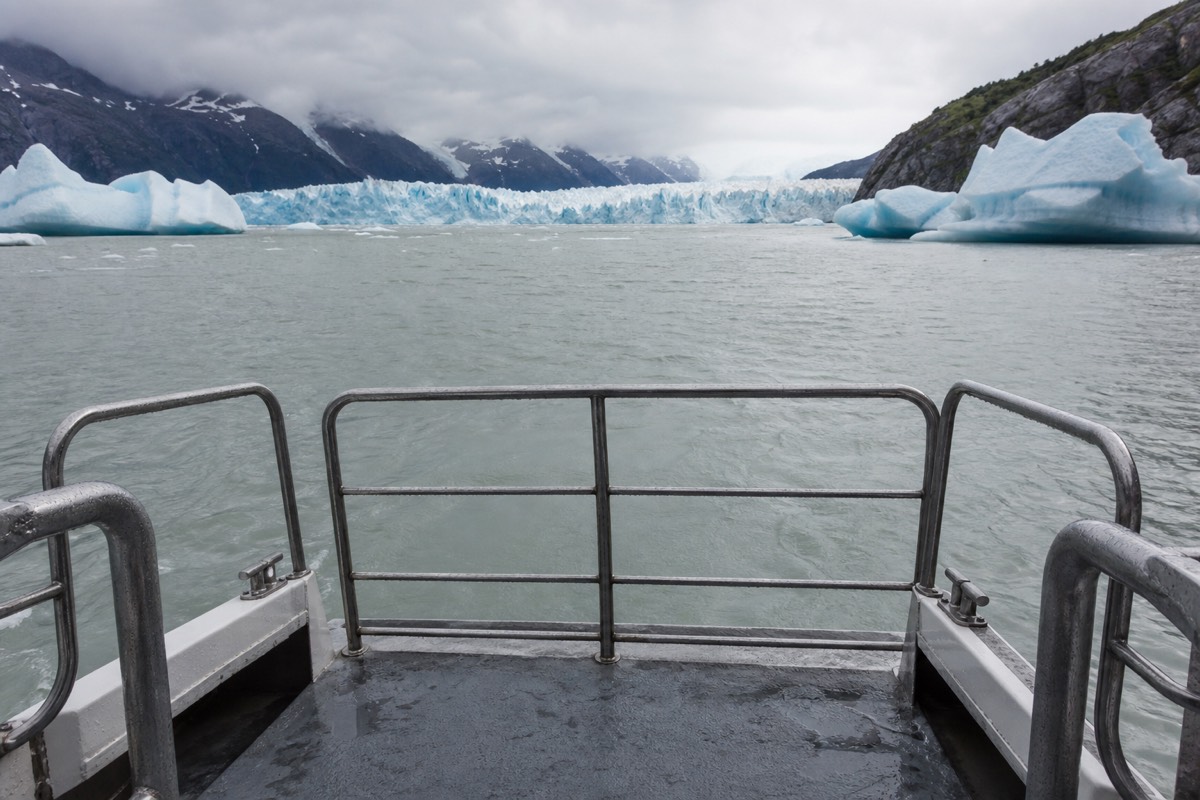
If glacier ice at close range is what you are chasing rather than the walk, the Grey arm does it better and more reliably, from the shore, from the trail or from the water. That comparison is laid out in the Grey Glacier arm of the W.
How hard is the climb into the valley?
Moderate to the first viewpoint, hard to the second. 274 metres of ascent over less than two kilometres is a real climb but a short one. 640 metres to Británico, on ground that includes a long boulder section above the first mirador, is where it earns its rating.
The lower half is a forest and river climb, steep in places, on a trail that is well used and easy to follow. Above the first viewpoint the character changes: the trees thin out, the path crosses open ground and boulder fields, and the route is marked rather than built. It is not technical and there is no exposure, but you are picking your line across rock rather than walking a path, and that costs time and concentration.
Set against the rest of the park, this is squarely a middle-difficulty walk. The Base Torres trail gains 1,041 metres and takes eight to ten hours; the Grey mirador from the refuge gains 150 metres over 5.6 kilometres and takes two. The French Valley to Británico sits between them, closer to the harder end, and it is usually done on top of a stage day rather than as a fresh start. Our breakdown of the Base Torres climb is the useful comparison if you have already done that one.
Recommended tours by season
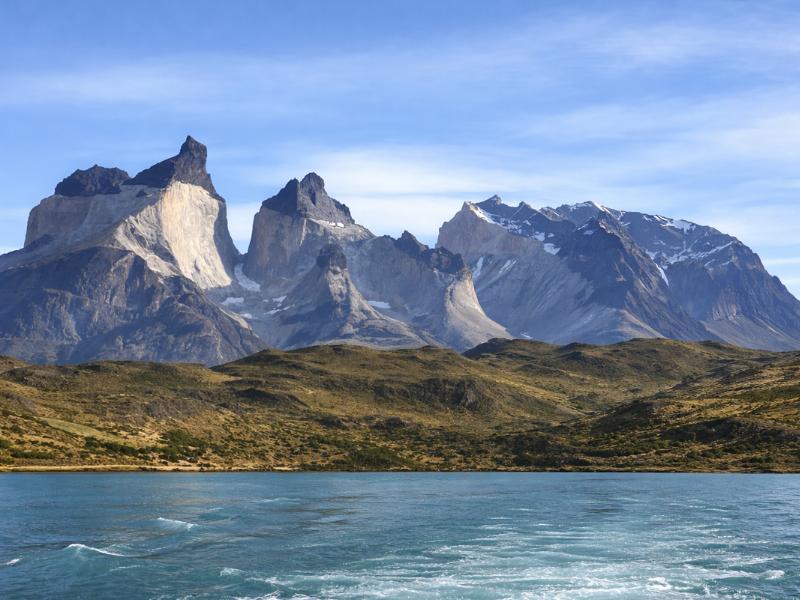
Torres del Paine W Trek Alternative 3-Day Guided Tour
Guided walk of Base Torres, the French Valley and the Grey viewpoint, with two nights at Camping Pehoé so the valley day is done on a day pack.
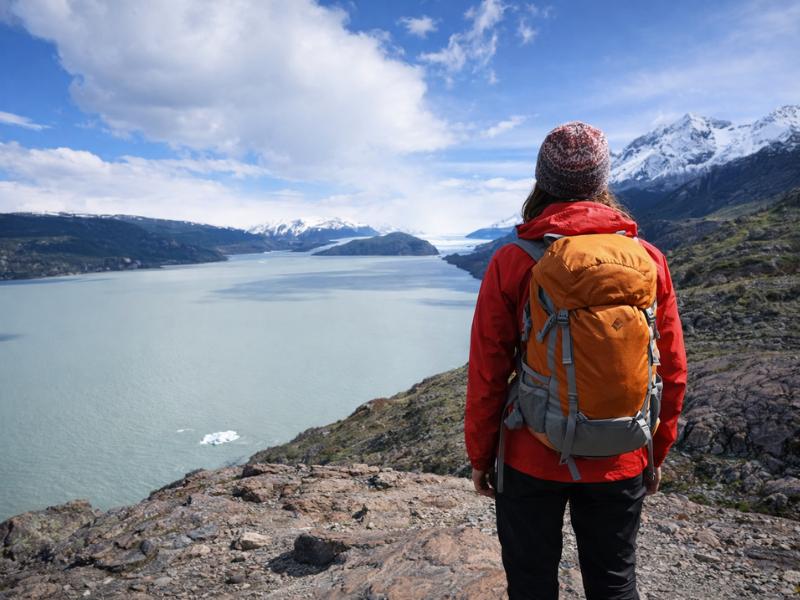
5-Day Torres del Paine W Trek – Guided Patagonia Adventure
Supported five-day W with vouchers, meals and transfers arranged. You walk independently; the French Valley day is listed at 20.5 kilometres.
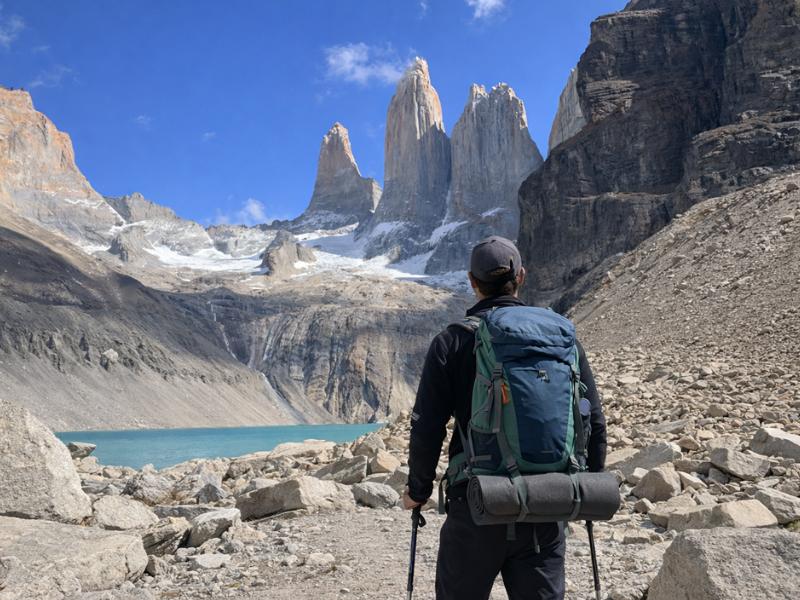
Torres del Paine 2-Day Express Tour – Aventura & Highlights
A 22 kilometre day to Base Torres, a night at Pehoé, then the Condor and Cuernos viewpoints. The French Valley is not on this route.
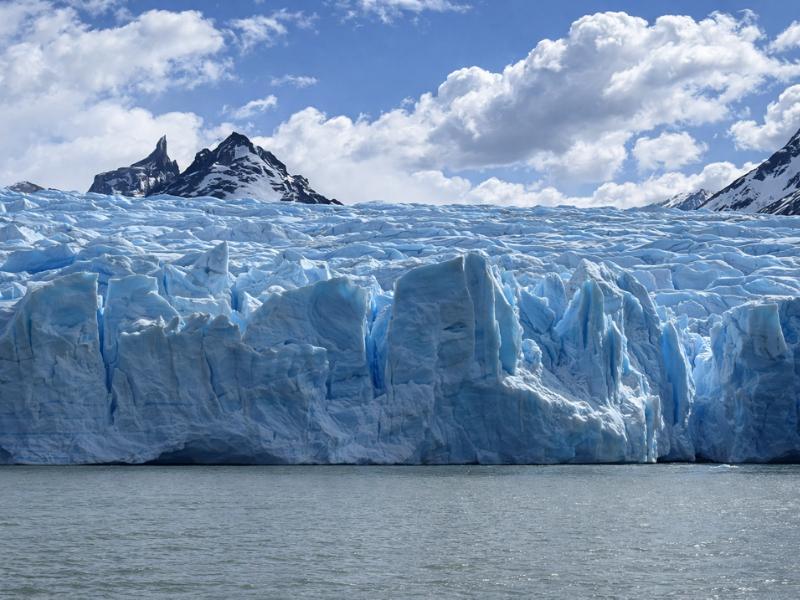
Torres del Paine: 3-Hour Grey Glacier Scenic Cruise
Three hours on Grey Lake to the glacier face. A fit for days when the valley walk is not on the table.
| W side trip | Distance | Ascent | Time |
|---|---|---|---|
| Base Torres from the Welcome Center | 21 km round trip | 1,041 m | 8 to 10 hours |
| Mirador Británico from Italiano | 7.5 to 12 km out and back | 640 m | 3.5 to 4 hours |
| Mirador Francés from Italiano | 3.9 km out and back | 274 m | 1.5 hours |
| Mirador Grey and the suspension bridges from Refugio Grey | 5.6 km out and back | 150 m | 2 hours |
Why do rangers turn people back, and what are the cut-off times?
Because the upper valley is exposed, the weather changes fast and there is no shelter between the viewpoints. Trail registration at control points applies across the W, so staff know who went up and when. We have not found a fixed, published cut-off time we can quote for Italiano, and it moves with conditions, so treat the decision at the junction as the one that counts.
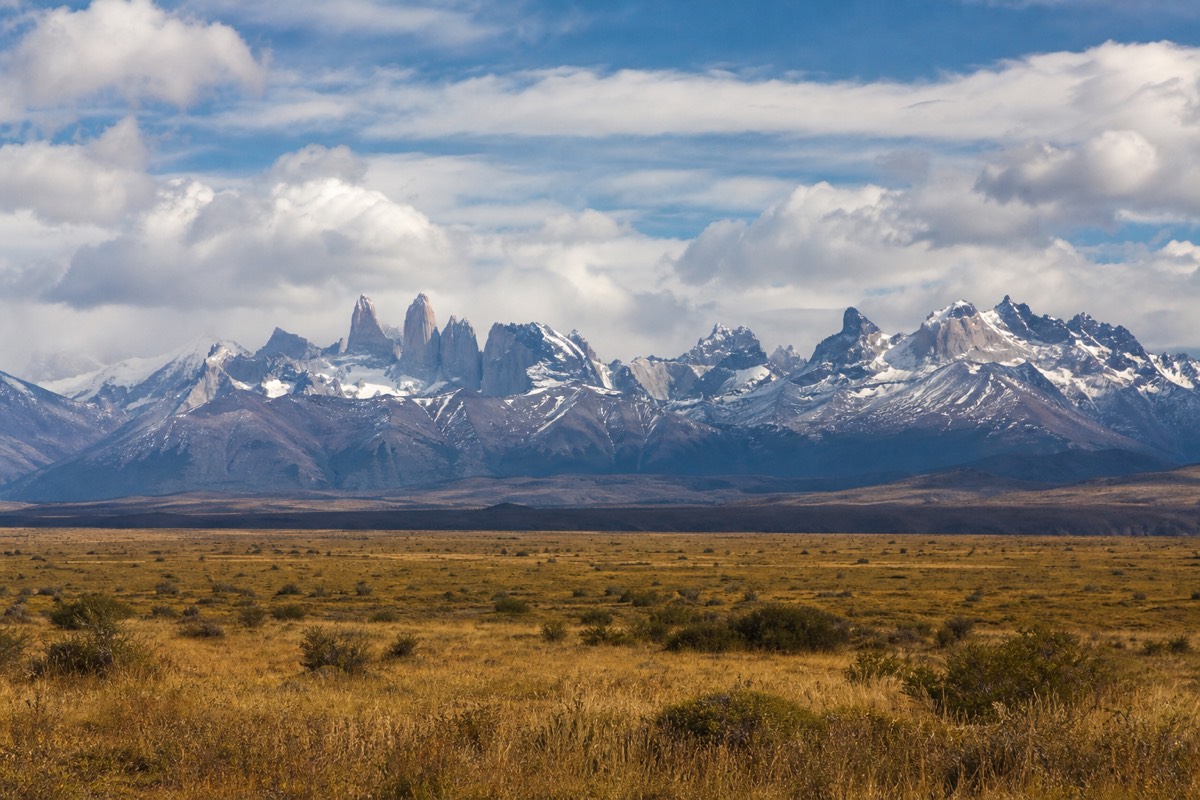
What that means practically: arrive at Italiano in the morning if you intend to go all the way to Británico. A party reaching the junction at two in the afternoon with four hours of walking still to do, on the far side of the day from where the wind is going, is exactly the party that gets stopped. Nobody is being difficult; they are looking at the same forecast you are and adding your start time to it.
Closures at the level of whole sections belong to CONAF and are decided on weather and trail conditions, not on a schedule. Their official park page carries current access status. Beyond that, the practical constraint is the same one that governs the whole W: the catamaran timetable at one end and the bus timetable at the other, neither of which waits.
Park gates run 07:00 to 21:00 in high season and 08:00 to 18:30 from May to September, and you need a valid entry ticket bought in advance at the official park ticketing portal, currently 48,500 Chilean pesos for a foreign adult on the multi-day pass. It is date-locked and non-refundable, which is worth knowing before you build a plan around a weather window.
What does the wind do inside the valley?
It funnels. A valley running between Paine Grande and the Cuernos concentrates whatever is crossing the massif, and the upper section above the first viewpoint has no trees and no shelter. Regional averages at Puerto Natales run 29 to 37 kilometres per hour depending on the month, and the park is windier than the town.
The pattern to plan around is that the wind almost always builds through the afternoon. That single fact argues for doing the valley early in the day, which conflicts with the fact that most people arrive at Italiano having already walked a stage. It is one reason the multi-day itineraries that sleep close to the junction get more out of this arm than the ones that do not.
November is the windiest month at about 37 kilometres per hour on average, December the wettest at 155 millimetres, and everyday summer gusts of 60 to 100 kilometres per hour are what people actually meet on exposed ground. Regional sources have reported extremes up to about 193 kilometres per hour, which is not a normal day but does explain why the catamaran is cancelled as often as it is. Month by month figures are in wind and rain by month.
Getting to the valley: the catamaran and the timetable that runs your day
Most people reach the western end of the W on the Lake Pehoé catamaran from Pudeto to Paine Grande, a 30 minute crossing published at around 26,000 Chilean pesos, roughly $45 one way. High season departures from Pudeto are commonly listed around 08:30, 10:30, 16:15 and 18:00, and high wind cancels sailings outright.
That timetable is the hard edge of any French Valley plan approached from the west. Miss the boat and you do not walk in; there is no road to Paine Grande. Timetables also change every season, so the times above are the shape of the service rather than a promise, and the operator's current schedule is the one to work from.
From the east the constraint is the bus. Puerto Natales to Laguna Amarga is 112 kilometres and two to three hours, roughly $20 to $29, with high season departures commonly around 06:45, 07:00, 12:00 and 14:30, plus the 7 kilometre shuttle to the Welcome Center at 4,000 to 4,500 pesos, cash only.
| Connection | Time | Published cost | What breaks it |
|---|---|---|---|
| Catamaran Pudeto to Paine Grande | 30 minutes | about 26,000 CLP, roughly $45 one way | high wind cancels sailings |
| Bus Puerto Natales to Laguna Amarga | 2 to 3 hours, 112 km | $20 to $29 one way | fixed departure times |
| Shuttle Laguna Amarga to the Welcome Center | 7 km | 4,000 to 4,500 CLP, cash only | cash only, meets the buses |
| Park entry, foreign adult, multi-day | valid up to 10 consecutive days | 48,500 CLP, about $51 | date-locked, non-refundable |
Is the French Valley better on a guided trip than alone?
For most visitors, yes, and not for the reason people assume. The trail is not dangerous and does not need a professional to follow it. What a guided multi-day fixes is the logistics: the three separate bookings, the catamaran timetable, the pack you would otherwise carry, and the judgement call about whether today is a Británico day.
The self-guided route is entirely doable and plenty of people do it. It means holding beds from two concessionaires plus a park ticket, on dates that all match, booked from around April for the following season. It means carrying everything. And it means making the turn-back decision yourself, in weather you have probably never walked in before.
The guided three-day trip, currently $1,175 with a published 5 rating across 320 bookings, is the version that suits this arm best. It covers the Base Torres trail, the French Valley and the Grey Glacier viewpoint with a local guide, sleeping two nights at Camping Pehoé on the lake shore, so you are not moving camp daily and not carrying a full pack up the valley. Patagonian meals are included.
If you would rather walk the classic route at your own pace, the supported five-day W at $1,905 arranges the accommodation vouchers, full-board meals, transfers and briefing and leaves the walking to you. Be clear on what that is: the listing is supported rather than led, so a professional guide is not part of it, and it gives the French Valley day as 20.5 kilometres. The trade-offs between the two approaches are set out in guided against self-guided on the W.
What does an independent French Valley day actually cost?
The valley itself is free. Everything around it is not. Park entry at 48,500 pesos, a catamaran crossing at about 26,000 each way, a bed either side of the junction at $11 to $114 a night depending on tent or dorm, and meals in the park published at $25 for breakfast, $20 to $50 for a box lunch and $35 to $70 for dinner.
Stack those up across the three or four days it takes to reach the valley and walk out again and the gap between doing it yourself and joining a guided trip narrows more than most people expect. Published self-guided W totals run roughly $600 to $1,500 all in, against $1,700 to $3,500 and up for guided packages, with our own trips sitting at $1,175 for three days and $1,905 for the supported five.
Gear is the other line. Rental Natales in Puerto Natales publishes around $37 a day for a tent and $8 a day for a sleeping bag, which for a four day trip is often cheaper than carrying your own from home. And no free CONAF campsites are operating; they closed and have not reopened for the 2025-26 season, so there is no zero-cost night anywhere on the route.
| Line | Published figure | Notes |
|---|---|---|
| Park entry, multi-day, foreign adult | 48,500 CLP, about $51 | up to 10 consecutive days |
| Catamaran, one way | about 26,000 CLP, roughly $45 | each crossing |
| Own tent, Vertice sites | $11 to $14 per person | Paine Grande, Francés, Grey |
| Dorm bed | $46 to $114 per person | varies by season and sector |
| Meals in the park | $25 breakfast, $20 to $50 lunch, $35 to $70 dinner | full board often quoted around $100 a day |
| Tent and sleeping bag hire | about $37 and about $8 a day | Rental Natales, Puerto Natales |
| Guided three-day trip covering the valley | $1,175 | meals, guide and two nights included |
Is the French Valley worth the extra hours?
Mirador Francés, almost always. 274 metres of climbing for a hanging glacier across the valley is the best return on effort anywhere on the W. Mirador Británico, only if the day is long enough and the weather is holding, because 640 metres and 3.5 to 4 hours on top of a stage is a real commitment.
The people who regret going on are the ones who did it in cloud. The amphitheatre at the head of the valley is a panorama, and a panorama in a whiteout is a boulder field. The people who regret stopping are the ones who had a clear afternoon and turned round out of habit. Make the call at the junction, with the sky in front of you, not in a hostel in Puerto Natales two nights earlier.
The wider question of whether the W as a whole justifies its cost is one we answer separately at whether the W justifies its price.
If you only have one or two days in the park
You will not see the French Valley. It sits at the middle of a multi-day route with no road access, and there is no day trip from Puerto Natales that reaches it and returns. Anyone selling you Valle Francés in a day is selling you a viewpoint from the road, not the valley.
What fits into a short visit is the eastern and southern side of the park: the Cuernos and Nordenskjöld viewpoints, Salto Grande, Lake Pehoé and the Base Torres trail if you have a full day and the legs for it. The two-day express trip at $620 covers a roughly 22 kilometre day to the Base Torres viewpoint, a night in an equipped tent at Pehoé camping, then the Condor viewpoint, the Cuernos viewpoint and the Aonikenk trail with its rock paintings. It does not include the French Valley, and we would rather say so than let you find out on day two.
For the valley itself, three days is the realistic minimum and the guided three-day trip is the least painful way to get them. Everything we run, from a three hour glacier cruise to a six day self-drive, is listed on our Torres del Paine tours, and beds inside the park go through Vertice Patagonia for the Paine Grande, Francés and Grey sectors.