W Trek vs O Trek: Which Torres del Paine Route Should You Walk?
One route is about 80 km in four to five days, the other 136 km in seven to nine. The real decision is how many days you can be away from a road.
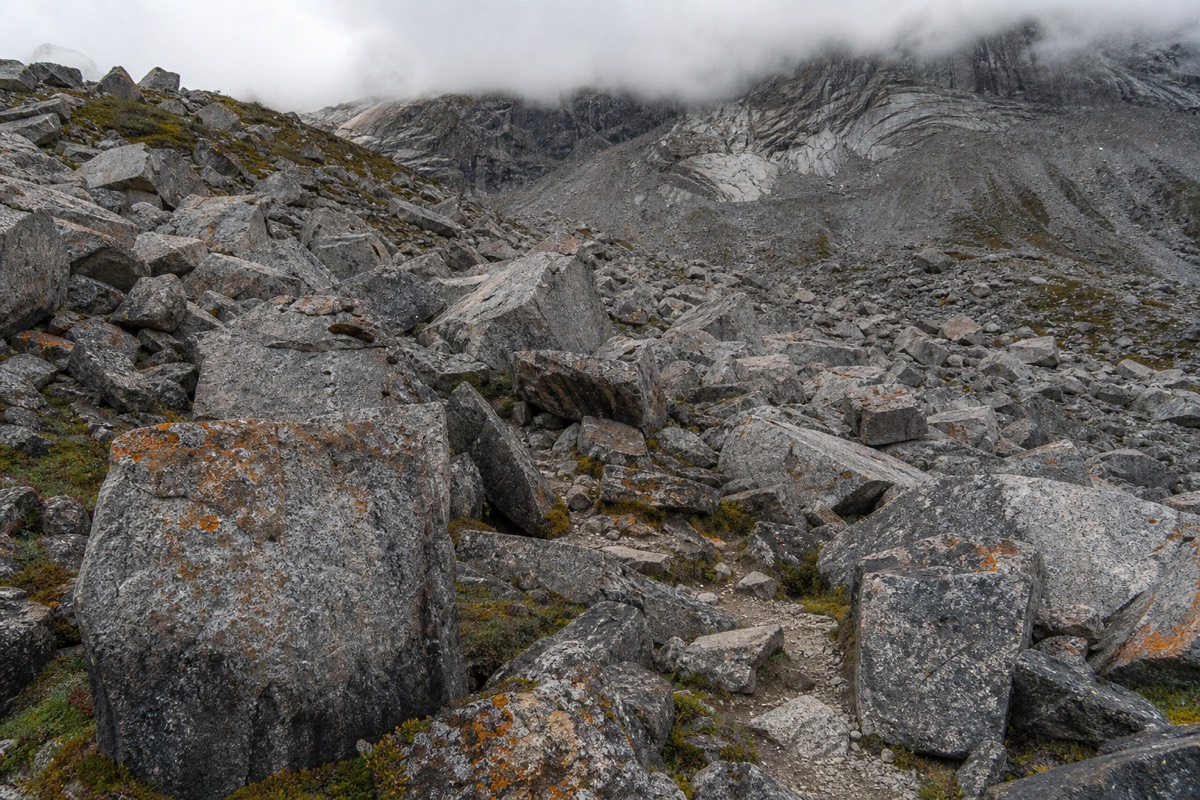
One is 80 km and the other is 136. That single comparison decides most of it, and it decides it badly, because the number people should be comparing is not distance at all. It is how many days you can be away from a road.
How far each route really is
Both routes are published as ranges rather than fixed numbers, and the higher figures count side trips and variants.
What is the difference between the W and O circuits in the Torres del Paine?
The W is a point-to-point route of about 80 km along the southern face of the massif, walked in four to five days, walkable in either direction. The O Circuit is a full loop of about 136 km around the whole massif, walked in seven to nine days, counter-clockwise only, and it contains the W as its southern half. The O is not a longer W. It is the W plus a remote back side.
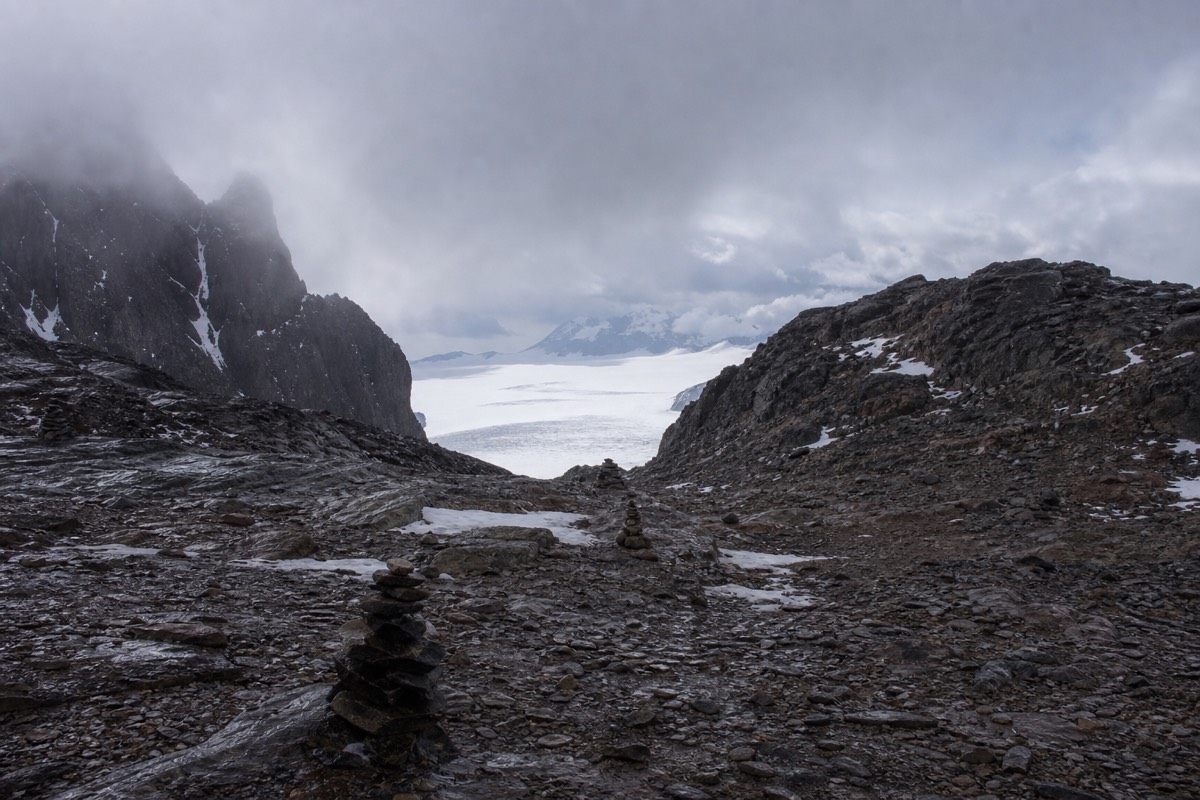
That back side is the actual difference. Between Serón, Dickson, Los Perros and the John Gardner Pass you are on the northern and western flanks of the massif, days from a road, with no catamaran to bail you out and no day-visitor traffic. The southern half then rejoins the W at Grey and finishes on trails you would have walked either way.
| Metric | W Trek | O Circuit |
|---|---|---|
| Distance | About 80 km, published range 60 to 85 km | Most sources say 136 km, published range 120 to 136 km |
| Days | 4 to 5 | 7 to 9, most often 8 |
| Cumulative ascent | Published between 2,730 m and 3,480 m | About 4,971 m |
| Direction | Either way, west to east is more common | Counter-clockwise only, no exceptions |
| High point | No pass crossing | John Gardner Pass at 1,200 m |
| Season for independent hikers | October to April | Roughly November to March |
| Traffic | Heavy, especially January and February | Light on the back side, quota-limited beds |
| Sold through this site | Yes, guided and supported versions | No |
Both distance figures are ranges rather than facts, and anyone quoting a single number is rounding someone else's rounding. Rangers quote higher figures for the O once variants are counted, and the W's 60 to 85 km spread depends entirely on which side trips get included. The full route breakdown sits in the complete W Trek route guide and its counterpart in the O Circuit route and camps guide.
How many days does each route actually take?
Four to five days for the W and seven to nine for the O, most commonly eight. The gap is bigger than three days once you add the travel days at either end, because the O has a shorter weather window and less room to absorb a lost day. A W trip fits inside a fortnight in Patagonia comfortably. An O trip usually is the fortnight.
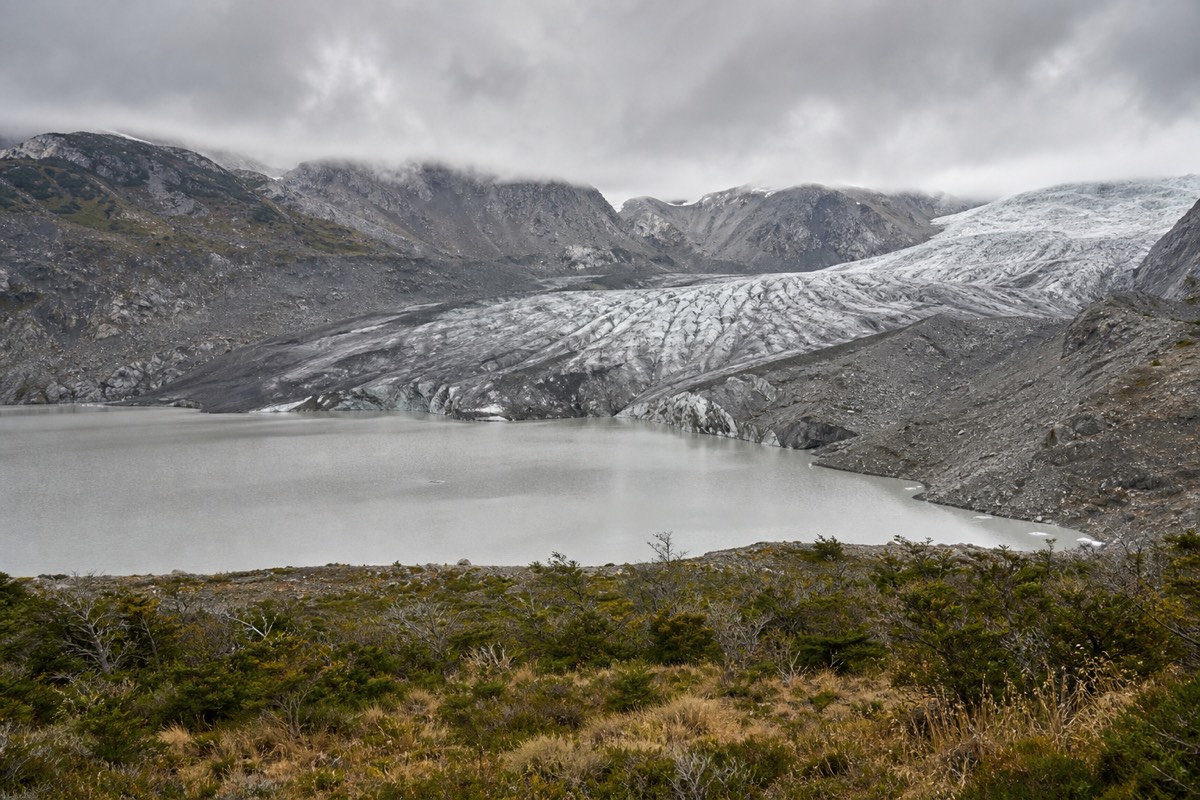
The day counts are not interchangeable with effort. The O's extra days are back-side days: Serón, Dickson, Los Perros, then the pass. Those are not rest days added to a W, they are the hardest and most committing part of the loop, and the pass day alone typically runs 10 to 12 hours with departures from Los Perros often required by 07:00.
| Days available | What fits | What it gives you |
|---|---|---|
| 1 to 2 | Day trips and the two-day express shape | The towers, the Cuernos viewpoints, Salto Grande, Lago Pehoé |
| 3 | A guided W alternative from a fixed base | Base Torres, Valle Francés and the Grey viewpoint without moving camp |
| 4 to 5 | The full W | All three arms, both lakeside legs, one catamaran crossing |
| 7 to 9 | The O Circuit | Everything on the W plus Serón, Dickson, Los Perros and the pass |
If your calendar sits in the three-day row, that is a real trip rather than a consolation. The three-day guided W alternative covers the same three landmarks from two nights at Camping Pehoé, which means full packs stay at camp and the days are walked light. Its listing records more than 300 past bookings.
Solitude: what the back side gives you that the W cannot
The W carries the park's heaviest foot traffic, concentrated in January and February, and shares its trailheads with day visitors. The O's back side has quota-limited beds at four camps and no day traffic at all, because there is no road within a day's walk of any of it. That is the O's real product.
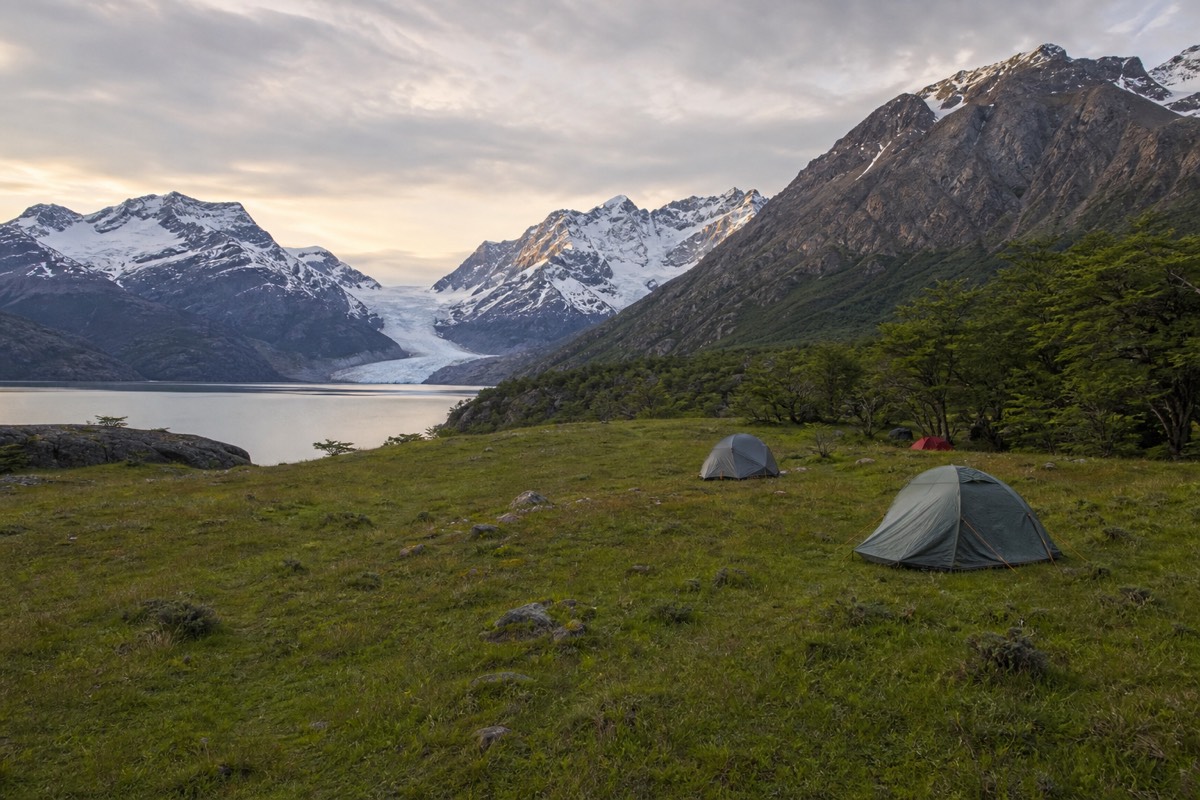
The park recorded 367,426 visitors in 2024, and peak months are January and February. Almost none of those people are on the back side. They are on the Base Torres trail, at Salto Grande, on the Pudeto catamaran and at the Grey viewpoints, which are exactly the places the W passes through. The southern half of the O is therefore just as busy as the W, because it is the W.
The back-side camps are limited by capacity rather than by rule, and there are only four of them. Serón belongs to Las Torres; Dickson, Los Perros and Grey belong to Vertice. Los Perros is the most basic of the set, with cold showers and no wifi, and it is the last stop before the pass, which gives it a particular atmosphere on the evening before a 07:00 departure.
| Back-side camp | Operator | What it is |
|---|---|---|
| Serón | Las Torres Patagonia | First night out of the Central sector, open steppe and river valley |
| Dickson | Vertice Patagonia | Lakeside camp under the Dickson glacier, opens around 1 November |
| Los Perros | Vertice Patagonia | The most basic camp, cold showers, no wifi, last stop before the pass |
| Grey | Vertice Patagonia | Where the loop rejoins the W, opens around 1 October |
Solitude has a cost that is easy to underrate. Fewer people also means fewer places to stop, fewer chances to buy a meal you did not carry, and a longer wait for help. The trade is genuine in both directions.
The John Gardner Pass, and why the O runs one way only
The pass tops out at 1,200 m and may only be crossed from the Los Perros side, which is why the O is walked counter-clockwise without exception. The climb from Los Perros is roughly 550 to 600 m, the day as a whole typically runs 10 to 12 hours, and CONAF closes the pass on conditions.
It is the most weather-exposed point on either route by a wide margin. There is no shelter on the crossing, the descent to Grey is long and steep, and the closure decision is made by the park rather than by you or your guide. A closed pass on the O is not a detour, because there is no alternative line: you either wait at Los Perros or you turn back the way you came, which means several days of retracing.
The 07:00 departure requirement from Los Perros exists for that reason. It buys daylight for a day that can run twelve hours, in a place where the weather worsens through the afternoon as reliably as it does everywhere else in the park. The W has no equivalent commitment point anywhere on it. Its worst day, the 21 km Base Torres round trip with 1,041 m of ascent, ends where it started, next to a road.
That asymmetry is the honest core of the comparison. The W is a series of out-and-back days from serviced places. The O has one day where you cross a high pass with several days of walking behind you and no quick way back. Both are non-technical. Only one of them is committing.
Season length: why the O has the shorter window
The W runs October to April for independent hikers and stays walkable in winter with a guide. The O runs roughly November to March, with CONAF setting the exact opening and closing dates each year on conditions, and the back side closed for the whole winter. That is roughly five months against seven.
| Period | W Trek | O Circuit |
|---|---|---|
| October | Open, Paine Grande and Grey open around 1 October | Generally closed, CONAF listed the circuit as closed until at least 31 October 2026 |
| November to March | Full season, Dickson opens around 1 November | The circuit's working season |
| April | Open, the Las Torres season runs to about 25 April | Closed |
| May to September | Walkable with a guide, most refugios shut, Base Torres requires an authorised guide from 27 April to 30 August 2026 | Back side closed |
The narrower window compounds the reservation problem. An O itinerary needs consecutive nights at four back-side camps inside a five-month season, split across two companies, and the calendar opens around April for the following season. A W itinerary needs fewer nights inside a longer season with more sectors to choose between, which is why W dates can often be shuffled and O dates frequently cannot.
Weather patterns inside those windows differ too. November is the windiest month in the regional record at an average 37 kph, December the wettest at 155 mm, and May the calmest at 28.5 kph but firmly outside the O season. Anyone building dates around conditions rather than availability should read the month-by-month weather record for the park first, then check what is actually reservable.
Recommended tours by season
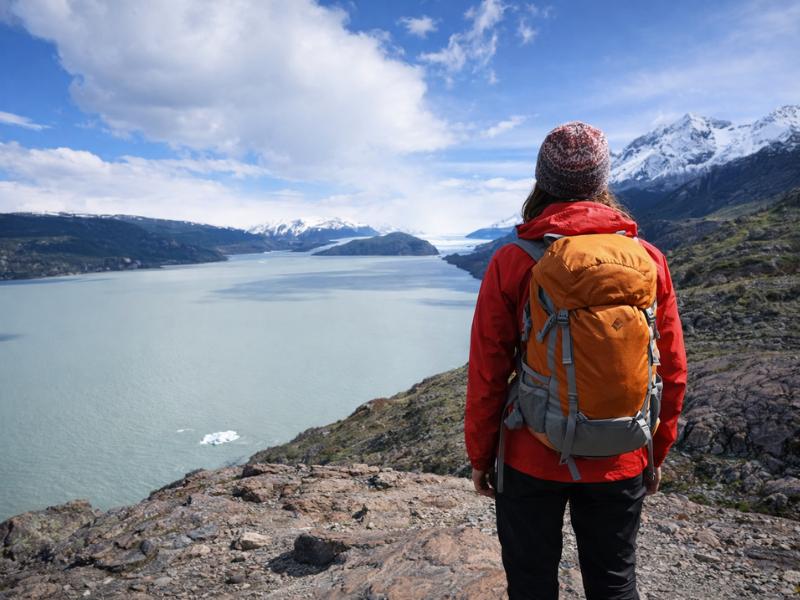
5-Day Torres del Paine W Trek – Guided Patagonia Adventure
The full W in the October to April window, with meals and accommodation included, covering Nordenskjöld Lake, French Valley and Grey Glacier.
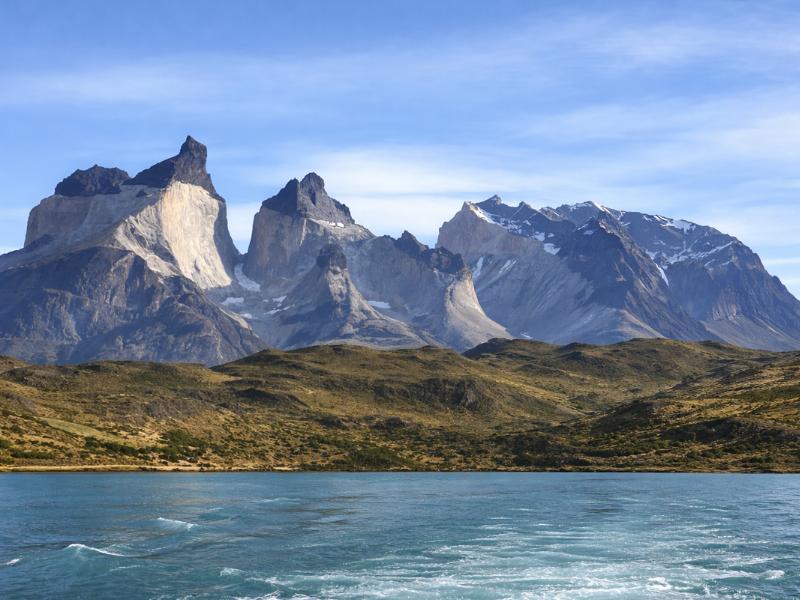
Torres del Paine W Trek Alternative 3-Day Guided Tour
Base Torres, Valle Francés and the Grey viewpoint from two nights at Camping Pehoé, walked without moving camp.
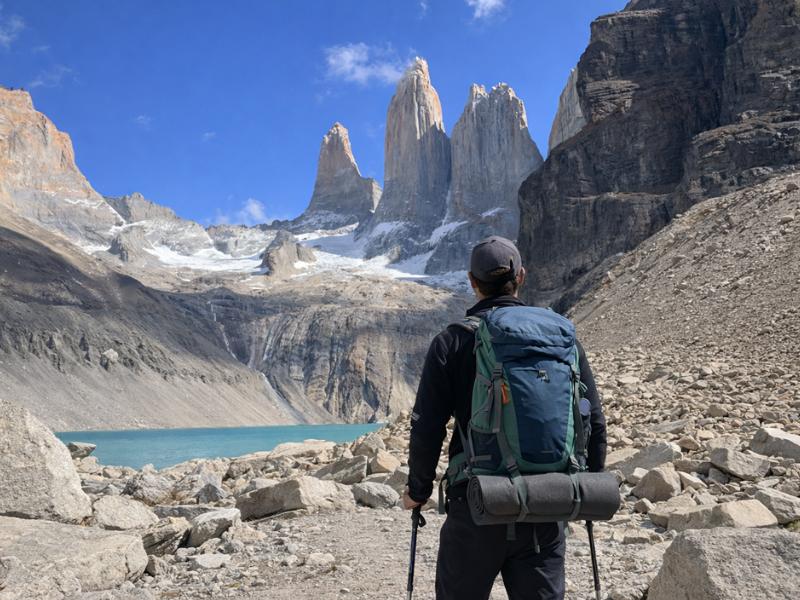
Torres del Paine 2-Day Express Tour – Aventura & Highlights
Base Torres, the Cóndor lookout and the Cuernos, with one night at Camping Pehoé. Poles and crampons included in winter.
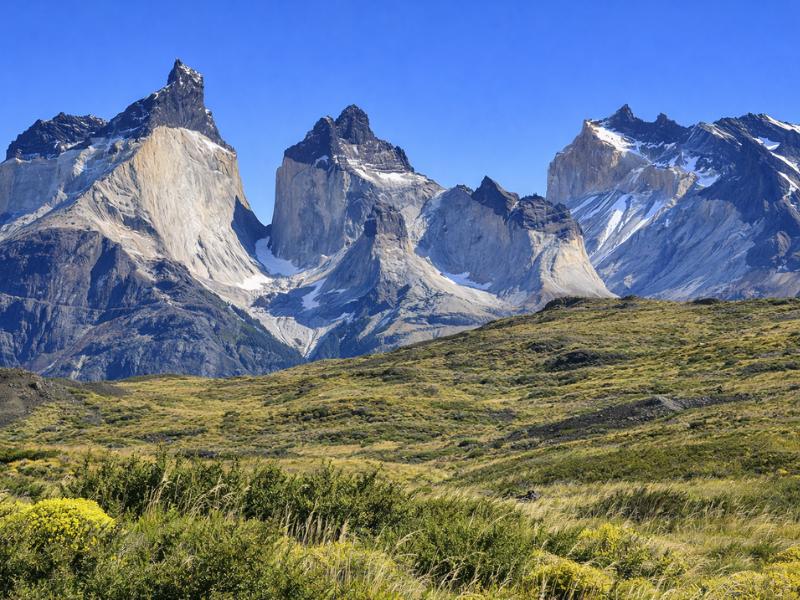
Torres del Paine Full-Day Adventure Tour from Puerto Natales
A single-day guided visit departing Puerto Natales, for dates when a multi-day route does not fit.
What each route costs, and why the gap is smaller than it looks
Self-guided figures are published at roughly $600 to $1,500 for the W and $500 to $1,500 for the O. Guided packages run $1,700 to $3,500 and up for the W, and from about $2,550 for the O. Per day, the O is often the cheaper route. In total, it rarely is.
The overlap in the self-guided ranges surprises people. The O's back-side camps are basic and cheap, and the extra days are mostly camping days rather than refugio nights, so the marginal cost of days five through eight is lower than the cost of days one through four. Park entry does not change at all: the multi-day ticket at 48,500 CLP covers up to ten consecutive days either way.
| Cost line | W Trek | O Circuit |
|---|---|---|
| Self-guided, published range | $600 to $1,500 | $500 to $1,500 |
| Guided packages, published | $1,700 to $3,500 and up | From about $2,550 |
| Park entry, foreign adult | 48,500 CLP multi-day, about $51 | Same ticket, same price |
| Nights inside the park | 3 to 4 | 6 to 8 |
| Catamaran crossings usually needed | One, at the start or the end | One, near the end |
| Days off work | Around a week with travel | Around two weeks with travel |
The bottom row is the real cost difference and it is not denominated in dollars. Four extra trekking days plus the buffer they need is what most people are actually deciding about. Ticket mechanics for both routes are the same, and they are set out in the park entry ticket and fee breakdown. Whether the shorter route justifies what it costs is a question worth answering on its own before comparing it to the O.
Which route is harder to reserve?
The O, and not by a small margin. Both routes need beds from two companies plus a separate park ticket, but the O needs more consecutive nights inside a shorter season at only four back-side camps, and a single missing night breaks the whole loop.
The mechanics are identical on paper. Las Torres Patagonia holds Central, Chileno and Serón. Vertice Patagonia holds Paine Grande, Grey, Dickson and Los Perros. Park entry is bought separately at the official park ticketing portal. Both calendars open around April for the following season, and Chileno sells out first every year.
On the W, a missing night has workarounds: shift a day, swap a sector, or walk a longer combined leg. On the O, the back-side camps are sequential and spaced by a day's walk each, so there is nothing to swap. If Los Perros is full on your date, the pass day moves, and if the pass day moves, everything after it moves too. This is why the Vertice Patagonia site and the Las Torres reservations site get refreshed obsessively every April by people building loops.
There are no free CONAF campsites operating either, which removes the traditional escape valve. They closed and have not reopened for the 2025-26 season. The sector-by-sector detail is in how the two reservation systems actually work.
Exit options: what happens if you have to stop
On the W you are never more than a day from a road, a catamaran or a serviced refugio. On the O's back side you are days from any of those, and past the John Gardner Pass the only way out is forward to Grey. That is the safety difference, stated plainly.
| Where you are | Route | How you get out |
|---|---|---|
| Central sector or the Welcome Center | Both | Shuttle 7 km to Laguna Amarga, then a bus to Puerto Natales |
| Refugio Chileno or the Ascencio valley | Both | Walk down to Central, a few hours |
| Refugio Francés or Camping Italiano | Both | Walk 7.5 km west to Paine Grande, or 11 km east to Central |
| Paine Grande | Both | Catamaran to Pudeto, about 30 minutes, weather permitting |
| Refugio Grey | Both | Walk 11 km back to Paine Grande for the catamaran |
| Serón or Dickson | O only | Walk back towards the Central sector, one to two days |
| Los Perros or the pass | O only | Committed: cross to Grey or retrace several days |
Note how many of those exits end at the catamaran, and that the catamaran is cancelled in high wind. Neither route has a weatherproof way out of the western side of the park. The W simply gives you more chances to be somewhere else when the wind arrives.
Weather exposure: where each route leaves you unprotected
The W's exposure is lakeside and afternoon: open shores along Nordenskjöld and Pehoé where gusts of 60 to 100 kph are ordinary. The O adds altitude exposure at 1,200 m on a pass with no shelter, at the end of several days with no way to restock.
Wind is the dominant hazard on both, and it is not seasonal in the way people assume. The regional record puts average wind at 37 kph in November, 34 kph in December and 32 kph in January, so the peak trekking months are also the windiest. Gusts reported in the park have reached about 193 kph, which is an extreme rather than a planning figure, but it explains why sailings get cancelled and why exposed sections stop being fun.
The western side of the park is significantly wetter than the eastern steppe, which is why Grey can be under rain while Laguna Amarga is dry. Both routes cross that gradient, but the O crosses it twice and spends more nights on the wet side. Snow is likely at trail level from June to August and possible at altitude in any month, and altitude is where the O spends its most committing hours.
The other difference is information. On the W you are passing serviced refugios daily, which means you hear forecasts, closures and trail conditions from staff. On the back side you get what you were told at Dickson or Los Perros, and then you make a decision at 07:00 in the dark. Live closures are posted by CONAF, the park authority.
We do not sell the O Circuit, and here is what we suggest instead
None of the nine trips we list is an O Circuit. If the loop is what you want, reserve it directly with Las Torres and Vertice and buy your ticket at pasesparques.cl. We would rather say that plainly than pretend otherwise.
What we do sell is the W and the park's day-visit shapes, and for a good number of O-curious readers those are the better fit anyway. The most common reason people abandon the loop is not fitness, it is the calendar: eight trekking days plus buffer plus travel is close to a fortnight, and the reservation window that decides it opens around April for the following summer.
If the answer is that you have a week, the full W is the natural target, and the supported five-day W with beds, meals and transfers arranged removes the three-system reservation problem without removing the walk. If it is closer to three or four days, the three-day guided route from a fixed base camp covers the towers, Valle Francés and the Grey viewpoint. And if the trip is really a park visit rather than a trek, the two-day express trip with a night at Camping Pehoé reaches the Base Torres viewpoint, the Condor lookout and the Cuernos.
The wider decision between doing it all yourself and having it arranged is set out in the self-guided against guided cost and risk comparison, and if you are still working out how many days the park deserves in your itinerary, the itinerary planner by trip length is the place to start. You can also see the full set of guided trips into the park in one place.
Who should choose which?
Choose the W if you have a week, want the three famous valleys, and would rather spend your buffer days on weather than on remoteness. Choose the O if you have a fortnight, have walked multi-day routes before, and specifically want the back side. Almost nobody regrets the W. A few people regret the O, and it is always for the same reasons.
| Choose the W if | Choose the O if |
|---|---|
| You have around a week in Patagonia | You have around a fortnight and a spare day or two |
| You want the towers, Valle Francés and Grey | You want Serón, Dickson, Los Perros and the pass as well |
| This is your first multi-day trek | You have done consecutive multi-day walks before |
| You want the option of a guided or supported version | You are prepared to reserve everything yourself |
| You want daily exits and serviced stops | You accept committing days with no quick way out |
| Your dates are flexible within October to April | Your dates sit inside roughly November to March |
One last honest point. The O includes the W, so the question is never whether you will see the famous places. You will see all of them either way. What the extra four days buy is the quiet half of the massif and one high pass, at the price of a shorter season, a harder reservation and a longer holiday. Whether that is a good trade is not a fitness question, and treating it as one is how people end up on a loop they did not have the days for.