Refugios and Campsites in Torres del Paine: Beds, Prices and the Booking Problem (2026)
Who owns the beds on the W Trek, what a refugio night costs and includes, when the calendar opens, and the fallbacks when your dates are already sold.
The single most common planning failure on the W Trek is not fitness and it is not gear. It is discovering in October that the beds for January are gone. Accommodation inside Torres del Paine is not run by the park authority. It is run by two private concessionaires who sell separately, on separate calendars, through separate websites, and neither of them sells you the ticket you need to walk through the gate.
That makes three bookings for one trek, none of which talks to the others, and the order you make them in decides whether the trip happens at all. Dorm beds are published between $46 and $114 per person a night, own-tent sites between $11 and $14, and one refugio sells out before all the others every single year.
Published nightly prices, by accommodation type
Bars show the top of each published range. Hotel Las Torres sits off this scale entirely at from about $820 a night half board.
Who owns the beds inside the park, and why do you book three times?
Two concessionaires split the park. Las Torres Patagonia runs the Central, Chileno and Serón sectors on the eastern side. Vértice Patagonia runs Paine Grande, Grey, Dickson and Los Perros on the western and northern side. Park entry is a third, entirely separate booking with CONAF at pasesparques.cl. Nothing is joined up, and nobody will tell you that until you try.
The consequence is that a standard four-night W needs beds from both companies. A west to east crossing sleeps at Paine Grande and Grey, which are Vértice, then at Chileno or Central, which are Las Torres. If one company has your dates and the other does not, you do not have a trek, you have half a trek and a problem. This is why experienced planners open both booking sites in two browser tabs and hold the dates together rather than confirming one and hoping.
It also explains why the same night can be quoted at wildly different prices across two sources. The companies price independently, by sector and by season, and they publish their own rates. Check the Las Torres Patagonia site and the Vértice Patagonia site directly rather than trusting an aggregator, and check them on the day you intend to buy.
| Booking | What it covers | Where | When it opens |
|---|---|---|---|
| Las Torres Patagonia | Central, Chileno and Serón: refugio beds and equipped camping | lastorres.com | Next season's calendar around April |
| Vértice Patagonia | Paine Grande, Grey, Dickson and Los Perros: refugio beds, equipped camping, own-tent sites | vertice.travel | Next season's calendar around April |
| CONAF park entry | The ticket that lets you into the park at all | pasesparques.cl | Sold online in advance, date-locked |
The ticket half of that table is unpacked in the park entry ticket explained, including why the multi-day pass is the right buy for anyone sleeping inside the boundary.
Where do you sleep on the W Trek in Patagonia?
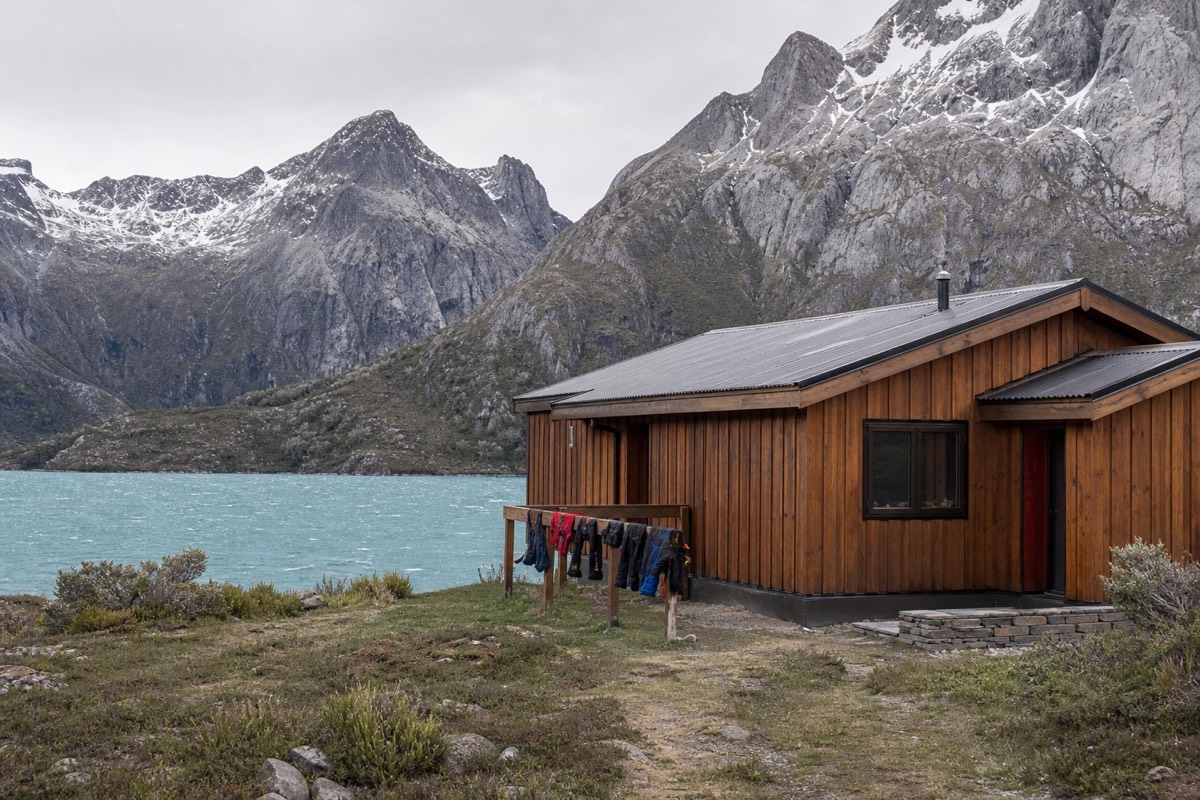
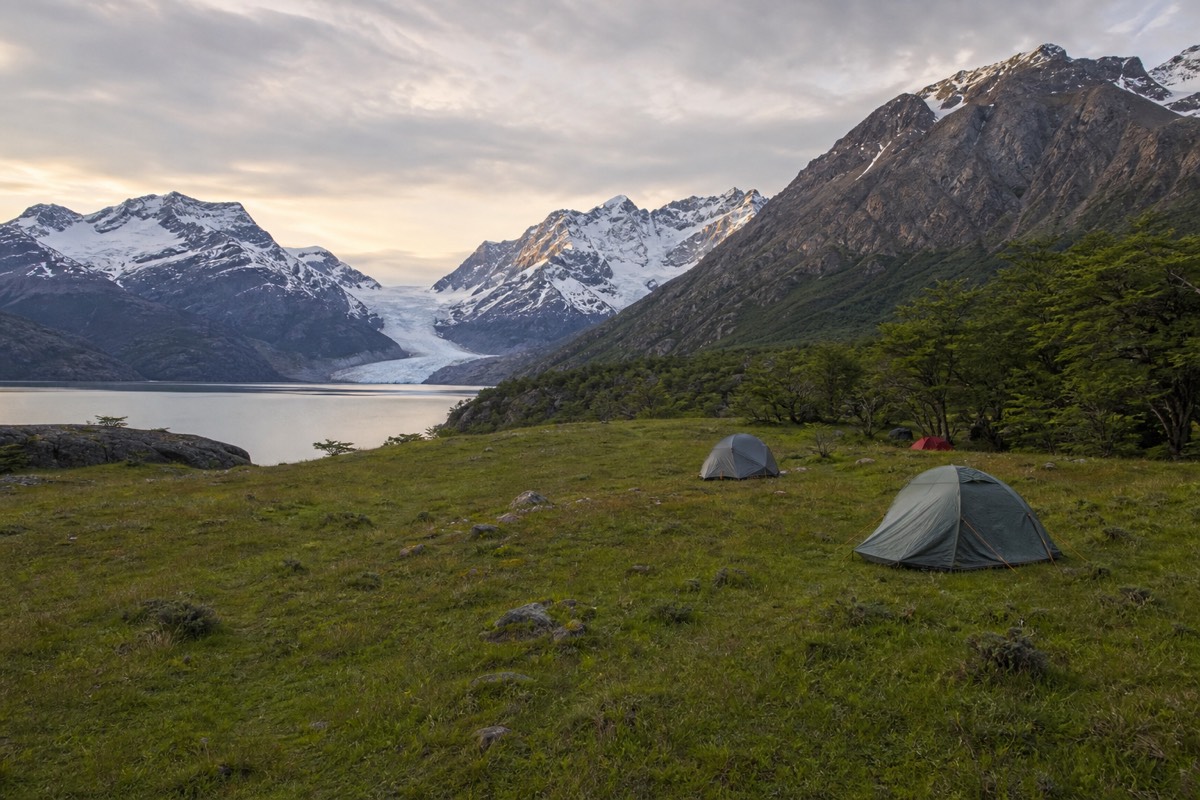
At five sectors strung along the route: Paine Grande and Grey on the western arm, Francés or Cuernos in the middle, and Chileno or Central at the eastern end. Each has some combination of refugio dorm beds, equipped camping with the tent already pitched, and in the Vértice sectors, pitches for your own tent. There is nothing in between and nothing outside them.
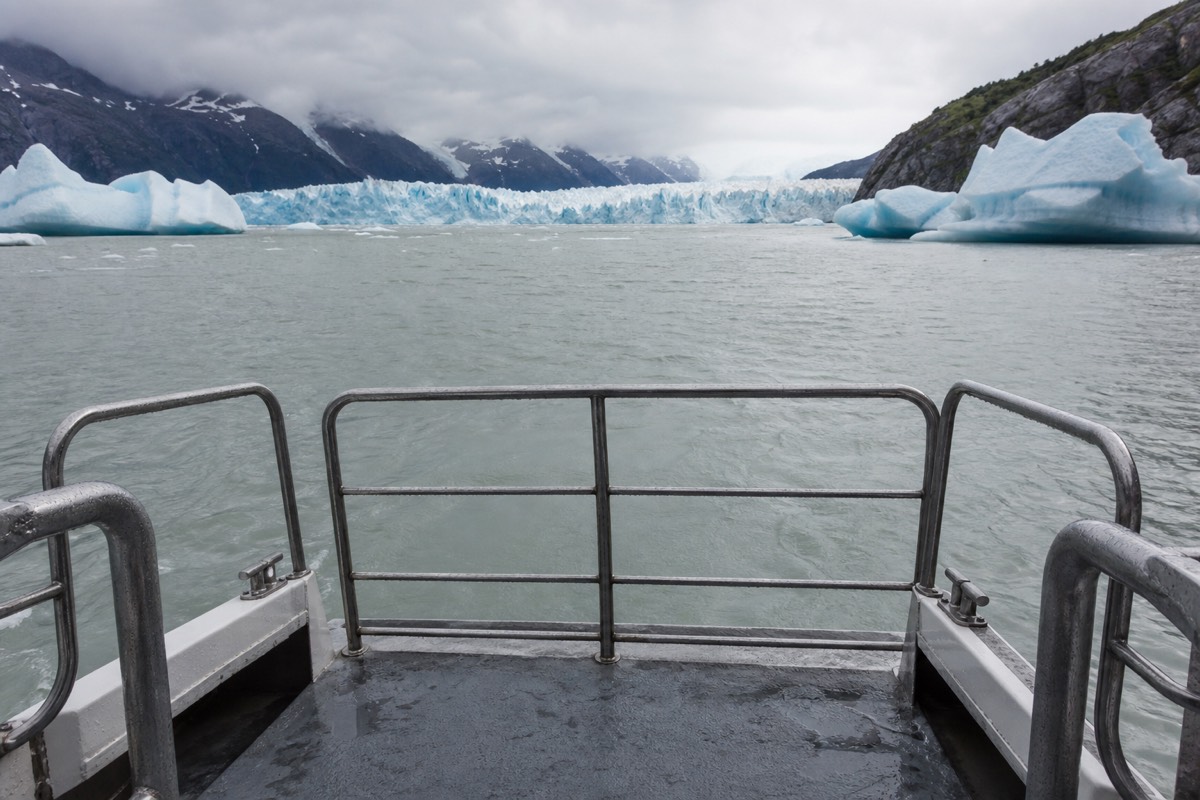
The standard west to east crossing takes the catamaran from Pudeto to Paine Grande, sleeps there, walks 11 km to Grey and back or stays at Grey, comes back east along the lake, spends a night in the middle at Francés or Cuernos, then finishes at Chileno for a sunrise push to the towers. The distances are not brutal on their own. It is the sequence, and the fact that each night is a booking you cannot change on the trail, that makes the planning heavy.
Direction matters to your booking as much as to your legs. West to east is the more common way and the one most packages sell, because it puts the Base Torres viewpoint at the end, usually at sunrise. East to west starts with the hardest day on fresh legs and saves the glacier for last. Both are walked; the sector table below reads west to east because that is how most beds get sold. The full route breakdown is in the W Trek stage by stage.
| Sector | Operator | What you can sleep in | Next leg |
|---|---|---|---|
| Paine Grande | Vértice | Refugio dorms, equipped camping, own-tent sites | 11 km to Refugio Grey, 4 to 4.5 hours |
| Grey | Vértice | Refugio dorms, equipped camping, own-tent sites | 5.6 km round trip to the mirador and the suspension bridges |
| Francés | Las Torres sector operations | Refugio beds and equipped camping | 7.5 km to Paine Grande, about 2.5 hours |
| Cuernos | Las Torres sector operations | Refugio beds and equipped camping | 11 km along Lake Nordenskjöld to Torres Central, about 4 hours |
| Chileno | Las Torres | Refugio beds and equipped camping | 8 to 10 km round trip to the Base Torres mirador, about 4 hours |
| Central | Las Torres | Refugio beds, equipped camping, the Hotel Las Torres alongside | 21 km round trip to the mirador, 1,041 m of ascent |
How much does a refugio cost in Torres del Paine?
Published dorm beds in the Vértice refugios run roughly $46 to $114 per person a night, depending on season and sector. Own-tent sites at the same refugios are around $11 to $14 per person. Las Torres equipped camping is dearer, published between $30 and $50 for standard sites and $40 to $90 at Serón in high season. Meals are separate.
The spread inside that dorm range is the thing to plan around. A shoulder-season night at a quieter sector sits near the bottom; a January night at a popular one sits near the top. Four nights of dorm beds therefore lands somewhere between roughly $184 and $456 per person before a single meal, which is why two people can walk the same trek and report costs that differ by several hundred dollars.
Set that against what a bed replaces. A dorm night removes a tent, a sleeping mat and a stove from your pack, and at Vértice sites it comes with showers and the option of buying food rather than carrying it. Whether that trade is worth $100 a night is a real question rather than a rhetorical one, and the answer changes depending on how many nights you are out and whether you own the gear already. The tent side is worked through in pitching your own tent in the park.
| Accommodation type | Published price per person per night | Operator |
|---|---|---|
| Own-tent campsite | About $11 to $14 | Vértice sectors |
| Equipped camping, standard sites | About $30 to $50 | Las Torres sectors |
| Equipped camping, Serón in high season | About $40 to $90 | Las Torres |
| Refugio dorm bed | About $46 to $114 | Vértice sectors |
| Hotel Las Torres, half board | From about $820 | Central sector, at the Base Torres trailhead |
All figures are published rates for the 2025-26 season and move with season, sector and availability. Confirm on the operator's own page before you budget.
Can you stay inside Torres del Paine?
Yes, and at four very different price points. Own-tent sites from about $11, equipped camping from about $30, refugio dorm beds from about $46, and hotels inside or beside the park where Hotel Las Torres publishes from about $820 a night half board. What you cannot do is turn up without a reservation and expect to sleep anywhere.
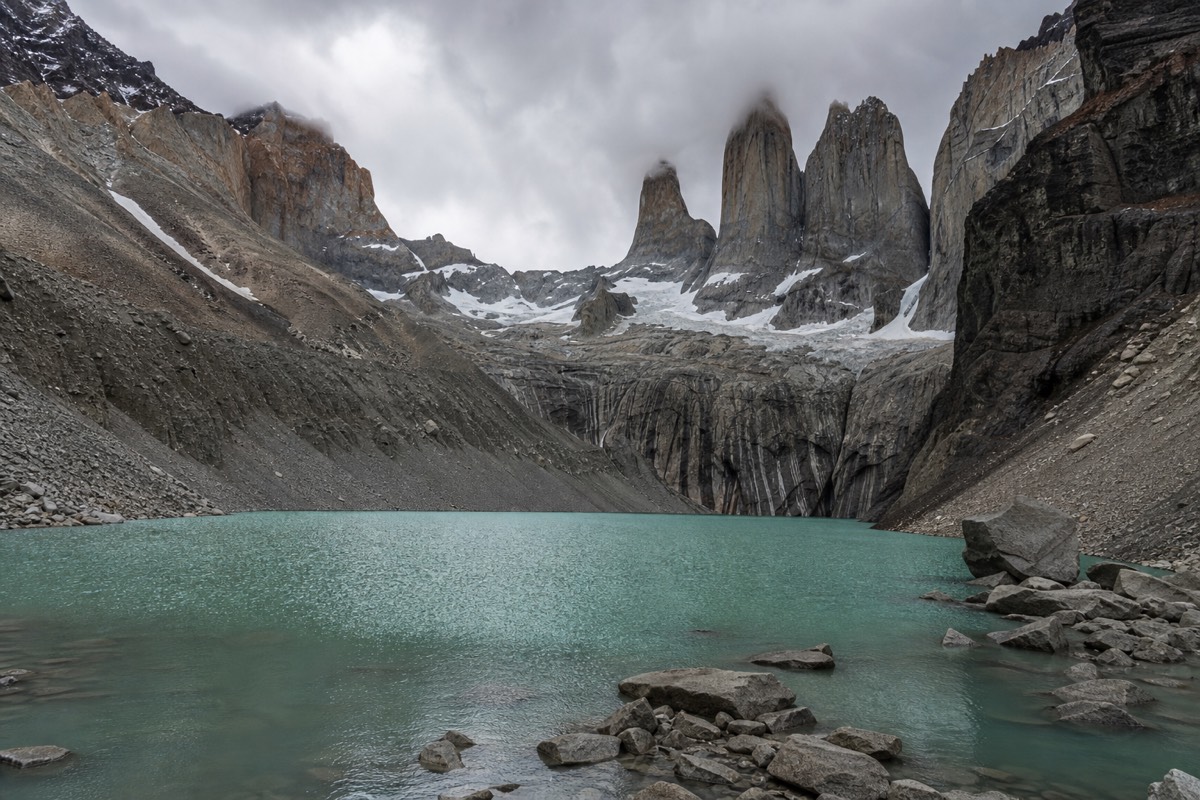
The hotel tier is a genuine option rather than a footnote, and it changes the shape of a trip completely. Hotel Las Torres sits in the Central sector at the Base Torres trailhead, which means the hardest day hike in the park starts from the front door. Explora on Lake Pehoé, Tierra Patagonia on Lake Sarmiento, Hotel Lago Grey, Hotel Río Serrano, EcoCamp Patagonia's geodesic domes in the Central sector, Patagonia Camp and Awasi fill out the rest. Of those, only the Las Torres rate is published clearly enough to quote; for the others, nightly rates run into the several hundreds of dollars and you should check the property directly.
The alternative is not sleeping inside at all. Puerto Natales is 112 km away, 1.5 to 2 hours by road, and it holds the buses, the gear shops, the supermarkets and every tour departure. A day trip from town means leaving by about 07:00, and for a lot of visitors that is the better trade: cheaper beds, real restaurants, and no bed booking made nine months out. The comparison across all of it sits in every lodging option around the massif.
When does the booking calendar open, and what sells out first?
The concessionaires open the next season's calendar around April. Chileno goes first, every year, because it is the closest bed to the Base Torres mirador and therefore the only way to be at the towers for sunrise without a pre-dawn start from the valley floor. December and January dates follow. This is the honest urgency on this page, and it is the only kind we deal in.
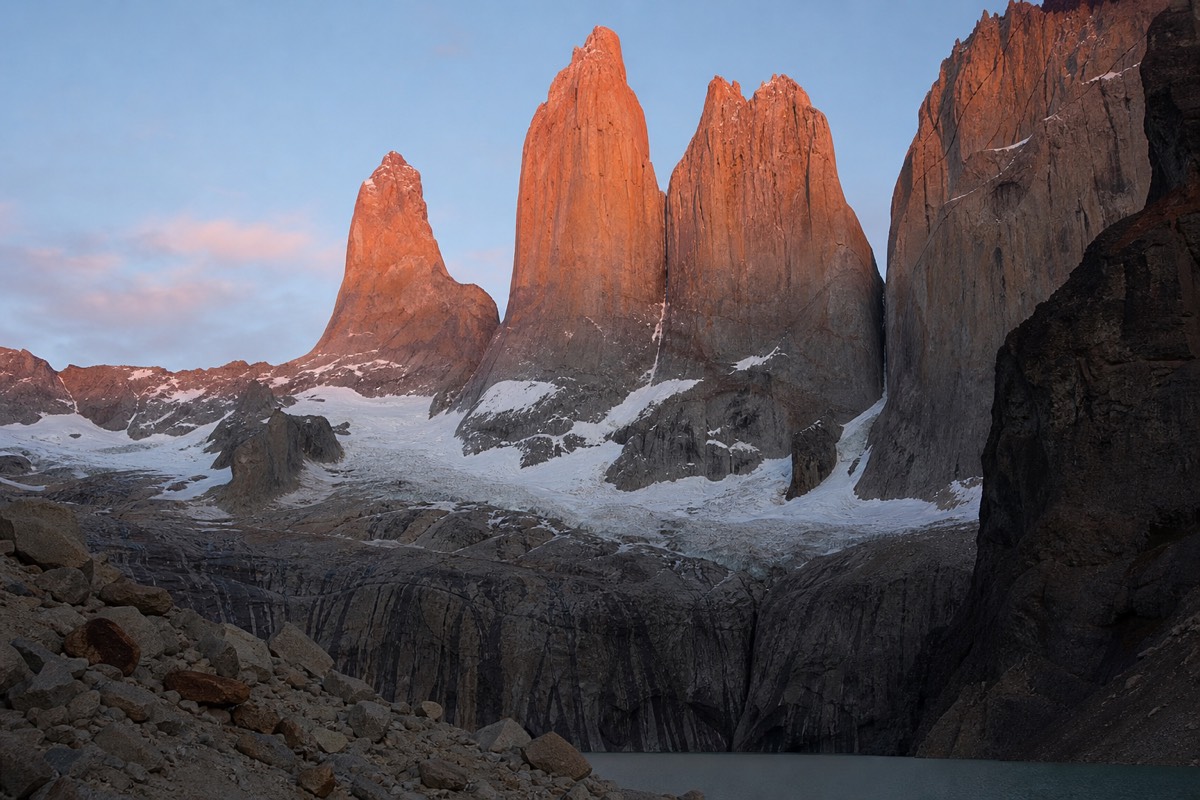
Chileno's scarcity is structural rather than fashionable. It sits partway up the Ascencio valley, roughly 8 to 10 km round trip from the mirador against 21 km from the Welcome Center, and there is no second option at that altitude. Everyone who wants the sunrise shot wants the same beds, and there is a fixed number of them. When Chileno is gone the usual fallback is Central, which turns a four-hour morning into an eight to ten hour day with 1,041 m of ascent.
The rest of the calendar behaves predictably. High summer sells before shoulder season, weekends before midweek, and dorm beds before equipped camping because more people want them. Vértice's Paine Grande and Grey open around 1 October and Dickson around 1 November; the Las Torres season runs roughly 1 October to 25 April 2026. Anything outside those windows is not late booking, it is closed.
| When | What to do |
|---|---|
| Around April, the season before | Both concessionaire calendars open. Fix your dates and your direction now |
| The same week | Hold Chileno or its fallback first, then build the other nights around it |
| Once beds are confirmed | Book buses and the catamaran leg around the fixed bed dates |
| Last, and only then | Buy the CONAF park ticket, which is date-locked and non-refundable |
| Two weeks out | Recheck the catamaran timetable, which changes every season |
What does a refugio night actually get you?
A bunk in a shared dorm, hot showers, a dry building to sit in, and a kitchen or dining room selling meals you do not have to carry. Wifi is available at the bigger refugios for an extra fee. What it does not get you is privacy, silence, or any guarantee about who is in the other five bunks.
The value is mostly weight. Sleeping in refugios means no tent, no sleeping mat, no stove, no fuel and no four days of food in the pack, which for most people is the difference between walking the W comfortably and grinding through it. On a route where the Base Torres day alone is 21 km with 1,041 m of ascent, that difference is not cosmetic.
The trade is noise and cost. Dorms are dorms: people pack at 05:00 for the sunrise push, boots come off at the door, and drying rooms smell like drying rooms. Los Perros, out on the O Circuit back side rather than the W, is the most basic of the network with cold showers and no wifi, and it sets the floor for what a park refugio can be. If you want the quiet version of this trip, a hotel base or a guided trip sleeping at a fixed camp is a better fit than a bunk room in February.
| What you get | Included in the bed price | Usually extra |
|---|---|---|
| Bunk in a shared dorm | Yes | |
| Hot showers | Yes at the developed refugios | Cold showers only at Los Perros |
| Indoor dining and shelter | Yes | |
| Breakfast, lunch, dinner | No | Bought individually or as a full-board supplement |
| Wifi | No | Available at the bigger refugios for a fee |
| Sleeping bag or bedding | Varies by operator and site | Confirm on the operator's page before you pack |
Full board, or carry your own food?
Recommended tours by season
High-summer dorms are the first to go. These trips either hold the nights for you or stay outside the refugio system.
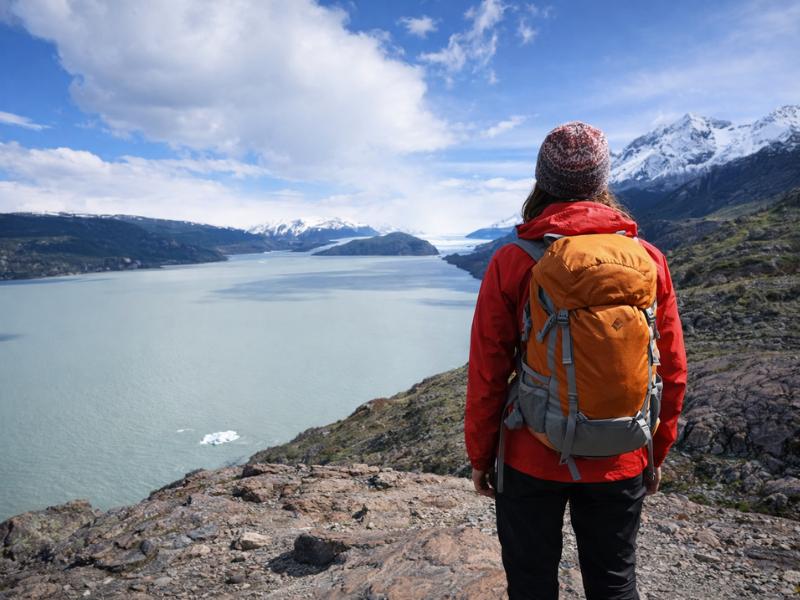
5-Day Torres del Paine W Trek – Guided Patagonia Adventure
The high-summer option when refugio beds are hardest to hold. Confirmed accommodation vouchers, full-board meals, bus and catamaran transfers; self-guided.
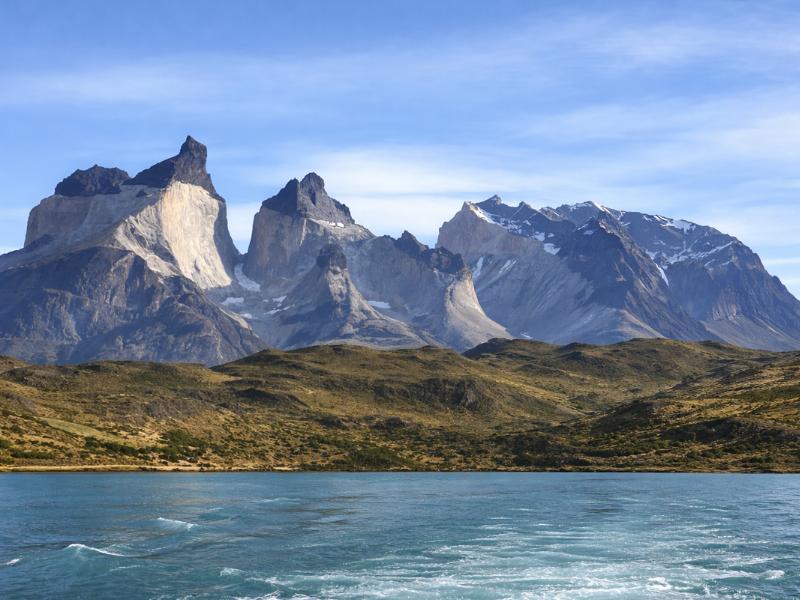
Torres del Paine W Trek Alternative 3-Day Guided Tour
A guided three-day take on Base Torres, the French Valley and the Grey viewpoint from two nights at Camping Pehoé, when a full four-night refugio sequence will not close.
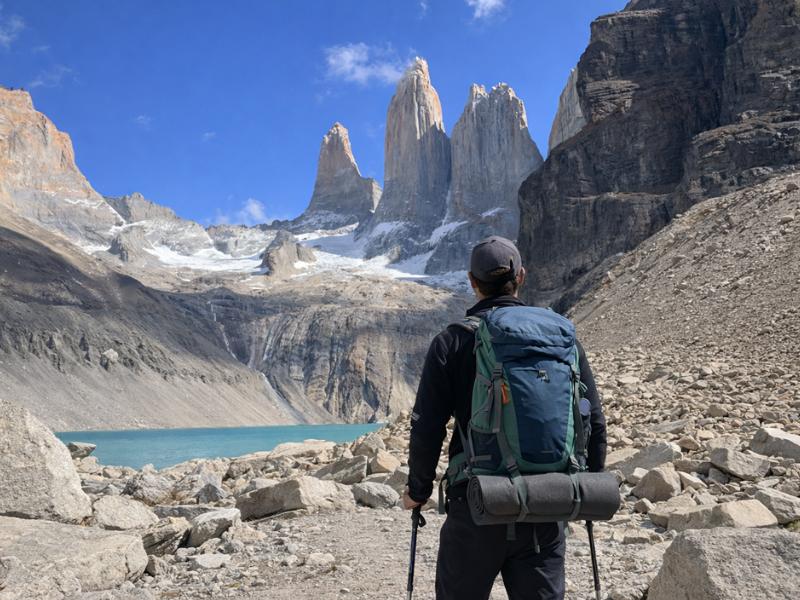
Torres del Paine 2-Day Express Tour – Aventura & Highlights
Base Torres on day one and the Condor, Cuernos and Aonikenk viewpoints on day two. Overnight in an equipped tent at Pehoé; the listing includes poles and crampons in winter.
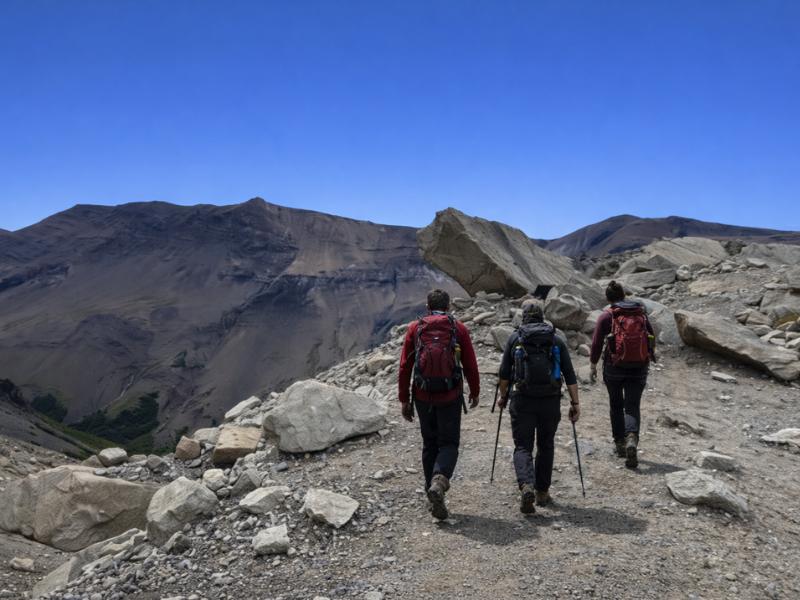
Torres del Paine Base Torres Trekking Day Trip from Puerto Natales
The Base Torres trail as a day trip from Puerto Natales. No refugio or campsite reservation, and no night booked inside the park.
Full board is quoted around $100 a day and removes four days of food from your pack. Carrying your own is cheaper and heavier, and it commits you to a stove, fuel and the designated cooking areas. Most people walking the W with refugio beds take full board for at least the longest days. The decision is really about weight, not money.
Run the numbers honestly. Four days of full board at around $100 is roughly $400 per person, on top of $184 to $456 of beds. Carrying your own food removes most of that but adds a stove, a pot, fuel you cannot fly with and must buy in Puerto Natales, and four days of supplies on your back on a route with over a kilometre of ascent in one day. Neither answer is obviously right.
There is a middle path that a lot of people end up on without planning it. Take breakfasts and dinners at the refugio, where the kitchen is already running, and carry your own lunches, which are the meals you eat on the trail anyway and the ones where the box lunch price looks worst. It cuts the food bill without putting a stove in the pack, and it means you are not tied to a serving time in the middle of a walking day.
Whatever you choose, buy it in town. Puerto Natales has the supermarkets, the gear shops and the fuel canisters, and there is nothing to buy between the gate and your first bed except what a refugio chooses to sell. The town itself is covered in basing yourself in Puerto Natales.
What do meals cost once you are inside the park?
Published refugio meal figures cluster around $25 for breakfast, $20 to $50 for a box lunch and $35 to $70 for dinner, with a full-board supplement often quoted around $100 a day. Sources vary widely on all of these, so treat them as a planning range and check the concessionaire's own page for your sector and dates.
The spread on lunch is the one that looks strangest and is the easiest to explain. A box lunch at the bottom of that range is a sandwich and a piece of fruit; at the top it is a substantial packed meal designed to carry someone through a 20 km day. Different sectors and different operators package it differently, and the price follows. Dinner behaves the same way, which is why the honest figure is a range rather than a number.
What this does to a budget is worth stating plainly. Four nights of dorm beds plus full board lands somewhere around $584 to $856 per person before transport, gear or the park ticket, and that is a self-guided trip. It is the reason the published all-in figure for a self-guided W runs between roughly $600 and $1,500, and the reason guided packages at $1,700 and up are not the outlier they first appear to be.
| Meal | Published range | Note |
|---|---|---|
| Breakfast | Around $25 | Served at the refugio before the first walkers leave |
| Box lunch | $20 to $50 | Ordered the night before, carried on the trail |
| Dinner | $35 to $70 | Fixed serving times at most sectors |
| Full-board supplement | Often quoted around $100 a day | Covers all three, booked with the bed |
Sources disagree on every line above. These are the ranges the published figures cluster around, not a menu.
Are there free campsites left in Torres del Paine?
No. The free CONAF campsites are not operating. They closed and have not reopened for the 2025-26 season, which means every night you spend inside the park is a paid, reserved night with one of the two concessionaires. Old blog posts and older guidebooks still describe the free sites, and following them will leave you with a trek that has a hole in it.
This single change is the biggest shift in W Trek costs of the last decade. The route used to be walkable on a shoestring by stringing free CONAF sites together with a couple of paid nights. That version of the trek does not exist now. The cheapest legal way to sleep on the W is an own-tent pitch at a Vértice site at roughly $11 to $14 per person, and even that has to be reserved.
Rangers check. Camping only in designated, reserved sites is a CONAF rule with the same legal backing as the fire ban, and the fire ban carries fines up to 2 million CLP, up to three years in prison and expulsion from the park under Chilean law 20.653. Turning up without a reservation and improvising is not a budget strategy, it is the thing that gets people removed. The current rules are published by CONAF, the park authority.
What do you do when the nights you need are already gone?
Five real options, in rough order of how well they work: shift your dates, change direction, drop a night and walk longer days, switch that night from a bed to an own-tent pitch, or book a supported trip where somebody else holds confirmed accommodation. Waiting for a cancellation is not on that list because it is not a plan.
Shifting dates is the cleanest fix and the one people resist hardest, because flights are booked first. If you can move a W by three days into late March rather than mid January you will find beds, calmer wind and thinner trails at once. Changing direction can free up a different set of nights entirely, since the demand pattern for a west to east crossing is not the same as for east to west.
Dropping a night means walking two legs in one day, which on the W is possible but not casual. The Francés to Paine Grande leg is 7.5 km and about 2.5 hours, so pairing it with another leg is realistic; pairing the Grey day with anything is not. Switching to an own-tent pitch works where Vértice has space and you have or can rent the kit, which is a Puerto Natales errand rather than a crisis.
The last option is the one that removes the problem rather than working around it. Our 5-day supported W Trek is sold with confirmed accommodation vouchers, full-board meals, bus and catamaran transfers and QR check-in support, currently from $1,905, and it is self-guided rather than guided. If you want an actual guide, the 3-day guided W Trek alternative covers Base Torres, the French Valley and the Grey viewpoint from two nights at Camping Pehoé, currently $1,175, with a rating of 5 across 320 bookings on its listing. How those two shapes compare is set out in guided against self-guided W trips.
| Option | What it means | Cost signal | Trade-off |
|---|---|---|---|
| Shift your dates | Move into shoulder season, late March or October | Beds sit nearer the bottom of the $46 to $114 range | Shorter daylight, colder nights |
| Change direction | Walk east to west instead of the usual west to east | Neutral | Hardest day first, glacier last, no sunrise finish at the towers |
| Drop a night | Pair two short legs into one walking day | Saves one bed and one dinner | Only works on the shorter legs, not the Grey day |
| Own-tent pitch instead of a bed | Reserve a Vértice campsite and carry or rent a tent | $11 to $14 instead of $46 to $114 | Tent, mat and weight in the pack |
| Book a supported trip | Confirmed vouchers, meals and transfers held for you | From $1,905 for the 5-day supported W | Fixed itinerary, higher up-front price |
Beds, tents, or letting someone else hold the reservations?
If you are organised nine months out and happy in a dorm, book it yourself and save real money. If you are inside the booking window, travelling in high summer, or simply do not want three separate reservation systems in your life, a supported or guided trip is the sensible buy rather than the lazy one. Both are legitimate ways to walk this route.
Be honest about which one you are. The self-booked W is cheaper and published all-in between roughly $600 and $1,500 depending on beds against tents, but it assumes you were ready in April, that both concessionaires had your dates, and that nothing shifts. Guided packages run $1,700 to $3,500 and up across the market, and what that buys is somebody else absorbing exactly the failure mode described at the top of this page.
There is a third shape worth knowing about, for people who want the park without four nights on a trail. The 2-day express tour walks the roughly 22 km Base Torres route on day one, sleeps in a fully equipped tent at Pehoé camping with dinner included, then takes in the Condor viewpoint, the Cuernos viewpoint and the Aonikenk trail on day two. Currently $620, rated 4.8 across 823 bookings on its listing. It is not the W and does not pretend to be, but it puts you at the towers and inside the park overnight without a single concessionaire login.
Whichever way you go, the O Circuit is a separate conversation: 120 to 136 km, seven to nine days, back-side camps at Serón, Dickson, Los Perros and Grey, and we do not sell it. What it involves is in the O Circuit back side. For the W and for day visits, guided trips into the park is where our own shelf sits, and whether the trek justifies its price is argued out in whether the W justifies its cost.