Where to Stay in Torres del Paine: Refugios, Hotels or Puerto Natales
The gap between the cheapest and the dearest published bed inside Torres del Paine is roughly seventy times, and the drive time from Puerto Natales is what you are really buying.
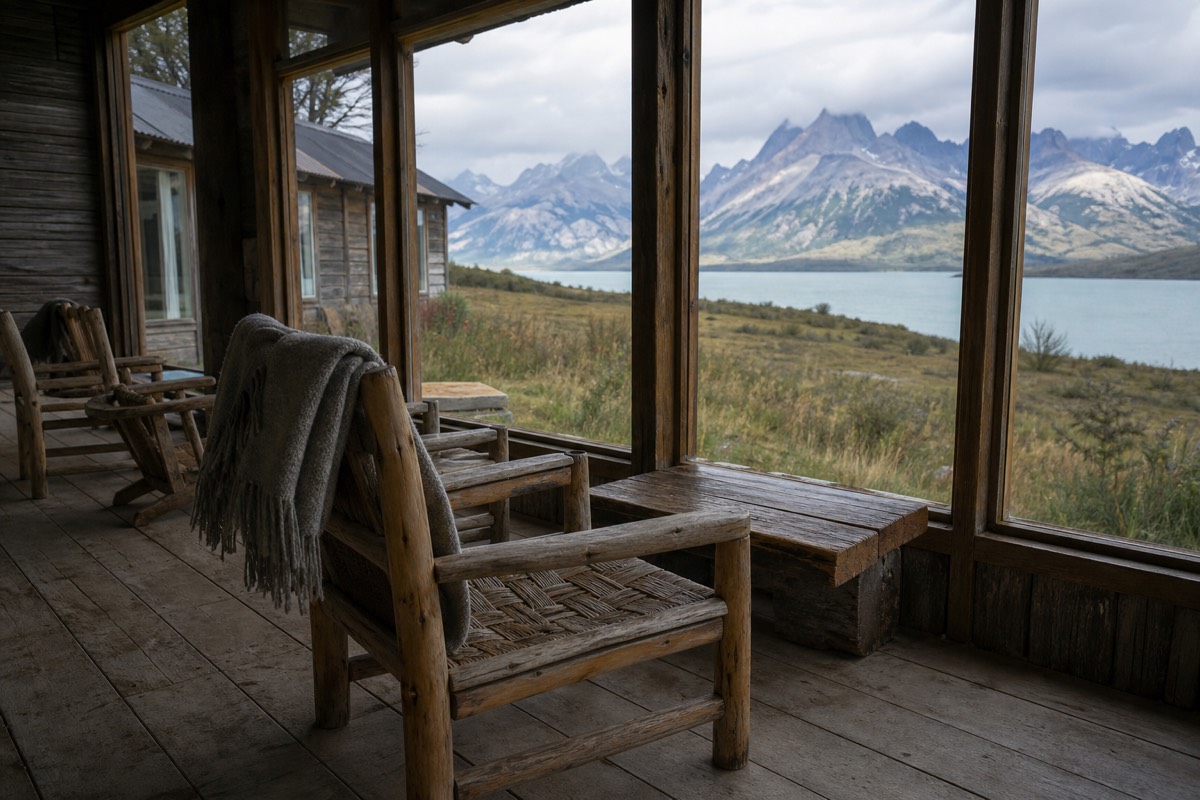
Three published figures frame this entire decision. A pitch for your own tent at a Vertice campsite inside the park runs $11 to $14 a person. A dorm bed in the same refugio is published between $46 and $114. Hotel Las Torres, standing at the Base Torres trailhead, is published from $820 a night half-board for the 2025-26 season. Same park, same wind, roughly seventy times the money at the extremes.
Published nightly cost by bed type
Campsite and refugio figures are per person; the hotel figure is a published room rate half-board, so the two ends of this chart are not measured the same way.
Where to stay when going to Torres del Paine?
There are three real answers and they are not substitutes for each other. Refugios and campsites inside the park put you on the trail and book through two separate concessionaires. In-park hotels buy comfort and first light, starting at a published $820 half-board. Puerto Natales, 112 km away, is the cheap and flexible base with buses, gear shops and supermarkets. Which one is right depends far less on budget than people expect, and far more on how many days you have and whether you intend to walk.
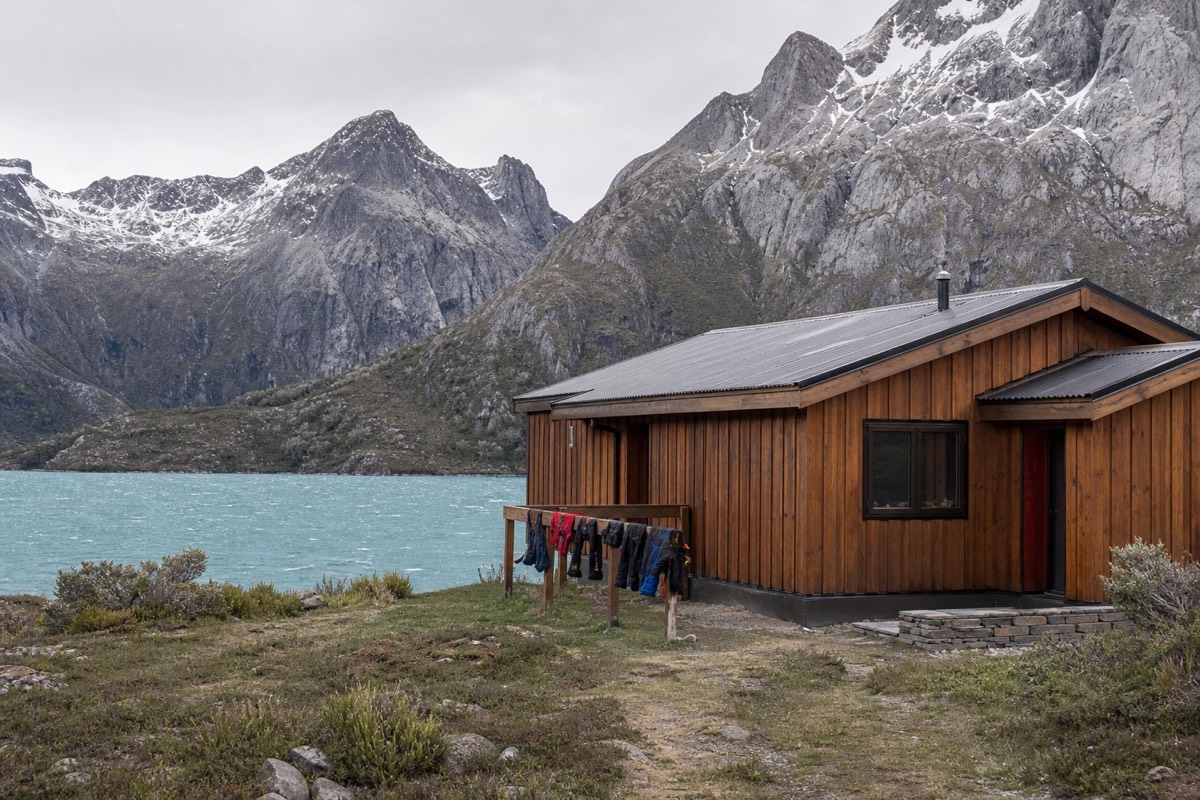
If you are on the W trek, the question mostly answers itself: you sleep where the route puts you, and the only choice left is tent or bed. If you are visiting for one or two days, sleeping inside the park is usually the wrong call, because you pay park prices for nights you barely use. The awkward middle is the three to four day visitor who wants the towers at dawn but does not want to carry a pack. That traveller is the reason the in-park hotels and the equipped camping sectors exist at all.
One thing worth settling before anything else: free camping is not an option. The CONAF campsites that used to be free are not operating and have not reopened for the 2025-26 season. Anyone arriving with a tent and a plan to find a spot is arriving with a problem instead. Every night inside the boundary is reserved, paid and tied to a name.
| Option | Published nightly cost | Distance to a trailhead | Books through | Suits |
|---|---|---|---|---|
| Own tent, Vertice campsite | $11 to $14 per person | On the trail | Vertice Patagonia | Lowest-cost W trekkers carrying gear |
| Equipped camping, Las Torres sectors | $30 to $50, and $40 to $90 at Serón in high season | On the trail | Las Torres Patagonia | Trekkers who will not carry a tent |
| Refugio dorm bed | $46 to $114 per person | On the trail | Vertice or Las Torres Patagonia | Trekkers who want a mattress and hot food |
| Hotel inside the park | From $820 half-board at Hotel Las Torres; other properties published into the several hundreds | Minutes by road, or on the doorstep | The property directly | Sunrise starts without logistics |
| Puerto Natales | Not a figure we hold, so budget for a wide spread | 112 km, 1.5 to 3 hours by road | The property directly | Short visits, weather days, gear rental |
Can you stay inside Torres del Paine?
Yes, in four distinct ways: your own tent on a reserved pitch, a pre-pitched equipped tent, a dorm bed in a refugio, or a hotel room. What you cannot do is turn up and camp for free. The old CONAF free sites are shut and have not reopened for 2025-26, so every bed and every pitch inside the boundary is booked in advance. The difficulty is not availability so much as the shape of the booking system.
Two companies hold the concessions and they do not talk to each other. Las Torres Patagonia runs the Central, Chileno and Serón sectors on the eastern side. Vertice Patagonia runs Paine Grande, Grey, Dickson and Los Perros on the western and northern side. Park entry is a third booking entirely, made at the official park ticketing portal. A four-night W therefore means juggling three systems, three payment pages and three confirmation emails, and a gap in any one of them stops the whole itinerary. We cover how the two booking systems actually work in detail elsewhere, because it is the single biggest planning headache in the park.
That is also the honest argument for a supported trip. The five-day supported W we sell arrives with confirmed accommodation vouchers and full-board meals already attached, which removes the three-system problem without putting a guide in front of you. It is self-guided walking with the bookings done.
| Bed type | Operator | Published price | Season |
|---|---|---|---|
| Own tent pitch at Paine Grande, Grey or Dickson | Vertice Patagonia | $11 to $14 per person | Paine Grande and Grey from around 1 October, Dickson around 1 November |
| Refugio dorm bed | Vertice Patagonia | $46 to $114 per person | As above, by sector |
| Equipped camping, standard site | Las Torres Patagonia | $30 to $50 | Roughly 1 October to 25 April 2026 |
| Equipped camping at Serón, high season | Las Torres Patagonia | $40 to $90 | Roughly 1 October to 25 April 2026 |
| Free CONAF campsite | CONAF | Not operating | Closed and not reopened for 2025-26 |
Is it better to stay in Torres del Paine or Puerto Natales?
Stay inside the park if you are walking a multi-day route, want the towers in first light, or have three days or more. Stay in Puerto Natales for one and two day visits, tight budgets, gear rental and the freedom to swap a bad forecast for a fjord sailing. The 112 km between the two is the whole trade. Published road times for that stretch disagree, which tells you something in itself.
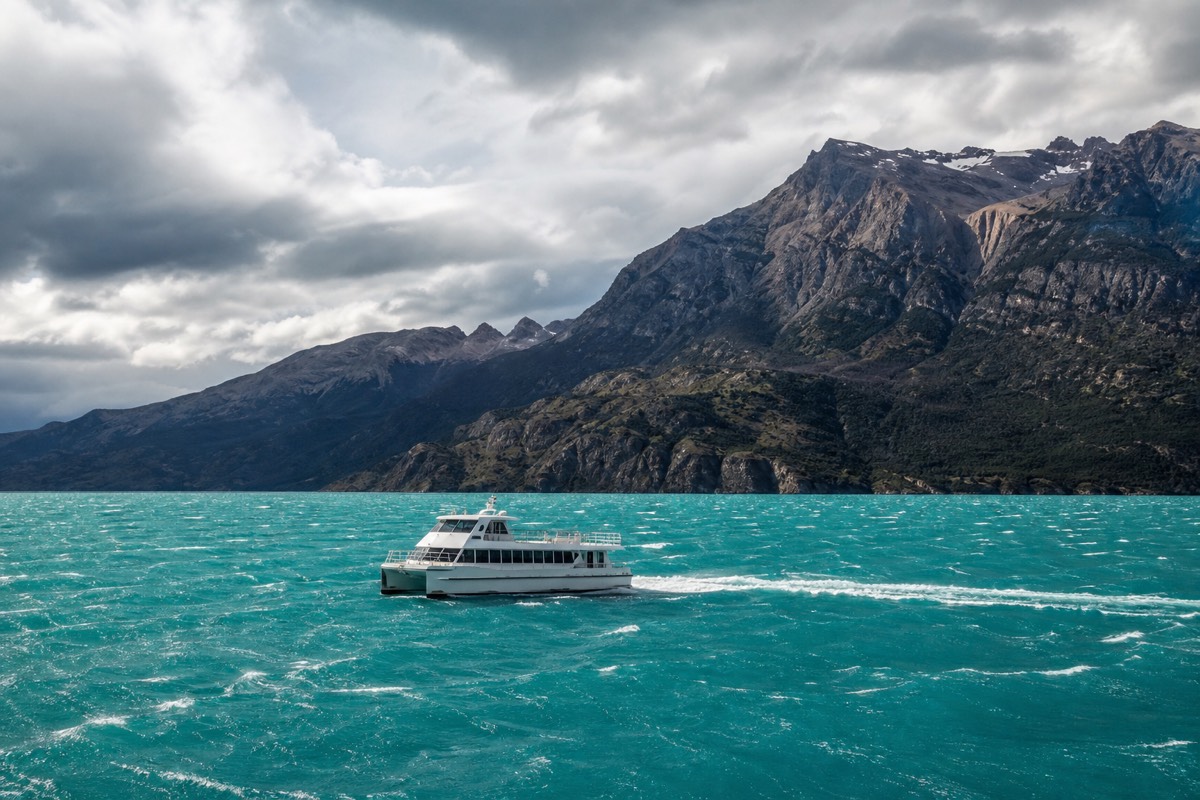
One set of figures puts Puerto Natales at 1.5 to 2 hours from the park, another puts the run to the Laguna Amarga gate at 2 to 3 hours. Both are in circulation. The practical planning number is closer to the upper end, because the bus stops, the gate queue and the shuttle connection are all real and none of them appear in a driving estimate. Assume you lose the best part of five hours of daylight to the round trip on any day you sleep in town.
That is the cost side. The benefit side is everything the town has that the park does not: supermarkets, restaurants, a bus terminal, gear rental, pharmacies, and the option of doing something else entirely when the massif is buried in cloud. There are no fuel stations inside the park at all, which catches out self-drivers more often than it should. If the town is new to you, what Puerto Natales offers on a rest day goes through it properly, and the short version lives in whether Puerto Natales earns a night.
| Journey leg | Distance | Published time | Published cost |
|---|---|---|---|
| Puerto Natales to Laguna Amarga by bus | 112 km | 1.5 to 3 hours, sources differ | $20 to $29 one way |
| Laguna Amarga to the Welcome Center shuttle | 7 km | Meets the arriving buses | 4,000 to 4,500 CLP, cash only |
| Pudeto to Paine Grande catamaran | Across Lake Pehoé | About 30 minutes | About 26,000 CLP, roughly $45 |
| Punta Arenas to Puerto Natales by bus | 250 km | 3 to 4 hours | $9 to $26 |
| Private transfer, Puerto Natales to the park | 112 km | As the road allows | Around $150 |
What does each sector of the park put you next to?
Five names cover almost everything: Central, Pehoé, Grey, Serrano and Sarmiento. Central sits at the Base Torres trailhead, Pehoé at the catamaran and the short walks, Grey at the glacier, Serrano on the southern road out, and Sarmiento on the open steppe where the guanaco herds are. Picking the wrong one adds an hour of driving to every morning of your trip.
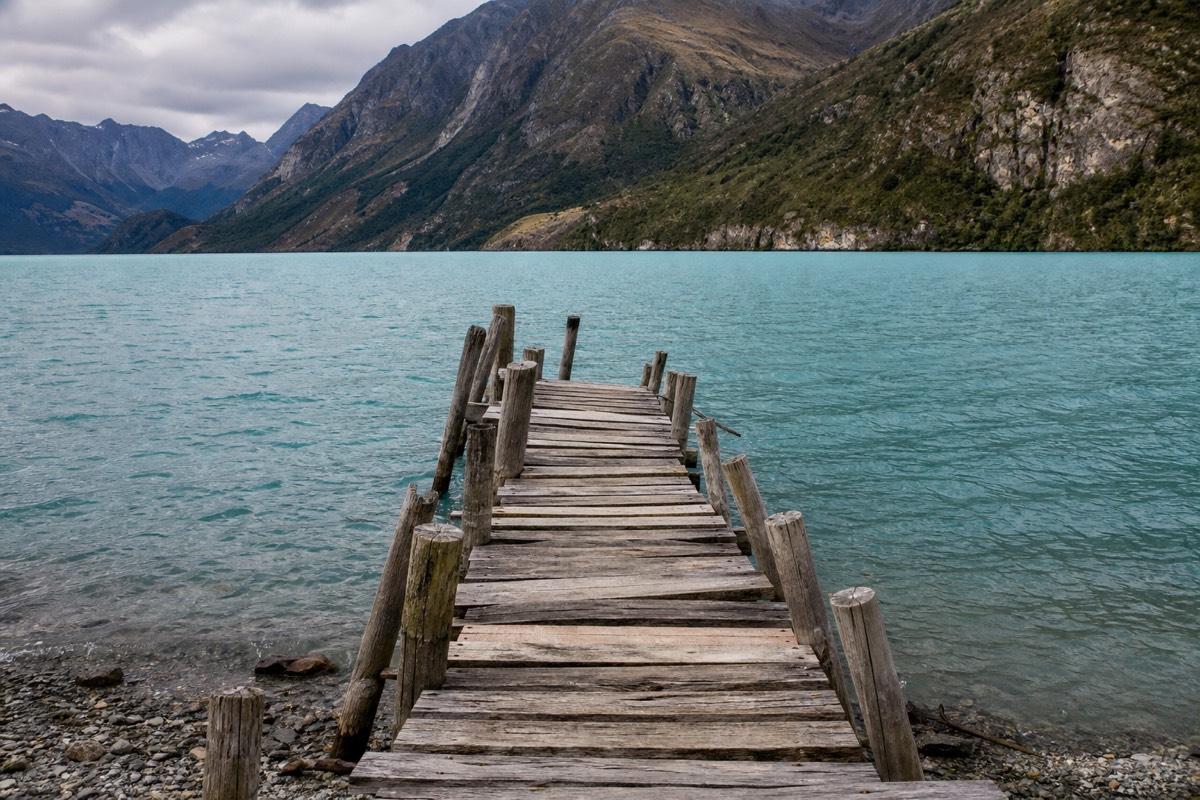
Central is the busiest and the most useful for hikers, because the 21 km round trip to the Mirador Las Torres starts there and the 1,041 m of ascent is far more manageable when you are not already two hours into a bus. Pehoé is the transport hub: the catamaran leaves Pudeto for Paine Grande in about 30 minutes, and Salto Grande is a 1.5 km stroll from the same car park. Grey is the glacier sector, with the cruise pier and the 5.6 km round trip out to the mirador and the suspension bridges. Serrano faces the southern entrance and the river valley. Sarmiento is the driest, most open corner, and the eastern steppe is where wildlife actually shows up.
Patagonia Camp and Awasi are the other two names that come up in the area; the published figures we hold do not place them in a named sector, so check the property before assuming a location.
| Sector | What operates there | What it puts you next to |
|---|---|---|
| Central (Torres) | Welcome Center, Hotel Las Torres, EcoCamp Patagonia, Las Torres campsites | The Base Torres trailhead, 21 km round trip with 1,041 m of ascent |
| Pehoé | Paine Grande refuge across the lake, Camping Pehoé, Explora | The Pudeto catamaran, Salto Grande at 1.5 km, Mirador Cóndor at 3 km |
| Grey | Refugio Grey, Hotel Lago Grey | Grey Glacier, the cruise pier, the mirador and bridges at 5.6 km round trip |
| Río Serrano | Hotel Río Serrano | The southern Río Serrano entrance and the road back to Puerto Natales |
| Lago Sarmiento | Tierra Patagonia | The Sarmiento viewpoint, open steppe, and the Laguna Amarga approach |
What does a refugio bed actually get you?
Recommended tours by season
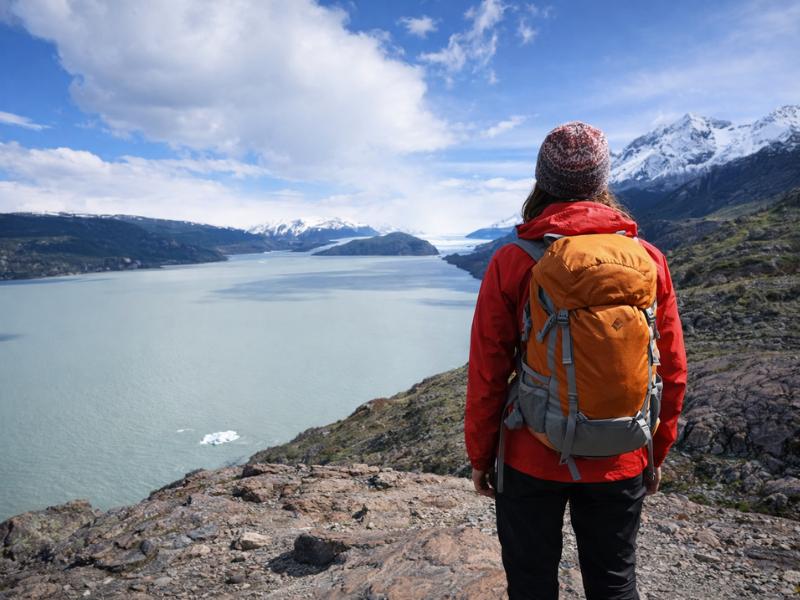
5-Day Torres del Paine W Trek – Guided Patagonia Adventure
For the main walking season, when Vertice and Las Torres beds are open. Accommodation vouchers and full-board meals come attached, so the two concessionaire calendars are not your problem.
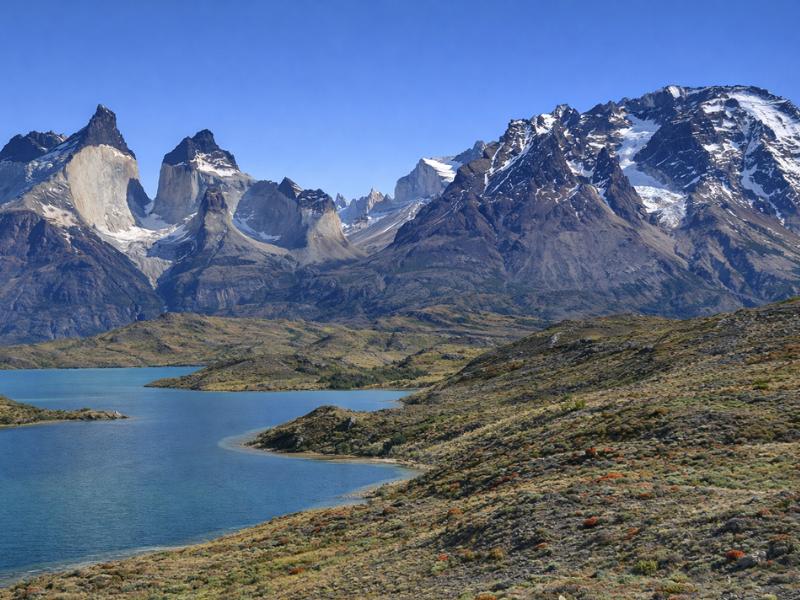
4-Day Torres del Paine Experience – Departing Puerto Natales
Hotel nights in Puerto Natales with the park days already sequenced. A town base through the open season, including the quieter weeks after January.
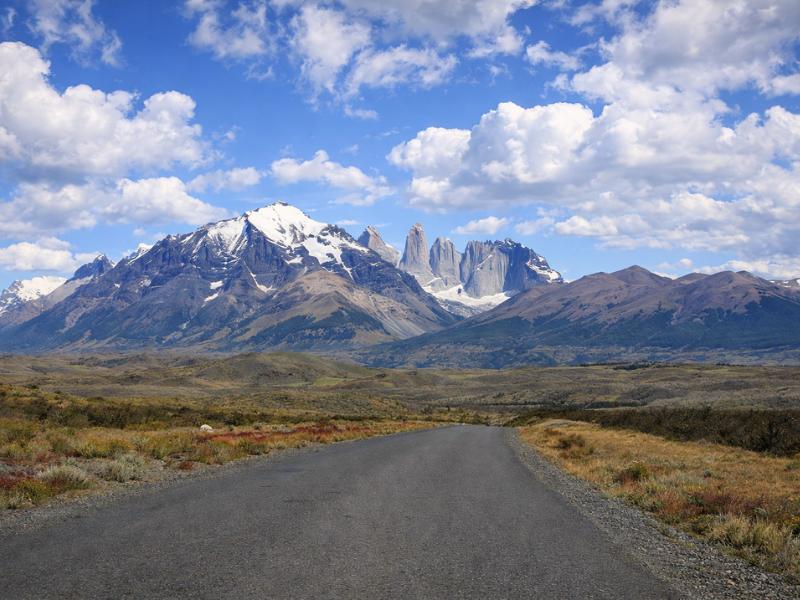
6-Day Self-Drive Torres del Paine National Park Adventure
A car with unlimited mileage and five nights already arranged. Useful in the shoulder months, when you may want to sit out a forecast without losing a refugio reservation.
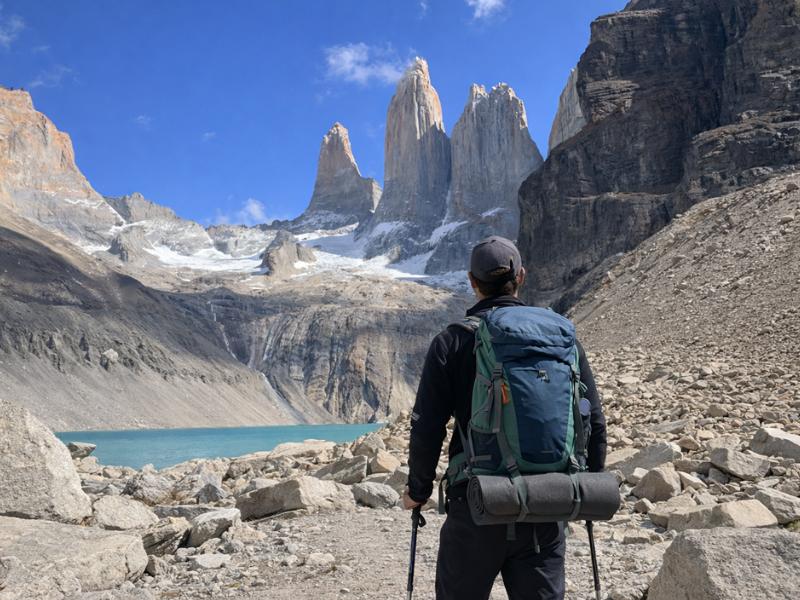
Torres del Paine 2-Day Express Tour – Aventura & Highlights
A camp night at Pehoé so the second morning starts inside the park. Winter departures include trekking poles and crampons.
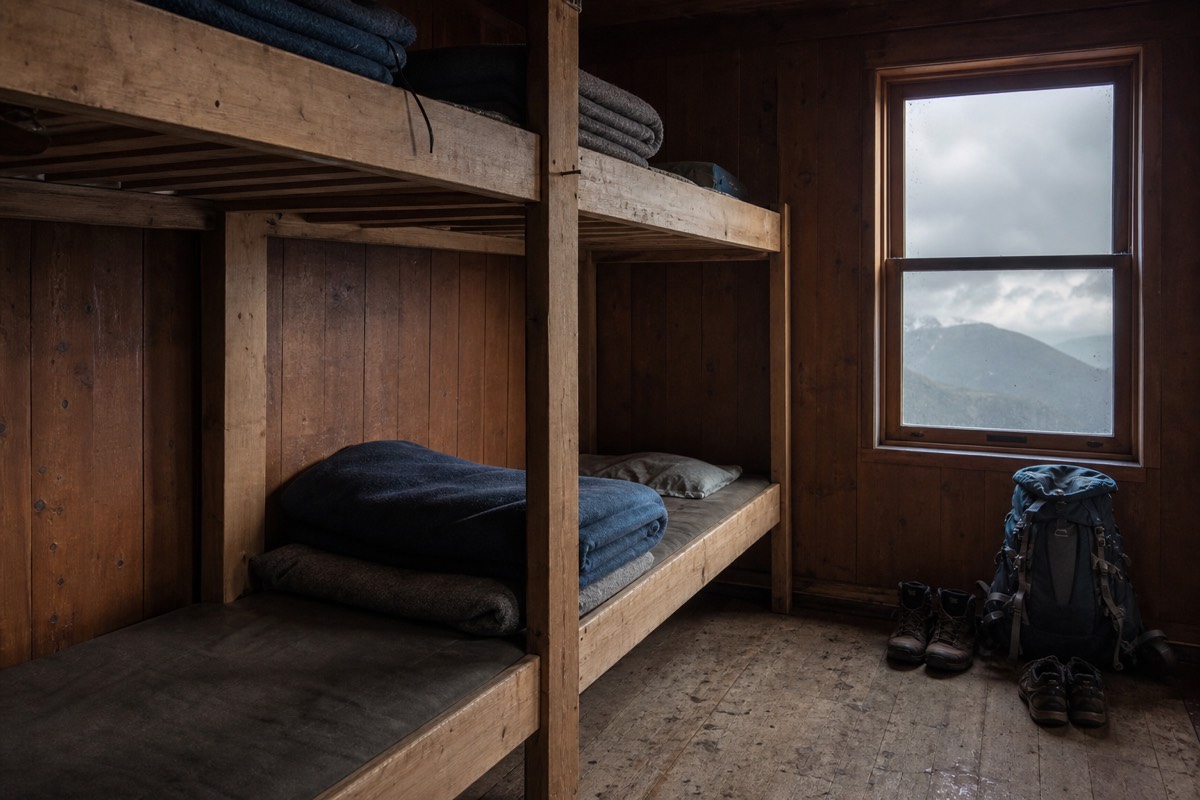
A bunk in a shared dorm, a hot shower, a dry building to eat in, and meals you can buy separately or as full board. Published dorm rates run $46 to $114 a person depending on sector and season. Wifi costs extra at the larger refuges and does not exist at the smaller ones. The gap between the cheapest and dearest bed is mostly seasonal and locational, not a difference in what you get.
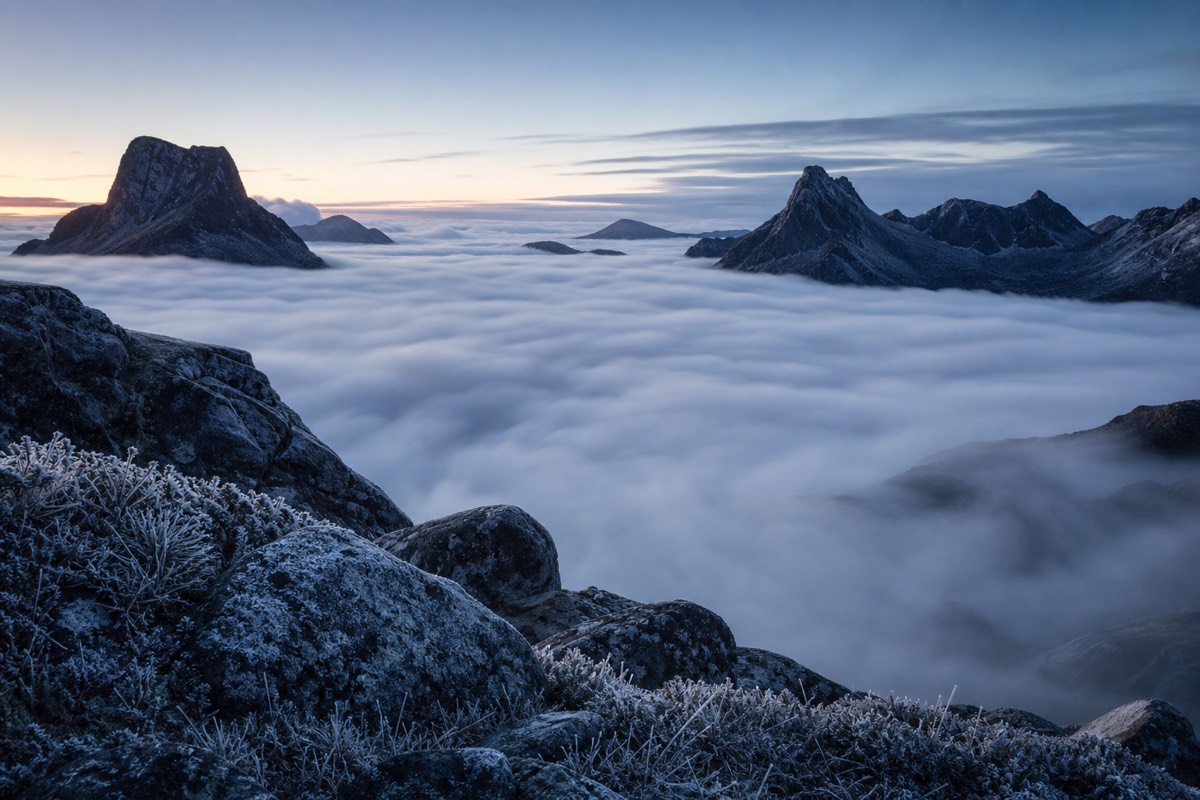
The buildings vary more than the prices suggest. Paine Grande sits on the lake shore and is the largest of the Vertice properties, doubling as the catamaran arrival point for most people walking the W west to east. Grey is smaller and sits within a couple of hours of the glacier mirador. Los Perros, out on the back side of the O Circuit, is the plainest of the lot: cold showers, no wifi, and the last stop before the John Gardner Pass. Nobody sleeps there for the comfort.
Two practical points get missed. Bedding is not automatic across every property and season, so check whether the rate quoted includes a sleeping bag or whether you are carrying one. And Chileno sells out first, every single year, because it is the bed that shortens the Base Torres walk from a 21 km day to something nearer 8 to 10 km round trip. If your plan depends on Chileno, your plan depends on booking in April. For the trail context, the Base Torres trail step by step lays out what that shorter start actually saves you, and what camping in the park involves covers the tent side.
What do the hotels inside the park cost?
Only one published rate is firm enough to quote: Hotel Las Torres, in the Central sector at the Base Torres trailhead, from $820 a night half-board for 2025-26. For Explora, Tierra Patagonia, Hotel Lago Grey, Hotel Río Serrano and EcoCamp Patagonia, published nightly rates run into the several hundreds of dollars and you should check the property. We are not going to guess at rates we cannot stand behind.
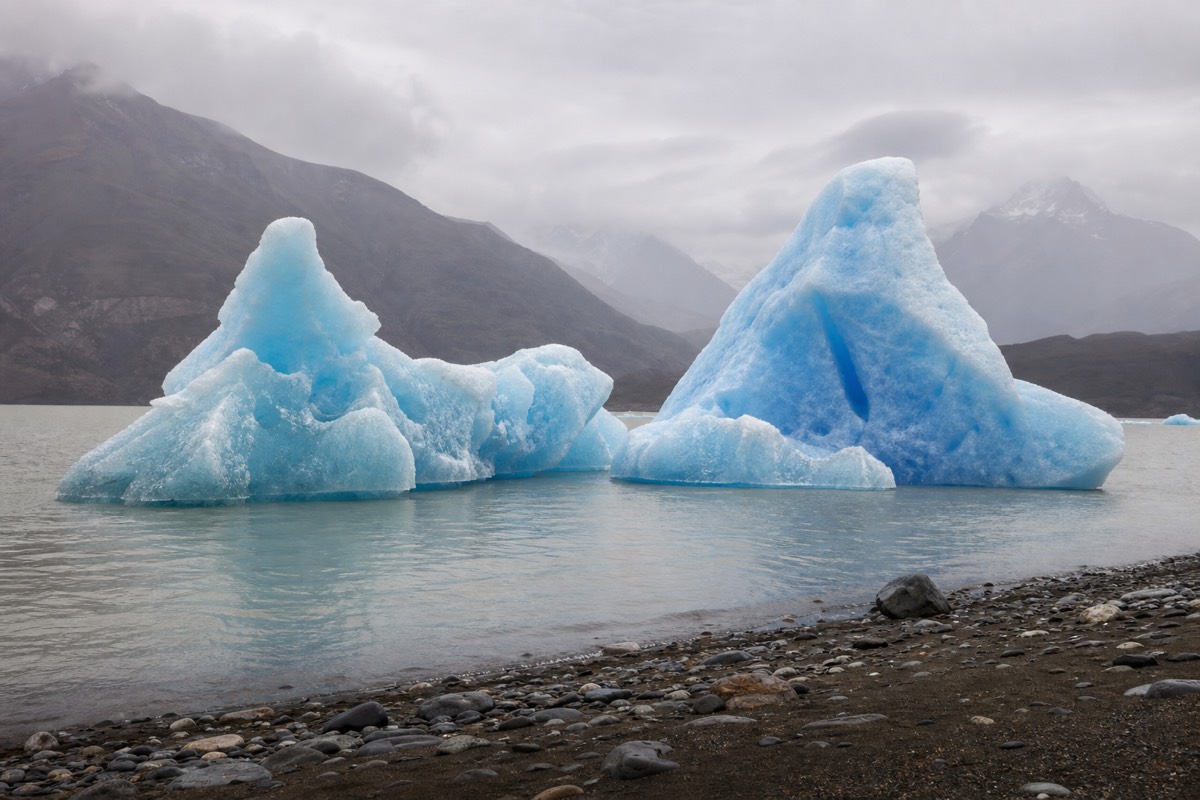
What that money buys is not really the room. It is position and time. A hotel in the Central sector means the trailhead is outside the door rather than three hours of bus and shuttle away. A hotel at Lago Grey means the cruise pier is on site. The properties are almost all half-board or all-inclusive, which matters more than it sounds, because there is nowhere else to eat and food inside the park is expensive on its own terms.
The other thing these rates buy is weather tolerance. If the massif is in cloud on your one booked day and you are staying in town, that day is simply gone. If you are inside the park for four nights, you get four chances at the same view, and in a place where frontal systems cross the range in hours that is worth real money. Our four-day trip with hotel nights included takes the same idea and applies it from a town base instead, which is the cheaper version of the same insurance.
| Property | Where it sits | What we can quote |
|---|---|---|
| Hotel Las Torres | Central sector, at the Base Torres trailhead | Published from $820 a night half-board for 2025-26 |
| EcoCamp Patagonia | Central sector, geodesic domes | Published rates run into the several hundreds, check the property |
| Explora | Lake Pehoé | All-inclusive; published rates run into the several hundreds |
| Tierra Patagonia | Lake Sarmiento | Published rates run into the several hundreds |
| Hotel Lago Grey | Lago Grey, at the cruise pier | Published rates run into the several hundreds |
| Hotel Río Serrano | Río Serrano, southern side | Published rates run into the several hundreds |
| Patagonia Camp and Awasi | Not placed by the figures we hold | Published rates run into the several hundreds |
How much does eating inside the park add to the bill?
Published refugio meal figures cluster around $25 for breakfast, $20 to $50 for a box lunch and $35 to $70 for dinner, with a full-board supplement often quoted around $100 a day. Sources vary widely on all of these, so treat them as a bracket and check the concessionaire's own page before you budget. On a four-night trek, food can quietly cost more than the beds.
The arithmetic that surprises people is the full-board one. Five days at roughly $100 is around $500 on top of accommodation, park entry and transport, which is why a camping W and a refugio W with full board are not $200 apart, they are closer to $700 apart. Self-catering narrows that gap sharply, but it means carrying the food in from Puerto Natales, and it means cooking only in the designated areas because stoves are banned everywhere else.
That fire rule is the strictest thing in the park and it is not decorative. Chilean law 20.653 carries fines up to 2 million CLP, up to three years in prison and expulsion. Three of the park's worst fires were started by visitors, and the 2011-12 fire burned a large part of the eastern park. CONAF's page for the park is the place to check current rules and closures before you travel.
| Daily cost beyond the bed | Published figure | Note |
|---|---|---|
| Breakfast at a refugio | Around $25 | Sources vary; check the operator |
| Box lunch | $20 to $50 | Ordered the night before |
| Dinner | $35 to $70 | Fixed menu at most properties |
| Full-board supplement | Often quoted around $100 a day | Usually cheaper than buying meals singly |
| Tent rental in Puerto Natales | About $37 a day | Rental Natales published rate |
| Sleeping bag rental in Puerto Natales | About $8 a day | Rental Natales published rate |
How does the 19% IVA exemption work, and what paperwork does it need?
Foreign tourists paying for accommodation in foreign currency are exempt from Chile's 19% IVA. It is not automatic. You present your passport together with the tourist card, the PDI slip that Chilean immigration issues on entry, at check-in, and the property applies the exemption. Lose the slip and you lose the discount. On a $820 room that is a material number.
The mechanics are simple once you know them. Immigration hands you the card when you enter Chile, whether you fly into Punta Arenas or cross the land border from Argentina. Keep it folded inside your passport for the whole trip. At check-in, the hotel or hostel copies both, invoices you in dollars rather than pesos, and drops the tax. Paying in Chilean pesos usually forfeits the exemption, which is the part travellers get wrong most often, because paying in local currency feels like the sensible thing to do.
It applies to accommodation, not to park entry, meals bought separately or transport, so it does not change the rest of your budget. If you are arriving overland, the slip is issued at the border post rather than an airport, and crossing in from El Calafate covers what that checkpoint involves. Anyone flying in gets the same document at passport control.
What does a night inside the park actually buy you?
Two things a day visitor cannot have: an early start and first light. High-season gate hours are 07:00 to 21:00, and in late December the sun is up around 05:00. A visitor sleeping in Puerto Natales physically cannot be at a viewpoint for sunrise, because the gate is still shut. That is the whole case for an in-park bed, stated plainly.
The towers are the sharpest example. The Base Torres route from the Welcome Center is 21 km round trip with 1,041 m of ascent and takes 8 to 10 hours. To catch the granite lit at dawn you need to be walking in the dark, which means starting from Central or from Chileno, not from a bus that left town at 07:00. The 8 to 10 km round trip from Chileno is what most sunrise plans are actually built on, and it is why that refuge fills before anything else.
The second gain is timetable freedom. The Pudeto catamaran has fixed high-season departures, commonly listed around 08:30, 10:30, 16:15 and 18:00, and it is cancelled outright in strong wind. If you are inside the park you can move a plan to the next sailing. If you are on a day bus, a cancelled catamaran ends the day. Wind also builds through the afternoon almost every day in summer, so the calm, clear hours are the ones a day visitor spends on the road. Our two-day express with a camp night at Pehoé exists precisely to buy back that morning.
When is Puerto Natales genuinely the better call?
For one and two day visits, for anyone renting gear, for anyone on a budget, and for anyone travelling in a stretch of unsettled weather. The town has the bus terminal, the supermarkets, the rental shops and the fjord sailings, and it costs a fraction of a park bed. There is no fuel inside the park, so self-drivers fill up here regardless.
The weather argument is the strongest one and the least obvious. Park entry tickets are date-locked and non-refundable except when the park itself closes, so a cloud-in day costs you the ticket either way. What differs is what you do instead. From town, a washed-out morning becomes the Balmaceda and Serrano navigation, published from about $138, or the Milodon Cave, or a day spent doing nothing expensive at all. From a refugio at Grey, a washed-out morning is a washed-out morning.
Cost is the other half. Even without a published town rate to quote, the structure is obvious: you are comparing a normal small-town room against $46 to $114 for a bunk or $820 for a hotel night. Add the gear question. Tents rent for about $37 a day and sleeping bags for about $8, and both come from town, not from inside the park. Practically every guided departure also picks up from Puerto Natales lodging, including the six-day self-drive with accommodation booked, which hands you a car with unlimited mileage and five nights already arranged.
When do you have to book, and what goes first?
The concessionaires open the next season's calendar around April. Chileno goes first, every year, followed by the December and January dates across the board. Park entry is a separate booking at pasesparques.cl and can be made later, but the beds cannot. Miss April and you are working with whatever is left, which usually means camping or a reshaped itinerary.
The reason is structural rather than hype. There are a fixed number of beds at a fixed number of sites, and the route only works if you can sleep at specific points on specific nights. One missing night breaks the chain. Because Las Torres Patagonia and Vertice Patagonia sell separately, you can hold three of four nights and find the fourth gone, and there is no single screen anywhere that shows you the whole picture.
Park tickets themselves are less pressured but still worth doing early: 34,000 CLP for a foreign adult on a one-day pass, 48,500 CLP for the multi-day pass valid up to ten consecutive days, with children under 12 free. CONAF applied a 4.9% inflation adjustment for January to April 2026 and has postponed a new differentiated tariff system to 1 May 2026, so check the live figure rather than the one you read last year. Park entry tickets and fees covers the detail, and which months suit which plan is worth reading before you commit to dates, because November is the windiest month on record and May is the calmest.
What does five nights actually cost, three ways?
Built from published figures alone, five nights of camping with your own tent comes to $55 to $70 of accommodation, five nights of refugio beds to $230 to $570, and a town base to whatever the local market is doing. Food, park entry and transport then sit on top of all three. The bed is rarely the biggest line.
The table below adds nothing invented. Every figure in it appears in the published sources we work from, and the totals are simply those figures added up. Treat it as a shape rather than a quote, and check each component before you travel, because prices move every season and the peso-dollar rate moves with them.
| Line item, five nights, one person | Camping the W with your own tent | Refugio beds on the W | Puerto Natales base, day trips in |
|---|---|---|---|
| Accommodation | $55 to $70 | $230 to $570 | Not a figure we hold, budget separately |
| Food | Self-catered, carried in from town | Full board often quoted around $100 a day, so roughly $500 | Town restaurants and supermarkets |
| Park entry, multi-day pass | 48,500 CLP, about $51 | 48,500 CLP, about $51 | 34,000 CLP a day, about $36, or the multi-day pass |
| Buses to and from the park | $40 to $58 return | $40 to $58 return | $40 to $58 for each return trip |
| Pudeto catamaran, one way | About $45 | About $45 | Only if you cross the lake |
| Tent and bag rental in town | About $45 a day for both | Not needed | Not needed |
Whichever column you land in, the sequencing is the same: dates first, beds in April, park ticket after, transport last. If you would rather hand the whole chain to somebody else, all of the Torres del Paine tours we list arrive with the accommodation and the transfers already fixed, and the full W trek route explains what those nights are actually connecting.