Torres del Paine Tickets and Entrance Fees: What You Pay and How to Buy (2026)
What a Torres del Paine ticket costs, when the multi-day pass is the cheaper buy, and why arriving at the gate without a QR code causes trouble.
The park charges 34,000 Chilean pesos for a foreign adult on a single day and 48,500 pesos for a pass valid up to ten consecutive days. At roughly 950 pesos to the dollar that is about $36 against $51. Read those two numbers next to each other and the point lands: a second day in the park costs 14,500 pesos if you buy the right ticket and 34,000 pesos if you buy the wrong one. Plenty of visitors buy two separate one-day tickets for a trip that one multi-day pass would have covered for less money and less admin.
The ticket itself is only the first line of the bill, and it is also the line that carries the strictest conditions. It is bought online, it is locked to a date, it is not refundable, and it arrives as a QR code that somebody will want to scan. Everything below is what that means in practice, from the fee table to the CONAF rules that come attached to it.
What a park ticket costs, by category
Peso prices are indexed and CONAF applied a 4.9% adjustment for early 2026, so check pasesparques.cl for the live figure.
How much does an entrance ticket to Torres del Paine National Park cost?
34,000 CLP, around $36, for a foreign adult on a one-day pass, and 48,500 CLP, around $51, for the multi-day pass valid up to ten consecutive days. Foreign visitors aged 12 to 17 pay 17,400 CLP for a single day. Chilean residents pay 9,900 CLP and 14,200 CLP. Children under 12 enter free. Those are the 2025-26 season prices, published in Chilean pesos and converted here at roughly 950 pesos to the dollar, so the dollar figures move with the exchange rate even when the peso price does not.
One detail in that table catches people out every season. The reduced teenage rate applies to the one-day ticket only. On the multi-day pass a 12 to 17 year old pays the full 48,500 CLP, exactly the same as an adult. For a family of four spending several days in the park, that single line changes the budget more than any other decision on this page.
Buy at the official CONAF ticketing portal. Prices move: CONAF applied an inflation adjustment for the early part of 2026 and has a new tariff structure waiting in the wings, so treat every figure here as current rather than permanent and check the live price before you pay.
| Ticket | Foreign adult | Foreign 12 to 17 | Chilean adult | Chilean 12 to 17 |
|---|---|---|---|---|
| One day | 34,000 CLP (about $36) | 17,400 CLP | 9,900 CLP | Reduced rate |
| More than one day, up to ten consecutive days | 48,500 CLP (about $51) | 48,500 CLP | 14,200 CLP | Reduced rate |
Do I need to buy Torres del Paine tickets in advance?
Yes. Tickets are sold online at pasesparques.cl and you are expected to arrive with a QR code already on your phone. Payment totems at the Serrano and Laguna Amarga entrances do take cards, but they exist mainly for private-vehicle visitors, so buying at the gate is a fallback rather than a plan. If you arrive on a bus without a code, you are the person holding up a queue of forty people.

The practical sequence is short. Pick the park, pick your date, pick the ticket type, expect the portal to ask for identification details for each person in the party, pay by card, and save the QR code to your phone rather than leaving it buried in an email you will need signal to open. One ticket per person, and the name on the ticket should match the passport in your pocket.
Two timing points matter more than the booking itself. First, the ticket is only useful if you can physically reach the gate that day, which for most independent visitors means the early bus out of town. Second, if you are walking the W you are booking three separate things in three separate systems: this ticket, plus beds from Las Torres Patagonia and Vértice Patagonia, the two concessionaires who run the accommodation. The bed side of that problem is set out in how the two bed-booking systems work.
There is one group who can ignore all of this. If you are booked on a tour that includes park entry, the operator handles it. That is a short list: the 4-day Torres del Paine Experience departing Puerto Natales is the one that includes park entry.
One day or ten: when does the multi-day pass pay for itself?
Immediately, on the second day. A foreign adult paying 34,000 CLP twice spends 68,000 CLP for two days. The multi-day pass costs 48,500 CLP and covers up to ten consecutive days with re-entry. The break-even point is not close, it is the very first repeat visit, and the gap only widens after that. The maths is so lopsided that the only people who should buy a one-day ticket are the people who genuinely enter the park once.
That group is larger than you might think. Everyone on a single day trip from Puerto Natales falls into it, which covers the classic full-day circuit and the guided Base Torres day hike. Those trips leave town around 07:00 and come back the same evening, and they cross the boundary once. For them the 34,000 CLP ticket is the right buy and the multi-day pass is 14,500 pesos of nothing.
Everyone else should look hard at re-entry. Anyone sleeping inside the park, anyone doing two separate day trips on non-consecutive dates within a ten-day window, and anyone basing in Puerto Natales and driving in twice is better off on the multi-day pass. So is anyone whose plan involves a weather buffer, because a pass that covers a ten-day span absorbs a rearranged day in a way a single-date ticket cannot.
| Days you enter the park | Buying one-day tickets | Buying the multi-day pass | What you save with the pass |
|---|---|---|---|
| 1 | 34,000 CLP | 48,500 CLP | Nothing, you lose 14,500 CLP |
| 2 | 68,000 CLP | 48,500 CLP | 19,500 CLP |
| 3 | 102,000 CLP | 48,500 CLP | 53,500 CLP |
| 4 | 136,000 CLP | 48,500 CLP | 87,500 CLP |
| 5, a standard W Trek | 170,000 CLP | 48,500 CLP | 121,500 CLP |
Figures are for one foreign adult at the 2025-26 published rates. The one-day column is arithmetic rather than a real product: nobody sensible buys five separate day tickets, which is exactly the point. If you are working out a full trek budget rather than a ticket budget, what a W Trek really costs takes the same approach to beds, food and transfers.
The ticket is date-locked and non-refundable, so what does a weather day cost?
The full price of the ticket, and it is the one line of a Patagonian budget that weather can destroy outright. Park tickets are locked to the date you chose and are not refunded except when the park itself closes. A storm that keeps you in Puerto Natales is a ticket you paid for and did not use. Nobody warns you about this at the point of sale, because the point of sale is a web form.
This is a real risk rather than a theoretical one. The regional weather record shows rain on 13 to 16 days a month through the summer, average wind running above 30 kph every single month of the year and peaking in November, and gusts that regularly reach 60 to 100 kph on the trails. Frontal systems cross the massif fast enough that a booked date and a walkable date are two different things. The full record sits in the month-by-month weather figures.
There are three sensible responses. Buy the multi-day pass if there is any chance of a second entry, because it turns one fixed date into a ten-day window. Book the park date after you have your bus and bed dates fixed rather than before, so the ticket is the last domino rather than the first. And accept that if you are on a tight one-day-only schedule, the 34,000 CLP is exposed and there is no product that covers it.
Guided day trips do not remove the weather risk, but they do move the decision to someone whose job it is to make it. Operators running the full-day park circuit from Puerto Natales watch the forecast every morning and reroute around the worst of it, which is a different thing from a private car and a fixed plan.
Where do you actually enter the park, and when are the gates open?
Three main entrances: Laguna Amarga on the east side, which is the one almost every bus uses, Lago Sarmiento nearby, and Río Serrano in the south near Administración. Laguna Azul is a separate northern access road. High season, October to April, the gates run 07:00 to 21:00. Low season, May to September, 08:00 to 18:30. Weather can change those hours without notice.
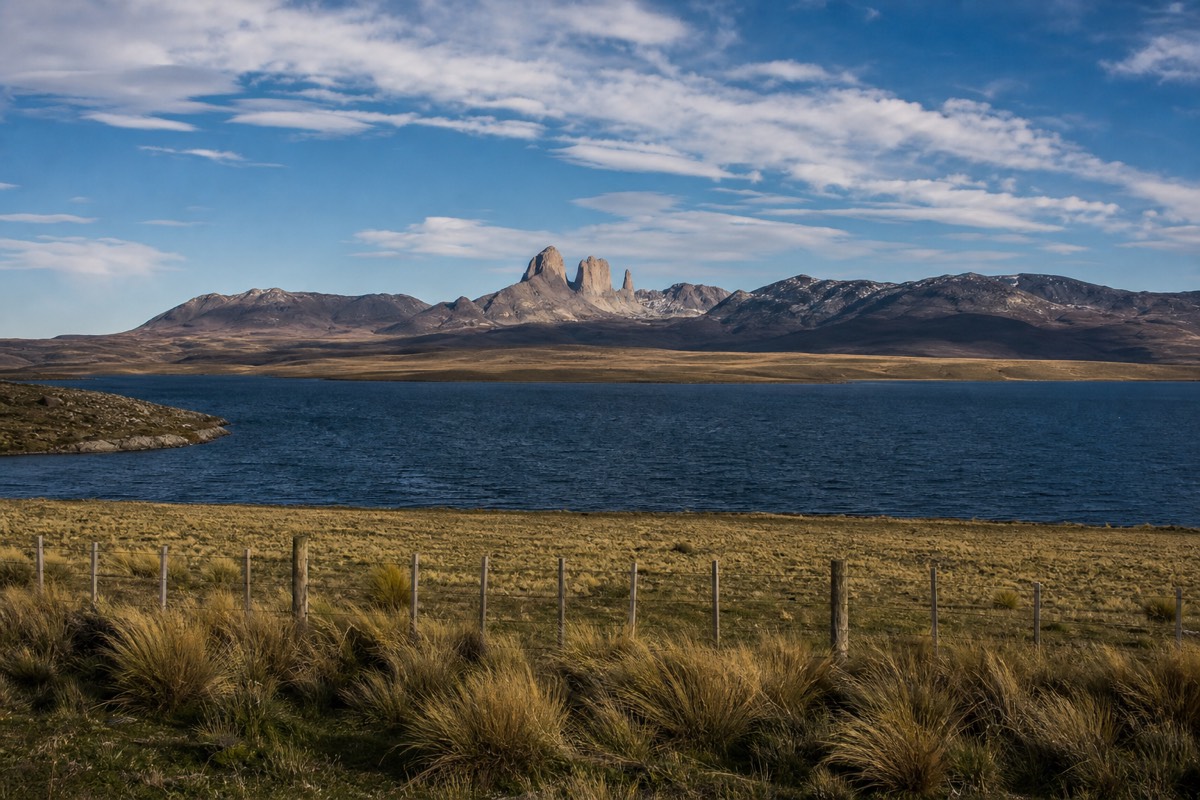
Which gate you use is decided by your transport, not by preference. Buses from Puerto Natales run the eastern approach and stop at Laguna Amarga first, then Pudeto, then Administración. Anyone heading for the Base Torres trailhead gets off at Laguna Amarga and takes the 7 km shuttle to the Welcome Center, which costs 4,000 to 4,500 CLP and is cash only. That shuttle is the single most commonly forgotten line in a day-hike budget.
Drivers have more choice and one more constraint. There is no fuel inside the park at all, so the tank is filled in Puerto Natales or not at all, and a fair amount of the road network is ripio, the loose gravel that Patagonian rental agents warn about. The routes and the timings are laid out in every route into the park, and the bus side specifically in the bus run from Puerto Natales.
| Entrance | Side | What it serves | Who uses it |
|---|---|---|---|
| Laguna Amarga | East | Base Torres sector, the shuttle to the Welcome Center, the towers frontal viewpoint | Almost every bus from Puerto Natales |
| Lago Sarmiento | East | The Sarmiento lake road and the eastern steppe | Private vehicles and some tours |
| Río Serrano | South | Administración, the Río Serrano hotels, the road towards Grey | Southern approach and self-drive trips |
| Laguna Azul | North | A separate northern access road with its own view of the towers | Day visitors on the northern route |
Gate hours above are the park-wide published times: 07:00 to 21:00 from October to April, 08:00 to 18:30 from May to September.
Who gets in free, and who pays less?
Children under 12 of any nationality enter free. Chilean residents over 60 are exempt, and so are visitors with disabilities of any nationality. Chilean residents pay a reduced rate at every age band. Foreign teenagers aged 12 to 17 get a reduction on the one-day ticket only. Everyone else pays the standard foreign adult rate.
The exemptions are worth checking before you buy rather than after, because the portal treats each traveller as a separate line. A family of two adults and two children under 12 pays for two tickets, not four, and on a multi-day pass that is 97,000 CLP instead of 194,000 CLP. It is the largest single saving available to any visitor to the park and it is entirely undramatic.
The disability exemption applies regardless of nationality, which is unusual among the region's parks and is stated plainly by CONAF. The seniors exemption is narrower: it is tied to Chilean residency over 60, not to age alone, so a 70 year old foreign visitor pays the full foreign adult rate. Bring whatever documentation supports your category, because the exemption is applied against a person, not against a booking reference.
| Category | Status | Detail |
|---|---|---|
| Children under 12 | Free | Any nationality, on both ticket types |
| Chilean residents over 60 | Exempt | Tied to Chilean residency, not to age alone |
| Visitors with disabilities | Exempt | Any nationality |
| Foreign visitors 12 to 17 | Reduced, one-day ticket only | The multi-day pass costs the same as an adult's |
| Chilean residents, adult | Reduced at every band | Roughly a third of the foreign adult price |
| Foreign adults 18 and over | Full price | The standard rate quoted everywhere on this page |
What is changing in 2026?
Two things. CONAF applied a 4.9% inflation adjustment covering January to April 2026, and it has postponed its new differentiated tariff system to 1 May 2026. Neither change alters how you buy a ticket, but both change what you pay, so the numbers on this page are a snapshot rather than a fixed schedule. Check the portal before you commit.
The inflation adjustment is the routine part. Chilean park fees are quoted in pesos and indexed, so the peso figure creeps upward while the dollar figure wobbles with the exchange rate. If you are budgeting a year out, treat 34,000 and 48,500 CLP as the floor rather than the number, and hold a little slack.
The differentiated tariff system is the part worth watching. A differentiated structure means fees that vary by category rather than a flat foreign adult rate, and its postponement to 1 May 2026 means anyone travelling in the 2025-26 southern summer is on the current schedule. Anyone planning the following season should look again once it lands, because the one-day against multi-day maths above is a function of two specific numbers, and if those numbers change the conclusion can change with them.
Timing your trip around price is a poor use of energy compared with timing it around wind and daylight. If you are still choosing dates, which month suits your trip is the more useful question, and it changes the cost of the trip far more than a tariff revision will.
Recommended tours by season
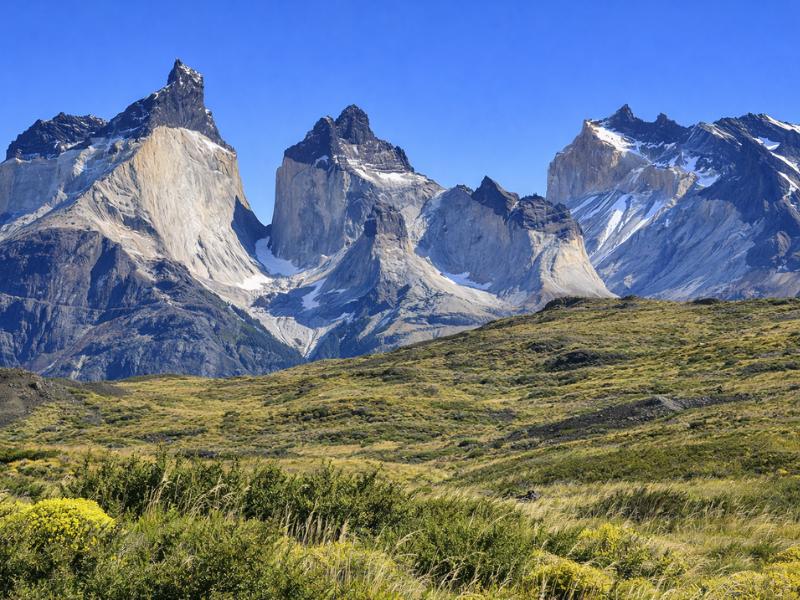
Torres del Paine Full-Day Adventure Tour from Puerto Natales
October to April high season: a one-day circuit with hotel pickup. Buy the one-day park ticket separately.
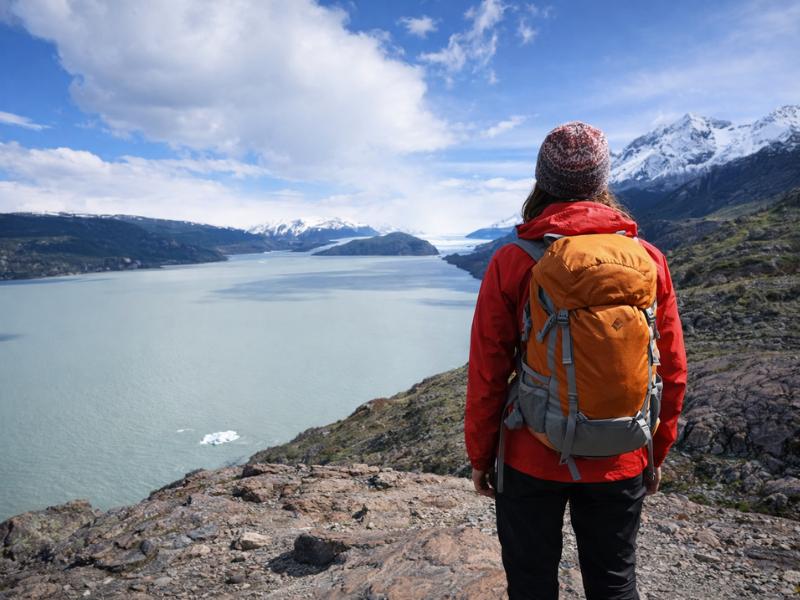
5-Day Torres del Paine W Trek – Guided Patagonia Adventure
A guided five-day W Trek. The multi-day park pass is the ticket that matches this itinerary; fees are not in the tour price.
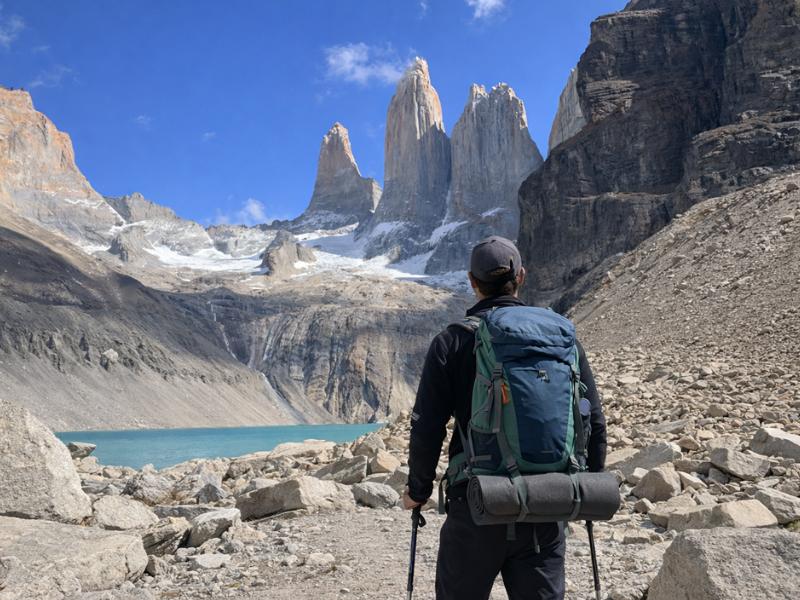
Torres del Paine 2-Day Express Tour – Aventura & Highlights
Two entries inside a ten-day window, when the multi-day pass is the cheaper ticket. Park entry is not included.
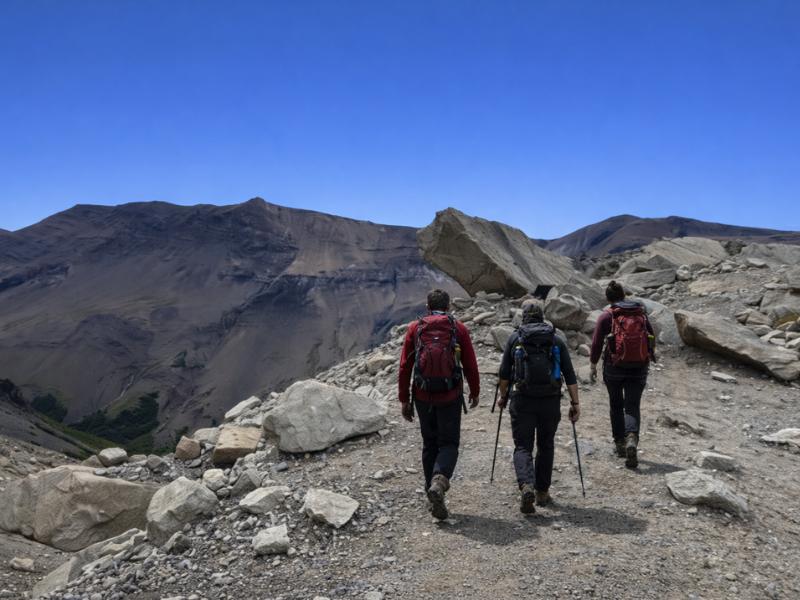
Torres del Paine Base Torres Trekking Day Trip from Puerto Natales
For 27 April to 30 August 2026, when this trail requires an authorised guide. The one-day park ticket is extra.
Is the park entrance fee included in a Torres del Paine tour?
Usually not. Of the nine tours we list, one includes park entrance fees outright: the 4-day Torres del Paine Experience departing Puerto Natales. Every other listing treats the park fee as an extra you pay yourself, and the El Calafate overland trip states it explicitly as roughly $35 to $50 not included. Read the exclusions before you assume.
This trips people up because a $139 day tour feels like a package. It is a transport, guiding and route package, and the state's entrance fee sits outside it. The full-day adventure tour covers hotel pickup, the minibus, a bilingual guide, snacks and water, and leaves the park fee, the Milodon Cave fee and lunch to you. The guided Base Torres day trip is the same shape: poles, crampons when there is ice, a 1:6 guide ratio in summer, and no park ticket.
The 4-day Puerto Natales experience is the exception, and it is a different kind of product. All park entrance fees are in, along with three nights in a 4-star hotel, three breakfasts, two lunches, and every transfer including the Punta Arenas airport runs. If you want the ticket question to disappear, the 4-day Puerto Natales experience is the listing where it does.
| Tour | From price | Park entry fee |
|---|---|---|
| Full-Day Adventure Tour from Puerto Natales | $139 | Not included |
| 3-Hour Grey Glacier Scenic Cruise | $120 | Not included |
| Full-Day Overland 4x4 from El Calafate | $180 | Not included, listed at roughly $35 to $50 |
| Base Torres Trekking Day Trip | $99 | Not included |
| 2-Day Express Tour, Aventura and Highlights | $620 | Not included |
| W Trek Alternative 3-Day Guided Tour | $1,175 | Not included |
| 4-Day Experience departing Puerto Natales | $1,355 | Included |
| 5-Day W Trek, Guided Patagonia Adventure | $1,905 | Not included |
| 6-Day Self-Drive National Park Adventure | $1,447 | Not included |
Prices are the current published from-rates on the listings and move with season and availability. The full set sits on the nine Torres del Paine tours we list.
What else do you pay once you are through the gate?
The ticket is rarely the biggest line. A bus from Puerto Natales runs $20 to $29 each way, the Laguna Amarga shuttle is 4,000 to 4,500 CLP in cash, the Pudeto to Paine Grande catamaran is around 26,000 CLP or roughly $45 one way, and the Grey Glacier cruise is currently $120. Add those up and the park fee stops being the headline.
The catamaran is the one that surprises W trekkers. It is the standard start to a west to east crossing, it runs about 30 minutes, and high-season departures from Pudeto are commonly listed around 08:30, 10:30, 16:15 and 18:00. Timetables change every season, and sailings get cancelled in high wind, which is a fixed constraint rather than an inconvenience: miss the last boat and your day ends where you are standing.
Cash matters more here than almost anywhere else on a modern trip. The Laguna Amarga shuttle takes cash only, and there is no fuel station inside the park to break a note at. Draw pesos in Puerto Natales, keep small denominations, and treat card acceptance inside the park as a bonus rather than an expectation.
| Cost after the ticket | Published price | Who pays it |
|---|---|---|
| Bus, Puerto Natales to Laguna Amarga, one way | $20 to $29 | Independent visitors on public transport |
| Shuttle, Laguna Amarga to the Welcome Center, 7 km | 4,000 to 4,500 CLP, cash only | Anyone walking Base Torres off the bus |
| Catamaran, Pudeto to Paine Grande, one way | About 26,000 CLP, roughly $45 | W trekkers and Grey-side walkers |
| Grey Glacier scenic cruise, 3 hours | $120 | Anyone wanting the ice face from the water |
| Milodon Cave natural monument | A separate fee, not in the day-tour price | Full-day tour passengers who go in |
| Box lunch on the full-day tour | A paid add-on | Anyone not carrying their own food |
Sleeping inside the park is a separate budget again, and a large one: dorm beds are published between $46 and $114 per person and own-tent sites between $11 and $14. That side is covered in what a night in your own tent costs.
What rules come attached to the ticket?
The ticket is a permit with conditions. No fires anywhere, no camp stoves outside designated cooking areas, no smoking anywhere in the park, camping only in reserved designated sites, no leaving the marked trails, and trail registration at control points on the Base Torres and W routes. Chilean law 20.653 backs the fire rules with fines up to 2 million CLP and up to three years in prison.
The fire rule is not park-authority boilerplate. Three of the park's worst fires, in 1985, 2005 and 2011-12, were started by visitors, and the 2011-12 fire burned a large part of the eastern park. The lenga forest here regenerates over decades, not seasons, and the burnt hillsides are still visible from the road. Expulsion from the park is part of the penalty alongside the fine and the prison term, and it is applied.
Trail registration is the rule people forget rather than break. Control points on the Base Torres and W routes log who is on the trail and when, which is how a search starts if you do not come back. Sign in, sign out, and if you turn around early, say so. The same logic drives the winter rule: from 27 April to 30 August 2026 the Base Torres trail requires an authorised guide, and the O Circuit back side is closed for the winter entirely. The trail detail is in the Base Torres trail in detail and the full route in the W Trek route breakdown.
| Rule | What it means on the ground | What stands behind it |
|---|---|---|
| No open fires, anywhere | No campfires, no exceptions, at any site or season | Law 20.653: fines up to 2 million CLP, up to three years in prison, expulsion |
| Stoves only in designated cooking areas | You cook where the site tells you to, not at your tent | The same fire legislation |
| No smoking anywhere in the park | Including on the road and in car parks | CONAF park regulation |
| Camp only in designated, reserved sites | Wild camping is not permitted at any point on either route | CONAF park regulation |
| Stay on marked trails | No shortcutting switchbacks, no off-trail viewpoints | CONAF park regulation |
| Pack out all rubbish | Everything you carry in comes back out with you | CONAF park regulation |
| Register at trail control points | Applies on the Base Torres and W routes | CONAF safety procedure |
| Guided only in winter on Base Torres | 27 April to 30 August 2026, an authorised guide is required | CONAF seasonal rule |
The current version of all of this is published by CONAF, the authority that runs the park, and closures are announced there first.
So what should you actually buy?
If you enter the park once, buy the one-day ticket at 34,000 CLP and stop thinking about it. If you enter twice or more inside a ten-day window, buy the 48,500 CLP multi-day pass. If you are on the 4-day Puerto Natales experience, buy nothing, it is already included. Everything else is detail around those three cases.
Two habits make the rest painless. Buy the ticket last, after your bus seats and your beds are fixed, so that the one non-refundable item in the chain is the one you commit to with the most information. And carry the QR code offline alongside your passport and, if you crossed from Argentina, the PDI tourist card, because that slip is also what triggers the 19% IVA exemption at Chilean hotels when a foreign visitor pays in foreign currency.
If the ticket admin is the part of the trip you want to disappear, a guided 4-day departure from Puerto Natales moves most of it. Bed bookings, transfers and the catamaran timetable stop being your problem, and on the 4-day Puerto Natales experience the entrance fee does too. Where the beds fit into that chain is set out in how the two bed-booking systems work, which is the other half of the same puzzle.