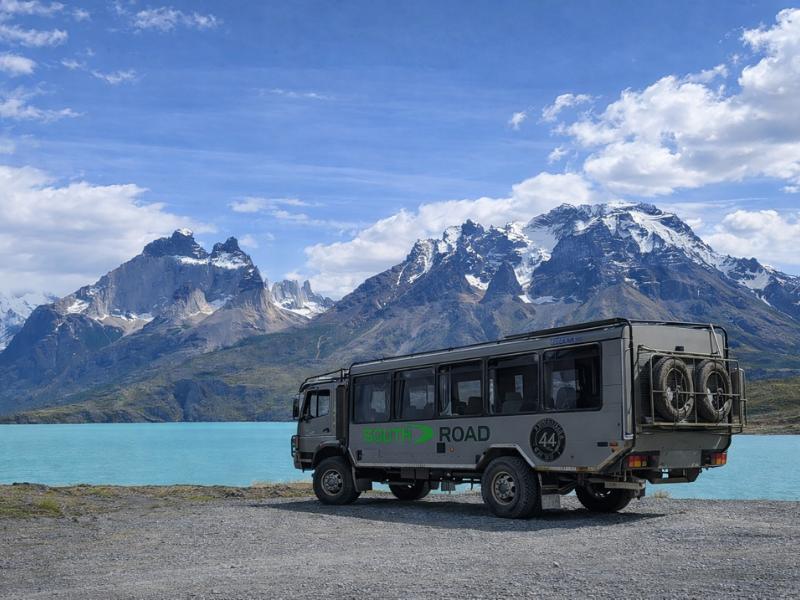
How to Get to Torres del Paine: Every Route In and Out
Nothing lands at the park itself, so every visit is a chain of flights and road legs. Here is what each link costs, and how long it takes.
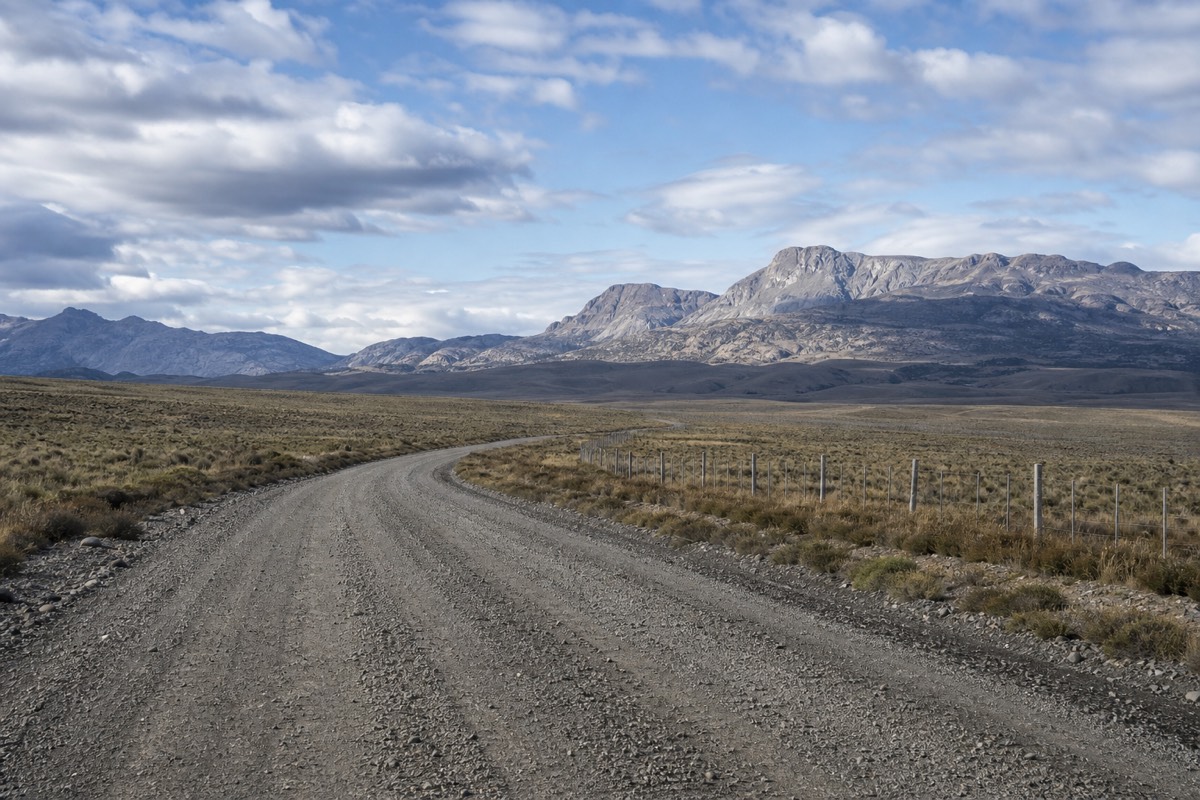
Nothing lands at Torres del Paine. The nearest runway sits at Puerto Natales, 112 km from the park, and the nearest one with a year-round timetable is at Punta Arenas, another 245 to 250 km beyond that. So every visitor arrives by the same chain: a flight south from Santiago, a road leg of three to four hours, then a second road leg into the park itself. Get the chain right and the park is easy to reach. Get one link wrong and you lose a day out of a trip that probably took a long-haul ticket to start.
How long each leg of the journey takes
Road times are the commonly published ranges; the park's own profile quotes 1.5 to 2 hours for the final leg while the bus timetables quote 2 to 3.
How hard is it to get to Torres del Paine?
Not technically hard, but long. No single vehicle carries you from an international airport to the park gate. Plan on two road legs after your last flight, one of them finishing on gravel, and treat the arrival as a full travel day rather than something you slot around a morning flight. The difficulty is scheduling, not terrain.
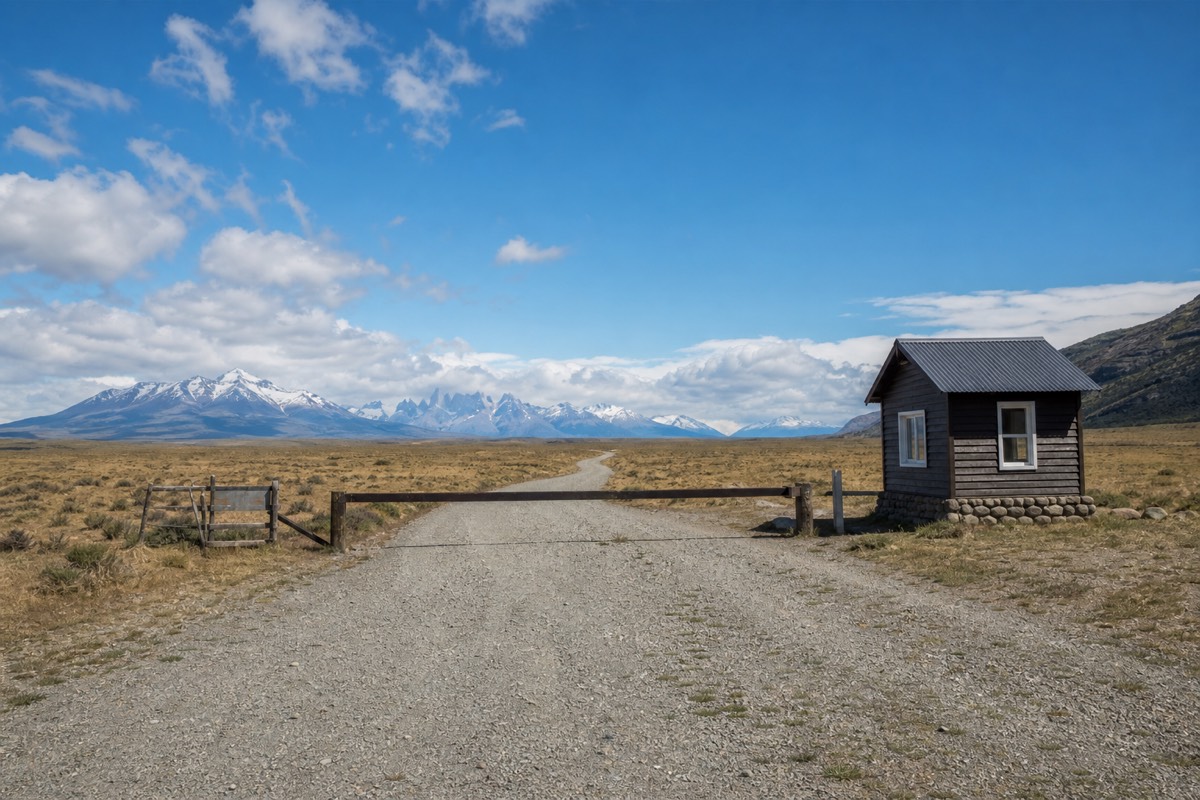
CONAF recorded 367,426 visitors in 2024, which tells you the route is well worn. Buses run it daily in season, minibuses run it for tour companies twice a day, and rental cars do it constantly. The highway between Punta Arenas and Puerto Natales is paved the whole way. The approach to the park mixes paved surface with ripio, the local word for gravel, and ripio is the only part of the drive that asks anything of a driver.
What catches people is that each leg runs on its own timetable and those timetables do not interlock. Southbound flights from Santiago tend to land in the middle of the day. Buses to the park leave Puerto Natales in the early morning. The catamaran across Lake Pehoe sails four times a day in high season and stops sailing when the wind gets up. Miss any one of those and the next chance is tomorrow, not in an hour. That is why the arrival plan matters more here than the driving does, and why it pays to read how many days the park actually needs before you book flights.
What city is closest to Torres del Paine?
Puerto Natales, 112 km from the park. Published road times run from 1.5 to 2 hours in the park's own regional profile up to 2 to 3 hours on the bus timetables, and the guided day trips allow around two hours. It is the only town close enough to make a day visit work.
Puerto Natales is where the whole system converges. The Terminal Rodoviario handles the park buses and the Punta Arenas buses. Gear shops rent what you did not bring, with Rental Natales publishing roughly $37 a day for a tent and $8 a day for a sleeping bag. Supermarkets, restaurants and every tour pickup are within walking distance of each other. A day trip out of town means leaving by about 07:00, which is why almost every operator quotes a pickup between 06:30 and 07:00.
The settlements between the town and the park are small. Villa Cerro Castillo, which the full-day tours stop at, is a hamlet on the route to the Argentine border rather than a base. There are hotels inside and beside the park, and they are excellent and expensive, with Hotel Las Torres publishing from $820 a night half-board for the 2025-26 season. If you want a bed near the trailheads rather than near the bus station, that is a different decision, covered in the accommodation options inside the park. For the practical business of arriving, sleeping and leaving again, see what Puerto Natales offers as a base and whether the town earns a night of its own.
Is Puerto Natales or Punta Arenas closer to Torres del Paine?
Puerto Natales, by a wide margin. It is 112 km from the park. Punta Arenas is 245 to 250 km from Puerto Natales before the park leg even begins, so the total from Punta Arenas is roughly 360 km and five to seven hours of road. Punta Arenas is an arrival airport, not a base.

The two towns do different jobs. Punta Arenas has the regional airport that works in every month, the wider choice of flights and the car rental desks that the multi-day self-drive package uses, picking up at the airport and covering 245 km each way to Puerto Natales. Puerto Natales has the park itself within reach and the entire tour and bus infrastructure. Almost nobody sleeps in Punta Arenas by choice unless a flight forces it.
El Calafate is the third option and it belongs to a different country. It sits east of the park in Argentina, roughly six hours away by road plus whatever the border takes, and it makes sense only if Perito Moreno and El Chalten are already on your itinerary.
| Base | Distance to the park | Road time | Airport | Best for |
|---|---|---|---|---|
| Puerto Natales, Chile | 112 km | 1.5 to 3 hours, sources differ | PNT, thin outside summer | Day trips, treks, everything |
| Punta Arenas, Chile | roughly 360 km | 5 to 7 hours in total | PUQ, year-round | Arriving and departing by air |
| El Calafate, Argentina | not published as a single road figure | about 6 hours plus the border | FTE, Argentine network | Combining Chile with Argentine Patagonia |
Every route into the park, with distances, times and published fares
There are five legs that matter: Santiago to Punta Arenas by air, Punta Arenas to Puerto Natales by road, Puerto Natales to the park gate by road, El Calafate to Puerto Natales across the border, and the two short internal connections at Laguna Amarga and Lake Pehoe. Every itinerary is a combination of those.
Fares below are the published figures at the time of writing and they move with the season and the exchange rate, which has been sitting around 950 Chilean pesos to the dollar. Treat them as a planning baseline, then confirm on the day. Bus fares in particular vary by company and by how far in advance you buy.
| Leg | Distance | Time | Published fare | Notes |
|---|---|---|---|---|
| Santiago to Punta Arenas (PUQ), air | domestic flight | about 3h30m | $65 to $200 one way | LATAM and Sky, all year |
| Santiago to Puerto Natales (PNT), air | domestic flight | about 3h20m | varies, fewer seats | LATAM, Sky and JetSMART, mostly summer |
| Punta Arenas to Puerto Natales, bus | 250 km | 3 to 4 hours | roughly $9 to $26 | Bus-Sur and Buses Fernandez, several a day, airport pickups |
| Puerto Natales to Laguna Amarga, bus | 112 km | 2 to 3 hours | roughly $20 to $29 one way | From the Terminal Rodoviario |
| El Calafate to Puerto Natales, bus | cross-border | allow the day | roughly $40 to $50 | Bus-Sur, Cerro Castillo crossing |
| Laguna Amarga to the Welcome Center, shuttle | 7 km | short hop | 4,000 to 4,500 CLP | Cash only, meets the buses |
| Pudeto to Paine Grande, catamaran | across Lake Pehoe | about 30 minutes | about 26,000 CLP, $45 one way | Cancelled in high wind |
Two of those rows are the ones people forget. The Laguna Amarga shuttle is a separate cash payment on top of a bus ticket you already bought, and the catamaran is a separate ticket again. Both are covered in detail in the bus, shuttle and self-drive detail from Puerto Natales.
What is the best way to get to Torres del Paine?
Fly Santiago to Punta Arenas, take the bus or a transfer to Puerto Natales, sleep there, then go into the park the next morning. That is the route the overwhelming majority use because it is the only one with reliable capacity in every month. Everything else is a variation on it.
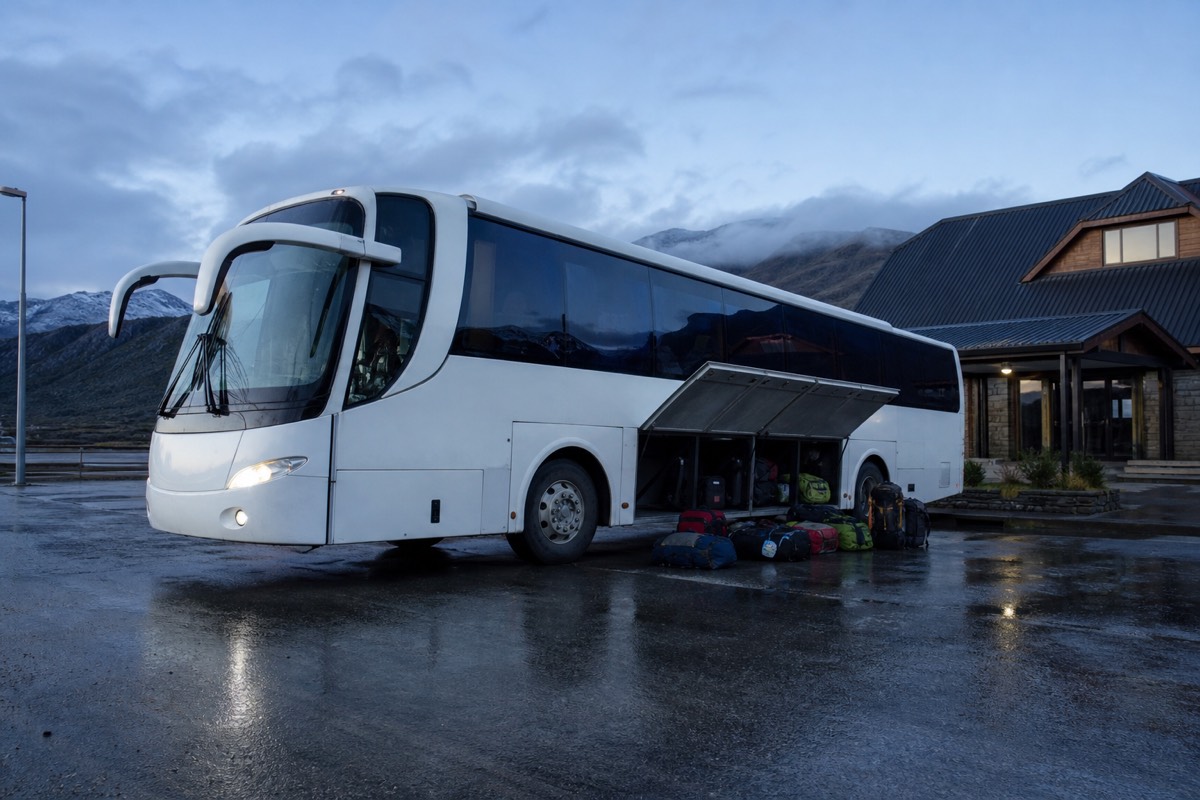
Which vehicle you use for the final leg depends on what you want out of the day. A public bus is cheapest and least flexible: it drops you at a fixed stop at a fixed time and collects you at another fixed time. A rental car gives you the whole park and every viewpoint on your own schedule, at the cost of driving ripio and refuelling in Puerto Natales because there is no fuel inside the park. A guided day tour removes the logistics entirely, and the full-day adventure tour from Puerto Natales is the version most people take, currently $139 with a 07:00 pickup and a return between 17:00 and 18:00.
| How you travel | Typical cost | Flexibility | What it suits |
|---|---|---|---|
| Public bus | $20 to $29 each way plus the shuttle | Fixed stops, fixed times | Trekkers heading to a trailhead |
| Private transfer | around $150 | Your timing, one vehicle | Groups, early starts, awkward arrivals |
| Rental car | package rates, fuel extra | Total, within the road network | Photographers, families, multi-day visits |
| Guided day tour | from $139 | Set route, no logistics | One day in the park, first visit |
| Multi-day package | $620 to $1,905 across our nine tours | Set itinerary, everything booked | Treks and comfort trips |
How does the Santiago connection work?
Santiago is the hinge of the whole journey. Almost every international arrival clears customs there, then takes a domestic flight of about 3h30m to Punta Arenas or about 3h20m to Puerto Natales. One-way fares on the Punta Arenas route are commonly published between $65 and $200, and they climb steeply in January and February.
Two things are worth knowing about that connection. The first is that Chile is long, so the southbound flight is a genuine flight, not a hop, and it eats most of a day once you add check-in and the transfer between terminals. The second is that Chilean immigration issues a tourist card, the PDI slip, when you enter the country. Keep it with your passport. Presenting both at hotel check-in is what triggers the 19% IVA exemption for foreign tourists paying in foreign currency, which is a real saving across several nights of Patagonian hotel rates. Chile's official tourism board is the reference point for entry formalities.
Booking the international and domestic legs on one ticket is usually kinder than booking them separately, because a delay on the long-haul leg then becomes the airline's problem rather than yours. If the legs are separate, leave real space between them. There is more on airport choice, frequencies and seasonality in the guide to which airport to fly into.
What does a realistic two-day arrival look like, hour by hour?
Day one gets you from Santiago to a bed in Puerto Natales. Day two gets you from that bed into the park by mid-morning. Trying to compress both into a single day only works if you land in Puerto Natales itself, and even then it leaves no margin for a delayed flight.
The timeline below is built from published flight times, the bus timings, and the way the 4-day package we list structures its own first day, which lands at Punta Arenas airport and runs a three-hour transfer to Puerto Natales. It assumes high season, when the gates are open 07:00 to 21:00.
| When | What happens | Why it matters |
|---|---|---|
| Day 1, morning | Fly Santiago to Punta Arenas, about 3h30m | The only leg that is genuinely fixed |
| Day 1, early afternoon | Clear the terminal, join the Puerto Natales bus | Several services a day, some collect at the airport |
| Day 1, late afternoon | 250 km and 3 to 4 hours north | Paved the whole way, scenic and dull in equal measure |
| Day 1, evening | Arrive Puerto Natales, buy the park ticket, check bus times | The terminal board is more current than any website |
| Day 2, 06:15 | Breakfast, walk to the Terminal Rodoviario | Early departures fill in January and February |
| Day 2, 06:45 to 07:00 | Bus leaves for the park | The two early departures are the useful ones |
| Day 2, 09:00 to 10:00 | Laguna Amarga, ticket scanned, shuttle onward | 7 km to the Welcome Center, 4,000 to 4,500 CLP in cash |
| Day 2, from 10:00 | You are in the park | Roughly 27 hours after leaving Santiago |
How much travel time should you budget at each end?
Recommended tours by season
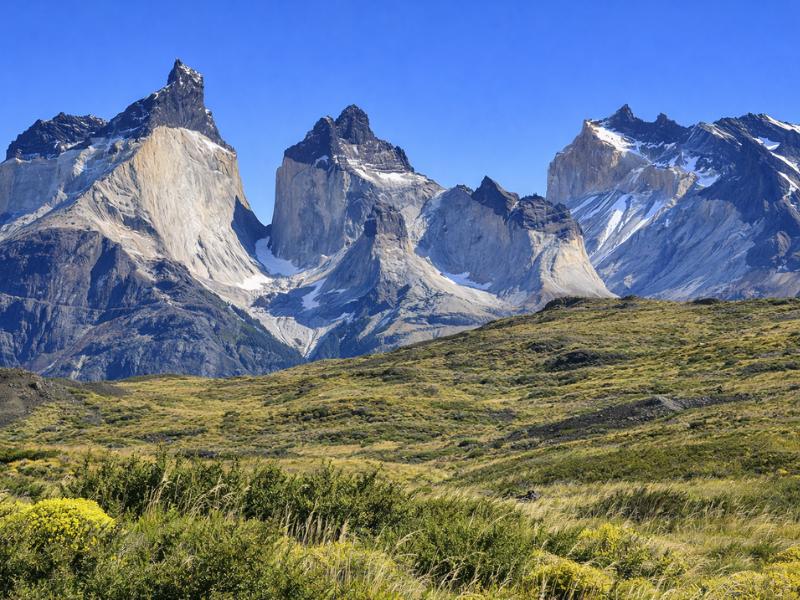
Torres del Paine Full-Day Adventure Tour from Puerto Natales
Suits the months when the gates open at 07:00 and a full day in the park is realistic. Pickup in Puerto Natales, back between 17:00 and 18:00.
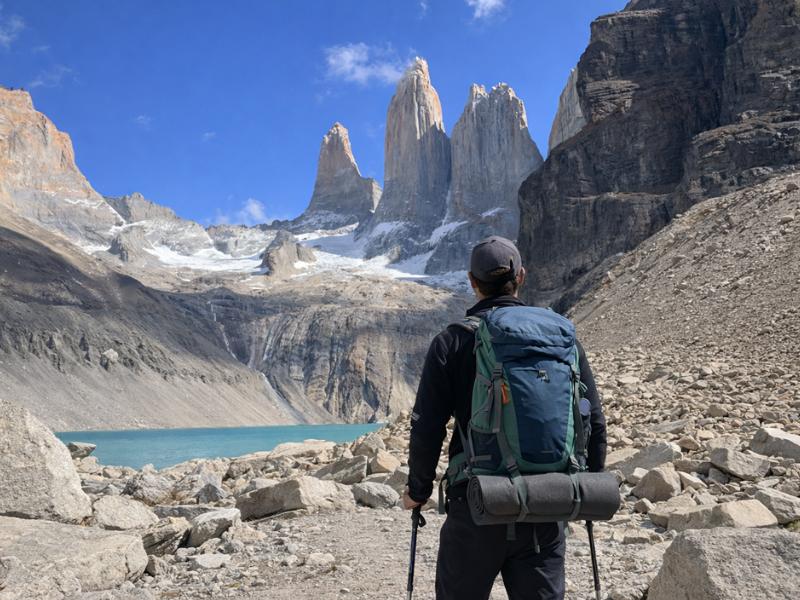
Torres del Paine 2-Day Express Tour – Aventura & Highlights
The shortest multi-day itinerary we list. A middle step if one day is too little and a trek is more than you want to organise.
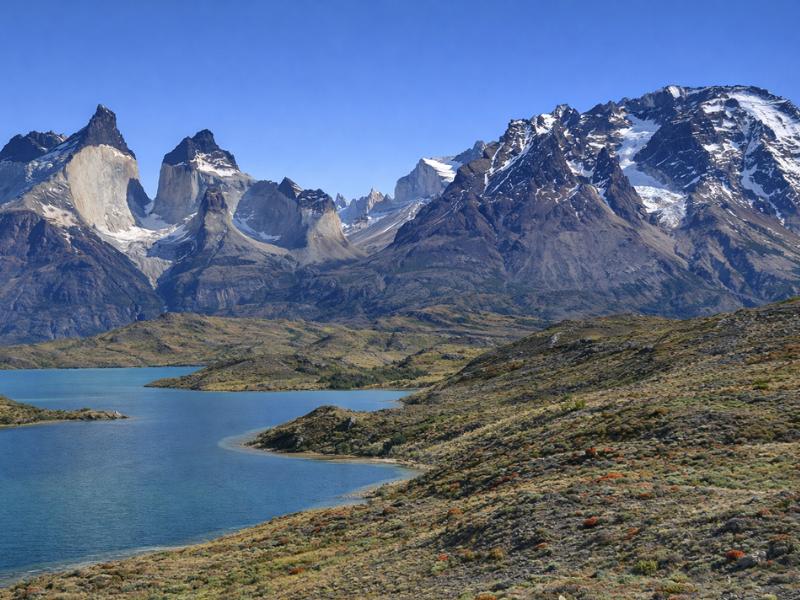
4-Day Torres del Paine Experience – Departing Puerto Natales
Starts and ends at Punta Arenas, the airport that keeps flying when Puerto Natales thins out outside summer. Transfers, hotels and park fees are inside the price.
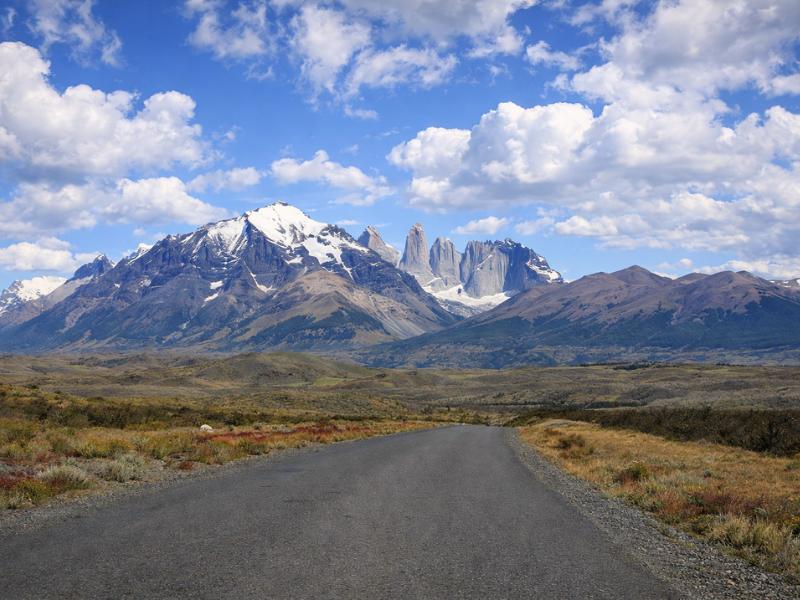
6-Day Self-Drive Torres del Paine National Park Adventure
Summer is when the park roads do not need four-wheel drive. A category D car, five nights and an itinerary, collected at Punta Arenas airport. Fuel, tolls and park fees stay on you.
At the front end, one full day from Santiago plus a night in Puerto Natales. At the back end, a night in Puerto Natales again and a morning bus to Punta Arenas, so the flight north leaves in the afternoon at the earliest. Anyone flying out the same day they leave the park is gambling with a 250 km road leg.
The reason to build in buffers here is that the failure modes are all one-way. A cancelled catamaran does not reschedule you an hour later, it strands you until the next sailing. A park ticket is date-locked and non-refundable, so a weather day spent in town is money already spent. A missed bus from Puerto Natales costs you the morning, and the morning is when the light and the calm are.
| Point in the journey | Scheduled time | Buffer to allow | What goes wrong without it |
|---|---|---|---|
| International arrival to southbound flight | same day | a night in Santiago | One delay and the southbound seat is gone |
| Punta Arenas landing to the northbound bus | same afternoon | 1 to 2 hours | Baggage and the terminal walk eat the connection |
| Puerto Natales to the park gate | 2 to 3 hours | 30 minutes at the gate | Ticket scanning queues at peak arrival |
| Any catamaran crossing | about 30 minutes | a spare sailing | Wind cancels the boat, not your booking |
| Leaving the park to flying home | same day | one full night | A road delay turns into a missed flight |
Can you come in from El Calafate and the Argentine side?
Yes. El Calafate sits about six hours from the park by road plus whatever the border takes, and Bus-Sur runs through to Puerto Natales for roughly $40 to $50. The crossing used on that route is the Cerro Castillo post. There is also a single long day trip that goes in and comes back the same day.
That day trip is real but it is a commitment: the overland 4x4 expedition from El Calafate runs 14 to 16 hours door to door, currently $180, using an unpaved shortcut in a rugged overland truck. It includes hotel pickup, a bilingual guide, a box lunch and help with customs, and it stops at Lake Pehoe, Lake Nordenskjöld and Salto Grande with hiking through the day. The park entry fee is not included, and neither is the digital affidavit Chile requires.
Two rules govern the border itself. SAG, the Chilean agricultural service, bans fresh fruit, vegetables, meat, dairy and honey from crossing, so declare or bin it before the checkpoint rather than after. Read the agricultural service's own restrictions before you pack a lunch. And a rental car needs an advance cross-border permit costing around $150, which not every rental company will issue, so it has to be arranged when you book the car and not at the counter. The full eastern approach, including timings and what the crossing feels like in practice, is in the guide to the Argentine approach.
Which park entrance will you actually arrive at?
Laguna Amarga if you come by bus. It is the main eastern entrance and the one the Puerto Natales services use. Lago Sarmiento and Rio Serrano are the other two porterias, and Laguna Azul is a separate access road to the north. The gate you use decides which trailhead you can reach that day.
Gate hours are set by the park authority and run 07:00 to 21:00 in high season, October to April, and 08:00 to 18:30 from May to September. Weather changes them. CONAF publishes the current hours and any closures, and it is the only source worth trusting on the day.
| Entrance | Side of the park | Who arrives here | What follows |
|---|---|---|---|
| Laguna Amarga | East | Buses from Puerto Natales, most tours | 7 km shuttle to the Welcome Center and the Base Torres trailhead |
| Lago Sarmiento | East | Private vehicles on the Sarmiento road | Payment totem at the gate, onward driving |
| Rio Serrano | South | Traffic on the southern road | The Serrano sector and the southern lodges |
| Laguna Azul | North | A separate northern access road | The Laguna Azul area, with its distant view of the towers |
Whichever gate you use, the ticket is bought in advance at the official park ticketing portal, currently 34,000 CLP for a foreign adult on one day and 48,500 CLP for up to ten consecutive days. The totems at Serrano and Laguna Amarga take cards but exist mainly for private vehicles, so arriving on a bus without a QR code is a problem rather than a plan. The full breakdown sits in what park entry costs and how to buy it.
What are the roads like if you drive yourself?
Paved between Punta Arenas and Puerto Natales, then a mix of paved surface and ripio to the park, and gravel inside it. Nothing needs four-wheel drive in summer. The two things that catch drivers out are the wind, which is strong enough that rental agents warn about door damage, and the complete absence of fuel stations inside the park.
Ripio is loose gravel over a compacted base. It rewards low speed and punishes braking hard, and it throws stones at windscreens, which is why insurance excess is worth reading before you sign. Open the car door into a Patagonian gust and the hinge takes the strain. Hold the door with both hands, park nose into the wind where you can, and expect the wind to build through the afternoon rather than the morning.
| Leg | Distance | Surface | What to know |
|---|---|---|---|
| Punta Arenas to Puerto Natales | 245 to 250 km | Paved highway | 3 to 4 hours, straightforward |
| Puerto Natales to the park gate | 112 km | Paved then ripio | Fill the tank in town, not later |
| Inside the park | Gravel throughout | Ripio | No fuel stations anywhere in the park |
| Across to Argentina | Cerro Castillo crossing | Paved and ripio | Cross-border permit around $150, arranged in advance |
If the driving appeals but the planning does not, the 6-day self-drive package hands over a category D car with unlimited mileage, five nights of accommodation and an itinerary, picking the car up at Punta Arenas airport. Fuel, tolls and park fees stay on you.
How do you plan the journey out?
Backwards from your flight. Work out the departure time, subtract the 3 to 4 hour bus from Puerto Natales to Punta Arenas, subtract the 2 to 3 hour leg out of the park, and you will usually find that the last full day in the park has to be the day before you fly.
The exit is where itineraries quietly break. People plan the arrival carefully, then assume the return runs like a taxi. It does not. Buses out of the park run to a fixed afternoon timetable posted at the terminal and at the stops, the catamaran can be cancelled by wind on the day you need it most, and the Punta Arenas bus is a road leg long enough that an hour of delay is an hour you cannot recover.
The clean version is simple. Leave the park in the afternoon, sleep in Puerto Natales, take a morning bus to Punta Arenas and fly in the afternoon or evening. It costs one extra night and removes almost every way the trip can end badly. If you would rather have the whole chain handled at both ends, the 4-day experience departing Puerto Natales begins at Punta Arenas airport and returns you to it, with the transfers, hotels and park fees already inside the price. Or start from the nine Torres del Paine tours we list and work out which shape of trip fits the flights you can actually get. Once you know when you are coming, the month-by-month case for each season will tell you what the roads and the wind will be doing when you arrive.