Flights to Torres del Paine: Which Airport to Fly Into
No runway serves the park itself. Three airports do the job instead, and picking between them is really about picking a road leg.
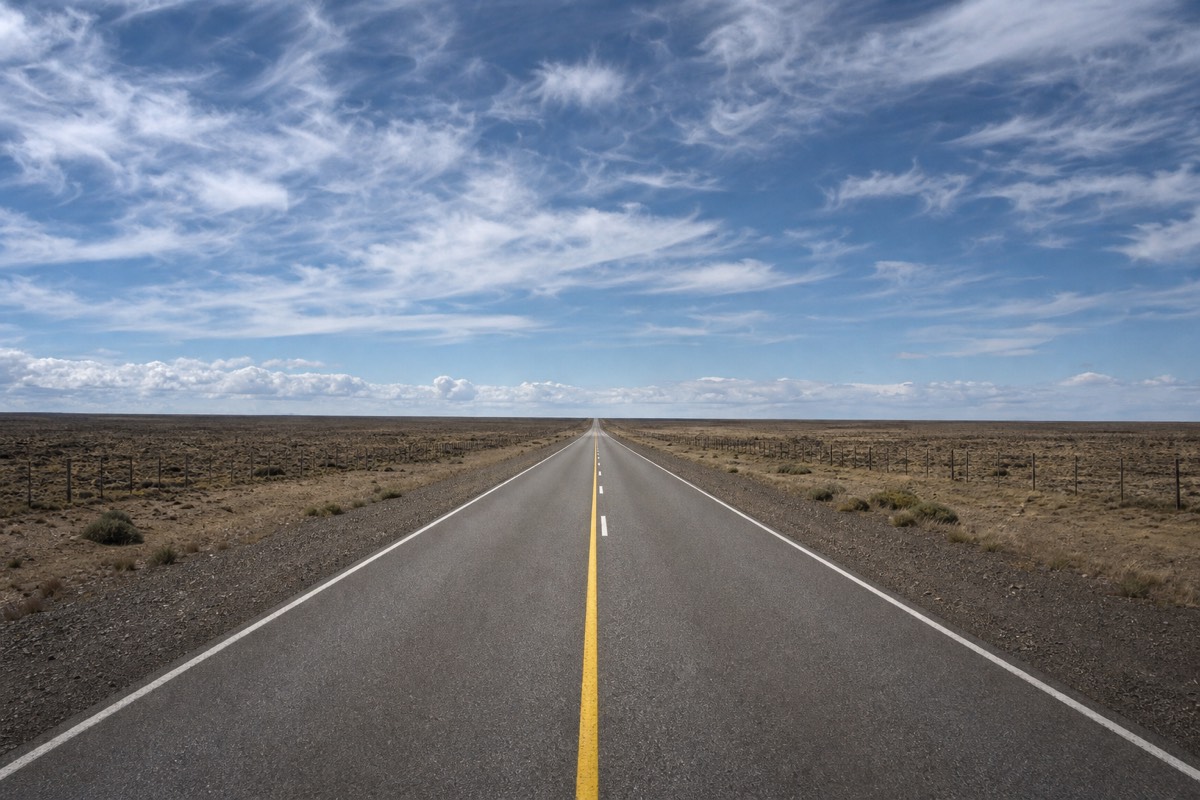
There is no airport at Torres del Paine, and the closest one operates on a summer-weighted timetable that thins out fast. That single fact shapes most Patagonian itineraries. The realistic choices are Punta Arenas in Chile, which works all year and sits five to seven hours of road from the park, Puerto Natales, which is 112 km away but has far fewer flights, and El Calafate in Argentina, which puts a border between you and the gate. Picking between them is less about airfare than about which one you can rely on in the month you are travelling.
Road time from each airport to the park
The Punta Arenas total adds the 245 to 250 km bus leg to Puerto Natales and the 112 km park leg; no single published figure covers it end to end.
Is there an airport at Torres del Paine?
No. The park has no runway, no airstrip open to scheduled traffic and no plans anyone can book a seat on. The nearest airport is Puerto Natales, 112 km away, and the nearest with a year-round schedule is Punta Arenas, roughly 360 km from the park by road.
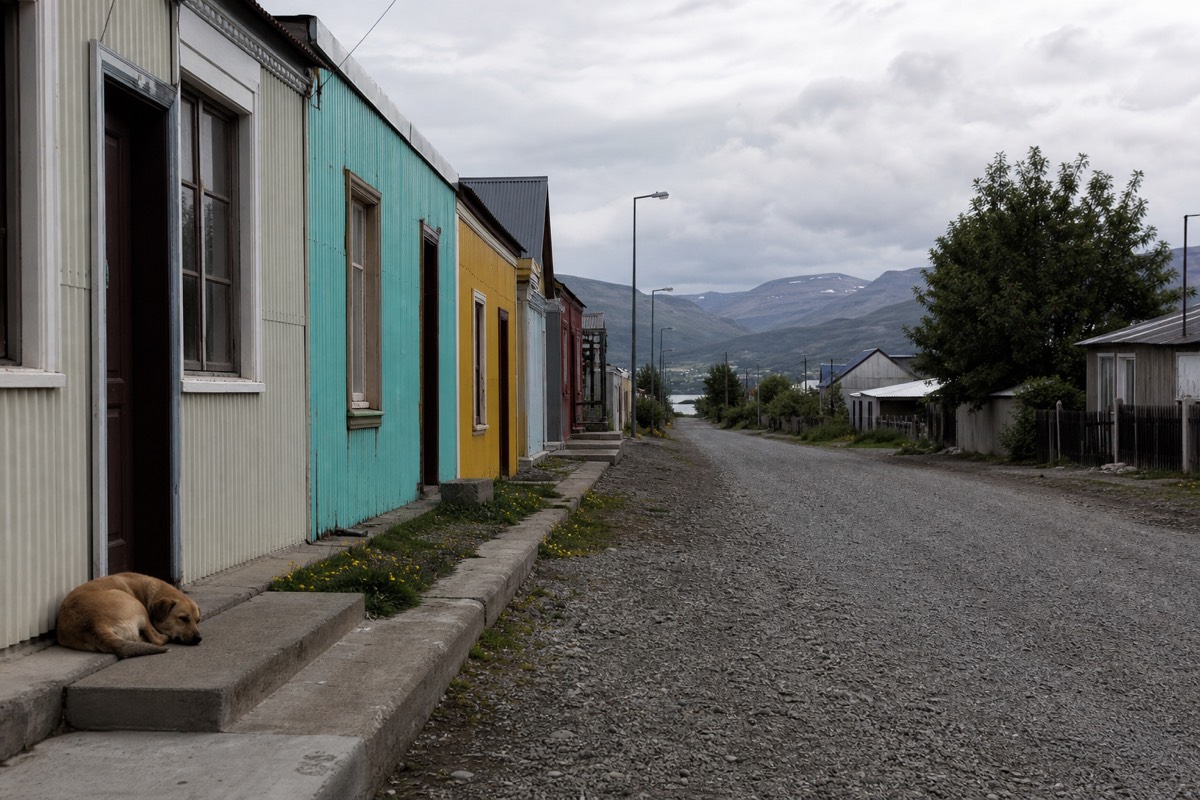
This matters because the park is large, 227,298 hectares, and it is not near anything. It sits in the Magallanes region at the southern end of Chile, and the drive in from any airport crosses open steppe. Even the closest option leaves you a two to three hour road leg, and the last stretch of that is gravel.
So the flight is only the first half of the problem. What you are really choosing when you pick an airport is a road leg, a bus timetable and a base town. Puerto Natales gives you the shortest leg and the least reliable flights. Punta Arenas gives you the most reliable flights and the longest leg. El Calafate gives you access to Argentine Patagonia and a customs post. All three end the same way, on the road described in the full set of routes in and out.
Where do you fly into for Torres del Paine?
Punta Arenas (PUQ) for reliability, Puerto Natales (PNT) for proximity if the season and the schedule allow, El Calafate (FTE) if Argentina is already in the plan. PUQ is served all year by LATAM and Sky and sits about 3h30m from Santiago. PNT is about 3h20m from Santiago but with far fewer frequencies.
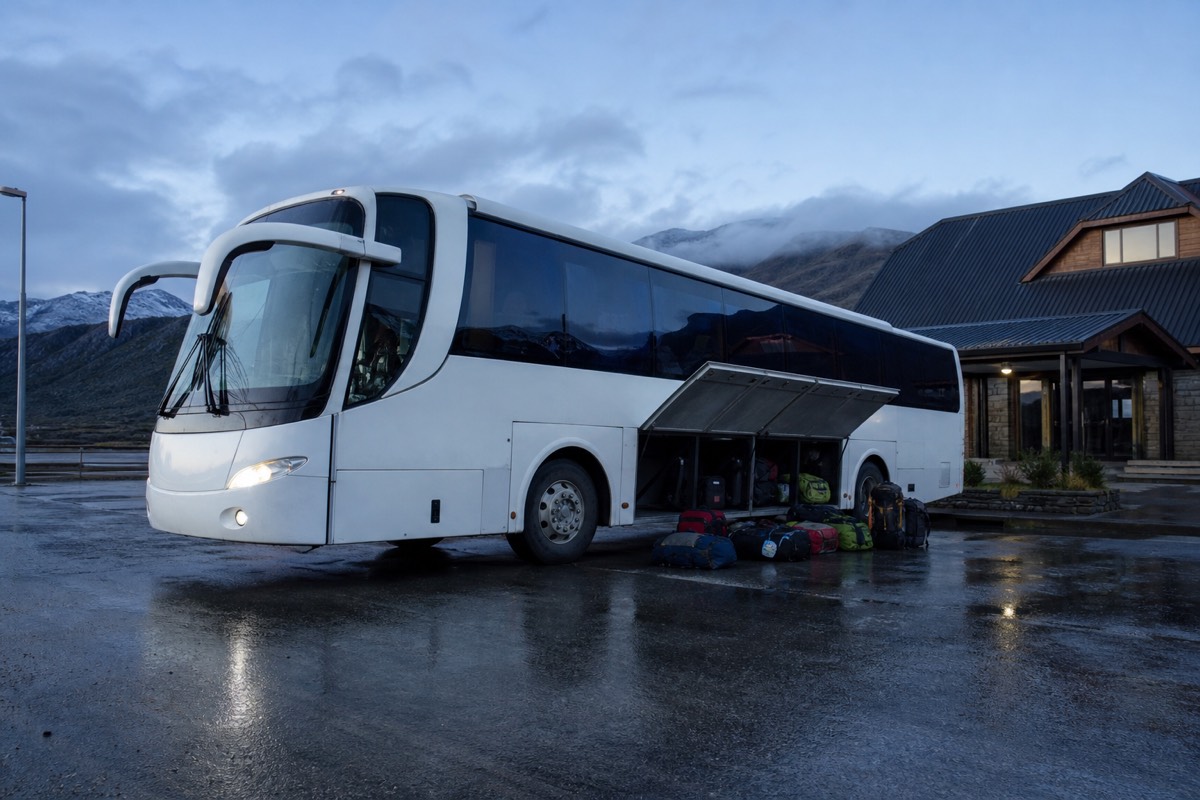
Most visitors end up at Punta Arenas without ever seriously considering the alternatives, and that is usually the right call. It has the flights, the car rental desks and the bus companies that run onward to Puerto Natales several times a day including airport pickups. The 4-day package begins exactly there, meeting arrivals at Punta Arenas airport and running a three-hour transfer north.
| Airport | Code | Country | Road time to the park | Airlines | Season |
|---|---|---|---|---|---|
| Punta Arenas | PUQ | Chile | 5 to 7 hours in total | LATAM, Sky | Year-round |
| Puerto Natales | PNT | Chile | 2 to 3 hours | LATAM, Sky, JetSMART | Mostly a summer operation |
| El Calafate | FTE | Argentina | about 6 hours plus the border | Argentine network | Year-round, summer-heavy |
One thing that table does not show is capacity. Punta Arenas has enough daily seats that a cancelled flight is an inconvenience. Puerto Natales does not, so a cancelled flight there can mean a day lost rather than an afternoon.
Punta Arenas (PUQ): the airport that works all year
PUQ is the regional hub and the default arrival point. LATAM and Sky fly it year-round from Santiago, about 3h30m in the air, with one-way fares commonly published between $65 and $200. From the terminal it is 245 to 250 km and 3 to 4 hours by bus to Puerto Natales, then the park leg after that.
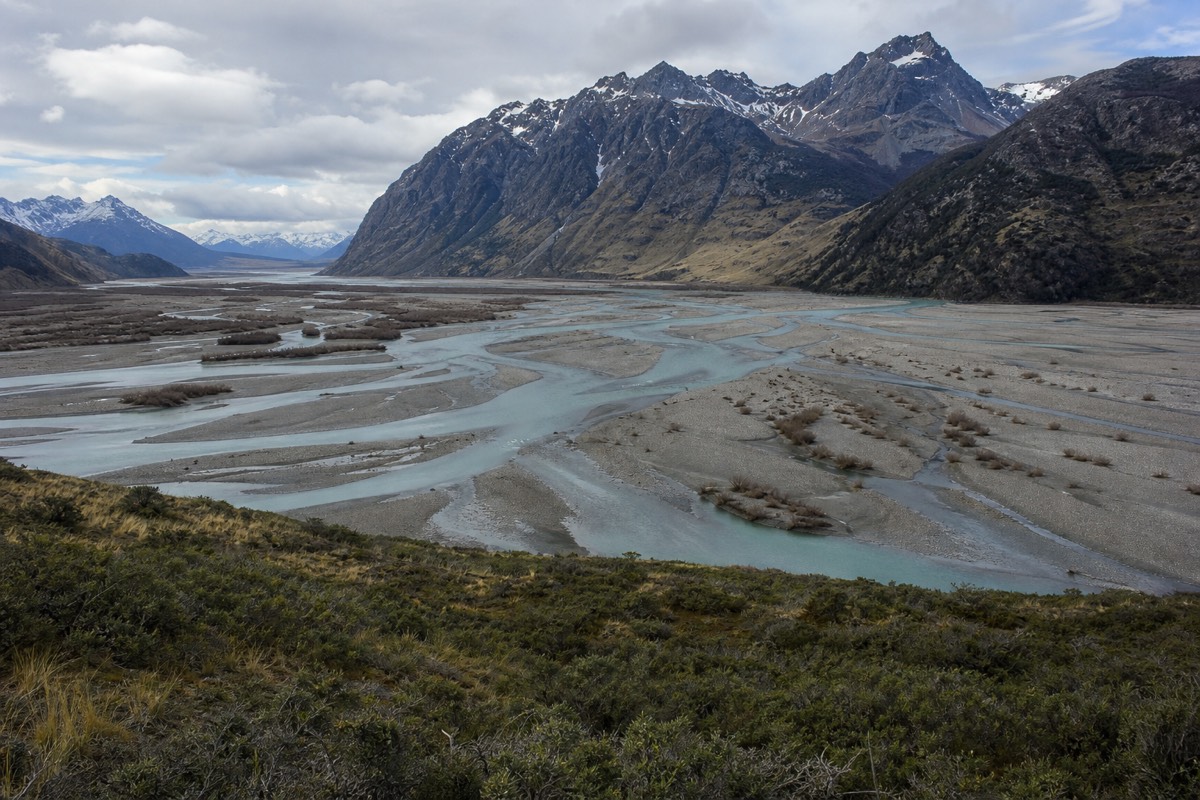
The bus connection is the part that makes PUQ workable. Bus-Sur and Buses Fernandez run the route several times a day for roughly $9 to $26, and some services collect at the airport rather than making you get into town first. That means a midday landing can become an evening arrival in Puerto Natales without much drama, which is exactly how most itineraries are built.
PUQ is also where the rental cars are. The 6-day self-drive package picks up its car at the airport, covering 245 km each way between Punta Arenas and Puerto Natales, with five nights of accommodation and insurance included and fuel excluded. If you plan to drive independently, this is the airport to do it from, because the fleet and the desks are here in a way they are not further north.
The trade-off is simply distance. Landing at PUQ means the park is still most of a day away. Nobody sensible tries to land in Punta Arenas and reach a trailhead the same day.
That distance has one hidden benefit. Punta Arenas gives you a buffer town at both ends of the trip. If a southbound flight slips by four hours, you have lost an afternoon rather than a park day, because the park day was always going to be the day after tomorrow. Itineraries built on the closer airport have no such slack, which is why experienced planners often fly into PUQ deliberately even when a Puerto Natales seat is available.
Puerto Natales (PNT): closest to the park, thinnest timetable
PNT is 112 km from the park, which makes it the closest airport by a wide margin, and it is served from Santiago by LATAM, Sky and JetSMART on a flight of about 3h20m. The problem is frequency. In practice it operates mainly as a summer route with far fewer departures than Punta Arenas, so it is a bonus rather than a base assumption.
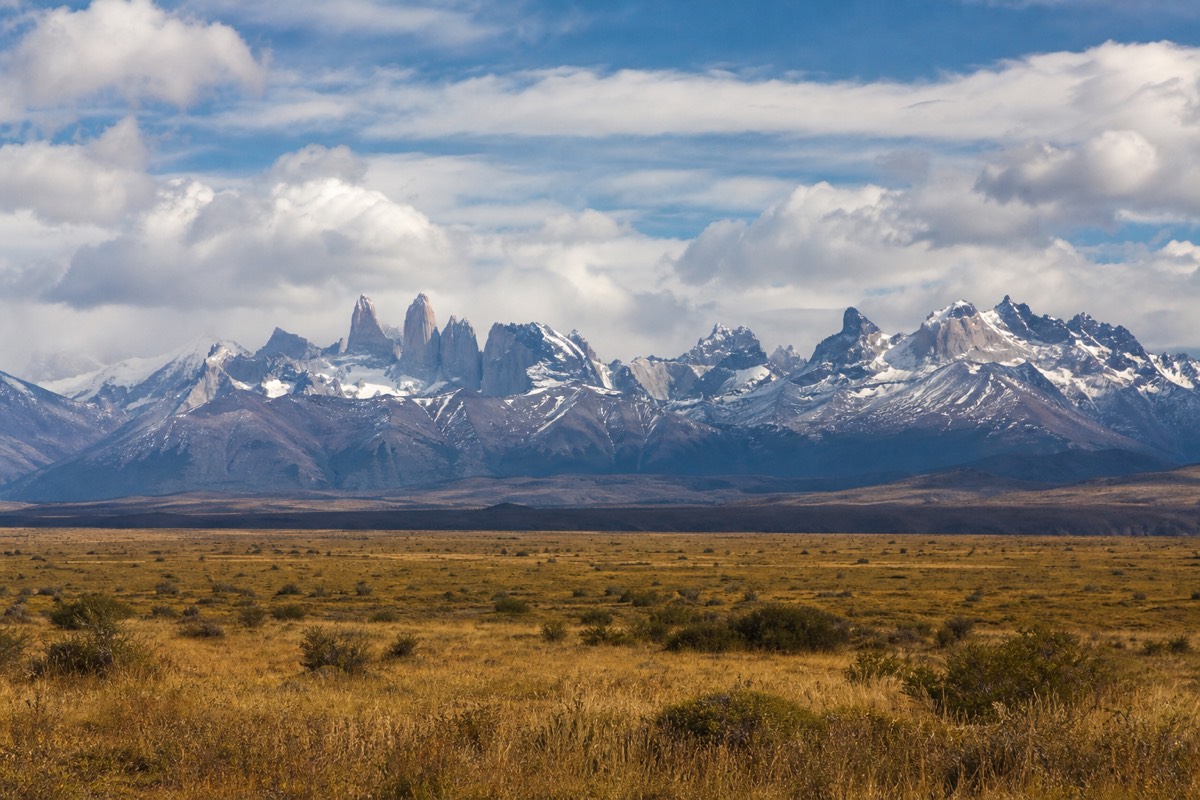
When PNT works, it is genuinely transformative. You land in the town where the buses, the gear shops and the tour pickups already are, and the following morning you are on a 07:00 bus to the gate. It removes an entire 250 km road leg and often a whole travel day at each end of the trip.
When it does not work, the fallback is Punta Arenas, and the fallback needs to be in the plan from the start. Check the schedule for your actual travel dates rather than for the season in general, and be wary of building a tight itinerary around a route that runs a few times a week. If the flight is cancelled and you have already paid for a date-locked park ticket, the ticket does not move with you.
There is a second, quieter argument for PNT that has nothing to do with time. Landing in Puerto Natales means your first sight of Patagonia is the fjord and the town waterfront rather than a bus window on the highway, and it means the gear shops, the terminal and the tour offices are a walk from your bed on the evening you arrive. That matters more than it sounds when you need a sleeping bag, a bus ticket and a park ticket sorted before a 07:00 departure.
For what the town itself offers once you land, including where the bus terminal sits relative to the accommodation, see the town at the end of the runway.
El Calafate (FTE): flying in on the Argentine side
El Calafate is the Argentine gateway, roughly six hours by road from the park plus the border crossing. Bus-Sur runs through to Puerto Natales for roughly $40 to $50 via the Cerro Castillo post. It only makes sense if Perito Moreno, El Chalten or the rest of Argentine Patagonia is already on your list.

Two Chilean formalities apply. Chile requires a digital affidavit from arrivals, which is the traveller's responsibility and not something a bus company handles for you. And SAG, the Chilean agricultural service, bans fresh fruit, vegetables, meat, dairy and honey from crossing the border. Declare or bin them before the checkpoint. The agricultural service publishes the current restrictions, and the checks are real rather than nominal.
Rental cars can cross, but only with an advance cross-border permit costing around $150, arranged when you book rather than at the counter, and not every company will issue one. If you want a taste of the park without moving base, the overland 4x4 expedition from El Calafate does the round trip in a single 14 to 16 hour day, currently $180, using an unpaved shortcut and including customs assistance and a box lunch. It is a long day by any standard. The comparison between the two countries' parks is set out in choosing between the Chilean and Argentine sides.
How does the Santiago connection work, and what does it cost?
Nearly every international arrival routes through Santiago, then takes a domestic flight south. Santiago to Punta Arenas is about 3h30m with one-way fares commonly published between $65 and $200. Santiago to Puerto Natales is about 3h20m. Fares climb hard for January and February, the park's two busiest months.
Treat the domestic leg as a real flight, not a connection. It is longer than many international hops in Europe, and once you add check-in, the terminal transfer and baggage at the far end, it consumes most of a day. Booking the long-haul and the domestic leg on a single ticket puts the risk of a delay on the airline rather than on you.
| Route | Flight time | Carriers | Published one-way fares |
|---|---|---|---|
| Santiago to Punta Arenas | about 3h30m | LATAM, Sky | $65 to $200 |
| Santiago to Puerto Natales | about 3h20m | LATAM, Sky, JetSMART | Fewer seats, fare range not consistently published |
One document is worth attention on arrival. Chilean immigration issues a tourist card, the PDI slip, when you enter the country. Keep it with your passport: presenting both at hotel check-in triggers the 19% IVA exemption for foreign tourists paying in foreign currency, which is worth real money across several nights of Patagonian rates. Chile's official tourism board covers the entry requirements.
Recommended tours by season
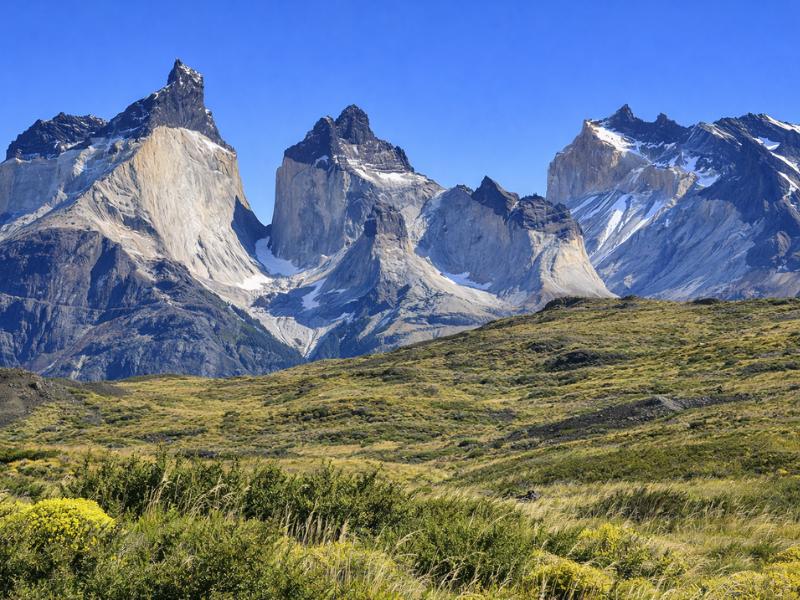
Torres del Paine Full-Day Adventure Tour from Puerto Natales
A one-day circuit from town with hotel pickup and the main viewpoint stops. A fit when you are using the summer-weighted Puerto Natales flights.
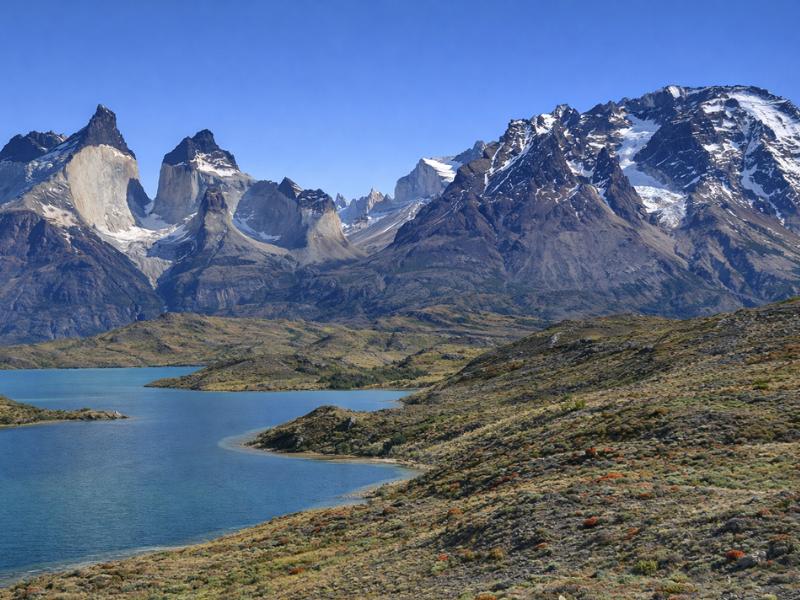
4-Day Torres del Paine Experience – Departing Puerto Natales
Meets the Punta Arenas flight, runs the transfer north, and puts hotels and park fees in one booking. Day four returns you to the same terminal.
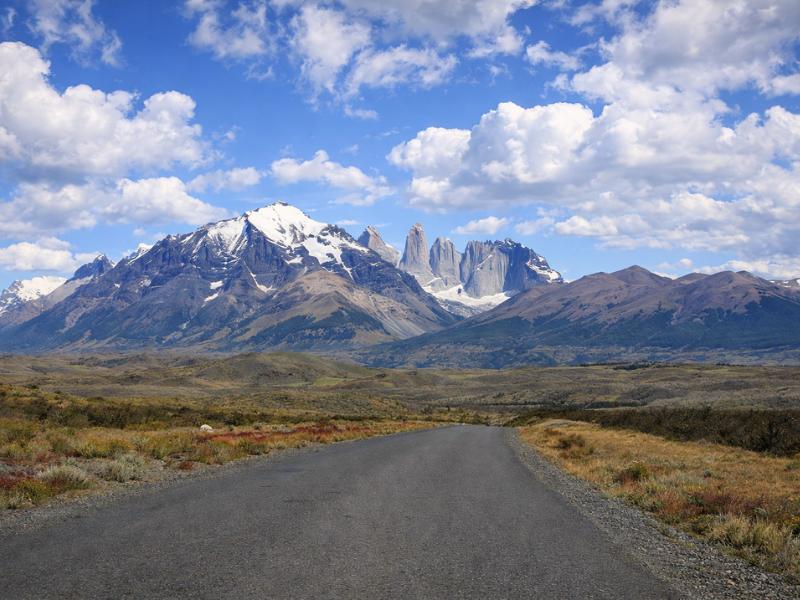
6-Day Self-Drive Torres del Paine National Park Adventure
Car collected at Punta Arenas, the airport that keeps flying when Puerto Natales thins out. Five nights and insurance are included; fuel is not.
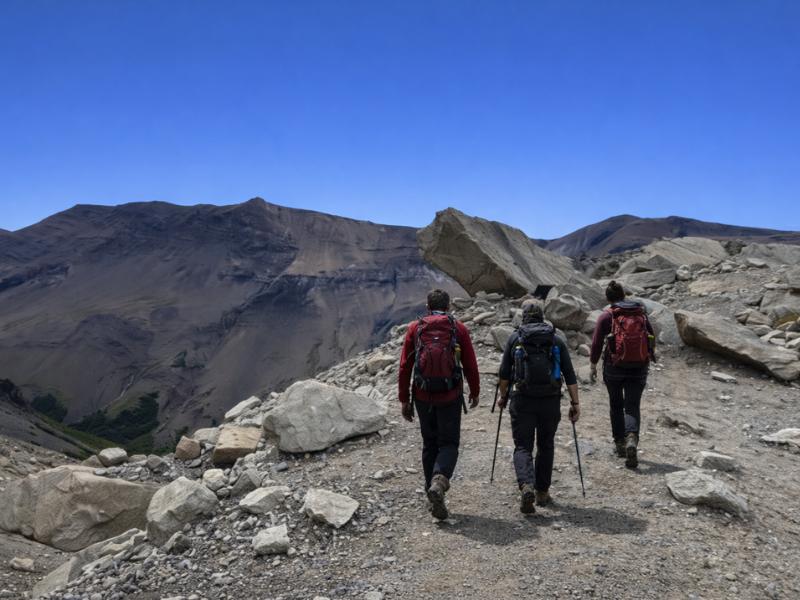
Torres del Paine Base Torres Trekking Day Trip from Puerto Natales
A single-day trek to the towers from Puerto Natales. The booking that matches a winter arrival, when that trail has to be done with a guide.
How does each airport connect onward by road?
PNT to the park gate is 112 km and 2 to 3 hours. PUQ to Puerto Natales is 245 to 250 km and 3 to 4 hours, then the park leg on top, so five to seven hours in total. FTE is about six hours plus the border. Every one of those ends on the same gravel approach to the same gates.
The road legs are not the hard part in themselves. The hard part is that they run on timetables that do not flex around your flight. Buses from Puerto Natales into the park leave in the early morning, commonly around 06:45, 07:00, 12:00 and 14:30, and the two early ones are the useful ones. A flight landing at three in the afternoon cannot be turned into park time that day, no matter how much daylight is left in December.
| From | To | Distance | Time | Published fare |
|---|---|---|---|---|
| PUQ airport | Puerto Natales | 245 to 250 km | 3 to 4 hours | roughly $9 to $26 by bus |
| Puerto Natales | Laguna Amarga gate | 112 km | 2 to 3 hours | roughly $20 to $29 one way |
| Laguna Amarga | Welcome Center | 7 km | a short hop | 4,000 to 4,500 CLP, cash only |
| FTE | Puerto Natales | cross-border | about 6 hours plus the border | roughly $40 to $50 |
The shuttle row is the one that catches people. It is a separate cash fare on top of a bus ticket, it has no card machine, and it is the connection that turns a bus stop into a trailhead. The mechanics of that final leg are set out in the last leg from Puerto Natales.
Why do tight same-day connections go wrong in Patagonian wind?
Because the weather here does not behave like a delay, it behaves like a cancellation. Average wind at Puerto Natales runs 28.5 to 37 kph across the year, peaking in November, everyday summer gusts of 60 to 100 kph are normal, and regional sources have reported gusts up to about 193 kph. Flights, boats and schedules all bend to it.
The catamaran across Lake Pehoe is the clearest example: it is a fixed four-sailing timetable in high season and it simply does not run in high wind. Applied to a same-day chain of flight, bus, boat and trailhead, one cancelled link takes the rest with it. Nothing about the chain reschedules itself.
| What can go wrong | How likely | The buffer that fixes it |
|---|---|---|
| Southbound flight delayed out of Santiago | Ordinary | Do not book the last bus of the day |
| PNT flight cancelled or not operating that day | Real outside summer | Have the PUQ plus bus route as a fallback |
| Catamaran cancelled by wind | Routine in windy months | Take an earlier sailing, keep a spare day |
| Park ticket unused because you never arrived | Follows any of the above | Nothing. It is date-locked and non-refundable |
| Missing the flight home after leaving the park | Avoidable | Sleep in Puerto Natales, fly out the next afternoon |
The wind is not an occasional event, it is the regional climate. What the wind and rain do month by month sets out the pattern, including why November is the windiest month and why afternoons are worse than mornings.
Should you book the flights or the beds first?
If you are trekking, the beds. Punta Arenas has far more airline seats than the park has refugio beds. The two concessionaires open the next season's calendar around April, Chileno sells out first every year, and park entry is a third separate booking. Fix the accommodation, then buy flights that fit it.
This is the planning mistake that costs people the most. The park's accommodation runs on two systems that do not talk to each other: Las Torres Patagonia covers the Central, Chileno and Serón sectors, and Vertice Patagonia covers Paine Grande, Grey, Dickson and Los Perros. A W trek usually needs nights from both. Add the park entry ticket, bought separately again, and a trek is three bookings in three places before a single flight is involved.
Airfares behave the opposite way. They rise as the date approaches, which pushes people to buy the flight first and sort the rest out later. On a route where a single sold-out night at Chileno can force a redesign of the whole itinerary, buying the flight first means buying a date you may not be able to walk. Refugio dorm beds are published at roughly $46 to $114 per person and own-tent sites at $11 to $14, so the beds are not the expensive part. They are just the scarce part.
Day visitors have the opposite freedom. If you are flying in for viewpoints and a couple of short walks rather than a trek, the flight can go first and the rest follows easily. The middle case is a supported trek where the beds are already reserved for you: the 5-day W trek with confirmed accommodation vouchers handles the reservations, the meals and the bus and catamaran transfers, leaving you the flight to book. How the two booking systems work in detail sits in the refugio and campsite booking guide, and the route itself in the W trek route guide.
Which airport suits which itinerary?
Short trip to the park only: PNT if it flies on your dates, PUQ otherwise. Trip combining Chile and Argentina: FTE one way and PUQ the other. Self-drive: PUQ, because that is where the cars are. Guided multi-day package: PUQ, because that is where the packages start.
The decision is really about how much slack your itinerary has. A two-week trip can absorb a cancelled PNT flight. A five-day trip cannot, and should be built on the airport with the most departures even if it costs an extra road leg.
| Your trip | Fly into | Why |
|---|---|---|
| Four or five days, park only | PNT if available, else PUQ | Every hour saved on the road is an hour in the park |
| Chile and Argentina combined | FTE in, PUQ out or the reverse | Avoids repeating a long border leg |
| Self-drive holiday | PUQ | Rental fleet and desks are at the airport |
| Guided package or W trek | PUQ | Packages start and end at Punta Arenas airport |
| Shoulder or winter travel | PUQ | PNT thins out badly outside summer |
| One long day trip from Argentina | FTE | The 14 to 16 hour overland trip runs from El Calafate |
The 4-day experience departing Puerto Natales is the clearest example of an itinerary designed around PUQ: day one is the airport arrival and the three-hour transfer, day four returns you to the same terminal, with hotels, transfers and park fees inside the price. Building your own version of that shape is what shaping the days between flights is about.
When should you fly in and out around your park days?
Fly in with a full day to spare before your first park day, and fly out no earlier than the afternoon of the day after your last one. In midsummer the daylight hides the risk, because Puerto Natales sees roughly 05:00 sunrise and 22:00 sunset in late December. In winter, when it is roughly 09:30 to 17:30, the margin disappears.
Daylight is the quiet variable in all of this. A 17-hour December day makes a late arrival recoverable. A June day of eight hours means a delayed flight ends any chance of using that afternoon, and the gates themselves close earlier, running 08:00 to 18:30 from May to September against 07:00 to 21:00 from October to April. CONAF publishes the current gate hours and any closures.
| Month | Daylight at Puerto Natales | What it means for an arrival day |
|---|---|---|
| January | 16.5 hours | An afternoon landing still leaves usable evening |
| March | 13 hours | Comfortable, and the wind is easing |
| May | 9.5 hours | Gates close 18:30, plan a morning arrival |
| July | 8.5 hours | Short days, guided access only on the Base Torres trail |
| September | 12 hours | Driest month on the record, days lengthening |
| November | 15.5 hours | Long days, windiest month of the year |
One rule sits underneath all of it: the Base Torres trail requires an authorised guide from 27 April to 30 August 2026, so a winter flight in has to be planned around a guided trip rather than an independent walk. Which months are worth the airfare in the first place is the subject of the case for each season.
What does the air and ground chain cost end to end?
From Santiago, allow $65 to $200 for the southbound flight, roughly $9 to $26 for the bus north from Punta Arenas, $20 to $29 each way for the park bus, about $5 in pesos for the Laguna Amarga shuttle each way, and 34,000 CLP for a one-day park ticket. That is the transport spine before a single night's accommodation.
Written out, the flight is usually the largest single line and the one with the widest range, which is why booking the domestic leg early for January and February pays more than any other saving on this list. Everything below the flight is comparatively fixed.
| Line | Published cost | Notes |
|---|---|---|
| Santiago to Punta Arenas, one way | $65 to $200 | Peaks in January and February |
| Airport to Puerto Natales, bus | $9 to $26 | Several services a day |
| Puerto Natales to the park, bus | $20 to $29 one way | Return doubles it |
| Laguna Amarga shuttle | 4,000 to 4,500 CLP | About $5, cash only, each way |
| Park entry, foreign adult | 34,000 CLP one day, 48,500 CLP multi-day | Multi-day covers up to ten consecutive days |
| Private transfer instead of the bus | around $150 | Per vehicle, no ride-hailing exists here |
If assembling that chain yourself sounds like more work than holiday, the packages exist precisely to absorb it: the full-day adventure tour from Puerto Natales handles a single day for $139, while the 4-day and 6-day trips take over the transfers, hotels and park fees for the whole visit. Start from the Torres del Paine tours we list and work backwards to the flights that make them possible.