The Best Time to Visit Torres del Paine, Season by Season (2026)
Four seasons, four different trips. What each one opens, what it closes, what it costs, and why the busiest months are not the best ones for everybody.
The park is open all year and almost nobody visits in July. That gap between what is possible and what people do is the whole of this question. In 2024 CONAF counted 367,426 visitors, and January and February carried the bulk of them. Those two months have the warmest air and the longest days. They also have the fullest refugios, the highest prices and the busiest trails, and three other windows in the year do most of what summer does with a fraction of the company.
Every month scored for a first visit
Scores are our reading of access, daylight and crowding, not a weather rating. The climate figures behind them are in the month-by-month weather guide.
What is the best time of year to go to Torres del Paine?
October to April, and inside that window late February to early April is the sweet spot most experienced visitors name. You get warm enough air, calming wind, thinning crowds and the lenga forests turning red in autumn. December and January are the safest bet for weather and daylight, and the least pleasant for company. There is no month that gives you everything.
Chilean Patagonia does not have a dry season and a wet season the way tropical destinations do. Puerto Natales, the closest weather station at 112 km from the park, records between 103 and 155 mm of rain in every single month of the year, and between 11 and 16 wet days. The variable that actually changes across the year is not rain. It is temperature, daylight and wind, and those three move independently.
| Season | Months | Average highs | Daylight | Access | Crowds |
|---|---|---|---|---|---|
| Summer | December to February | 11.5 to 13.1 C | 15.0 to 17.0 hours | Everything open | Heaviest |
| Autumn | March to May | 4.9 to 11.4 C | 9.5 to 13.0 hours | Full until late April | Falling fast |
| Winter | June to August | 1.9 to 2.9 C | 8.0 to 10.0 hours | Guided only on key trails | Almost none |
| Spring | September to November | 5.4 to 9.9 C | 12.0 to 15.5 hours | Reopening through October | Building |
Read that table as four different holidays rather than four grades of the same one. A summer trip is about doing everything. An autumn trip is about colour and calm air. A winter trip is about having the place to yourself with a guide beside you. A spring trip is about wildflowers and accepting the year's strongest wind.
What is the best month to visit Torres del Paine?
March, for most people. Average highs still reach 11.4 C, daylight holds at around 13 hours, average wind drops to 30 kph from November's 37, the summer crowd has gone home and the refugios stay open until late April. The trade is 145 mm of rain across 15 wet days, which is close to January's. February runs it close and December wins on daylight alone.
The case for March is that it fixes summer's worst feature without breaking anything else. You keep enough warmth to sit outside at a viewpoint. You keep enough daylight for a 10-hour hike with margin at both ends. You lose the peak-season pressure on beds, and you gain the first of the autumn colour in the lenga forest of the Ascencio valley.
The case against March is that the weather is genuinely less settled than February's and the season is on its way out. Las Torres Patagonia runs its camping season roughly from 1 October to 25 April, so a late-March trip is inside the window but not by a wide margin. Any plan that slides into the last week of April is planning around closures.
If your dates are fixed and you cannot choose, the honest answer is that every month from October to April works for a guided day trip. The full-day park circuit from Puerto Natales runs year round, with the winter version simply finishing earlier, around 16:00, because the light goes.
What is the best month to go to Patagonia?
For the whole region rather than this park alone, the answer widens to November through March, with December and January the only months where every road, pass, boat and refuge on both the Chilean and Argentine sides is reliably open at once. If you are combining Torres del Paine with El Chaltén or Perito Moreno, that matters more than local conditions. Cross-border trips have less slack.
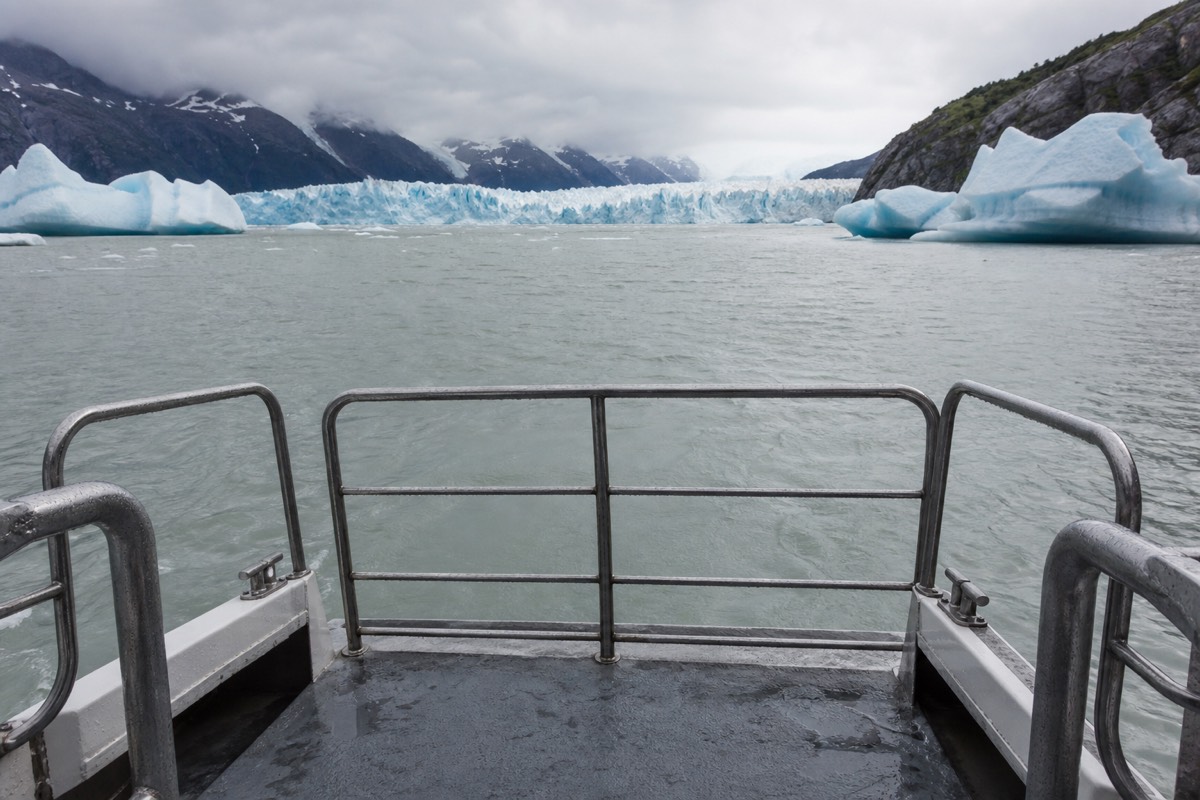
The reason is that a Patagonia itinerary is a chain of connections. The bus from El Calafate to Puerto Natales takes about six hours plus the border crossing at Cerro Castillo and runs roughly $40 to $50. Argentine side attractions and Chilean side trails have different opening calendars. In December the whole chain works. In May, several links do not.
There is a second reason to think regionally: flights. Santiago to Punta Arenas takes about three and a half hours and one-way fares commonly run $65 to $200, and the cheap end of that range is not a summer phenomenon. A shoulder-season trip saves on the flight, the bed and the tour, all at once. Our guide to flying into Patagonia covers which airports actually serve the park.
For a first Patagonia trip in the 2026-2027 season, we would put the dates in late February or the first half of March and take the small weather risk. For a second trip, or one built around photography, November and April are more interesting months and considerably emptier.
Summer: December to February
The warmest air of the year, average highs of 11.5 to 13.1 C, up to 17 hours of daylight in late December with sunrise near 05:00 and sunset near 22:00, and every trail, refugio, catamaran and boat operating. It is also when 367,426 annual visitors concentrate, with January and February the peak. Everything works, and everyone knows it. Summer is also when every one of the things the park is actually known for is simultaneously reachable, which is the whole draw of booking the busy months.
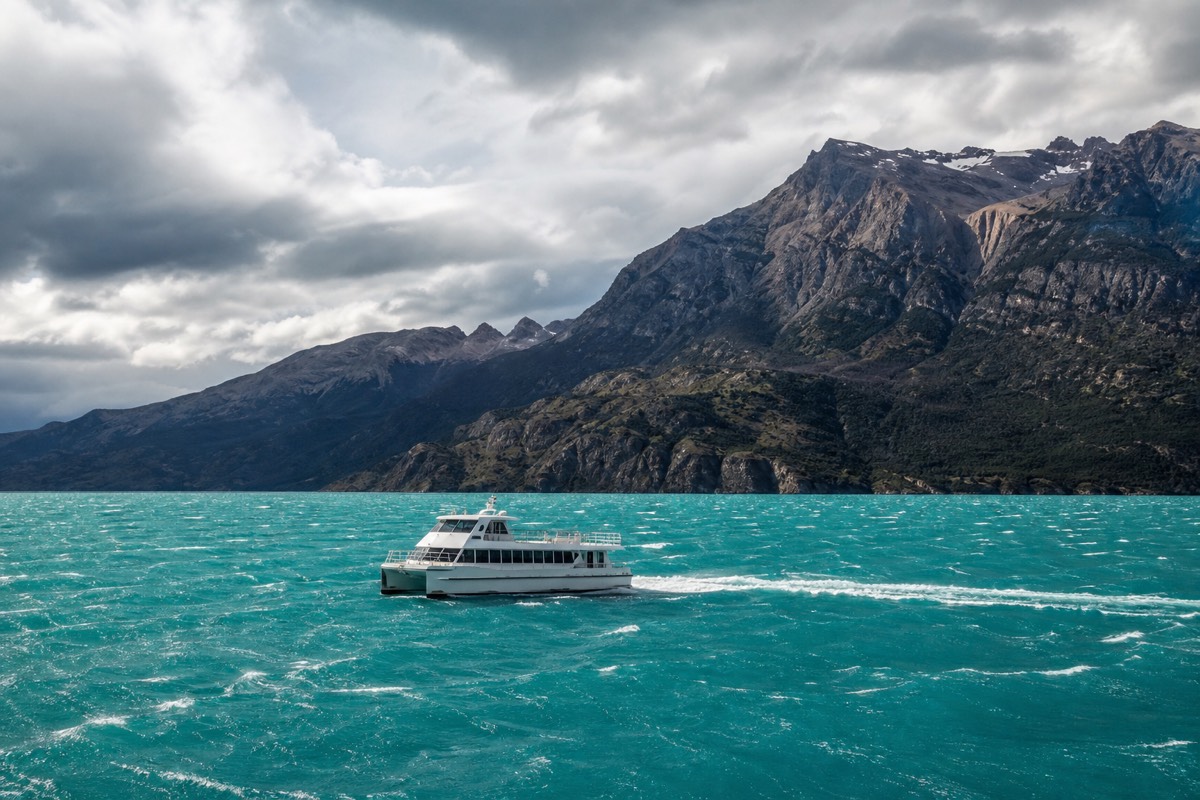
What the long days buy is real. Seventeen hours of light against an 8 to 10 hour hike to the towers means you can start at seven, stop for two hours at the top and still walk down in daylight. It also means sunrise photography does not require a headtorch march, and that late-afternoon plans stop being a gamble.
The cost is not just company. December records 155 mm of rain, the wettest month of the year, across 16 wet days, and average wind of 34 kph sits just below November's peak. Summer in this park is not a guarantee of blue sky, it is a guarantee of long days in which the weather can do several things.
Book summer early. The concessionaires open the next season's calendar around April, Chileno sells out first every year, and December and January dates go with it. If you are treating a summer trip as a decision to make in October, you are already choosing from what is left. The two-day express trip with a night in the park is one way around the bed problem, since the camping is arranged for you.
Autumn: March to May
March and April are the calmest and prettiest months on the trails, with the lenga forests turning red and gold, wind averages easing to 29 to 30 kph and visitor numbers falling away. From late April the park starts shutting: the Las Torres camping season ends around 25 April and the Base Torres trail requires an authorised guide from 27 April. Autumn is a narrowing window.
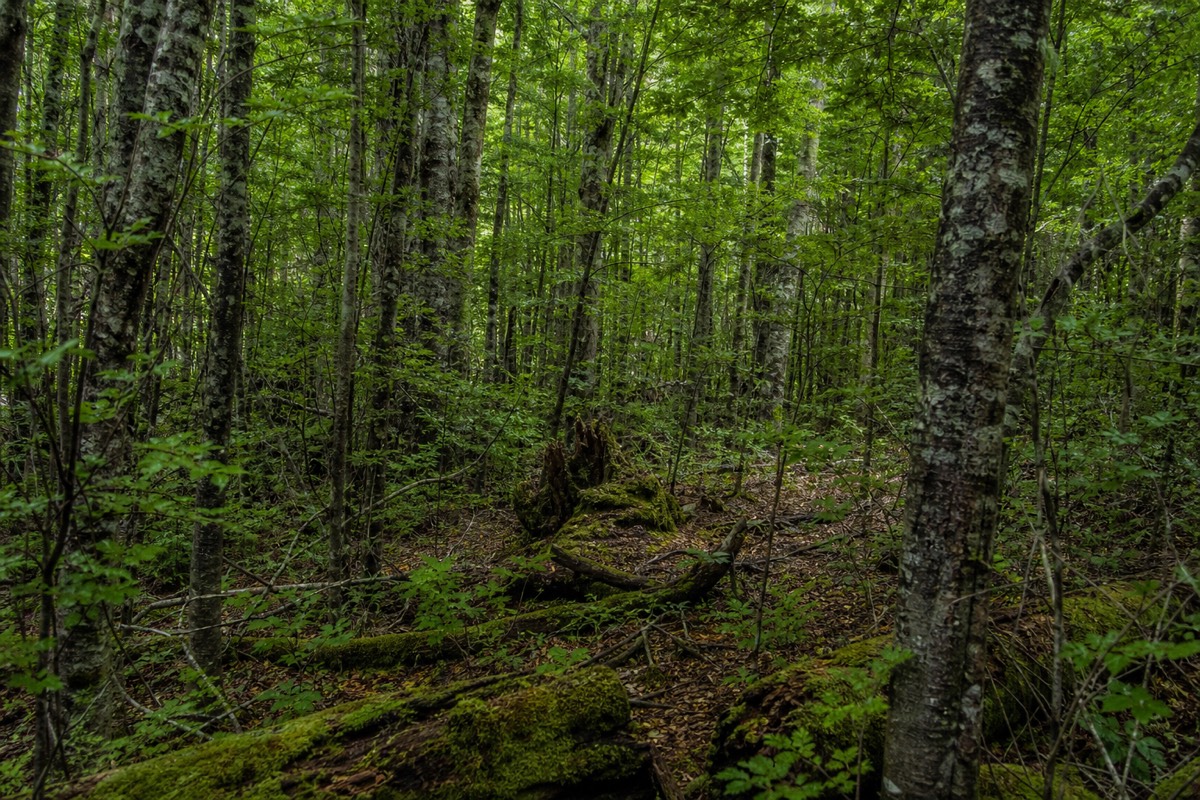
March behaves like a quieter February. April is a different month again: highs of 8.4 C, lows of 3.2 C, 154 mm of rain across 14 wet days and daylight down to about 11 hours. That last figure is the one that bites, because an 8 to 10 hour hike inside an 11-hour day has no margin at all. April walkers to the towers start in the dark or accept finishing in it.
What April gives back is the colour and the emptiness. The Ascencio valley forest is at its best, the light is low all day, which photographers care about a great deal, and the trails that carried a queue in January carry a handful of people. Anyone planning an April trip should read when the light actually works in the park alongside this page.
May is the hinge. It has the calmest wind of the year at 28.5 kph and the second-lowest rainfall at 119 mm, and it also has 9.5 hours of daylight, an average low of 0.2 C and a guide requirement on the key trail. It is a fine month to visit the park by vehicle and a hard one to trek independently.
Winter: June to August, and what actually closes
The park stays open in winter with reduced gate hours of 08:00 to 18:30, but the Base Torres trail requires an authorised guide from 27 April to 30 August 2026, the O Circuit's back side is closed for the season, and most refugios shut. Average highs sit at 1.9 to 2.9 C with lows below freezing, and daylight drops to about eight hours. Winter is not cancelled, it is supervised.
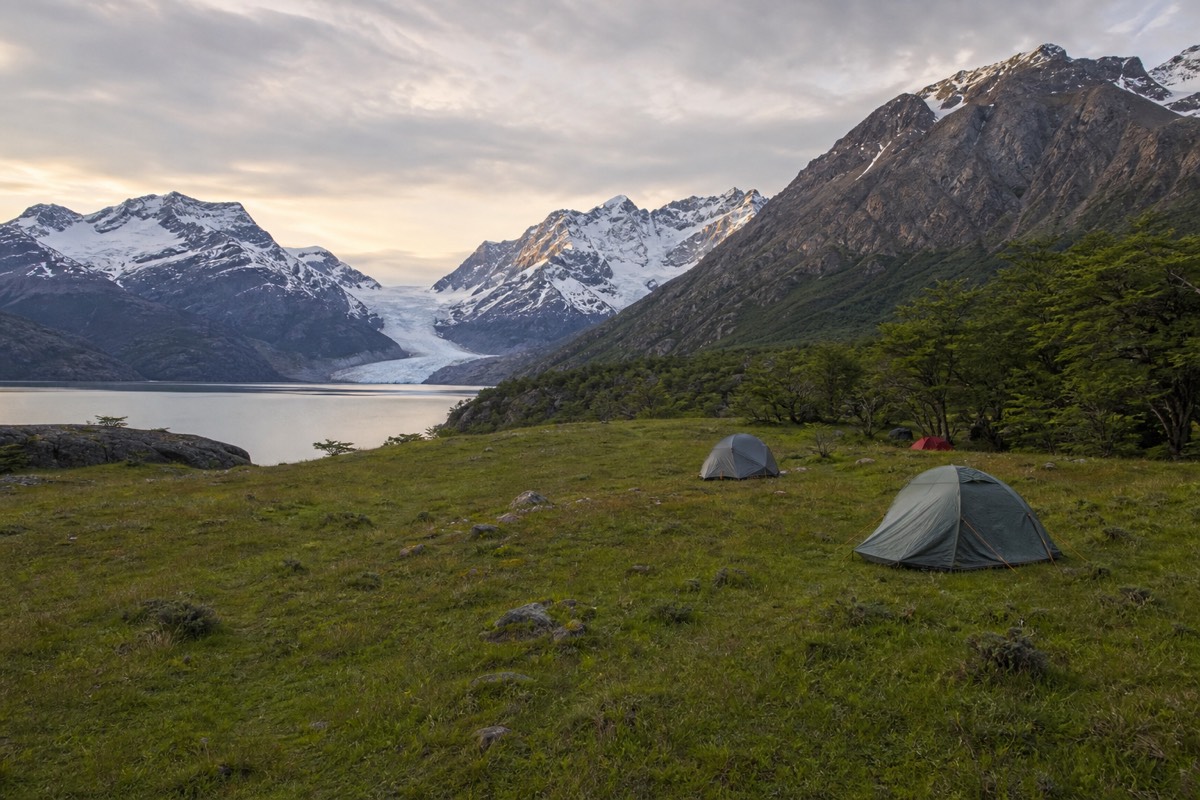
The guided-only rule is the single most important thing to understand about a winter trip, and it is not a suggestion. It applies to the trail everyone wants to walk. The W itself remains walkable in winter, but guided trips are the norm and the accommodation that makes an independent W possible is largely closed. Check CONAF for current closures before you build any winter plan, because the dates move by season.
| What | Summer, October to April | Winter, May to September |
|---|---|---|
| Gate hours | 07:00 to 21:00 | 08:00 to 18:30 |
| Base Torres trail | Independent walking allowed | Authorised guide required, 27 April to 30 August 2026 |
| O Circuit back side | Roughly November to March | Closed |
| Vertice refugios | Paine Grande and Grey from about 1 October, Dickson about 1 November | Mostly closed |
| Las Torres camping | About 1 October to 25 April | Closed |
| Grey Glacier ice hiking | October to April | Not operating |
What winter offers in exchange is the park with snow on the massif and effectively nobody on it. Guided day trips run through it, guide ratios tighten from 1:6 in summer to 1:4 in winter on the trekking trips, and crampons are included when there is ice. The guided Base Torres day trip is the practical way to walk that trail between May and August, since it satisfies the guide requirement by definition. Bring a headlamp and gaiters, which are not included.
Spring: September to November
Spring is the year's most underrated window and its windiest. September is the driest month at 103 mm across 12 wet days, October reopens the refugios and November brings wildflowers on the steppe, 15.5 hours of daylight and an average wind of 37 kph, the strongest of the twelve months. Everything about spring is a trade.
September is a strange, good month. The air is cold, highs of 5.4 C and lows around freezing, the days are back up to about 12 hours, and it rains less than in any other month. The trails are quiet and the light is clean. The catch is that the accommodation season has not started, so a September trip is a day-trip or lodge trip rather than a trek.
October is the reopening. Paine Grande and Grey open around 1 October, the Las Torres camping season starts about the same date, and gate hours go back to 07:00 to 21:00. Highs of 8.2 C and 13.5 hours of daylight make it a genuinely workable trekking month, and it is far emptier than December.
November is the one people argue about. It has the year's strongest average wind at 37 kph, 154 mm of rain across 15 wet days and highs of only 9.9 C. It also has wildflowers across the steppe, 15.5 hours of daylight, low clean light and a fraction of January's crowds. If wind is what you fear most, avoid it. If light is what you came for, it is one of the two best months in the year.
Recommended tours by season
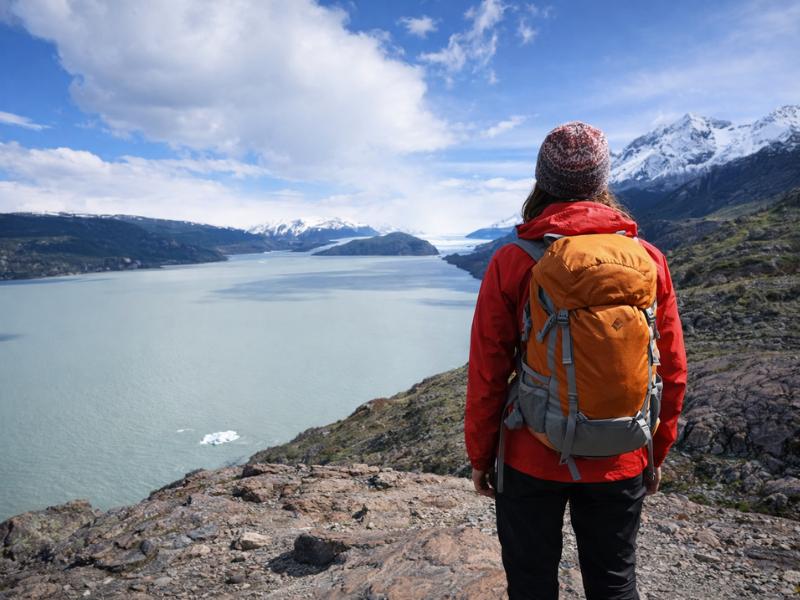
5-Day Torres del Paine W Trek – Guided Patagonia Adventure
Summer. A guided W while the refugios on both sides of the park are staffed, roughly October to April.
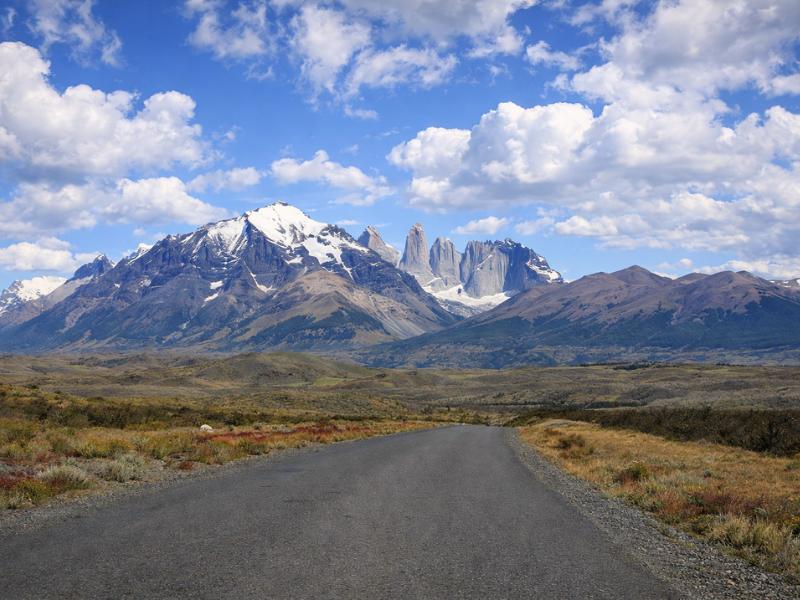
6-Day Self-Drive Torres del Paine National Park Adventure
Autumn. Six days with your own vehicle, when the internal roads are still fully open and you can sit out a weather day.
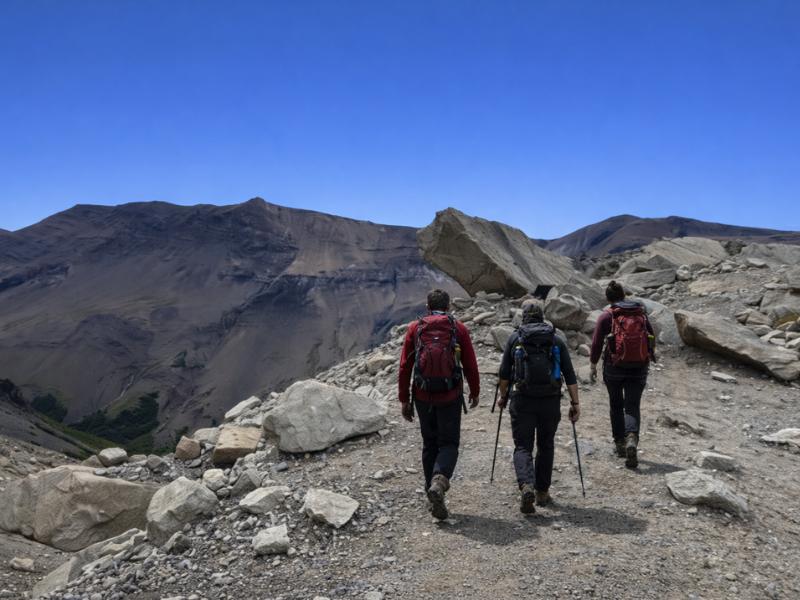
Torres del Paine Base Torres Trekking Day Trip from Puerto Natales
Winter. The guided hike to the towers. From 27 April to 30 August 2026 that trail requires an authorised guide, which this trip includes.
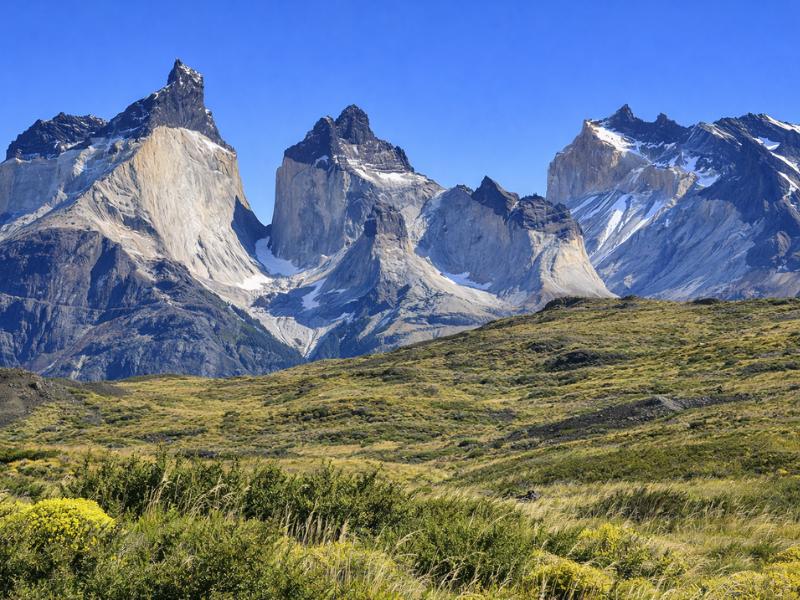
Torres del Paine Full-Day Adventure Tour from Puerto Natales
Any season, including spring. Viewpoints and lakes in one day from Puerto Natales, including the months when a multi-day trek is not practical.
Is November really the windiest month, and does it matter?
Yes, and it matters more than the number suggests. November averages 37 kph against May's 28.5, but averages are the wrong measure. Everyday summer gusts of 60 to 100 kph are what people actually meet on exposed ground, and regional sources have reported gusts up to about 193 kph in the park, which is an extreme rather than a normal. Wind is the Patagonian variable.
What wind does to a trip is specific and predictable. It cancels the Grey Glacier cruise, because the boat will not sail in it. It cancels the Pudeto catamaran, which strands people on the wrong side of Lago Pehoé. It turns exposed sections of the Nordenskjöld shoreline into a slow, braced walk. It damages car doors often enough that rental agents warn about it. And it builds through the afternoon almost every day, which is why early starts are not just about daylight.
| Season | Average wind range | What it changes |
|---|---|---|
| Spring, September to November | 32 to 37 kph | Strongest of the year, sailings at risk |
| Summer, December to February | 31 to 34 kph | Afternoon build, exposed sections slow |
| Autumn, March to May | 28.5 to 30 kph | Calmest walking of the year |
| Winter, June to August | 29 to 31 kph | Cold matters more than wind |
The counter-argument for November is that wind and good light travel together. Frontal systems crossing the massif give you the cloud, the clearing and the rainbow in the same hour. The steppe is in flower. Guanaco herds are calving. If your trip is built around photographs rather than distance covered, November earns its place despite the number. Full month-by-month figures sit in our weather breakdown with the real averages.
What does the shoulder season actually save you?
Beds, tours and flights all move. Refugio dorm beds are published anywhere from $46 to $114 per person depending on season and sector, equipped camping at Serón runs $40 to $90 in high season against $30 to $50 standard, and Santiago to Punta Arenas fares span $65 to $200. The park entrance fee does not move at all. Shoulder season saves you money in three places out of four.
| Cost | Published range | Moves with season? |
|---|---|---|
| Park entry, foreign adult, 1 day | 34,000 CLP, about $36 | No, but CONAF adjusts it annually |
| Park entry, multi-day up to 10 days | 48,500 CLP, about $51 | No |
| Refugio dorm bed | $46 to $114 per person | Yes, strongly |
| Own-tent campsite | $11 to $14 per person | Slightly |
| Equipped camping, Serón | $40 to $90 in high season | Yes |
| Santiago to Punta Arenas flight | $65 to $200 one way | Yes |
| Tent rental in Puerto Natales | about $37 a day | No |
The entry fee is worth a sentence of its own. A foreign adult pays around 34,000 CLP for one day or 48,500 CLP for up to ten consecutive days, and CONAF applied a 4.9% inflation adjustment for January to April 2026 with a new differentiated tariff system postponed to 1 May 2026. Buy at the official park ticketing portal in advance, because the tickets are date-locked and non-refundable.
The saving that nobody prices is availability. In March you can change your mind. In January you cannot, because the bed you want was booked in April of the previous year. That flexibility is worth more than the money on a trip where weather rearranges plans as often as it does here.
Who should skip December and January?
Anyone booking late, anyone travelling on a budget, anyone whose main goal is photographs or wildlife rather than mileage, and anyone who dislikes queues at trail junctions. Peak summer is the right choice for first-time visitors with fixed school-holiday dates and for anyone attempting the O Circuit, which only opens roughly November to March. Everyone else has better options.
| You are | Best window | Why |
|---|---|---|
| A first-timer with fixed December dates | December to January | Longest days, everything open, weather most reliable |
| Booking less than three months out | March to April or October | Beds still exist outside peak |
| Photographing the massif | April or November | Low light all day, colour or wildflowers |
| Walking the O Circuit | November to March | The back side is closed outside that |
| Travelling on a tight budget | September to October | Cheapest flights and beds, driest month |
| Wanting snow and solitude | June to August | Guided access only, almost no visitors |
| Nervous about wind | March to May | Calmest averages of the year |
The wildlife argument for avoiding peak summer deserves its own note. Pumas are crepuscular, so sightings happen at dawn and dusk around the Laguna Amarga sector and the estancias outside the boundary, and the quieter months put fewer people in those places at those hours. We do not sell puma tracking, and published day trips with specialist operators start around $841 per person, but what you can realistically expect to see is worth reading before you pick your dates.
When do bookings open, and what sells out first?
The concessionaires open the next season's calendar around April, and Chileno sells out first, every year without exception. Park entry is booked separately again at pasesparques.cl. Three systems, three calendars, and the one that closes first is the one that decides whether your W itinerary is possible. Plan backwards from beds.
Las Torres Patagonia handles the Central, Chileno and Serón sectors. Vertice Patagonia handles Paine Grande, Grey, Dickson and Los Perros. They do not talk to each other, they do not share a cart, and a W trek needs beds from both. Anyone treating this as a single booking has not started yet. How the two booking systems actually work sets out which company owns which night.
| System | Sectors it covers | Opens | Books alongside |
|---|---|---|---|
| Las Torres Patagonia | Central, Chileno, Serón | Around April for the following season | Nothing else, a separate transaction |
| Vertice Patagonia | Paine Grande, Grey, Dickson, Los Perros | Around April for the following season | Nothing else, a separate cart |
| pasesparques.cl, CONAF | Park entrance ticket, every sector | Anytime up to the visit date | Required alongside whichever bed you book |
Three systems, three logins, none of them aware the others exist. Book the beds first, since they are the scarcer resource, then buy the matching park entry once the dates are fixed.
There is also the fact that no free CONAF campsites are operating. They closed and have not reopened for the 2025-26 season, so any plan that relied on pitching a tent at no cost needs rebuilding. Own-tent sites at the concessionaire camps run about $11 to $14 per person and still need reserving.
If that sounds like more administration than a holiday should involve, it is, and it is the main reason guided and supported trips exist for this park. Our breakdown of how many days you actually need maps day counts onto trips, and the whole list of guided trips into the park sits on the homepage. For the raw numbers behind every date decision on this page, the month-by-month climate figures are the place to check next. And if the administration above still has you wondering whether the whole trip is worth it, that question deserves an honest answer before you book anything.