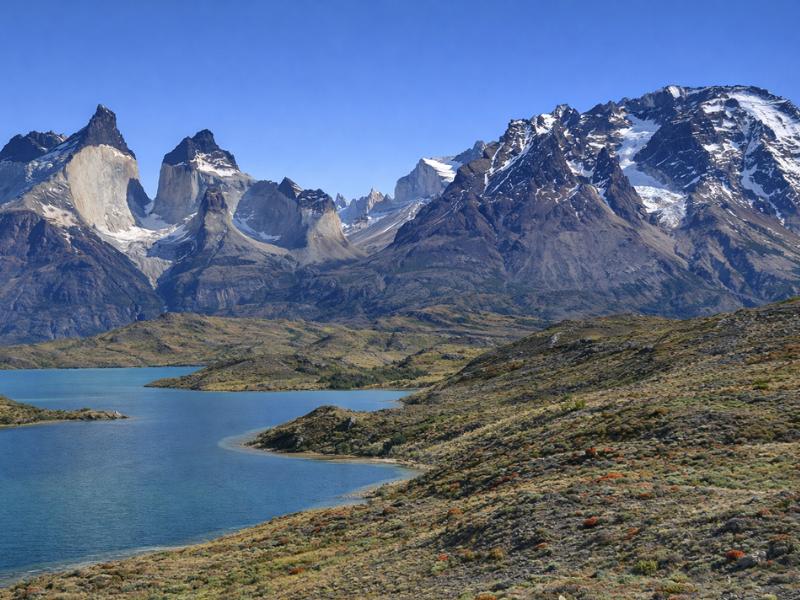
Torres del Paine Itineraries: How Many Days You Actually Need
Day counts decide everything else in this park. Here is what one day reaches, where three days stops feeling rushed, and why five is the standard answer.
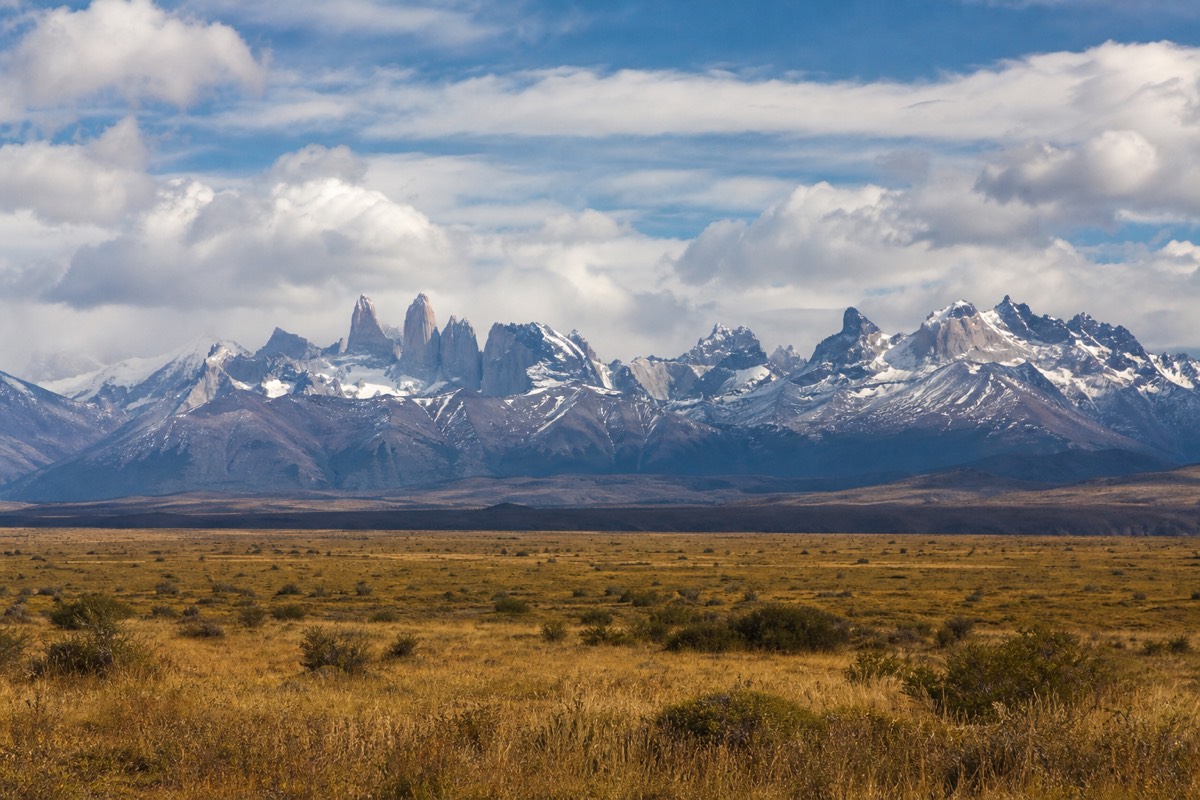
Most trip plans for this park start from the wrong end. People write a list of things they want to see, then try to work out how long that list takes. The park covers 227,298 hectares, the marked trail network runs to roughly 130 km, the approach road from Puerto Natales takes two to three hours in each direction, and the catamaran that links the two halves of the W sails only a handful of times a day. Start from the number of days you actually have and the plan assembles itself. Start from the wish list and you get an itinerary that works on paper and falls apart at the first gate.
What each day count actually buys you
Starting prices move with season and availability. The six-day self-drive costs less than the five-day W because you drive yourself and buy your own meals.
How many days should you spend in Torres del Paine?
Three to five days. Three is the shortest stay that reaches all three of the park's signature landscapes, the towers, the Cuernos and Grey Glacier, without depending on perfect weather. Five covers the classic W trek at a sane pace with one spare day for wind. Below three you are choosing between them, not collecting them. The reason is geography rather than fitness. If you are still working out what the park is actually famous for, that is the list to check before you fix a day count.
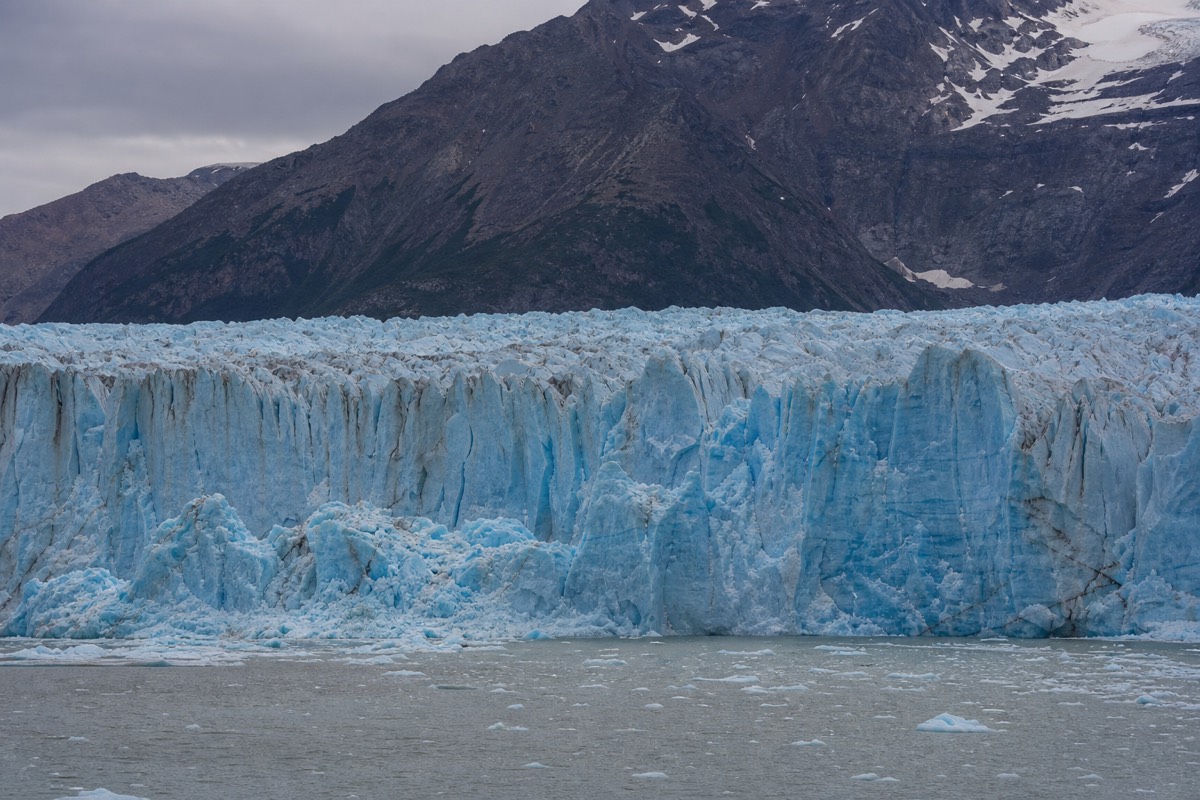
The park's big sights sit at opposite ends of a road and trail system that takes real hours to cross. The towers are reached from the eastern Laguna Amarga sector. Grey Glacier sits in the far west, either an 11 km walk from Paine Grande or a three-hour cruise from the Hotel Lago Grey pier. Between them, Lago Pehoé and the Cuernos are on the central road. A single day can reach one of those properly, or all of them from a bus window.
Then there is the day itself. Gate hours in high season, October to April, run 07:00 to 21:00, and drop to 08:00 to 18:30 from May to September, which is published on CONAF's own park page. A day trip from town leaves around 07:00 and gets back between 17:00 and 21:00 depending on the tour. Take the driving out and a day visit gives you roughly six to eight usable hours on the ground. Two of those days is a different trip from one. Three is a different trip again.
One more thing shapes the answer: the wind almost always builds through the afternoon. A three-day plan can move the exposed walking into the morning on all three days. A one-day plan takes whatever the afternoon hands it.
How many days is enough in Torres del Paine?
Two full days inside the park is the honest minimum for a first visit, and three is where the trip stops feeling rushed. One day is enough to see the park. Two is enough to walk in it. Three is enough to walk into it, which is a different experience and the one most people came for. The table below is the trade-off written out.
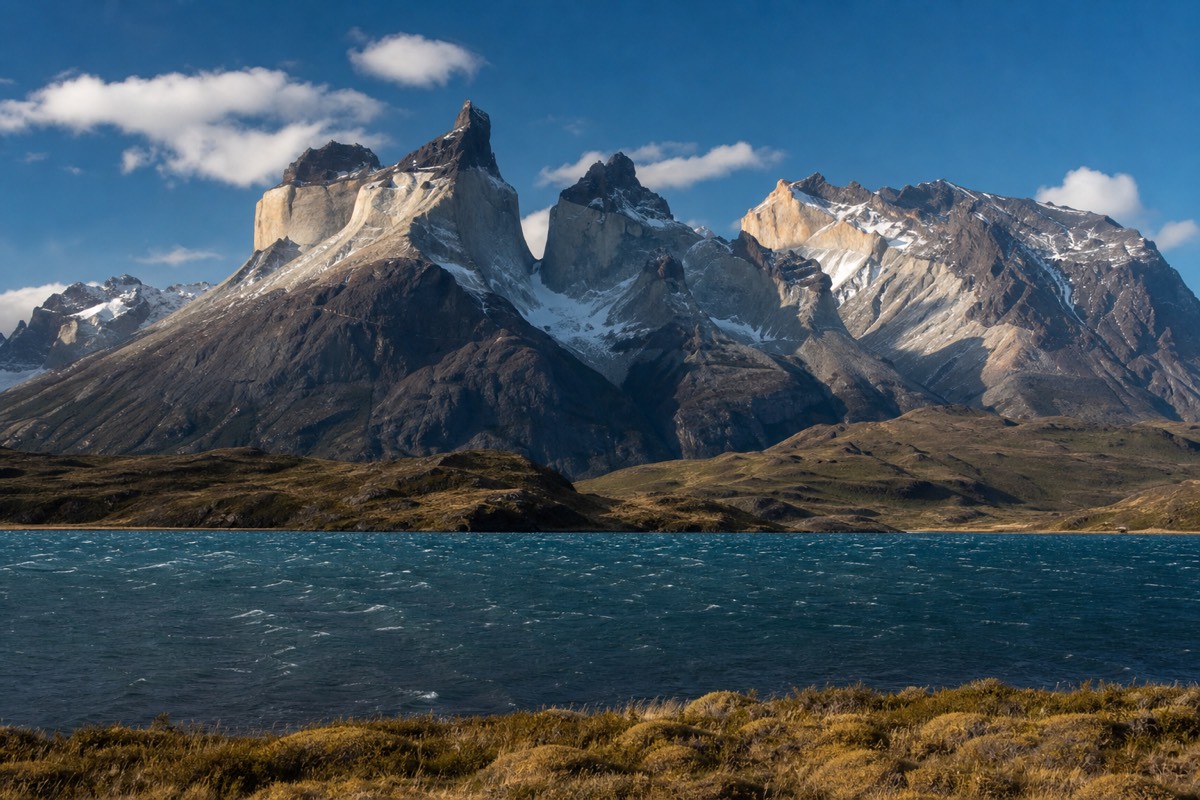
"Enough" depends entirely on whether you want views or trails. The viewpoints along the road, Sarmiento, Laguna Amarga, Nordenskjöld, Salto Grande and Lago Pehoé, are genuinely spectacular and all reachable by vehicle with short walks attached. The interior, meaning the Ascencio valley up to the towers, the Valle Francés and the Grey trail, needs a full day each and cannot be combined.
| Days | What you realistically reach | Longest walk that fits | What you give up |
|---|---|---|---|
| 1 | Road viewpoints, Salto Grande, Lago Pehoé, or one big hike instead | Base Torres, 21 km, 8 to 10 hours | Everything you did not pick |
| 2 | Base Torres plus the central viewpoints and short trails | Base Torres, plus 3 to 4 km walks | Grey Glacier at close range |
| 3 | Towers, Valle Francés and a Grey Glacier viewpoint or cruise | Valle Francés, 7.5 to 12 km out and back | Spare weather day |
| 4 | The full W at a hard pace, or the whole park at hotel pace | The Grey day, 22 km round trip | Recovery time between big days |
| 5 | The classic W with each arm walked as a separate out and back | Same, spread properly | Very little |
| 6 or more | The W plus a weather day, or a self-drive circuit of the region | Anything in the park | Budget, mostly |
Note what two days does not buy. It does not buy Grey Glacier on foot, because that arm of the W is a day in itself from Paine Grande. It can buy Grey from the water, since the cruise runs three hours from the pier, but only if your second day is built around the sailing time rather than a hike.
How many days do you need to see Torres del Paine?
One long day, if seeing is what you mean. A single guided day from Puerto Natales covers Villa Cerro Castillo, the Sarmiento Lake viewpoint, Laguna Amarga with its flamingos and frontal view of the towers, Salto Grande, the Nordenskjöld viewpoint and Lago Pehoé, and still gets back to town for dinner. That is a real answer, not a consolation prize.
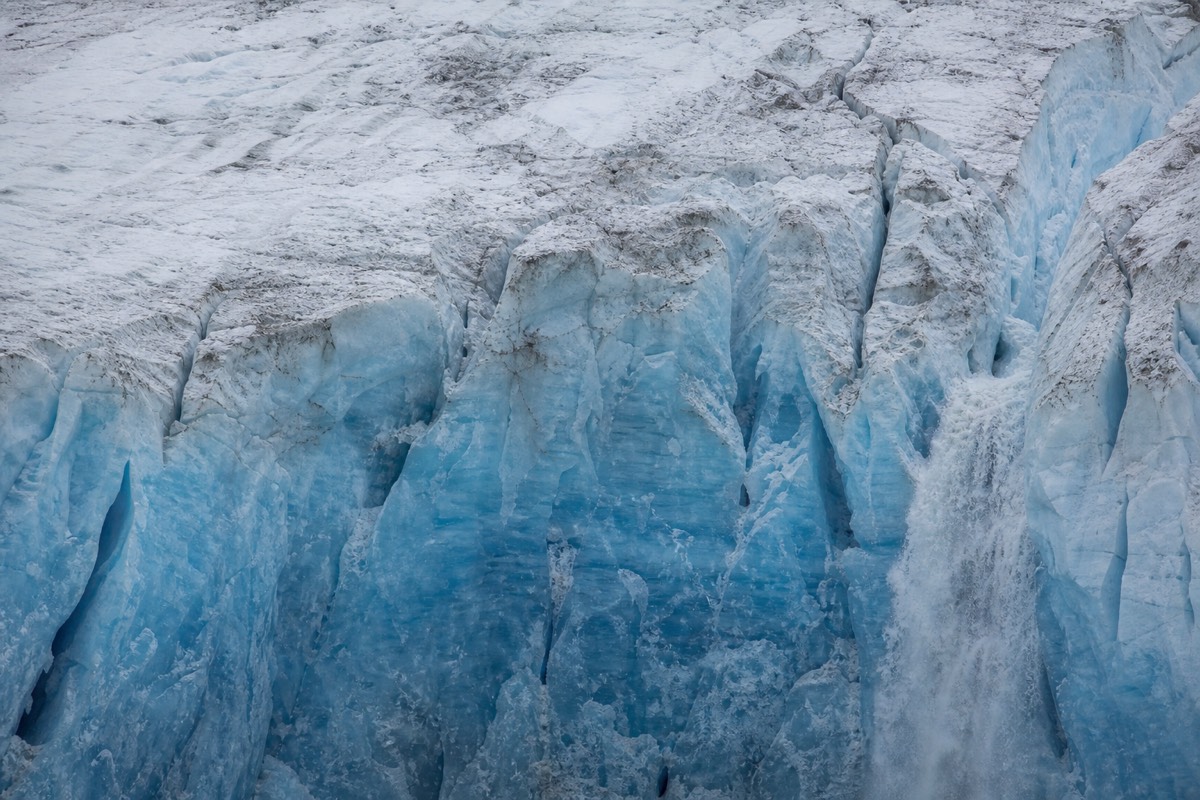
What it costs is the interior. You will photograph the towers from 20 km away rather than from the moraine above the lagoon. You will see Grey Glacier's icebergs on a map rather than from a boat. For a lot of travellers on a wider Patagonia route, that is the correct trade, and the full-day park circuit from Puerto Natales is built for exactly that trip.
The other reason day counts mislead is that arrival days are rarely park days. Getting here has moving parts, and each one eats hours that people quietly assign to hiking.
| Connection | Distance | Time | Published cost |
|---|---|---|---|
| Punta Arenas airport to Puerto Natales, by bus | 250 km | 3 to 4 hours | about $9 to $26 |
| Puerto Natales to Laguna Amarga gate | 112 km | 2 to 3 hours | about $20 to $29 one way |
| Laguna Amarga to the Welcome Center shuttle | 7 km | about 15 minutes | 4,000 to 4,500 CLP, cash only |
| Catamaran, Pudeto to Paine Grande | Across Lago Pehoé | about 30 minutes | about 26,000 CLP, near $45 |
| El Calafate to Puerto Natales, by bus | Border at Cerro Castillo | about 6 hours plus the crossing | about $40 to $50 |
Add those up for a typical arrival and the first day is gone. A five-day trip with flights at both ends is often three days in the park. Our breakdown of the road between town and the park goes through the bus timetable in detail, including which airports feed it.
One day in Torres del Paine, hour by hour
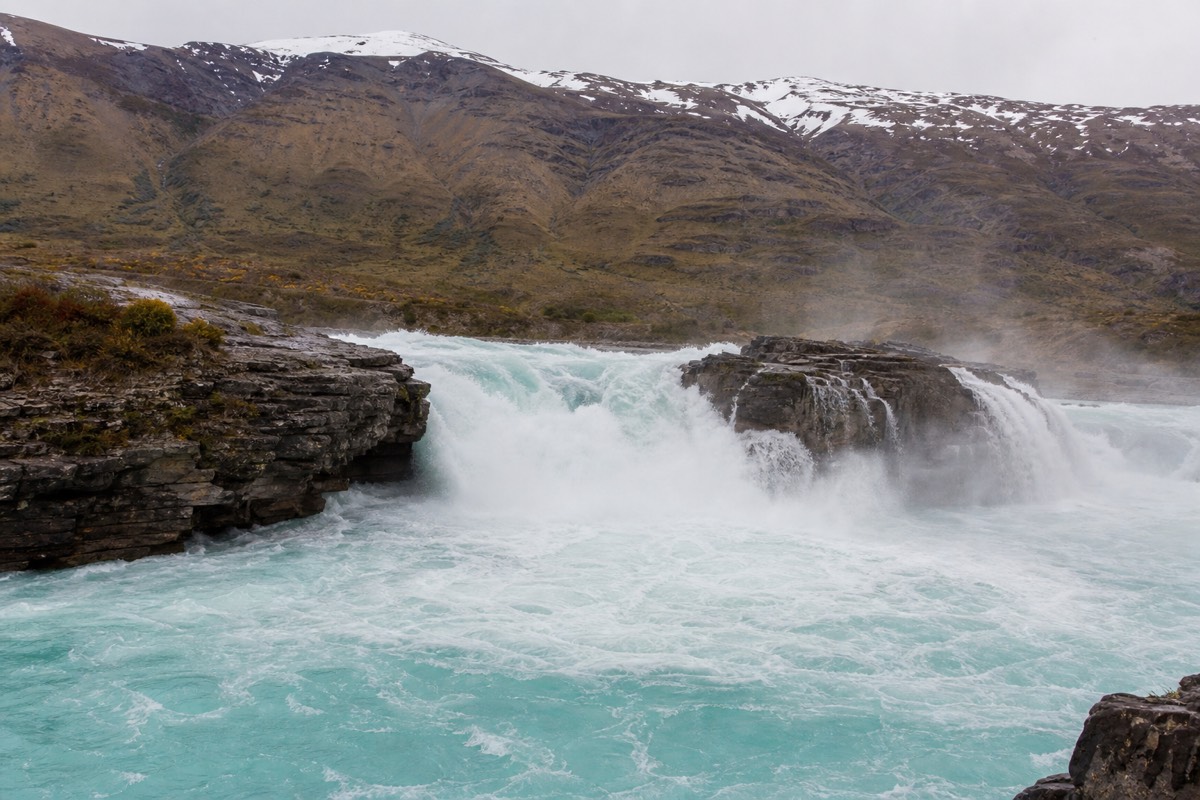
A one-day park visit from Puerto Natales runs roughly 07:00 to 18:00, covers about 112 km of approach each way, and gives you five or six stops with short walks attached. The single longest walk on it is the 30-minute stroll to Salto Grande. It is a viewing day, and it works. Here is what the hours actually look like.
| Time | Where | What happens |
|---|---|---|
| 07:00 | Puerto Natales | Hotel pickup, minibus, bilingual guide |
| 08:30 | Villa Cerro Castillo | First stop on the steppe road |
| 09:30 | Sarmiento Lake viewpoint | Wide view of the massif from the east |
| 10:30 | Laguna Amarga | Flamingos, guanaco herds, frontal view of the towers |
| 12:30 | Salto Grande | 30-minute walk each way to the waterfall |
| 14:00 | Nordenskjöld viewpoint and Lago Pehoé | The Cuernos, the water colour everyone photographs |
| 16:00 | Milodón Cave | Natural monument on the way back, separate fee |
| 17:00 to 18:00 | Puerto Natales | Drop-off at your hotel |
Those times are the published shape of the day rather than a fixed schedule, and the winter version finishes earlier, around 16:00, because the light goes. Two costs sit outside the tour price: the park entrance fee and the Milodón Cave fee, and lunch is a paid add-on rather than an inclusion.
The alternative one-day plan swaps all of that for a single trail. A guided Base Torres day hike from Puerto Natales leaves between 06:30 and 07:00, drives two hours to the Portería Amarga sector, walks a route the listing describes as 20 km with 870 m of gain, and returns to town between 20:00 and 21:00. That is a 14-hour door-to-door day for one viewpoint. It is also the viewpoint. Anyone weighing the two should read what the trail to the towers actually involves before choosing.
Two days: the express itinerary and what it trades away
Two days lets you walk to the towers and still see the central park, which is the combination one day cannot deliver. The standard shape is a big hike on day one, a night inside the park, then shorter trails and viewpoints on day two before the drive back to town. The gain is not extra kilometres, it is a second morning.
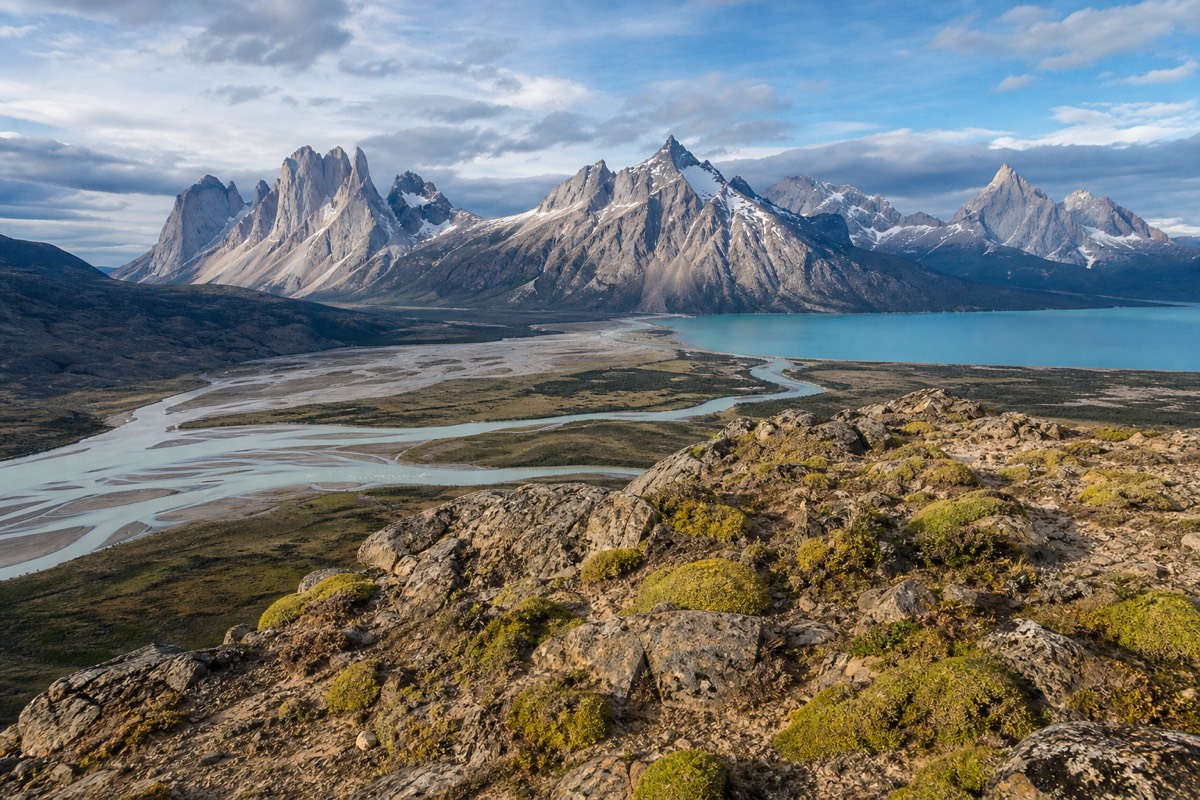
Sleeping in the park changes the arithmetic more than most people expect. You skip one two-hour approach drive and one two-hour return, which is four hours handed straight back to daylight. You also get the calm early air, before the wind starts building through the afternoon.
The two-day express trip with a night at Pehoé camping is built on exactly that logic. Day one is a hike of roughly 22 km to the Base Torres viewpoint, then a fully equipped tent and dinner at the campsite. Day two takes in the Condor viewpoint, the Cuernos viewpoint trek and the Aonikenk trail, where the wildlife and the ancient rock paintings are. Transport, guide, meals and trekking poles are included, with crampons added in winter.
What two days trades away is Grey Glacier. Reaching the ice on foot means getting to Paine Grande, which means the catamaran, and the return sailing timetable makes it impossible to combine with a towers day unless you add a third night. If the glacier is the thing you came for, either build the trip around the three-hour Grey Glacier cruise instead of the towers, or add a day. Our rundown of the four ways to reach Grey Glacier lays out which of them fit into a short trip.
Three days, hour by hour: the shape most people should copy
Three days is the first itinerary that reaches the towers, the Valle Francés and Grey Glacier without cutting any of them short. It works because you sleep in the centre of the park both nights and walk one arm a day, out and back, instead of dragging a full pack from sector to sector. That structure is why guided three-day trips exist.
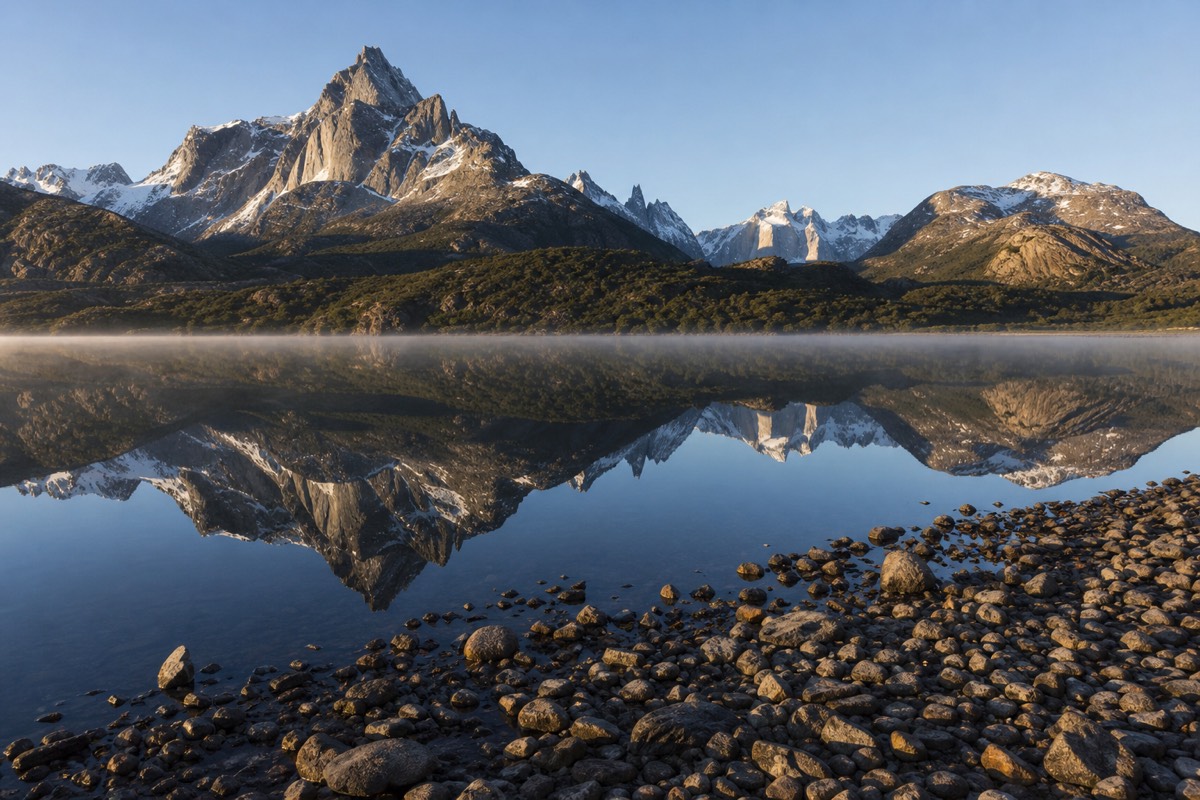
The three-day guided alternative to the W runs precisely this way: the Base Torres trail, the Valle Francés and the Grey Glacier viewpoint, with two nights at Camping Pehoé on the lake shore, so full packs stay at camp. Patagonian meals are included. It is the most direct answer to the question "can I see all of it without a week".
| Day | Morning | Afternoon | Night |
|---|---|---|---|
| 1 | 06:45 bus from Puerto Natales, at the gate by about 09:00 | Transfer into the central sector, short trails around Pehoé and Salto Grande | Camping Pehoé |
| 2 | Early start for the towers, 21 km round trip, 1,041 m of ascent | The final 0.8 km moraine climb, about 45 minutes, then the descent | Camping Pehoé |
| 3 | Catamaran across Lago Pehoé, about 30 minutes, then the Valle Francés or the Grey trail | Return sailing, then the road back to town | Puerto Natales |
Two of those hours are worth spelling out. The moraine section at the top of the Ascencio valley is only 0.8 km long with about 200 m of climb, and it takes around 45 minutes, which surprises people who have already walked nine kilometres. And the catamaran from Pudeto is a fixed timetable, commonly listed around 08:30, 10:30, 16:15 and 18:00 in high season, so day three is planned backwards from a sailing, not forwards from breakfast. High wind cancels it outright.
Times above are planning allowances built from the published leg distances and the bus timetable, not a fixed schedule. Weather rearranges all of it, and any guide worth the money will reorder the days rather than push a party up the moraine in a gale.
Four days: the full W, or the park at hotel pace
Four days splits into two completely different trips. It is the fast end of the standard four to five day W trek, walked with a pack and slept in refugios. Or it is a hotel-based park circuit with a glacier navigation attached and no camping at all. Same day count, opposite trips. Pick deliberately.
The trekking version compresses the W into three walking days plus travel, which means the Grey day and the Valle Francés day land back to back with no recovery. Fit walkers manage it. People who have not walked 20 km on consecutive days before usually do not enjoy it. If that is the plan, read the full W trek route breakdown and be honest about the pace.
The comfort version looks nothing like it. Our four-day park experience from Puerto Natales spends day one arriving at Punta Arenas airport with a three-hour transfer to town, day two on the full park circuit from 07:00 to about 19:30 taking in Sarmiento, Nordenskjöld, Pehoé, Salto Grande and the Grey Lake beach, day three on the four-hour Balmaceda and Serrano glacier navigation from the Bories pier with a Patagonian lunch at Estancia Perales, and day four returning to Punta Arenas. Three nights in a four-star hotel, all park entrance fees, three breakfasts and two lunches and every transfer are included; airfare, dinners and insurance are not.
That itinerary has one honest weakness and one honest strength. The weakness is that only one of the four days is properly inside the park. The strength is that it never asks you to carry anything, and it fits travellers who want Patagonia without a trekking holiday. If you are weighing beds against tents, the accommodation options inside and around the park sets out what each tier really costs.
Recommended tours by day count
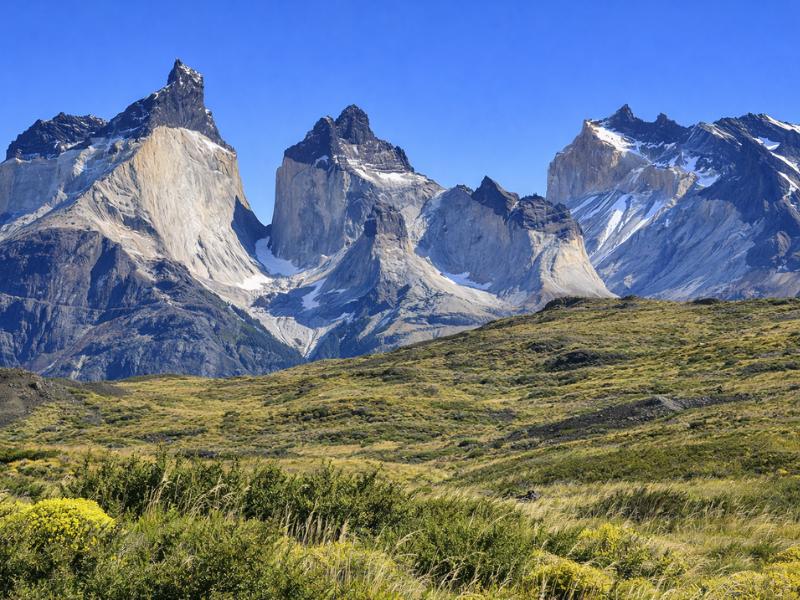
Torres del Paine Full-Day Adventure Tour from Puerto Natales
A guided circuit from Puerto Natales covering the road viewpoints and short walks, typically 07:00 to 18:00. Park entry and lunch are separate.
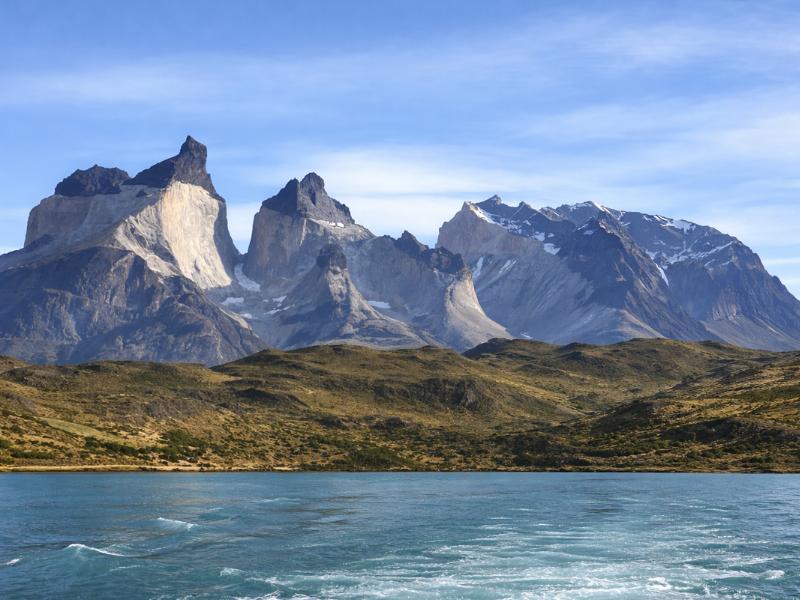
Torres del Paine W Trek Alternative 3-Day Guided Tour
Base Torres, Valle Francés and a Grey Glacier viewpoint, with both nights at Camping Pehoé. Packs stay at camp; meals are included.
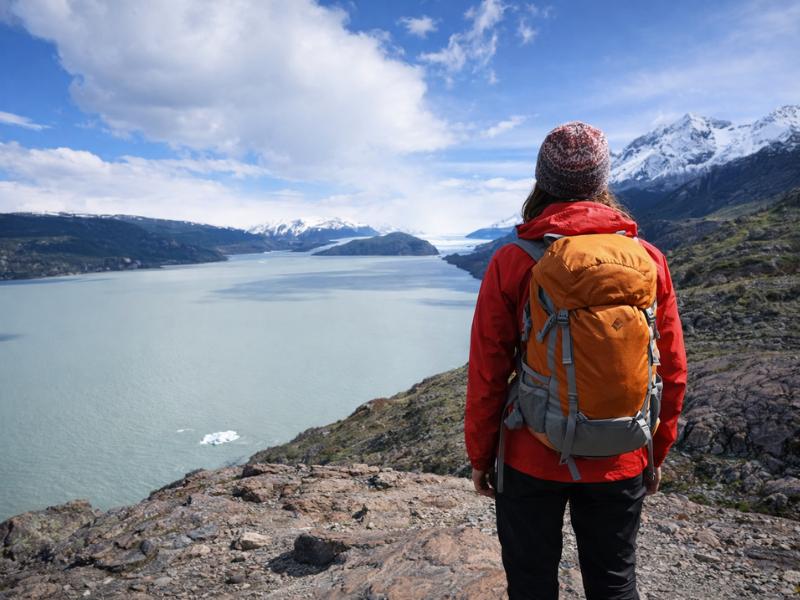
5-Day Torres del Paine W Trek – Guided Patagonia Adventure
Each arm of the W on its own day, with beds, meals and transfers arranged. You walk without a guide; park entry is separate.
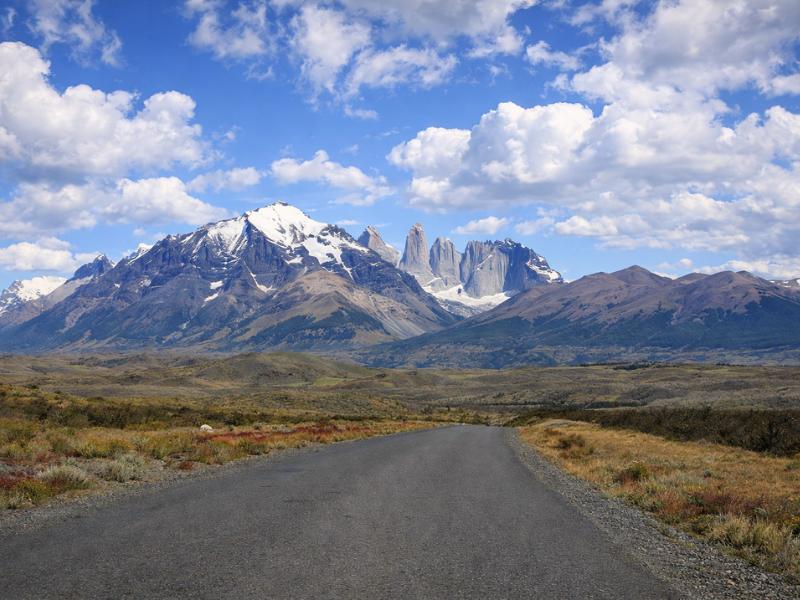
6-Day Self-Drive Torres del Paine National Park Adventure
A category D rental, five hotel nights and breakfasts, collecting at Punta Arenas airport. Fuel, park fees and other meals are extra.
Five days: the classic W trek, arm by arm
Five days is the standard W. Each arm of the route gets its own day, walked as an out and back from a fixed bed, which is why it feels manageable where the four-day version feels like a forced march. Published distances for the whole W run from 60 to 85 km depending on which side trips are counted, most commonly given as about 80 km. Cumulative ascent is published between 2,730 m and 3,480 m, so treat any single figure with suspicion.
Direction matters. West to east, starting with the catamaran to Paine Grande and finishing at the towers, usually at sunrise, is the more common way round and the one most packages sell. East to west puts the hardest day first while your legs are fresh and saves the glacier for the end. Neither is wrong. The comparison of the W against the full O Circuit covers why direction is mandatory on one and optional on the other.
| Day | Leg | Distance | Typical time |
|---|---|---|---|
| 1 | Base Torres round trip | 19.5 to 21 km, 1,041 m of ascent | 8 to 10 hours |
| 2 | Central to Refugio Cuernos along Lago Nordenskjöld | 11 to 13.5 km, about 200 m | about 4 hours |
| 3 | Valle Francés day, up to Mirador Británico and back | 20.5 km total, the mirador leg 640 m of climb | 3.5 to 4 hours for the mirador leg |
| 4 | Refugio Frances to Paine Grande | 7.5 km, about 100 m | about 2.5 hours |
| 5 | Grey day, Paine Grande to Refugio Grey and the mirador | 22 km round trip | 4 to 4.5 hours each way |
Distances above combine the figures published on the supported five-day itinerary with the commonly cited leg data, and they do not agree perfectly. The Mirador Británico leg in particular is given anywhere from 7.5 to 12 km out and back. Plan on the longer number and be pleased if the signage says otherwise.
The supported five-day W with confirmed beds and transfers is self-guided rather than guided, which is the part people miss. You get accommodation vouchers, full-board meals, a map and itinerary briefing, bus and catamaran transfers and check-in support. You do not get a guide walking with you, and the park entrance fee is separate. Anyone unsure which side of that line they belong on should read the case for and against walking the W unguided.
Six days and up: self-drive, the O Circuit and a weather buffer
Past five days the question changes from "what else can I see" to "what happens when the weather takes a day". Six days buys the W plus a genuine spare day, or a self-drive trip that covers the park and the wider Magallanes region at your own pace. Both are legitimate uses of the extra time.
Self-driving suits people who want to sit at a viewpoint until the cloud lifts rather than get back on a minibus. The six-day self-drive package with a category D rental car includes unlimited mileage, five nights in four-star accommodation, insurance and daily breakfasts, picking up at Punta Arenas airport with 245 km to cover each way to Puerto Natales. Fuel, tolls, park entrance fees and meals beyond breakfast are yours. One detail matters more than any of that: there are no fuel stations inside the park, so every day starts with a full tank.
The other six-day-plus option is the O Circuit, and we should be straight about it. The O is 120 to 136 km depending on the source, takes seven to nine days and most often eight, climbs about 4,971 m in total, and must be walked counter-clockwise because the John Gardner Pass at 1,200 m may only be crossed from the Los Perros side. Departures from Los Perros are often required by 07:00 and that pass day runs 10 to 12 hours. The back side closes in winter, and CONAF has listed the circuit as closed until at least 31 October 2026. We do not sell the O Circuit, and no page on this site can book it for you. If it is what you want, our honest account of the full circuit explains the booking route, and the supported five-day W is the closest thing we do sell.
What do people get wrong about day counts?
The five recurring mistakes are counting travel days as park days, buying a single-day ticket for a multi-day trip, assuming the catamaran will sail, planning zero weather margin, and booking a flight out on the evening of the last hike. Every one of them is avoidable at the planning stage and expensive afterwards.
Start with tickets, because it is the cheapest fix. A foreign adult pays around 34,000 CLP for a single day and 48,500 CLP for a pass valid up to ten consecutive days with re-entry, roughly $36 against $51 at about 950 pesos to the dollar. The multi-day ticket pays for itself the moment you enter twice. Tickets are bought in advance at the official park ticketing portal, and they are date-locked and non-refundable except when the park itself closes, so a weather day spent in town is a ticket you have already paid for. CONAF applied a 4.9% inflation adjustment for January to April 2026 and has postponed its new differentiated tariff system to 1 May 2026, so check the live figure rather than this paragraph. The full picture sits in our park tickets and fees breakdown.
- Travel days are not park days. A four-day trip that includes a Punta Arenas arrival and departure is a two-day park trip.
- The catamaran is a timetable, not a taxi. Roughly 26,000 CLP one way, about 30 minutes, four high-season departures, and wind cancels it.
- The Laguna Amarga shuttle is cash only. Seven kilometres, 4,000 to 4,500 CLP, and it meets the arriving buses. People with no pesos have walked it.
- No spare day means no second attempt. Cloud sits on the towers regularly. One booked day is one roll of the dice.
- Beds book earlier than flights. The concessionaires open the next season's calendar around April, and Chileno goes first every year.
That last point is the one that quietly decides itineraries. The refugios and campsites are run by two separate companies that book separately, Las Torres Patagonia for the Central, Chileno and Serón sectors and Vertice Patagonia for Paine Grande, Grey, Dickson and Los Perros, with park entry a third booking again. By the time you have your dates, the beds may have decided your direction for you.
How should you split time between the park and Puerto Natales?
Sleep in town for one and two day trips, and inside the park for anything from three days up. Puerto Natales sits 112 km from the park, which is between 1.5 and 3 hours of road depending on which source and which gate, and that drive twice a day is the single biggest tax on a short itinerary. The break-even point is the third day.
Town has real advantages: buses, gear rental, supermarkets, restaurants and every tour departure. Rental Natales publishes roughly $37 a day for a tent and $8 a day for a sleeping bag, which is worth knowing before you fly gear across a continent. Hotel rooms are a fraction of park prices, and presenting your passport with the PDI tourist card at check-in triggers the 19% IVA exemption for foreign tourists paying in foreign currency.
| Trip length | Nights in Puerto Natales | Nights in the park | Why |
|---|---|---|---|
| 1 day | 2 | 0 | One approach drive each way, nothing gained by moving |
| 2 days | 1 or 2 | 0 or 1 | A park night saves four hours of driving |
| 3 days | 1 | 2 | Fixed base, one arm walked per day |
| 4 to 5 days | 1 either side | 3 to 4 | The W has to be slept on the route |
| 6 days or more | 2 | 4 or more | Room for a weather day at either end |
Inside the park, the price ladder is steep. Own-tent campsites publish around $11 to $14 per person, refugio dorm beds between $46 and $114 depending on season and sector, equipped camping with Las Torres in the $30 to $50 range and $40 to $90 at Serón in high season, and Hotel Las Torres from about $820 a night half-board. There are no free CONAF campsites operating, which catches out anyone planning to pitch a tent for nothing. Meals bought in the park run roughly $25 for breakfast, $20 to $50 for a box lunch and $35 to $70 for dinner, with full-board supplements often quoted around $100 a day, and the published figures vary enough that you should check the concessionaire's own page. How the two booking systems actually work goes through it sector by sector.
Which guided itinerary matches your day count?
Every day count from one to six has a product built for it, and the price does not climb in a straight line, because a self-drive week costs less than a supported five-day trek. Match the itinerary to the days you have, then check the price, not the other way round. The nine trips we list are set out below by length.
| Days | Trip | From | Best for |
|---|---|---|---|
| 1 | Base Torres trekking day trip | $99 | One big hike, back in town the same night |
| 1 | Full-day park circuit from Puerto Natales | $139 | Seeing the whole park without walking far |
| 1 | Grey Glacier scenic cruise | $120 | Ice at close range in three hours |
| 1 | Overland 4x4 from El Calafate | $180 | A 14 to 16 hour day from Argentina |
| 2 | Express tour with a night at Pehoé | $620 | Towers plus the central park |
| 3 | W trek alternative, guided | $1,175 | All three landscapes, no pack carrying |
| 4 | Park experience with hotels | $1,355 | Comfort, transfers and a glacier navigation |
| 5 | Supported W trek | $1,905 | The classic route, beds confirmed |
| 6 | Self-drive park adventure | $1,447 | Your own pace, your own car |
Prices are the published starting figures and move with season and availability, so treat them as current rather than fixed and check the live listing before you commit. Two of the nine carry the volume that tells you what most visitors actually choose: the full-day circuit shows 2,736 bookings on its listing and the Grey cruise 2,715, against a few hundred each for the multi-day trips. That is the shape of demand for this park, and it is worth knowing that the short trips are the crowded ones.
If you are still deciding, work through which season suits the trip you want before you fix the dates, because a March itinerary and a December one behave differently even when the day count is identical. And if the whole trip is still an open question, whether it earns the distance and the cost is the place to settle that first. The full set of Torres del Paine tours is listed on the homepage with what each one includes.