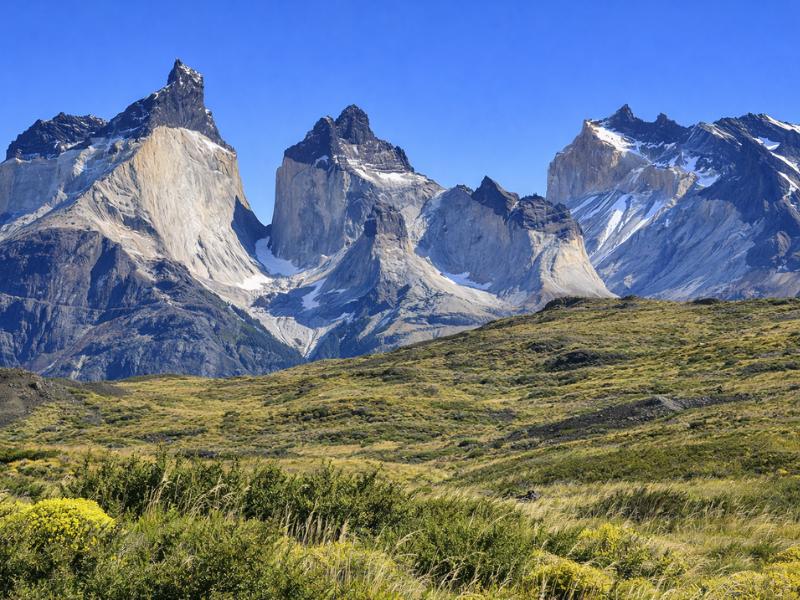
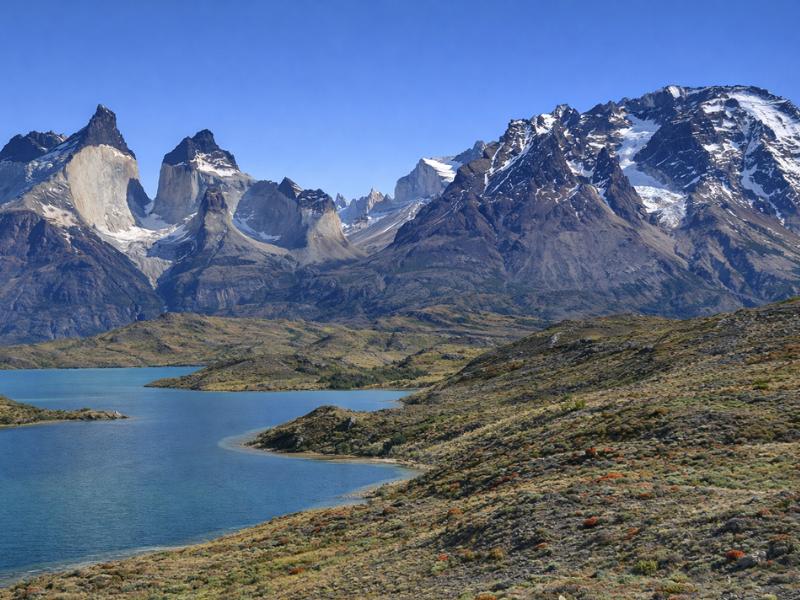
El Calafate to Torres del Paine: The Border Crossing, Step by Step
The distance is not the problem on this route. The border is, and so is the fresh fruit sitting in the bottom of your daypack.
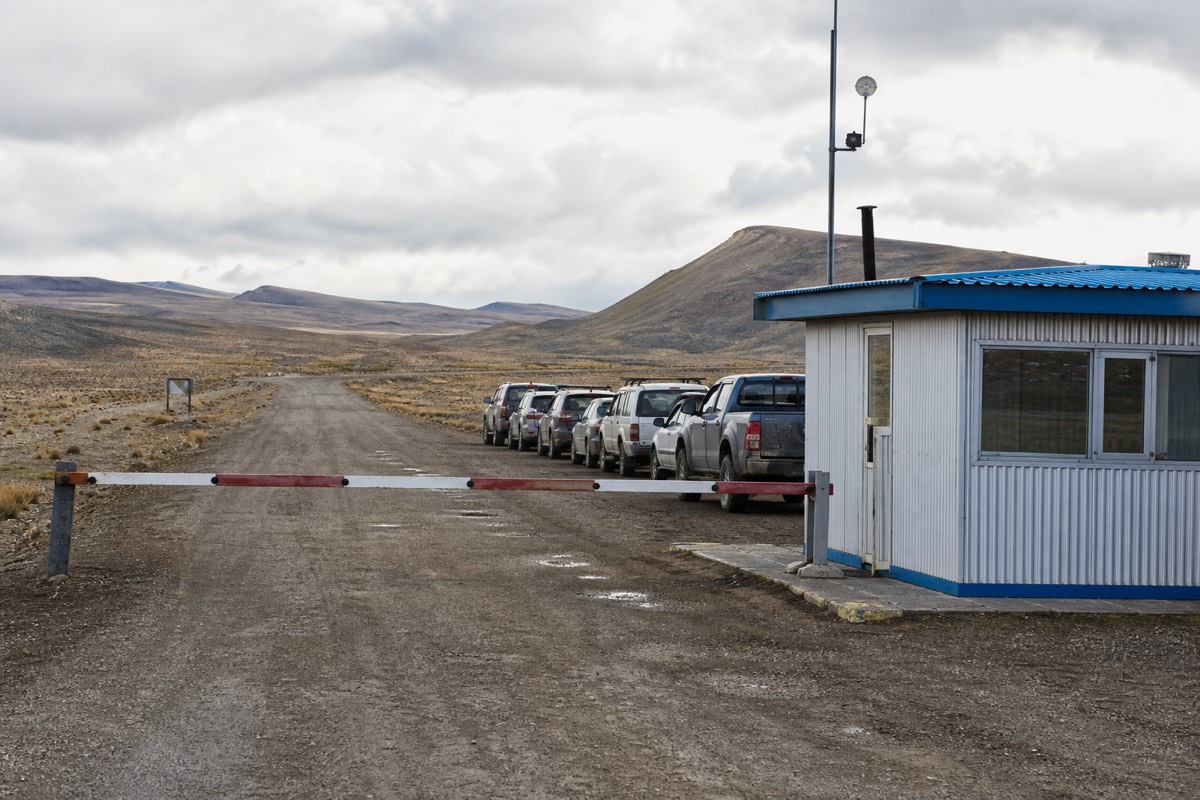
The distance is not what makes this trip awkward. The border is, and so is the apple in the bottom of your daypack. El Calafate to Torres del Paine is published at about six hours plus whatever the crossing takes, across two countries, two sets of immigration and one agricultural checkpoint that takes food seriously. Doing it yourself is entirely possible. Doing it without knowing the rules is how people end up bussing back to Argentina at 22:00.
Published journey times on the southern approaches
Border time is not included in the six-hour figure and is the leg that varies most; a queue of coaches at Cerro Castillo can add an hour or more.
How far is El Calafate from Torres del Paine, and how long does it take?
About six hours plus border time, according to the published figures. Bus-Sur runs El Calafate to Puerto Natales for roughly $40 to $50, crossing at Cerro Castillo. From Puerto Natales it is another 112 km to the Laguna Amarga gate, published at anywhere between 1.5 and 3 hours depending on the source. Nobody publishes a clean door-to-door number, and that vagueness is itself the useful information.
Treat the day as long rather than timed. The road is good for most of it, the landscape is open steppe with very little on it, and the variable that swings the total is how quickly the coach ahead of yours clears immigration. A quiet morning can move a full bus through in well under an hour. A queue of three coaches at a small post on a January afternoon does not.
What that means practically is that the crossing eats the flexible part of the day. If your plan requires being somewhere at a specific time on the Chilean side, build the slack in at the front. Park gates close at 21:00 in high season and 18:30 in low season, so a late-running border day can end with you outside a shut gate holding a date-locked, non-refundable ticket. The wider route comparison sits in every route into the park compared.
| Leg | Published distance | Published time | Published cost |
|---|---|---|---|
| El Calafate to Torres del Paine, overall | Not published as a single figure | About 6 hours plus the border | Depends on mode |
| El Calafate to Puerto Natales by bus | Via the Cerro Castillo crossing | Part of the same 6 hours | Roughly $40 to $50 with Bus-Sur |
| Puerto Natales to Laguna Amarga | 112 km | 1.5 to 3 hours, sources differ | $20 to $29 one way |
| Guided 4x4 day from El Calafate, door to door | Uses an unpaved shortcut | 14 to 16 hours | From $180, park entry extra |
| Punta Arenas to Puerto Natales, for comparison | 250 km | 3 to 4 hours | $9 to $26 |
What are the real options for making the crossing?
Three, and they suit different travellers. The scheduled bus to Puerto Natales at roughly $40 to $50 is the cheap and reliable default. A rental car gives you the park itself but needs a cross-border permit costing around $150. A guided 4x4 does the whole thing in one 14 to 16 hour day and hands the paperwork to somebody else. This page is about the first two.
The bus is the sane baseline. It runs the route daily in season, it handles the border as a group, and it costs less than a tank of fuel. Its weakness is that it delivers you to Puerto Natales rather than the park, so you are adding a second travel day or an early bus the following morning. Most independent travellers accept that and use the town as a base, which is what what Puerto Natales gives you as a base is about.
The car is the opposite trade. It buys you the interior of the park, the Laguna Azul road, the short walks off the ripio, and the freedom to sit at a viewpoint until the cloud lifts. It costs you the roughly $150 permit, the paperwork lead time, and the fact that not every rental company will allow the crossing at all. If you want the zero-hassle version instead, the guided overland 4x4 from El Calafate covers the customs assistance and the driving in a single day, which is the honest alternative for anyone who does not want to manage any of this.
| Option | Paperwork you handle | Published cost | Gets you to |
|---|---|---|---|
| Scheduled bus to Puerto Natales | Your own passport and declaration | Roughly $40 to $50 | Puerto Natales, then a second leg to the park |
| Rental car across the border | Passport, declaration, plus the cross-border vehicle permit | Around $150 for the permit, on top of the hire | Anywhere in the park, on your own clock |
| Guided 4x4 day trip | Assistance provided with customs | From $180; park entry not included | The park and back in 14 to 16 hours |
| Fly instead | Standard air entry to Chile | Santiago to Punta Arenas $65 to $200 | Punta Arenas, then 250 km north |
What happens at the Cerro Castillo border, and how long does it take?
Two stops, not one. You clear Argentine exit formalities, drive a short neutral stretch, then clear Chilean entry at Cerro Castillo, where immigration issues your tourist card and the agricultural service checks your bags. On a bus the whole coach is processed as a group, so you move at the pace of the slowest passenger. Allow generously rather than optimistically.
The sequence on a coach is straightforward once you know it. Everyone gets off with all hand luggage, forms are completed, passports are stamped, bags go through the agricultural check, and the coach reloads. Hold luggage may be pulled out. The one thing that reliably slows the whole group is somebody in front of you with food they did not declare, which is worth remembering before you decide the rules do not apply to a banana.
In a private car you do the same steps without the group, which is usually faster, though you carry the vehicle documentation as well and it will be inspected. Either way, the tourist card you receive here is a document to keep rather than pocket and forget. Present it with your passport at hotel check-in and foreign tourists paying in foreign currency are exempt from Chile's 19% IVA on accommodation, which is a genuine saving over several nights. The country's entry formalities are set out by Chile's official tourism board.
| Step | What you hand over | What you get back |
|---|---|---|
| Argentine exit control | Passport | An exit stamp, and your Argentine entry record closed |
| The neutral stretch between posts | Nothing | A short drive across open steppe |
| Chilean immigration at Cerro Castillo | Passport and completed declaration | Entry stamp plus the PDI tourist card, which you keep |
| Agricultural inspection | Hand luggage, and sometimes hold bags | Clearance, or a confiscation if you did not declare |
| Vehicle check, private cars only | Hire agreement and the cross-border permit | Authorisation to continue in that specific vehicle |
What can you not carry across the border?
Fresh fruit, vegetables, meat, dairy and honey. Chile's agricultural service, SAG, polices this at the crossing and the checks are real, not symbolic. Declare anything you are carrying or bin it before the checkpoint. This is the single most common way independent travellers turn a smooth crossing into a bad one.
The reason is straightforward biosecurity, and the enforcement reflects that. Bags are scanned or opened, dogs work the queue at busier posts, and an undeclared item is treated as an undeclared item regardless of whether you forgot about it. The safe approach is to eat or discard fresh food before you board, and to buy your trekking supplies on the Chilean side in Puerto Natales, where there are supermarkets anyway.
Packaged and processed food is generally the workable category, but the sensible move is to declare everything and let the officer decide rather than guess at a line. The authoritative source is Chile's agricultural service, and it is worth a look before you pack, because the list changes and this page is not the last word on it.
| Item | Position at the crossing | Better plan |
|---|---|---|
| Fresh fruit and vegetables | Not permitted across | Eat or bin before the checkpoint |
| Meat and cured meat | Not permitted across | Buy in Puerto Natales |
| Dairy | Not permitted across | Buy in Puerto Natales |
| Honey | Not permitted across | Leave it in Argentina |
| Packaged and processed food | Generally the workable category | Declare it anyway and let the officer decide |
| Anything you are unsure about | Undeclared is the problem, not the item | Declare it on the form |
Can you drive your own rental car across?
Sometimes. A cross-border permit costs around $150 and has to be arranged in advance, and not every rental company allows the crossing at all. Ask before you book, not at the counter. Beyond the permit, expect a mix of paved highway and ripio gravel, no fuel stations anywhere inside the park, and wind strong enough that agents warn about door damage.
The permit is a documentation exercise rather than a formality you can improvise: the company prepares paperwork authorising that specific vehicle to leave the country, and you present it with the car at the border. Companies that do not offer it will not make an exception on the morning. The lead time varies, so treat it as something to settle when you reserve the car.
Once across, the driving itself is easy in good conditions and unforgiving in bad. Ripio punishes speed, and the wind here is a genuine hazard rather than a nuisance: gusts recorded in the park have been reported up to about 193 kph by regional sources, and everyday summer gusts of 60 to 100 kph are what you actually meet. Open the door into one of those and you will find out why the rental agent mentioned it. Fill the tank in Puerto Natales, because there is nothing inside the boundary. If the self-drive idea appeals but the paperwork does not, the six-day self-drive package supplies a category D car with unlimited mileage, insurance and five nights of accommodation already arranged, starting from Punta Arenas airport instead.
Can you do it as a day trip, or should you stay over?
As an independent traveller, no. The guided 4x4 does it in 14 to 16 hours because it uses an unpaved shortcut, starts before dawn and never stops moving. On scheduled buses the same day does not exist: the bus reaches Puerto Natales, and the park is another 112 km beyond that. Plan on at least one night in Chile.
The honest structure for a DIY trip is two travel days with the park in between. Cross to Puerto Natales on day one, arriving with the afternoon gone. Take the 06:45 or 07:00 bus into the park on day two, buy your entry online beforehand at the official park ticketing portal, and either return to town that evening or stay inside the boundary. Cross back on day three, or keep going south to Punta Arenas.
Two nights in Puerto Natales is the version that survives contact with reality, because it absorbs a slow border and a bad forecast without breaking anything. Anyone considering only one park day should think hard about the odds: this is a range where cloud and wind can shut down the views entirely for a day at a time, and your ticket is date-locked and non-refundable except when the park itself closes. Where you sleep on that middle night is its own decision, and where to sleep once you are across works through it.
Recommended tours by season
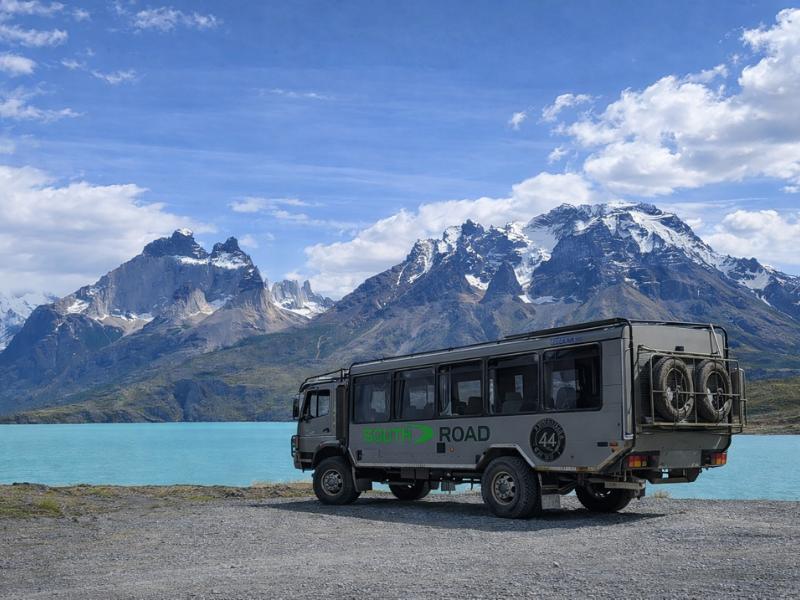
Torres del Paine Full-Day Overland 4×4 Expedition from El Calafate
From El Calafate and back the same day, with help at the border. Suited to the long-daylight months, when that day still has hours left in the park.
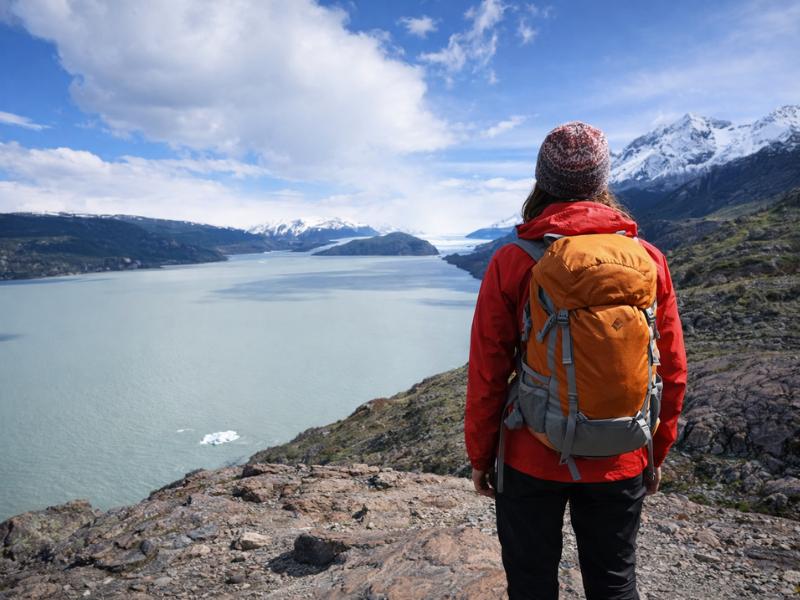
5-Day Torres del Paine W Trek – Guided Patagonia Adventure
A guided five-day W for travellers crossing in the open season in order to trek, rather than to see the park from the road in a single day.
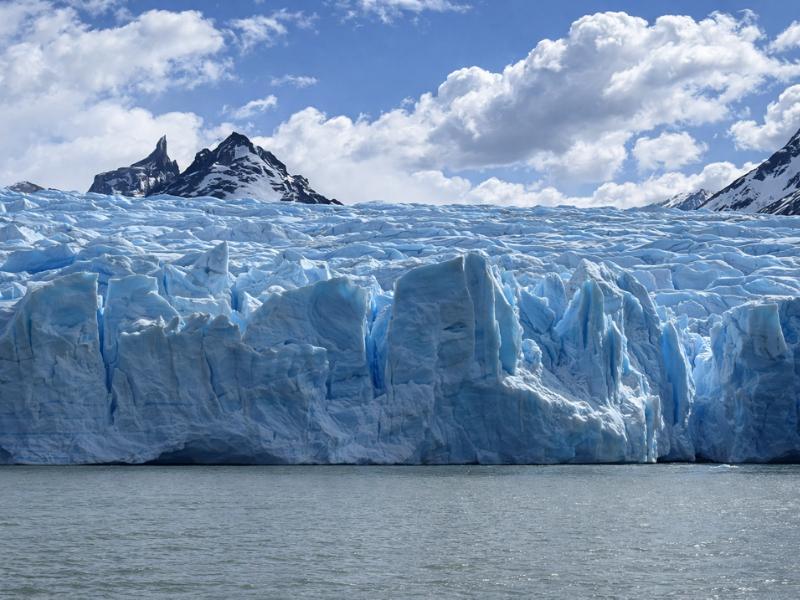
Torres del Paine: 3-Hour Grey Glacier Scenic Cruise
The boat to the Grey Glacier face, booked once you are inside the park and have a spare day if wind stops the sailing.
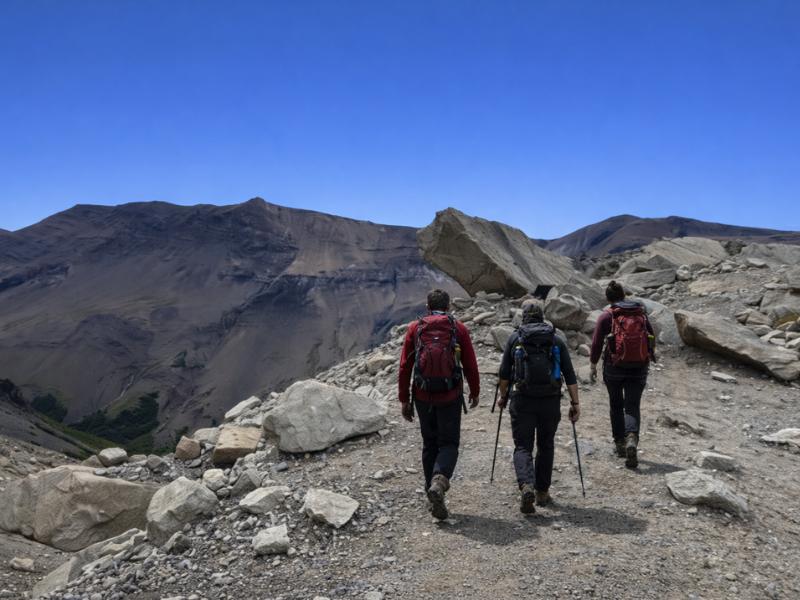
Torres del Paine Base Torres Trekking Day Trip from Puerto Natales
A guided walk to Base Torres from Puerto Natales. On this trail an authorised guide is required from 27 April to 30 August 2026.
| Shape of trip | Nights in Chile | What you actually see | Risk if the weather turns |
|---|---|---|---|
| Guided 4x4 day trip | None | Lake Pehoé, Lake Nordenskjöld, Salto Grande, some walking | The whole day, with no second chance |
| DIY, one night in Puerto Natales | 1 | One park day from town | The one park day |
| DIY, two nights in Puerto Natales | 2 | One park day plus a spare, or the fjord sailing | Absorbed by the spare day |
| DIY, night inside the park | 2 or more | Early starts and first light on the massif | Spread across several mornings |
What does the DIY crossing cost, end to end?
On published figures, roughly $40 to $50 for the bus to Puerto Natales, $20 to $29 each way for the park bus, 4,000 to 4,500 CLP in cash for the Laguna Amarga shuttle, and 34,000 CLP for a one-day foreign adult entry or 48,500 CLP for the multi-day pass. Accommodation sits on top. The transport is cheap. The entry ticket and the beds are what move the total.
Where independent travellers get caught out is the small connecting costs nobody quotes. The 7 km shuttle from Laguna Amarga to the Welcome Center takes cash only. The Pudeto catamaran across Lake Pehoé is about 26,000 CLP, roughly $45, for a 30 minute crossing. Neither appears in a fare comparison against a guided day, and together they change the arithmetic more than people expect.
Park entry itself is 34,000 CLP for a foreign adult on one day, about $36, or 48,500 CLP for the pass covering up to ten consecutive days, about $51, with children under 12 free. CONAF applied a 4.9% inflation adjustment for January to April 2026 and has postponed a new differentiated tariff system to 1 May 2026, so verify before you travel. The full breakdown is in park entry, which books separately.
| Line | Published figure | Payment note |
|---|---|---|
| El Calafate to Puerto Natales bus | Roughly $40 to $50 | Book ahead in high season |
| Puerto Natales to the park bus | $20 to $29 one way | From the Terminal Rodoviario |
| Laguna Amarga shuttle, 7 km | 4,000 to 4,500 CLP | Cash only |
| Park entry, foreign adult, one day | 34,000 CLP, about $36 | Online, date-locked, non-refundable |
| Park entry, up to ten consecutive days | 48,500 CLP, about $51 | Pays for itself on a second day |
| Pudeto to Paine Grande catamaran | About 26,000 CLP, roughly $45 | Fixed timetable, cancelled in high wind |
| Cross-border car permit | Around $150 | Arranged in advance, not all companies allow it |
Is Torres del Paine worth the crossing if you have already seen Perito Moreno?
They are not the same experience and one does not replace the other. Perito Moreno sits near El Calafate with extensive boardwalks, is easy to reach and calves visibly. Grey Glacier is inside Torres del Paine, reached by boat or on foot, about 28 km long and 6 km wide, with a face commonly given as around 30 metres above the water. Grey is harder to get to and comes attached to a mountain range.
The practical difference is access. At Perito Moreno you walk from a car park onto a boardwalk. At Grey you either take the three-hour cruise from the Hotel Lago Grey pier, currently $120 with a pisco sour on board, or you walk: 11 km each way from Paine Grande, or 5.6 km round trip from Refugio Grey out to the mirador and the suspension bridges. Wind cancels the sailings regularly, which is a sentence that never applies to a boardwalk.
The other difference is what surrounds them. Grey flows off the Southern Patagonian Ice Field into a lake where icebergs collect against the terminal moraine at the southern end, which is why you can stand on a beach beside house-sized ice without walking to the glacier at all, inside a 227,298 hectare park with the Cuernos and the towers behind you. We compare them properly in Grey against Perito Moreno, and the fuller picture of the glacier itself is in what Grey Glacier is actually like.
Which side of Patagonia should you base yourself on?
If glaciers and easy access are the priority, the Argentine side does it with less effort. If multi-day trekking through a compact granite massif is the priority, the Chilean side is the reason people come. Most travellers with a week do both and accept one border crossing as the price. The mistake is treating them as interchangeable.
Torres del Paine covers 227,298 hectares, was established in 1959 and has been a UNESCO Biosphere Reserve since 1978. It is a Biosphere Reserve rather than a World Heritage Site, a distinction plenty of travel writing gets wrong. It received 367,426 visitors in 2024, with January and February carrying most of them, and roughly 130 km of marked trail concentrated into a small area. That density is the appeal: the W trek covers about 80 km, with published figures ranging from 60 to 85 km depending on which side trips are counted, and it links the towers, the Valle Francés and Grey Glacier in four to five days.
The Argentine side plays differently, with El Chaltén as the day-hiking centre and El Calafate as the glacier base. Neither has the concentrated multi-day circuit that Torres del Paine has. We lay the two out side by side in choosing a side of Patagonia, and the trekking-town comparison sits in how the park compares with El Chaltén.
When does this route not work at all?
In deep winter, and on days the weather closes the park. Gate hours drop to 08:00 to 18:30 from May to September, the Base Torres trail requires an authorised guide from 27 April to 30 August 2026, most refugios shut, and the O Circuit back side is closed. A long border day into a short daylight window does not leave much of a visit.
Daylight is the arithmetic that kills it. In late June, Puerto Natales sees roughly 09:30 to 17:30 of light. Spend six hours plus a border getting there and there is no day left. In late December the same journey lands inside a window running roughly 05:00 to 22:00, which is why the El Calafate approach is a summer proposition for almost everyone who tries it.
Closures are the other variable. CONAF can shut trails and passes on conditions, and it listed the O Circuit as closed until at least 31 October 2026. Wind cancels the Grey sailings and the Pudeto catamaran without much notice. Check CONAF's park page for current closures before committing to a date, and if you would rather not carry any of this yourself, the Torres del Paine tours we list include departures from both Puerto Natales and El Calafate, among them the full-day park circuit from Puerto Natales and the four-day trip with transfers and park fees included. Flying in is the other way to skip the border entirely, and flying in instead covers the options.