What Is Torres del Paine Famous For?
Six things built this park's reputation, and they sit in different corners of a 227,298 hectare map, which is the fact worth planning around.
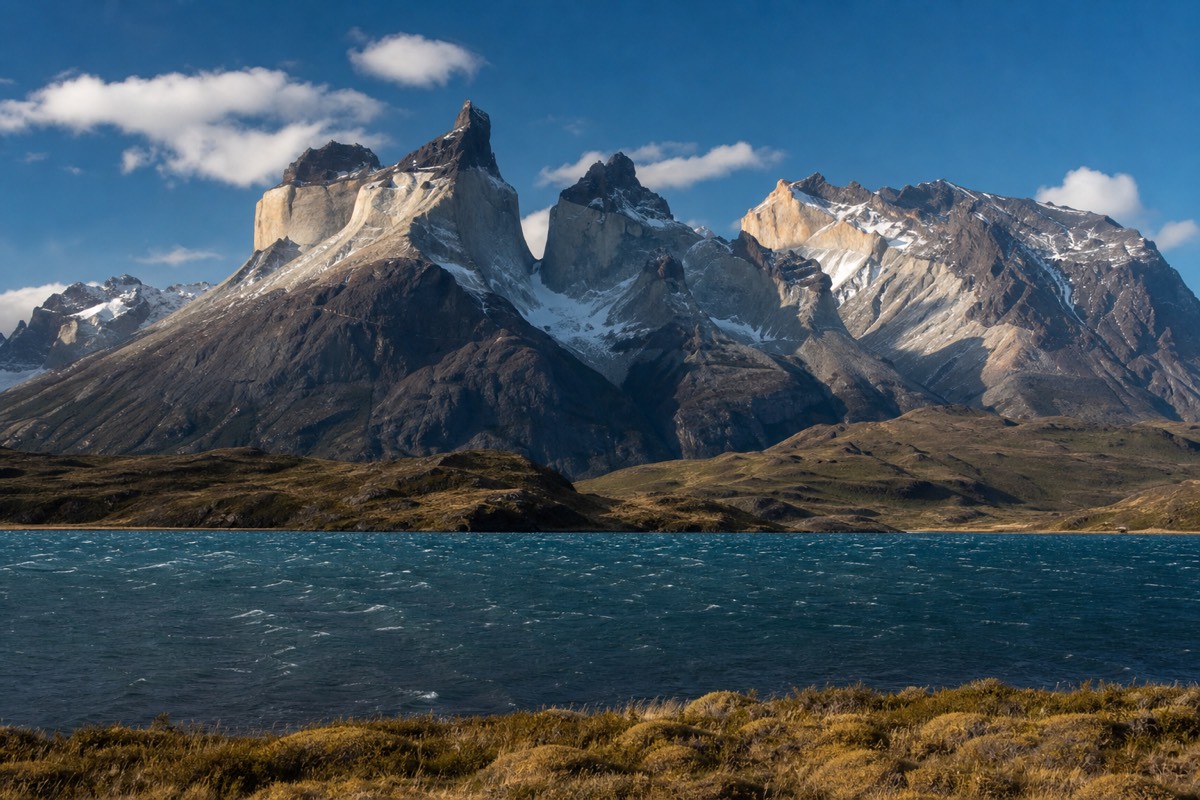
Torres del Paine is famous for four things: the three granite towers that give the park its name, the black-capped Cuernos del Paine, the W and O treks, and Grey Glacier. It is also known for guanaco herds, the densest puma population recorded anywhere, and wind strong enough to stop boats sailing. Put together, that is why 367,426 people made the trip in 2024 to a park 112 km from the nearest town.
The park was established in 1959, covers 227,298 hectares in the Magallanes region of Chilean Patagonia, and has been a UNESCO Biosphere Reserve since 1978. Roughly 130 km of marked trail runs through it. Each of the things it is famous for sits in a different corner of that map, which is the single most useful fact for anyone planning a visit.
Why are the three towers so famous?
Because they are three near-vertical granite spires standing above a glacial lagoon, and because reaching the classic view of them takes a 21 km round trip with 1,041 metres of ascent. The picture is everywhere. The eight to ten hour walk that produces it is the part most people find out about later.
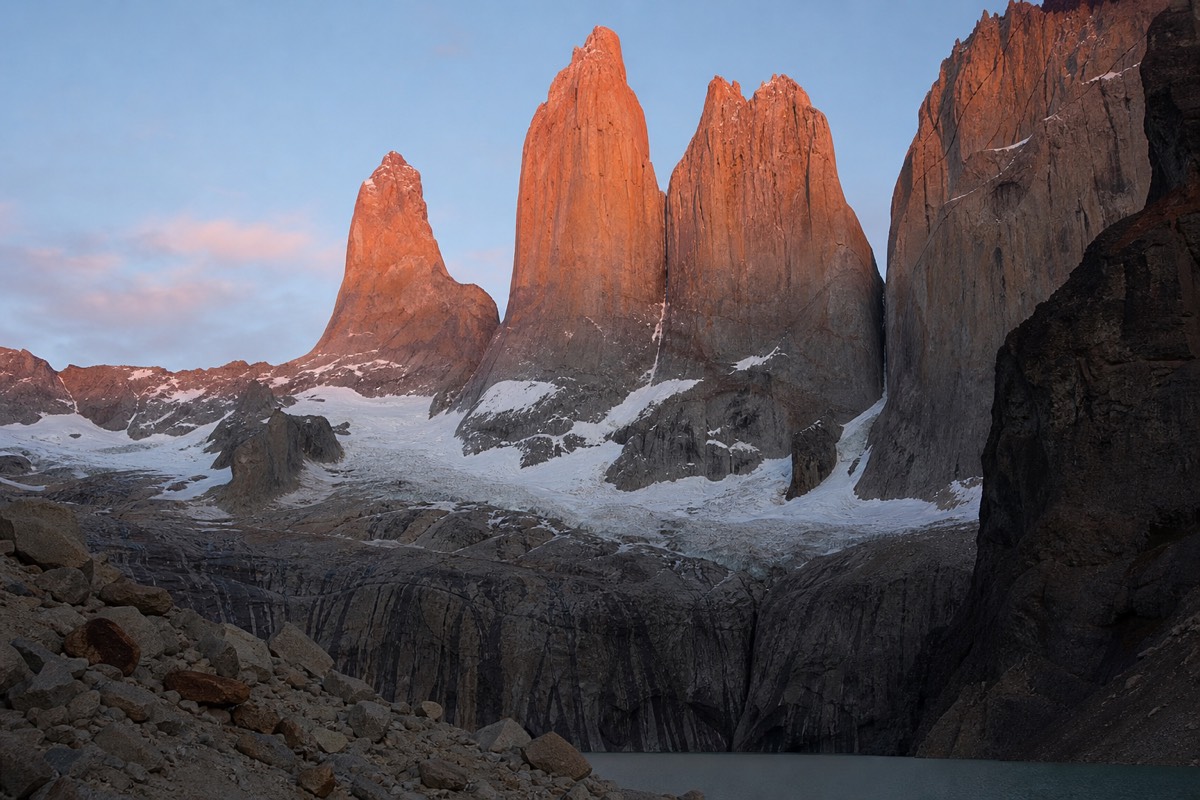
The trail leaves the Welcome Center in the Central sector, climbs out of the windy lower valley, runs through lenga forest along the Ascencio, and finishes with a 0.8 km scramble up moraine that gains about 200 metres in roughly 45 minutes. That last section is what people remember. It is also why the towers are the park's signature rather than its easiest sight: cloud sits on them often, and there is no way to check before you commit the day. The Base Torres trail described step by step covers timings, the moraine and what the summit looks like in poor weather.
What are the Cuernos del Paine?
The Cuernos are the horn-shaped peaks rising straight out of Lake Nordenskjöld, dark sedimentary caps sitting on pale granite, and they are the shape most photographs of Torres del Paine actually show. Unlike the towers, you can see them properly from the road, which is why every day tour includes a Nordenskjöld viewpoint stop.
That accessibility is the point. A visitor with one day gets the Cuernos without walking far: the stop at Salto Grande is a 1.5 km round trip on the flat, and the Mirador Cuernos continuation adds 4 km with about 150 metres of climb. Around sunset the light on the granite is the reason the park keeps appearing in landscape photography collections. Anyone with limited time gets a far better return here than on a rushed attempt at the towers, and a full-day guided circuit from Puerto Natales is built around exactly this string of viewpoints.
What are the W trek and the O circuit?
The W is a roughly 80 km route through the three main valleys, walked in 4 to 5 days, and it is the most famous multi-day trek in South America. The O circuit wraps the whole massif, most sources giving 136 km over 7 to 9 days, and crosses the 1,200 metre John Gardner Pass. Published W distances range from 60 to 85 km depending on which side trips are counted, and cumulative ascent is quoted between 2,730 and 3,480 metres.
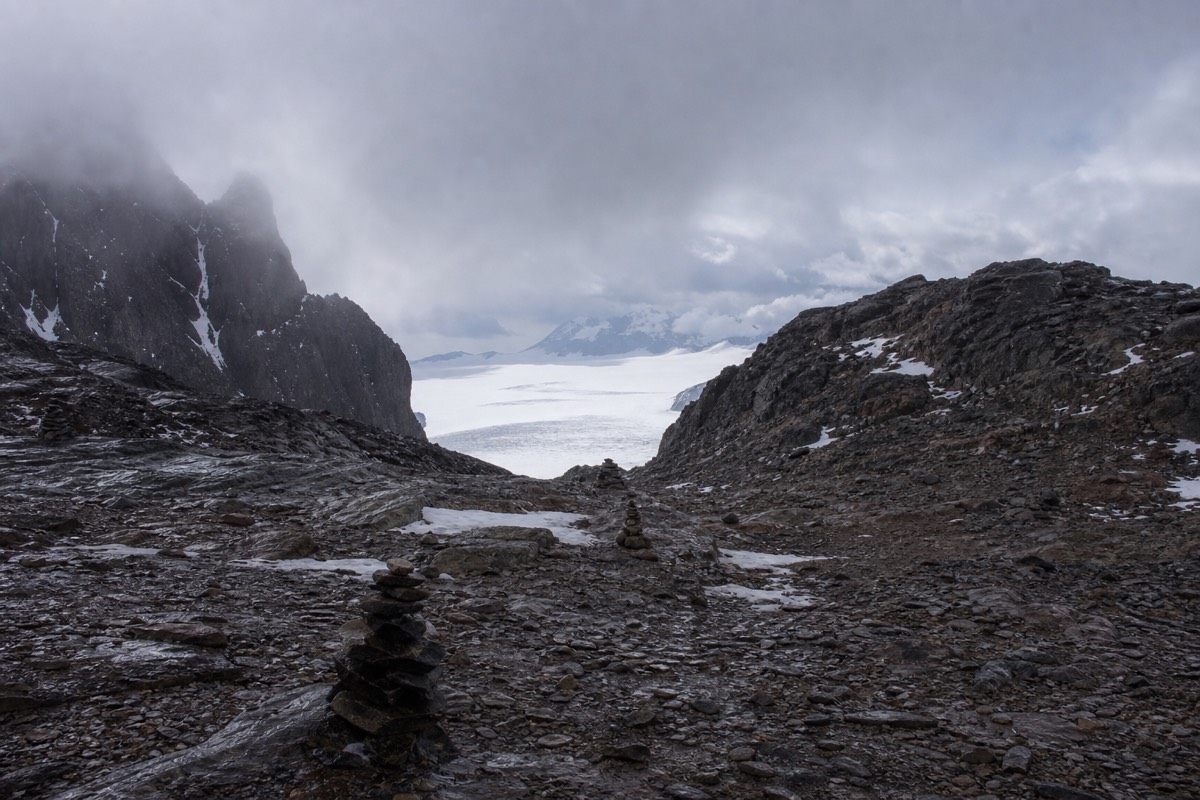
Most walkers go west to east, taking the catamaran to Paine Grande first and finishing at the towers, often at sunrise. Accommodation is booked through two separate concessionaires and the calendars open around April, which makes the W as much an administrative exercise as a physical one. The O is walked counter-clockwise by rule, because the pass may only be crossed from the Los Perros side, and its back section closes in winter. We do not sell O circuit trips. Our complete W trek guide covers the route we do run, including the 3-day guided W alternative that reaches all three signature sights from a single base camp.
What is Grey Glacier known for?
Grey is about 28 km long, 6 km wide and roughly 270 km2, flowing off the Southern Patagonian Ice Field, with a face standing around 30 metres above the water. It is famous for calving icebergs that drift the length of Lago Grey and pile against the terminal moraine at the southern end.
Those stranded icebergs mean you can stand on a beach beside house-sized blue ice without walking to the glacier at all, which is unusual. The glacier has been retreating, with a large calving event recorded in 1997 and published research in 2019 documenting an underwater terrace at its front. There are four ways to see it: a 3-hour scenic cruise from the Hotel Lago Grey pier, on foot from Paine Grande or the Grey refuge, by kayak among the icebergs, or with crampons on the ice itself. The 3-hour Grey Glacier cruise is currently $120 and the only one of those we sell. Wind cancels sailings regularly, which is worth knowing before it becomes your only free day. There is more in our Grey Glacier guide.
Recommended tours for what the park is famous for
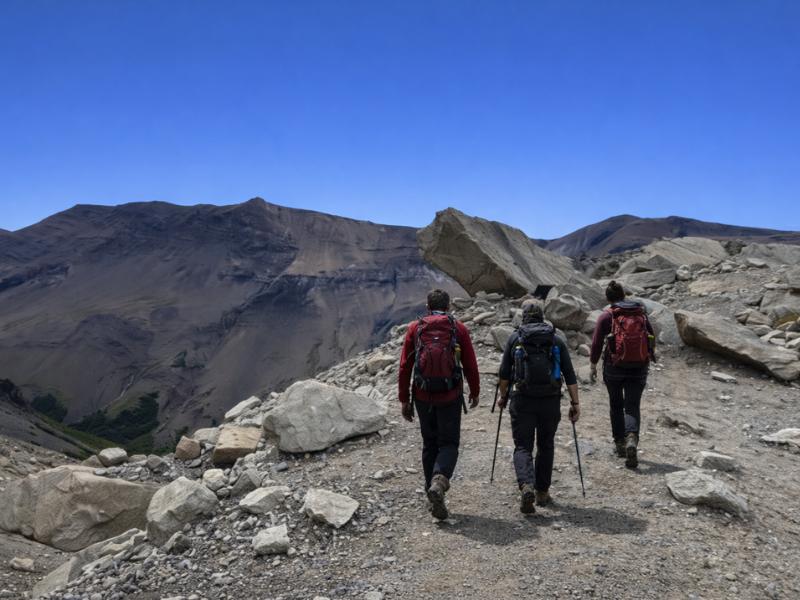
Torres del Paine Base Torres Trekking Day Trip from Puerto Natales
Guided day hike from Puerto Natales to the lagoon under the three towers, including a winter departure with crampons when the trail is icy.
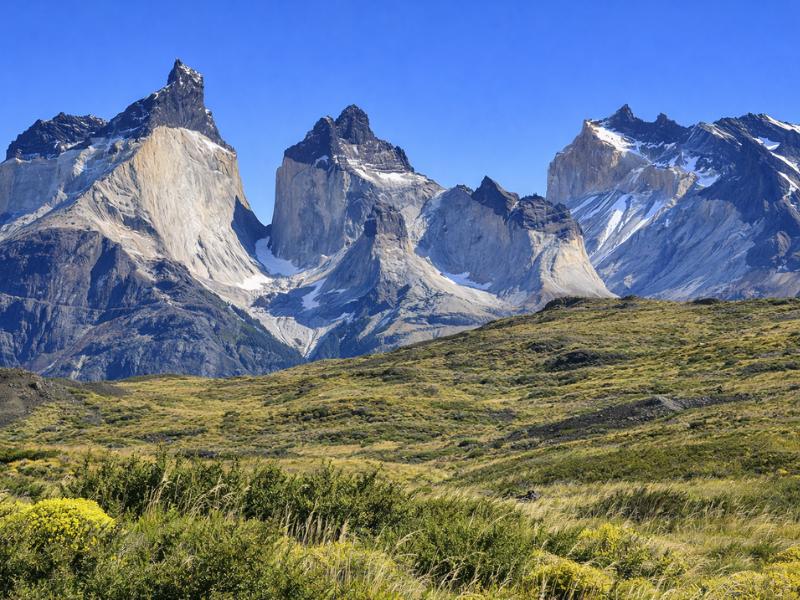
Torres del Paine Full-Day Adventure Tour from Puerto Natales
Road circuit of the main viewpoints, including the Cuernos and Salto Grande, with hotel pickup in Puerto Natales.
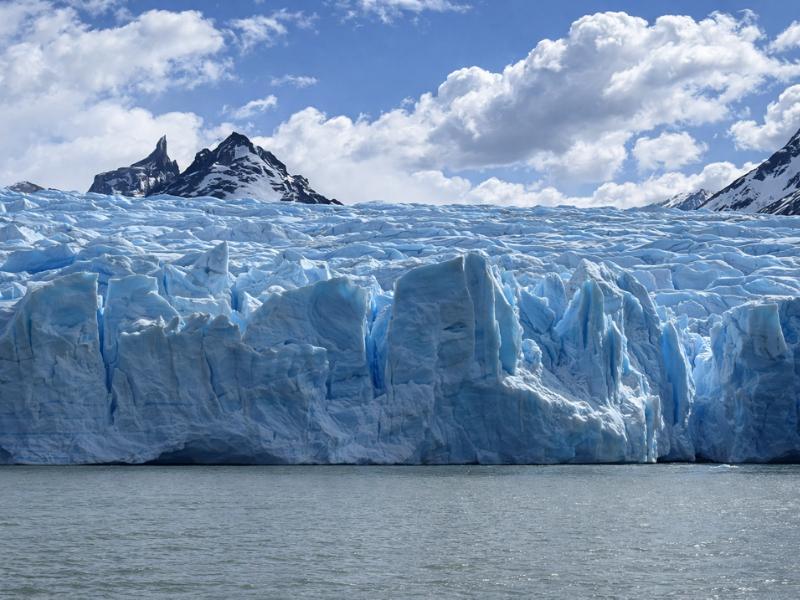
Torres del Paine: 3-Hour Grey Glacier Scenic Cruise
Boat trip from the Hotel Lago Grey pier to the glacier face, the option we list if you want the ice without a kayak or a walk on the glacier.
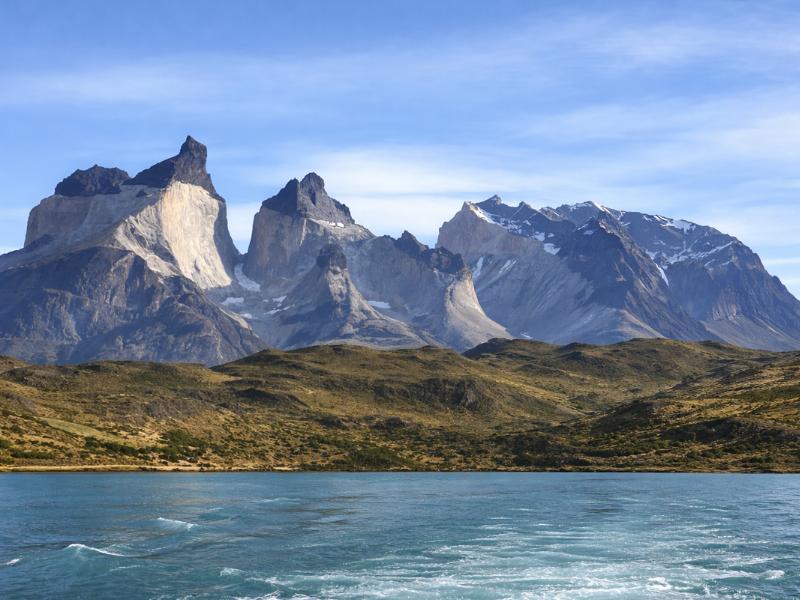
Torres del Paine W Trek Alternative 3-Day Guided Tour
Three guided days covering the towers, the French Valley and Grey Glacier from a single base camp.
Why is Torres del Paine famous for pumas and guanacos?
Because it holds the highest recorded puma density anywhere. The 1999 Franklin study in Biological Conservation logged a minimum of 2.5 adult pumas per 100 km2, roughly one animal per 17 km2, in a 200 km2 area of the park. Researchers describe that as at least twice any other known population. Estimates of the total park population vary widely, between 50 and 200 animals.
The reason is the guanaco, commonly cited at around 3,000 in the park and the puma's main prey. Herds graze the open eastern steppe where they are easy to see from the road, and the pumas follow them. Sightings happen at dawn and dusk, since pumas are crepuscular, and tracking operates around the Laguna Amarga sector and the estancias on the boundary. Attacks are extremely rare: there is no record of a fatal puma attack on a visitor inside the park. Alongside them you can realistically expect culpeo and chilla foxes, rheas, black-necked swans, Chilean flamingos and the Andean condor, whose wingspan reaches around 3 metres. See what wildlife you actually see in the park for the full list. Puma tracking itself is run by outside specialists rather than by us. Background on the species is held by the wild cat conservation organisation Panthera.
Is Torres del Paine a UNESCO World Heritage Site?
No. It is a UNESCO Biosphere Reserve, designated in 1978, which is a different programme. The park itself was established in 1959 and is managed by CONAF, Chile's national forestry corporation. It appears on plenty of lists as a World Heritage Site, and those lists are wrong.
The other thing it is quietly famous for is wind. Puerto Natales averages 37 kph in November, the windiest month, and gusts of 60 to 100 kph are ordinary on exposed ground in summer, with regional sources reporting extremes near 193 kph. Wind is what cancels boats, flattens tents and turns a lake crossing into a waiting game. It is also the reason the light changes so fast that the same viewpoint looks like three different places in an afternoon. The designation is confirmed on the UNESCO Biosphere Reserve listing, while closures, gate hours and trail rules come from CONAF's own park page.
| What it is famous for | Where you see it | Time needed |
|---|---|---|
| The three towers | Mirador Las Torres, Central sector | 8 to 10 hours on foot |
| Cuernos del Paine | Nordenskjöld and Salto Grande viewpoints | 30 minutes to 1.5 hours |
| Grey Glacier | Lago Grey, by boat or on foot | 3 hours by cruise |
| The W trek | Ascencio, Francés and Grey valleys | 4 to 5 days |
| Guanacos and pumas | Eastern steppe, Laguna Amarga sector | Dawn and dusk |
Between them, those five things are the whole reputation. All of them sit on the guided trips we list in one form or another, and none of them needs a 136 km circuit to reach.